7 Shopping List Template Tips for Easy Dinner Parties
 18 min read
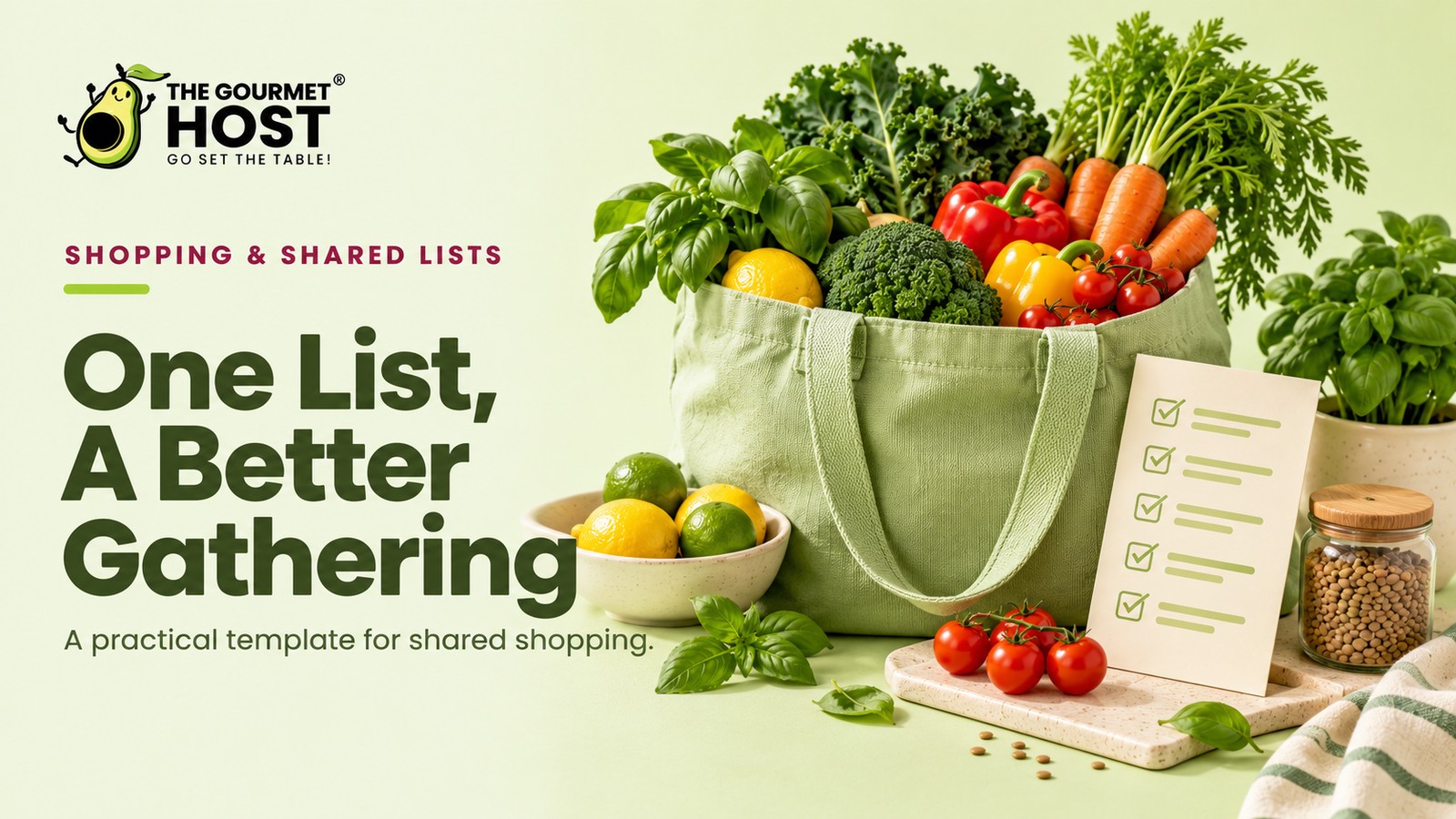
Drafting a shopping list template takes the guesswork out of feeding hungry friends. Organizing your ingredients into clear categories ensures you buy exactly what your dinner party menu demands.
This article outlines how to structure your grocery runs for gatherings of four to twelve guests. You will discover how to scale recipes, calculate wine portions, and stock essential pantry staples.
Building a reliable digital grocery guide lets you share responsibilities with a co-host and prevent last minute supermarket trips. Adopting this structured approach gives you more time to focus on the people gathering around your table.
At a Glance
- Begin mapping out your ingredient needs two weeks before the dinner party.
- Divide your guest count by 2.15 to determine exactly how many standard wine bottles to buy.
- Buy staple items like butter in bulk when on sale to control your event budget.
- Store savory bases like bouillon cubes in a dark pantry to maintain a two-year shelf life.
- Use precise gram weights instead of cup measurements when scaling recipes for large groups.
What a “shopping list template” means for modern home hosts
A shopping list template functions as a master blueprint for your dinner party procurement. It organizes every required ingredient by supermarket aisle and categorizes specialty items for dedicated butcher or farmer’s market trips.
You build this grocery inventory checklist by reviewing your selected recipes and extracting exact quantities. This document prevents you from wandering the aisles aimlessly or forgetting a crucial garnish.
Many hosts confuse a simple grocery note with a comprehensive supermarket checklist. A true template includes columns for quantities, unit prices, and specific brand preferences.
For example, a standard entry should not just read “chicken.” A highly functional template row specifies “2 pounds of boneless, skinless chicken thighs,” lists the expected price of “$12.00,” and notes the target aisle “Meat Counter.” This level of detail removes all guesswork when you stand in a crowded store.
Establishing this menu planning spreadsheet standardizes your preparation process for every future event. You simply duplicate your master document and adjust the ingredients for your new gathering.
How far in advance should you draft your shopping list template?
The Emily Post Institute recommends that party hosts build a timeline working backward from the event date and draft detailed shopping lists covering the complete menu and beverage needs. Start drafting your template two weeks out to allow time for budgeting, finding sales, and securing specialty ingredients.
Check what you already own with Pantry Staples Every Home Host Should Keep Stocked.
Starting early guarantees you never scramble to find specific cuts of meat the day before your gathering. Giving yourself a fourteen day runway allows you to contact local butchers and reserve popular items.
Imagine you are hosting a specialized seafood boil. Sourcing fresh crawfish or crab legs requires calling your fishmonger at least ten days out. By consulting your template on day fourteen, you identify this specialty need immediately.
You place the order ahead of time, note the pickup date in your spreadsheet, and completely eliminate the risk of an empty seafood counter.
If you plan to host during the winter holidays, your timeline must extend even further. The Emily Post Institute advises hosts to send out holiday party invitations four to six weeks before the event because calendars fill up quickly.
Once your friends RSVP to your holiday gathering, you can begin filling in your ingredient inventory list immediately.
Knowing your exact guest count helps you finalize the necessary portion sizes.
Your grocery guide acts as a living document during these two weeks of preparation. You will likely modify the produce section based on what looks freshest at your local market.
Resist the urge to buy highly perishable items like fresh herbs or soft cheeses too far in advance. Your template should include a specific column denoting which day to purchase each item.
To build your timeline, follow a simple three-step approach. Step one occurs fourteen days out: finalize the menu and write down every single ingredient required. Step two happens ten days out: purchase dry goods, canned items, and heavy liquids like wine.
Step three takes place the morning before your event: buy delicate produce, fresh bread, and raw proteins.
Schedule your non-perishable shopping trip ten days before the event. This leaves only fresh produce and delicate proteins for your final supermarket run the morning before the party.
Updating your digital grocery list chronologically ensures your kitchen stays organized. By mapping out your purchasing timeline, you spread out the financial cost and the physical effort of carrying heavy groceries.
|
Build the List From Your Menu |
How much wine and beverages should your shopping list include?
A comprehensive shopping list template treats beverages with the same priority as the main course. Wine Folly recommends dividing an event’s total guest count by 2.15 to calculate the number of standard wine bottles to buy. Keep in mind that a standard wine tasting pour is 2 to 3 ounces, yielding about 10 pours per standard bottle.
Make the pantry easier to audit using Kitchen Organization Pantry Ideas for Easy Storage.
For example, if you invite 12 guests, divide 12 by 2.15 to get 5.58. Round up to 6 standard bottles of wine.
If you want to split this between red and white, list 3 bottles of a versatile Pinot Noir and 3 bottles of a crisp Sauvignon Blanc in your spreadsheet.
Add specific notes to chill the white wine 24 hours in advance and open the red wine an hour before the first guest arrives.
Create a dedicated beverage category in your dinner party spreadsheet to track these exact calculations. Knowing your total bottle count helps you determine if you need to borrow extra glassware from a neighbor.
Red wine typically requires different serving temperatures and decanting times than white varieties.
Document these preparation notes directly next to the wine entries in your supermarket checklist.
You must also account for hydration and non-alcoholic options when mapping out your drinks category. Calculate one pound of ice per guest and list it prominently on your template.
A thoughtful host always provides engaging mocktails for friends who choose not to drink alcohol. Add specialized ingredients like ginger beer, fresh mint, and sparkling water to your beverage inventory.
Calculating non-alcoholic options requires equally precise math.
If you expect four guests to abstain from alcohol, plan for each person to consume three beverages over a four-hour evening. Multiply four guests by three drinks to reach 12 total mocktails. Your shopping list should then explicitly call for three liters of sparkling water, two pints of fresh berries for muddling, and an extra bag of ice specifically for these highball glasses.
Coffee and tea often serve as the final note of a great dinner party. Verify your coffee bean supply and include a reminder to buy fresh dairy or oat milk for after dinner service.
Tracking your beverage purchases in a central grocery template prevents overbuying expensive liquors.
You can accurately forecast your drink budget when every bottle and garnish sits neatly in its assigned row.
Store your customized beverage calculations in your master file for future reference. When you host your next group of twelve, you will already know exactly how many bottles of sparkling water to acquire.
How can a standardized shopping list help control dinner party costs?
Hosting multi-course dinners adds up quickly, but a structured list helps you stick to your budget. King Arthur test kitchen specialists advise purchasing butter when it is on sale and freezing excess quantities for up to a few months to cut baking costs. Update your digital template with these bulk buys.
Before adding equipment to your list, consult Kitchen Cooking Tools Every Host Needs for Confident Meals.
A detailed menu planning spreadsheet functions as a precise financial ledger for your gathering. By tracking the unit prices of frequent purchases, you quickly spot when your favorite supermarket offers a genuine discount.
Writing down your exact requirements stops you from tossing unneeded specialty items into your physical shopping cart. You stick to the plan because your template outlines exactly what you need to execute your menu.
Imagine planning a beef bourguignon dinner for eight.
Instead of blindly tossing items into your cart, list the required three pounds of chuck roast, pearl onions, and button mushrooms in your template alongside estimated prices.
If the chuck roast totals $30, the vegetables $15, and a mid-tier Burgundy wine adds $25, you quickly see a $70 base cost for the main course alone. You can then balance this by selecting an inexpensive starter, like a simple mixed green salad, keeping your per-guest spending under ten dollars.
You can drastically reduce your overall receipt by designing your ingredient list around seasonal produce.
Out of season vegetables require expensive importation, whereas local seasonal goods cost less and taste superior.
Add a budget column to your grocery guide to estimate the total cost before you leave the house. This proactive step allows you to adjust the menu if a specific protein pushes your spending limit too high.
A practical step to master grocery budgeting involves color-coding your digital list. Highlight premium ingredients like dry-aged steaks or saffron in red, and low-cost fillers like rice or potatoes in green. If your spreadsheet shows too much red, you instantly know to swap out a pricey side dish for a more economical, green-highlighted alternative.
A surprising contrarian tactic involves spending more money upfront on whole cuts of meat rather than pre-portioned fillets. You can purchase a whole tenderloin, trim it yourself, and note the yield differences in your shopping master file.
When you share your digital grocery list with a co-host, you can easily divide the financial responsibilities.
Assign specific expensive items, like the main protein or the wine selection, to different people on the spreadsheet.
Organizing your finances through a dedicated template makes frequent entertaining highly sustainable. You create a clear record of your spending habits that helps you plan smarter for your next gathering.
|
Hosting Tip: check the pantry first. |
Which long-term pantry staples should always be on your grocery list?
Keeping your pantry stocked prevents last minute panic and missing ingredients. Essential items include basic baking needs, savory bases, and cultural staples. The Taste of Home Test Kitchen recommends storing bouillon cubes in a dark pantry, where they maintain a shelf life of up to two years.
Collect clear guest information using How to Ask Guests About Dietary Restrictions: Scripts.
A permanent section of your shopping list template should be dedicated to auditing these long term foundational items. Checking your inventory of kosher salt, black peppercorns, and olive oil is a mandatory step before writing out fresh grocery needs.
Creating a dedicated pantry audit checklist involves three straightforward actions. Action one: open your spice cabinet and discard anything lacking a distinct aroma. Action two: check your baking powder and baking soda expiration dates, as expired leaveners ruin expensive baking projects.
Action three: consolidate duplicate items, like combining two half-empty boxes of kosher salt, so you know exactly how much volume remains.
If you love exploring global cuisines with your friends, your foundational list must reflect those flavors. Just One Cookbook lists Japanese soy sauce (shoyu), sake, mirin, miso, and rice vinegar as essential foundational pantry condiments for traditional Japanese cooking.
Designate a specific column in your supermarket checklist for expiration dates on these specialty items.
While dry goods last a long time, spices lose their aromatic potency after six months in a cabinet.
A thorough pantry audit reveals what you already own, allowing you to cross items off your grocery run. This practice creates a “do not buy” sub list that saves you from purchasing a fourth bottle of sesame oil.
Consider a short case scenario where a recipe demands a quick vinaigrette. If your template audit confirms you have extra virgin olive oil, Dijon mustard, and white wine vinegar in stock, you immediately save $15 by not repurchasing those bottles. You only need to add fresh shallots to your active grocery run.
You should also keep an inventory of your preferred cooking fats and vinegars. A well stocked pantry ensures you can whip together a vibrant salad dressing without needing an extra trip to the store.
When a staple ingredient drops below the halfway mark, immediately add it to your digital grocery guide.
Maintaining this proactive habit guarantees your kitchen is always ready to support a spontaneous dinner party.
Organizing your dry goods thoughtfully provides a solid foundation for any complex menu you decide to tackle. You build confidence knowing your kitchen contains all the necessary building blocks for an incredible meal.
How do you accurately convert and scale recipes for 4 to 12 guests?
Scaling recipes up for a dinner party requires precise measurements to avoid running short or creating excess waste. Use weight rather than volume when scaling baking recipes on your list. For example, King Arthur Baking specifies that one cup of Unbleached All-Purpose Flour weighs exactly 120 grams.
Divide the preparation with ideas from Co-Hosting and Progressive Dinner Party Planning.
Doubling a recipe for a large group completely changes the chemistry of your cooking process. Adding a formula column to your digital template allows you to automatically calculate new ingredient totals based on weight.
Follow these three steps to scale your menu flawlessly. First, determine your base recipe yields.
If your favorite mashed potato recipe serves four, note the 500 grams of potatoes required. Second, calculate your guest multiplier. For a party of ten, divide ten by four to establish a 2.5 multiplier.
Third, apply this multiplier to your base weights. Multiply 500 grams of potatoes by 2.5 to get 1250 grams, and type this exact figure into your produce section.
Many home cooks mistakenly double aggressive spices and salt when doubling a soup or stew.
A nuanced approach requires you to multiply the foundational ingredients by two while only increasing strong spices by a fraction.
Create a dedicated scaling table within your menu planning spreadsheet for quick reference. This keeps your math organized and ensures you never accidentally purchase twice as much cayenne pepper as you need.
| Menu Component | Scaling Measurement Strategy | 12 Guest Multiplier Rule | Advance Preparation Window |
|---|---|---|---|
| Baking Flour | Convert strictly to grams | Increase strictly by weight | Sift 24 hours prior |
| Fresh Spices | Taste test during cooking | Add only 1.5 times original | Grind 2 hours prior |
| Salad Greens | Estimate by handful | Allocate 2 ounces per person | Wash 12 hours prior |
| Raw Protein | Portion by raw weight | Purchase 8 ounces per person | Marinate 48 hours prior |
Recording these specific conversions directly in your grocery guide removes all mathematical guesswork while you shop. You know precisely how many ounces of raw chicken to request from the butcher counter.
Converting cups to grams also makes your actual grocery shopping far more accurate.
Supermarkets sell dry goods by weight, so matching your recipe requirements to the package weight prevents buying unnecessary extra bags.
Verify the final yield of your scaled recipes before you finalize your shopping list template. If a recipe originally feeds four, multiplying the base ingredients by three guarantees you have enough food for twelve hungry friends.
How do you plan a grocery list for 12 guests?
Start by strictly converting your recipe measurements from volume to grams using a digital calculator. Multiply the base weights by your desired servings divided by the recipe’s original servings to determine exactly how many ounces of each ingredient to buy. Create a comprehensive template that accounts for all scaled proteins, side dishes, and beverages.
Why does an organized grocery list reduce food waste?
Over purchasing leaves unused ingredients rotting in your refrigerator drawers long after the party ends. Agriculture and Agri-Food Canada reports that 46.5% of the total food supply in Canada is lost or wasted annually. A carefully structured grocery template ensures you purchase only what your exact menu requires.
Writing exact numerical quantities next to highly perishable items stops you from guessing at the farmer’s market. Instead of writing “carrots”, your customized checklist should specify “six large organic carrots for roasting”.
Consider a scenario where a recipe calls for two stalks of celery, but your grocery store only sells whole bunches. Note this discrepancy on your shopping list template immediately. You can then intentionally plan to serve celery sticks with a blue cheese dip as an appetizer, ensuring the remaining stalks do not rot in your crisper drawer.
You can design your menu planning spreadsheet to highlight overlapping ingredients across different courses. If you buy a large bunch of fresh parsley, plan to use half in the marinade and half as a vibrant garnish.
To implement cross-utilization successfully, scan your finalized recipes for specialized ingredients used in small amounts. If a dessert requires half a cup of heavy cream, find a savory application for the remaining liquid. Add a note to your template to use the leftover cream to enrich your potato puree or create a quick pan sauce for the main protein.
Cross utilizing your perishables ensures every item you bring into your kitchen serves a deliberate purpose. Documenting these overlapping uses in your digital template keeps you accountable to your original cooking plan.
Intentional leftover planning is another fantastic way to utilize your remaining ingredients.
If you expect to have extra roasted vegetables, add a dozen eggs to your grocery run for a post party frittata.
Proper food storage techniques drastically extend the life of whatever you bring home from the supermarket. Make notes in your grocery guide about which herbs need to stand in water and which require a damp paper towel.
Conduct a post party debrief the next morning to see which foods went untouched.
Update your master template to reflect these observations so you buy less of that specific item next time.
Taking control of your procurement process directly combats the widespread issue of residential food loss. You protect your local food system while keeping your kitchen organized and highly efficient.
|
Share the Grocery Run |
How The Gourmet Host Helps You Apply Your Shopping List Template
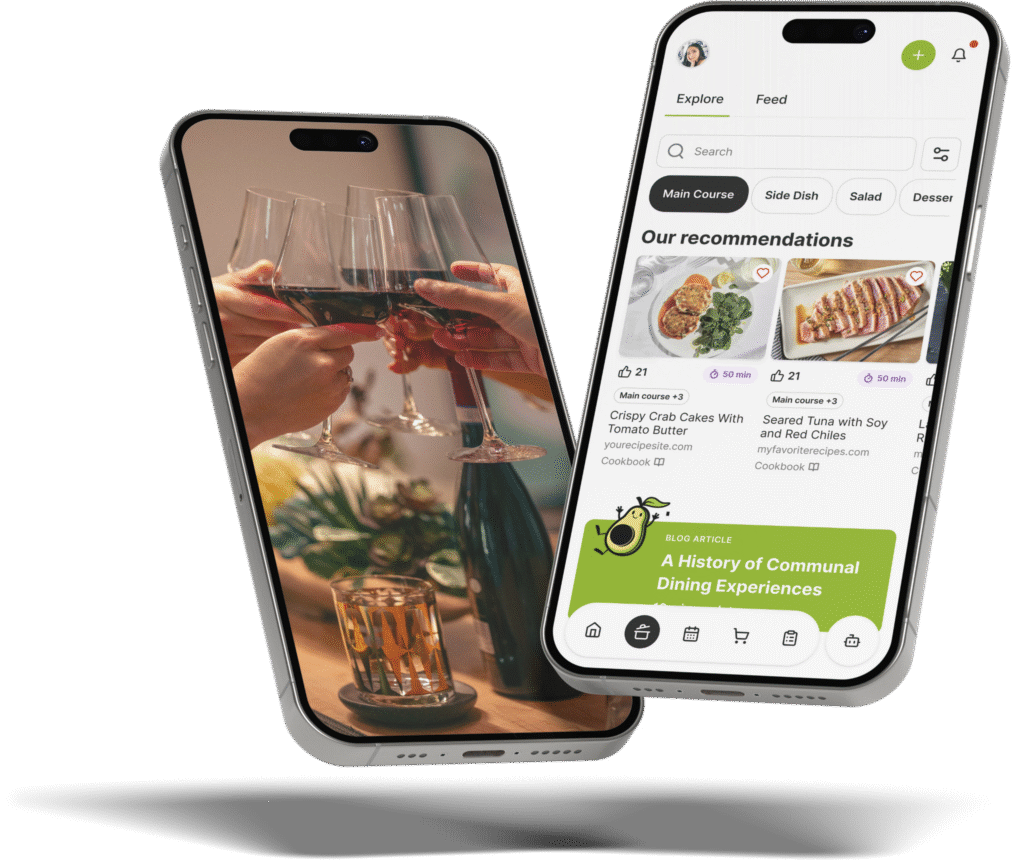
Managing multiple spreadsheets and separate notes overwhelms hosts planning intricate meals. The Gourmet Host mobile app replaces five different planning tools by syncing your selected recipes directly into an interactive digital grocery list. Import your favorite dishes and share specific buying tasks directly with your collaborators.
Using The Gourmet Host mobile app transforms your disjointed notes into a highly actionable event guide. As you browse our extensive recipe database, you can add complete ingredient lists to your master checklist with a single tap.
Consider how this technology handles a complex menu featuring an appetizer, main course, and dessert.
Instead of manually writing out three different ingredient lists and attempting to combine the overlapping items, the app merges them instantly. If your appetizer needs one onion and your main course needs two, the digital guide automatically populates a single line item demanding three onions.
This seamless integration saves you hours of tedious arithmetic.
The software collects guest dietary notes with your event details, helping you review ingredients and choose suitable replacements before you buy.
Every great gathering relies on communication between friends. Our platform makes it incredibly easy to invite co-hosts, assign specific dishes, and distribute the grocery buying responsibilities.
If you want to pull inspiration from outside sources, our system acts as your gateway to recipes across the web and lets you search for brilliant ideas from professional test kitchens without ever leaving the application interface.
Hosting should always prioritize community connection over complicated administrative work. Our interactive event page lets you build a beautiful menu for all guests to see, keeping guest dietary notes alongside the menu.
After the final plates are cleared, our built in cost splitter simplifies your post party financial logistics.
You can quickly settle the grocery bill with your co-hosts and instantly begin planning your next wonderful evening together.
Visit thegourmethost.com to discover how a unified digital system streamlines your preparation and impresses your guests every time. You can finally focus on experimenting with flavor instead of organizing chaotic paper notes.
Frequently Asked Questions
What categories should be on a shopping list template?
Your template should mirror the physical layout of your preferred supermarket. Break your list into distinct sections for fresh produce, dairy, raw meat, dry pantry staples, baked goods, and frozen items. This logical grouping prevents you from walking back and forth across the store to find forgotten ingredients.
Can I use a google shopping list for a dinner party?
Yes, a basic digital document works well for simple gatherings. However, a dedicated menu planning spreadsheet offers far more utility by allowing you to add columns for exact weights, unit prices, and store locations. Complex multi-course dinners require more organization than a standard bulleted list can provide.
What is the best app for shopping list organization?
The Gourmet Host mobile app excels at organizing dinner party groceries because it syncs directly with your chosen recipes. It compiles all necessary ingredients into one central list while keeping your guests’ dietary notes available for ingredient checks. It also divides responsibilities among your event co-hosts.
How do I share my shopping list with a co-host?
You can email a link to your digital spreadsheet or use a collaborative platform designed for group planning. The Gourmet Host mobile app allows you to invite a co-host directly to your event page. You can then assign specific grocery categories to different people to divide the workload.
Should I use AnyList or a dedicated party planning app?
General grocery apps handle standard weekly shopping effectively but lack event specific features. A dedicated platform connects your exact recipe yields, guest dietary profiles, and event RSVPs directly to your final checklist. This integration ensures your shopping run perfectly matches the unique demands of your upcoming dinner party.
How can I keep track of dietary restrictions on my grocery list?
Create a dedicated column in your menu planning spreadsheet to highlight potential allergens for each recipe component. Review this column before finalizing your supermarket run to ensure you buy suitable alternatives. The Gourmet Host mobile app keeps guest dietary notes with your event so you can check ingredients and choose suitable replacements.
Continue Reading:
More On Grocery List Apps
- 7 Google Shopping List Hacks for Dinner Party Hosts
- 7 AnyList App Tips for Flawless Dinner Parties
- 7 Ways a Shopping List Meal Planner App Simplifies Hosting
- 7 Meal Planner App With Shopping List Tips For Hosts
- 7 AnyList Web Tips to Plan Better Dinner Parties
More from The Gourmet Host
- Pantry Staples Every Home Host Should Keep Stocked
- Kitchen Organization Pantry Ideas for Easy Storage
- Kitchen Cooking Tools Every Host Needs for Confident Meals
- How to Ask Guests About Dietary Restrictions: Scripts
- Co-Hosting and Progressive Dinner Party Planning
Explore TGH Categories