Co-Hosting and Progressive Dinner Party Planning
 13 min read
Write one shared list before anyone turns on a stove, and name who owns each course and each task on it. That single move is what separates a shared dinner that runs smoothly from one that runs on crossed fingers.
Whether two friends co-host one dinner party in a single kitchen or a group runs a progressive dinner across three homes, the meal holds together on one timeline, not on goodwill. The work that decides the night is delegation: who cooks what, who pours, who sets up, and when each piece has to be ready.
Get that list right and the cooking feels half as heavy, because no one is quietly carrying the whole evening. This guide maps both formats: how to co-host one party by splitting roles, and how to plan a progressive dinner with a route, a schedule, and courses assigned across households. By the end you can split a dinner party across hosts or houses with no detail falling through.
At a Glance
- Two ways to share the load: co-hosting one dinner party with split roles, or a progressive dinner served course-by-course across multiple homes.
- A role map for co-hosting, kitchen lead, drinks, setup, serving, and cleanup, so nothing is double-covered or dropped.
- A route and a single shared timeline for a progressive dinner, with travel windows everyone follows.
- How to assign courses across households so the effort stays balanced and the menus do not clash.
- One shared task list as the source of truth, plus how the TGH co-host feature keeps it in sync for every host.
What Is a Progressive Dinner Party?
A progressive dinner party is a single meal served across multiple homes, with each course hosted at a different house, so guests move together from appetizers at one home to the main at another and dessert at a third. It turns one large hosting job into shared hosting, where every household cooks and serves only its own course instead of one cook handling the whole menu. Most progressive dinners use three homes kept close enough that travel between courses stays short, which is what makes the multi-house dinner feel like one continuous evening rather than three separate visits.
Two Ways to Share the Hosting Load
Shared hosting comes in two clean shapes, and choosing between them is the first planning decision. Co-hosting a dinner party means two or more hosts run one event in one venue and split the tasks. A progressive dinner moves the guests instead of the work, with each course at a different home.
Both spread the cooking, the cost, and the cleanup, and both rely on the same backbone: clear assignments and a shared timeline. Apartment Guide’s overview of the progressive dinner party format is a useful primer if the multi-house idea is new to your group, and our step-by-step guide to hosting a dinner party covers the single-venue fundamentals each co-host should already share.
- Co-hosting means one home and one meal, with two or more hosts who divide the kitchen, drinks, setup, and cleanup.
- A progressive dinner means one guest list that travels, with appetizers, the main, and dessert each at a different host’s home.
- Both rely on a written assignment list and a single timeline so no host is left guessing what they own.
Co-hosting one dinner is the simpler of the two to coordinate, so it is the right place to learn the delegation habit.
Co-Hosting One Dinner Party by Splitting the Roles
Knowing how to co-host a party starts with breaking the night into roles, not into a vague promise to help. One host leads the kitchen and owns the menu and timing, another handles drinks and setup, and you share serving and cleanup between you.
Agree the menu, the budget, and who buys what before either of you shops, so two carts do not come home with the same cheese. Task delegation only works when each job has a single named owner. Our dinner party menu planner helps two hosts settle a coherent menu together before anyone divides the cooking.
- Kitchen lead: owns the menu, the cooking schedule, and the oven order on the day.
- Drinks and setup: stocks the bar, lays the table, and handles music, ice, and ambiance.
- Serving: plates courses and clears between them so the kitchen lead stays at the stove.
- Cleanup: shared, with one host on dishes and the other on packing leftovers and resetting the room.
When you assign roles this clearly, the harder format becomes approachable: spreading a single meal across several homes.
|
Give Every Task One Clear Owner |
The Shared Task List That Keeps Everyone Aligned
One shared task list is the source of truth for any shared dinner, and it is the difference between coordination and a group chat that scrolls past every decision. Every assignment, its owner, and its timing live in one place that all hosts can see and update.
Build it once, then revisit it a few days before to confirm and fill any gaps. Two Twenty One’s walkthrough of how to throw a progressive dinner shows the same single-list discipline applied to a multi-home night, where a shared timeline matters even more.
- List every task: each course, the drinks, setup, serving, transport, and cleanup, with nothing left implied.
- Name one owner per task, so a job is never half-claimed by two hosts or quietly dropped by both.
- Add a time to each line, so the list doubles as the shared timeline everyone works from.
- Confirm a few days out, walk the list together, close gaps, and lock who covers a last-minute drop.
With the list in place for one kitchen, the same structure stretches naturally to a meal that travels between homes.
Planning the Progressive Dinner Route and Timeline
A progressive dinner runs on a route and a clock more than on any single dish. Decide the order of homes, set a fixed window for each course, and build those windows into one shared timeline that every guest and host follows.
Keep the homes close so transport between courses takes minutes, not a half-hour drive that cools the food and the mood. The team at Les Petites Gourmettes lays out a clean approach to throwing a progressive dinner, and Hill Country Bonvivant breaks the night into six steps for a progressive dinner party that keep the route tight.
- Order the homes by course: appetizers first, main second, dessert last, in a loop that ends near where guests parked.
- Give each stop a firm window, roughly forty-five minutes to an hour, so the night does not drift late.
- Plan transport up front: carpools, a short walk, or one driver per group between homes.
- Share one timeline with every guest, listing each address, its course, and the time to arrive.
A tight route only pays off if the courses themselves are divided so no single household carries too much.
Assigning Courses Across Households
Assign each course to a household by effort, not just by name, so the load is genuinely shared. The main house carries the heaviest cooking, the appetizer house sets the tone and seating for arrivals, and the dessert house closes the night with the lightest day-of work.
Coordinate the menus across stops so the night reads as one meal, not three unrelated plates. To share the cooking well, match each course to the home that can handle it. Erin Mackey’s notes on planning a progressive dinner offer good progressive dinner ideas for balancing the courses, and our guide to a complete dinner planned start to finish helps each host slot their course into the whole.
- Appetizer house: lighter cooking, the most seating, and the welcome drink, since this is where the night gathers first.
- Main house: the heaviest course, so pick the host with the best kitchen and the most table space.
- Dessert house: make-ahead sweets and coffee, the easiest day-of load, ideal for a host short on prep time.
Courses set, three practical threads still have to run unbroken through every home for the night to work.
|
Hosting Tip: Lock the Guest List Before the Menus |
Handling Headcount, Transport, and Dietary Needs
Three details have to stay consistent across every home: the headcount, the transport between stops, and any dietary needs in the group. A dinner party with friends moving house to house only works when the same guest list, and the same restrictions, carry through all three courses.
Collect dietary needs once, then pass them to every host so each course has a safe option, not just the first stop. One Hundred Layer Cake’s take on the progressive dinner party is helpful on keeping the experience seamless across homes, and for the wording of the dietary ask, our menu guide for closer connections shows how to gather it without making anyone feel singled out.
- Headcount: one confirmed list shared with every host, so each home plates for the same number.
- Transport: settle carpools or a walking route in advance and share it with the timeline.
- Dietary needs: collect once, distribute to all hosts, and make sure every course offers a safe choice.
Keeping those threads aligned by text is the part that breaks first, which is exactly where a shared planning tool earns its place.
Co-Hosting With the TGH App
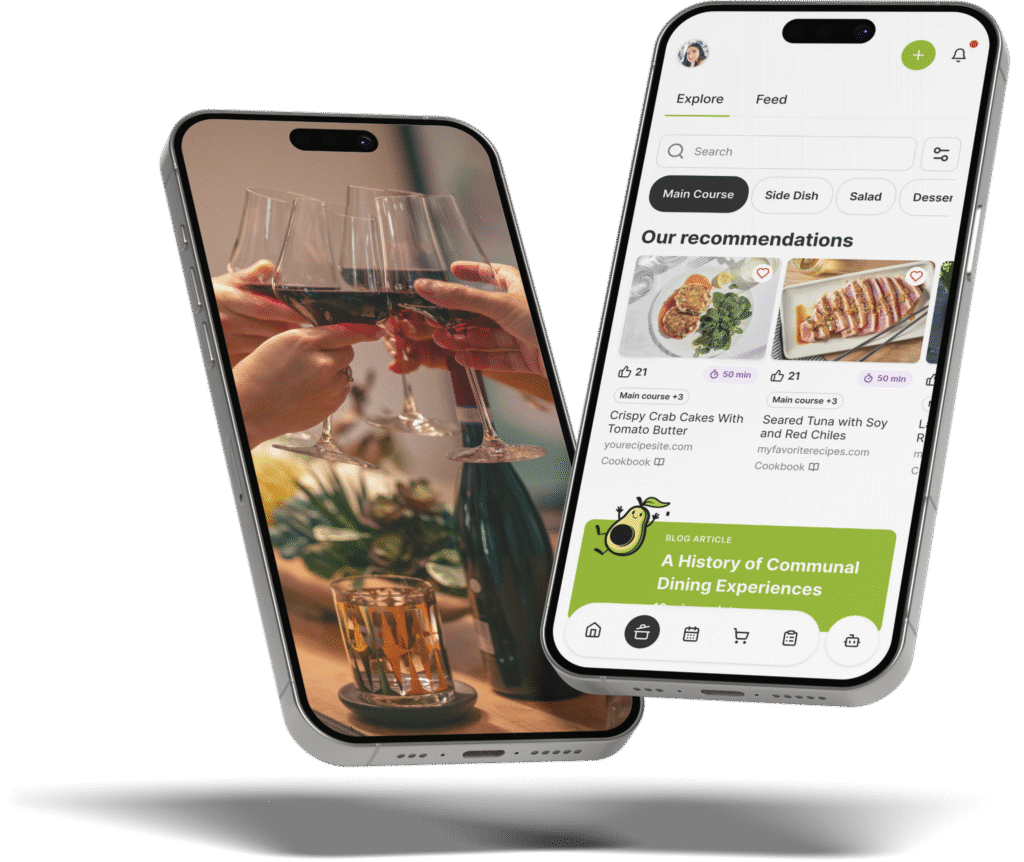
The hardest part of shared hosting is keeping every host on the same version of the plan, and that is exactly what a co-host feature is built to solve. In the TGH app, the menu, the task assignments, and the shared timeline all live in one place that each host can open and edit.
When every host works from the same saved task list and timeline, the plan stops depending on a thread no one re-reads. Emily Post’s guidance on shared food and drink hosting responsibilities is a good etiquette backdrop, and our cook-ahead menu guide pairs well with a shared plan when several hosts are prepping in parallel.
- One agreed menu every co-host can see, so courses and shopping never duplicate across hosts.
- Each job assigned to a named host and visible to all, with nothing half-claimed or dropped.
- One shared schedule every host can open, whether the meal is in a single kitchen or spread across three homes.
A shared plan removes most of the friction, but a few recurring slips still trip up co-hosts and progressive-dinner crews alike.
|
Keep Every Host on One Guest List |
Common Co-Hosting and Progressive Dinner Mistakes
A handful of gaps cause the bulk of shared-hosting trouble, and each has a fix that lives in the system you have just built. Run the plan past this checklist a few days out and the night mostly takes care of itself.
Neighborhood crews run into the same snags, which is why Simple Stylings’ guide to a neighborhood progressive dinner party and Dogwoods and Dandelions’ progressive dinner planning notes both keep returning to one list and one clock as the fix, and HowStuffWorks covers the same ground in its guide to throwing a progressive dinner party.
- No single timeline: hosts working from different plans. Fix it with one shared schedule every host edits.
- Lopsided course load: one home doing all the work. Fix it by assigning courses by effort, not just by name.
- Unclear route: guests lost between homes. Fix it with addresses, times, and transport shared up front.
- No shared list: tasks dropped or doubled. Fix it with one source of truth that names an owner for every job.
Share the cooking on one clear list and a single timeline, and a co-hosted dinner or a progressive dinner across three homes becomes what it should be: a full evening that several hosts built together, with no one carrying it alone.
Frequently Asked Questions
What is a progressive dinner party?
A progressive dinner party is a meal served across multiple homes, with each course at a different host’s house. Guests move together from appetizers at one home to the main at another and dessert at a third. It spreads the cooking load and turns the meal into a shared event.
How do you co-host a dinner party?
Co-hosting works when you split clear roles: one host leads the kitchen, another handles drinks and setup, and you share cleanup. Agree on the menu, the timeline, and who buys what in advance. A shared task list keeps both hosts working from the same plan instead of guessing.
How do you plan a progressive dinner?
Decide the course order and which home hosts each one, then map the route and travel windows into a single timeline everyone follows. Assign courses so the effort is balanced, keep the guest list consistent across stops, and carry dietary needs through every course.
How many houses are in a progressive dinner?
Most progressive dinners use three homes, one each for appetizers, the main course, and dessert, but they can run from two to four. Keep the homes reasonably close so travel between courses stays short, and confirm each host can seat the full guest list.
How do you divide tasks when co-hosting?
Break the event into roles, kitchen, drinks, setup, serving, and cleanup, and assign each to a specific host. Put every assignment and its timing in one shared list so nothing is double-covered or dropped. Revisit the list a few days before to confirm and fill any gaps.
What is the best app for co-hosting a dinner party?
An app that keeps the menu, the task assignments, and the timeline in one shared place works best, so every host opens the same plan. The TGH co-host feature is built for this: one saved menu and task list two or more hosts can share, so coordinating a dinner does not live in a tangle of texts.
Continue Reading:
More On Potluck Hosting
- How to Host a Potluck: A Coordination Playbook
- Potluck Etiquette: 12 Rules for Hosts and Guests
- Thanksgiving Potluck Sign-Up and Coordination Guide
- Office Potluck Guide: 9 Ways to Coordinate Work Food
- Potluck Sign-Up Sheets: The Perfect Potluck System
More from The Gourmet Host
- Easy Cold Appetizers That Need Zero Cooking (Full Guide)
- Fun Conversation Starters for Any Social Gathering
- Baby Shower Food Ideas: Easy Finger Foods Guests Love
- Family Conversation Starters That Spark Real Dinner Talk
- Elegant Infusions: Master Coffee and Tea for Your Next Dinner Party
Explore TGH Categories
- Set the Scene
- Drinks and Bar
- Plan the Meal
- Engage with Guests
- Games and Toasts
- Tools and Techniques
- Why We Gather