How to Host a Potluck: A Full Coordination Playbook
 14 min read
At a potluck, the dish you bring is the one piece worth saving for last. What comes first is the coordination, and getting that right is the host’s real work.
A potluck lives or dies on coordination, not cooking. The questions that decide whether the table is balanced or buried in dessert are who brings what, how much of it, and when each dish arrives.
Settle those first and your own dish becomes the easy part, the gap you fill once everything else is claimed. Get the order backwards and you end up cooking three courses anyway while ten desserts cool on the counter.
This is the host-side playbook for running that coordination from invite to cleanup. By the end you will have a system that splits dishes into categories, sets quantities per guest, assigns without nagging, and sequences the day so the food arrives ready and the host is not stuck at the stove.
At a Glance
- The host job at a potluck is coordination: assignments, dish balance, quantities, timing, and serving gear, not cooking the whole meal.
- A working ratio across five dish categories keeps the spread balanced so the table is not all salad or all dessert.
- A quantity-per-guest model that scales cleanly from a table of ten to a crowd of forty.
- An assignment method that hands out categories rather than exact dishes, plus a sign-up that stops duplicates before they happen.
- A day-of running order, a dietary-labeling protocol, and a co-hosting map for sharing the load on a shared assignment list.
What Is a Potluck, and What Does the Host Coordinate?
What is a potluck, in host terms? It is a shared meal where each guest brings a dish to pass and the host coordinates the whole spread rather than cooks it, so learning how to host a potluck means learning five coordination jobs: assigning dish categories, balancing the menu, setting quantities per guest, sequencing arrivals and reheating, and supplying the serving gear and space. The food is the part the host does least, because guests carry it; what the host owns is the system that makes a dozen separate dishes come together as one complete, on-time meal that everyone, including the cook, gets to enjoy.
The Five Dish Categories Every Potluck Needs
Balance starts by splitting every potluck dish into five categories: mains, sides, salads, appetizers, and desserts. Hand out categories instead of letting guests free-choose, and the table fills evenly instead of tipping toward whatever dish to pass is easiest to bring.
A reliable working ratio for a group is roughly one main per six guests, one side or salad per four, an appetizer or two for the start, and one dessert per six. TODAY’s host-a-potluck tips cover the same balance instinct from the guest side in their guide to hosting a perfect potluck party.
- Mains: the protein or hearty centerpiece, the category guests undershoot most, so assign it first and deliberately.
- Sides: starches and hot vegetables that round out a plate; reheatable or room-temp-stable picks travel best.
- Salads: fresh, cold, and forgiving, they fill a table quickly and rarely need oven time.
- Appetizers: snacks and dips that hold the room while latecomers arrive and the hot dishes settle.
- Desserts: the category that always overflows, so cap the slots early and steer extra hands elsewhere.
With the categories set, the next question is the one guests ask first: what to carry through the door.
What to Bring to a Potluck as a Guest
Deciding what to bring to a potluck comes down to three traits: the dish travels well, it holds at room temperature or reheats fast, and it serves a crowd. Check the sign-up before you cook so you fill a real gap, which is usually a main or a hearty side rather than a tenth dessert.
Think about what to bring for a potluck by category, and lean on dishes that survive a car ride. Budget Bytes keeps a deep file of make-ahead potluck dishes that travel, and a Reddit thread on food ideas to bring to a potluck is full of crowd-tested picks.
- A main in a slow cooker or foil tray that holds heat on its own through the drive and the table.
- A sturdy salad dressed on arrival, so it does not wilt between the kitchen and the spread.
- A dip with dippers, or another no-reheat appetizer that needs zero oven time on the day.
- Things to bring to a potluck beyond food: a serving spoon, a label for your dish, and a small trivet.
Knowing which dish to bring is half the job; the other half is bringing enough of it.
|
Claim Potluck Dishes In Advance |
How Much Food Per Person at a Potluck
Plan a potluck around one to one and a half servings per guest in each dish category, not a full plate of everything, because people sample rather than load up at a shared table. The host’s job is to size the categories to the headcount and then fill whatever stays thin.
Scaling is the easy part once you fix the quantity per guest as a serving size. The Old Farmer’s Almanac keeps a practical party planner for cooking for a crowd that backs up these portion estimates as the guest count climbs.
- For 10 guests: about two mains, three sides or salads, an appetizer, and two desserts covers a full meal.
- For 20 guests: aim for roughly three mains, four sides, two salads, and three desserts, with the host on drinks.
- For 40 guests: double the twenty-guest plan and split each category across more contributors so no one cooks for the room.
Quantities only hold if the right people are signed up for the right slots, which is where assignment comes in.
Assigning Dishes Without Micromanaging
Good potluck assignments hand out categories, not exact recipes. Ask one guest for a main and another for a salad, then leave the specific dish to them, so people bring something they cook well and you still control the balance.
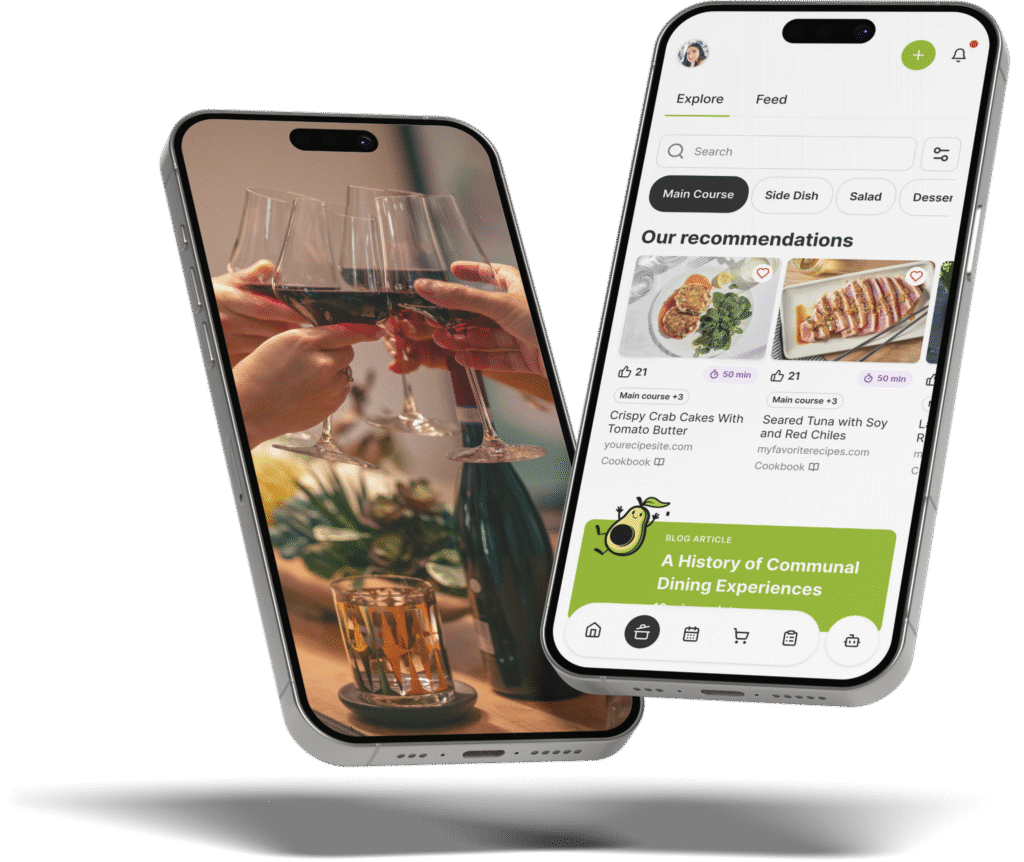
This claim-as-you-go approach is the heart of potluck coordination, and it scales when a co-host shares the assignment list with you. Our guide to running a self-serve system that holds for hours pairs well with category assignments for a larger crowd, and Mixily’s rundown of potluck ideas and how the format works is a good primer if your guests are new to the concept.
- Assign by category and let guests pick the recipe, so their signature dish has a home.
- Claim as you go on a shared list, so each new guest sees what is already taken.
- Reserve the trickiest category, usually mains, for your most reliable cooks.
- Leave one or two open slots for last-minute guests and store-bought contributions.
Category assignments set the targets; a sign-up is the tool that enforces them without a single reminder text from you.
The Sign-Up System That Prevents Ten Desserts
A slotted sign up is what turns category targets into a balanced reality. Instead of an open list where everyone writes “dessert,” you post a fixed number of slots per category, and the spread balances itself as guests claim each dish to pass.
The mechanics of building and sizing that sheet are worth their own walkthrough, and Add a Little Adventure has a clear primer on potluck sign-up sheets if you want a template to start from. MealTrain’s overview of how to coordinate a potluck covers the same slot-and-claim logic with an online tool.
- Set slot counts per category: three mains, four sides, three desserts for twenty guests, sized to your headcount.
- Add a dish and a serves-how-many column, so you can see the real quantity each claim brings.
- Send it two to three weeks out, set a claim deadline, then fill any open slots yourself.
A balanced sign-up still leaves one shared-table question every host has to answer: who can safely eat what.
|
Hosting Tip: Label Every Dish Before the First Arrival |
Dietary Restrictions and Labeling a Shared Table
Collect dietary restrictions when you send the sign-up, then ask every contributor to label their dish with its main allergens. At a shared table no one can ask the cook in person, so a small card in front of each dish does the explaining for them.
Keep a couple of safe-default dishes yourself, so a guest with a restriction always has something to eat without singling anyone out. For the wording of that initial ask, our guide to hosting a mixed-diet table confidently has scripts you can borrow, and Lisa Grotts covers the courtesy side in her potluck guidelines and golden rules.
- Ask about allergies and diets on the sign-up, before anyone has shopped or cooked.
- Print small label cards: dish name plus tags for nuts, dairy, gluten, and meat.
- Set out at least two safe-default dishes, such as a plain salad and a fruit platter.
Labels keep guests safe at the table; the table itself needs gear and a reheat plan to function.
Serving Gear, Space, and the Reheat Plan
The host supplies the infrastructure that turns a pile of dishes into a working buffet. That means serving spoons and tongs, trivets for hot pans, plates and cutlery, and a clear plan for who gets the oven and microwave first.
Map your outlets before the day if guests are bringing slow cookers, because three plugged in at once trips most kitchen circuits. Honest and Truly’s list of potluck-ready dishes that hold leans toward picks that need little reheating, which spares your oven queue.
- Counter space: clear two feet per category so dishes are not stacked on top of each other.
- Oven queue: bake-needed dishes first, reheats second, room-temp dishes straight to the table.
- Serving gear: stage spoons, tongs, and trivets in a basket so guests are not hunting through drawers.
- Outlets: reserve them for slow cookers and warming trays, and spread them across separate circuits.
Gear in place, the last piece is sequencing the actual day so everything lands on time.
The Day-Of Running Order, Arrivals to Cleanup
A simple day of timeline keeps the event from bottlenecking at the door or the oven. Stagger arrivals, route hot dishes to the reheat queue, and split cleanup so the whole job does not land on one person at the end.
Treat it like a loose schedule rather than a strict clock. Taste of Home’s collection on what to bring to a potluck is a useful reference for which contributed dishes need oven time and which go straight out, so you can sequence them.
- Sixty minutes before: set the table, lay out serving gear and labels, and clear oven and counter space.
- Arrival window: guests with reheat dishes come first to claim oven time before the queue forms.
- Serving: appetizers out as people arrive, then open the full buffet once the mains are hot.
- Cleanup: guests pack their own dishes, the host handles shared gear, and leftovers go home with their cooks.
One host can run this timeline solo, but the load gets far lighter when a second host shares it.
|
Split the Shared Potluck Costs |
Co-Hosting a Potluck and Sharing the Load
Bring on a co-host and the work splits cleanly along the same five jobs. One host owns assignments and the sign-up, the other owns gear, space, and the reheat queue, and you share the dietary check and the day-of timeline.
A shared assignment list is what makes co-hosting work, because both hosts work from the same saved list of claims and quantities. Our roundup of easy meals that feed a crowd helps the gear-and-space host plan the host-supplied dishes around the contributions.
- One host owns the guest list, the category assignments, the sign-up, and chasing the open slots.
- The other host owns serving gear, table space, the oven and outlet queue, and the drinks.
- Both share the dietary check, the day-of timeline, and the cleanup split at the end.
Whether you host solo or split it, the same handful of mistakes derail more potlucks than any bad recipe ever does.
Common Potluck Hosting Mistakes and the Fix
The same handful of gaps sink most potlucks, and each one has a quick fix that lives in the system you have just built. Run your plan past this checklist a few days before, and the event mostly runs itself.
Even the recipe-idea side benefits from a coordinated frame, which is why our list of 10 potluck ideas for a crowd slots neatly into category assignments, and why a thoughtful guest still reads up on what to bring to a dinner party before they arrive.
- No category balance: ten desserts and no mains. Fix it by assigning categories and capping the dessert slots.
- No quantities: too little food for the headcount. Fix it with one to one and a half servings per guest per category.
- No labels: guests guessing about allergens. Fix it with dietary collection on the sign-up and card tags on the table.
- No gear: ten dishes and no serving spoons. Fix it with a host-supplied serving-gear basket.
- No timeline: an oven gridlock at six o’clock. Fix it with a staggered arrival window and a reheat queue.
Coordinate those five and the potluck becomes what it is supposed to be: a full table that a dozen people built together, with the host free to sit down and eat it. Settle the assignments, the quantities, and the order first, and your own dish really can be the last and easiest thing you decide.
Frequently Asked Questions
What should you bring to a potluck?
Bring a dish that travels well, holds at room temperature, and serves a crowd. Check the sign-up first so you fill a gap rather than a tenth dessert. Mains, hearty sides, and salads are usually short. Pack your own serving spoon and a label.
How much food do you need for a potluck?
Plan one to one and a half servings per guest per dish category, knowing people sample rather than fill a plate. For twenty guests, aim for roughly three mains, four sides, two salads, and three desserts. The host covers gaps and drinks.
How do you organize a potluck so people do not bring the same thing?
Use a sign-up that assigns categories, not exact dishes, so guests claim a main, a side, or a dessert. A slotted list prevents duplicates and reveals gaps. Send it early, set a deadline, and the host fills whatever is still missing.
What does the host provide at a potluck?
The host provides the space, drinks, ice, plates, cutlery, serving gear, and the oven and microwave queue for reheating. Coordinating quantities, dietary labels, and the day-of timeline is also the host’s job. Guests bring the food; the host runs the logistics.
Who cleans up after a potluck?
The host handles the space, and guests take their own dishes home. Say so when you send the sign-up, and put a stack of foil and a marker near the kitchen for leftovers. Unclaimed serving bowls are the thing that turns a good potluck into a month of texts.
How far in advance should you plan a potluck?
Send invitations and the sign-up two to three weeks out so guests have time to claim a category and shop. Confirm assignments a few days before, finalize quantities, and prep your host gear and timeline the day before so the event runs itself.
Continue Reading:
More On Potluck Hosting
- Potluck Sign-Up Sheets: The Perfect Potluck System
- Office Potluck Guide: 9 Ways to Coordinate Work Food
- Co-Hosting and Progressive Dinner Party Planning
- Potluck Etiquette: 12 Rules for Hosts and Guests
- Thanksgiving Potluck Sign-Up and Coordination Guide
More from The Gourmet Host
- Heavy Hors d’Oeuvres: 12 Bites to Replace Dinner
- Party Brunch Ideas That Impress Any Crowd
- Easy Strawberry Mocktail Recipes for a Sweet Crowd
- Premium Wine and Food Pairings: A Host’s Complete Guide
- Common Dietary Restrictions: A Host’s Guide to Every Guest
Explore TGH Categories
- Set the Scene
- Drinks and Bar
- Plan the Meal
- Engage with Guests
- Games and Toasts
- Tools and Techniques
- Why We Gather