Brunch Menu Ideas: Build a Brunch Spread at Home
 12 min read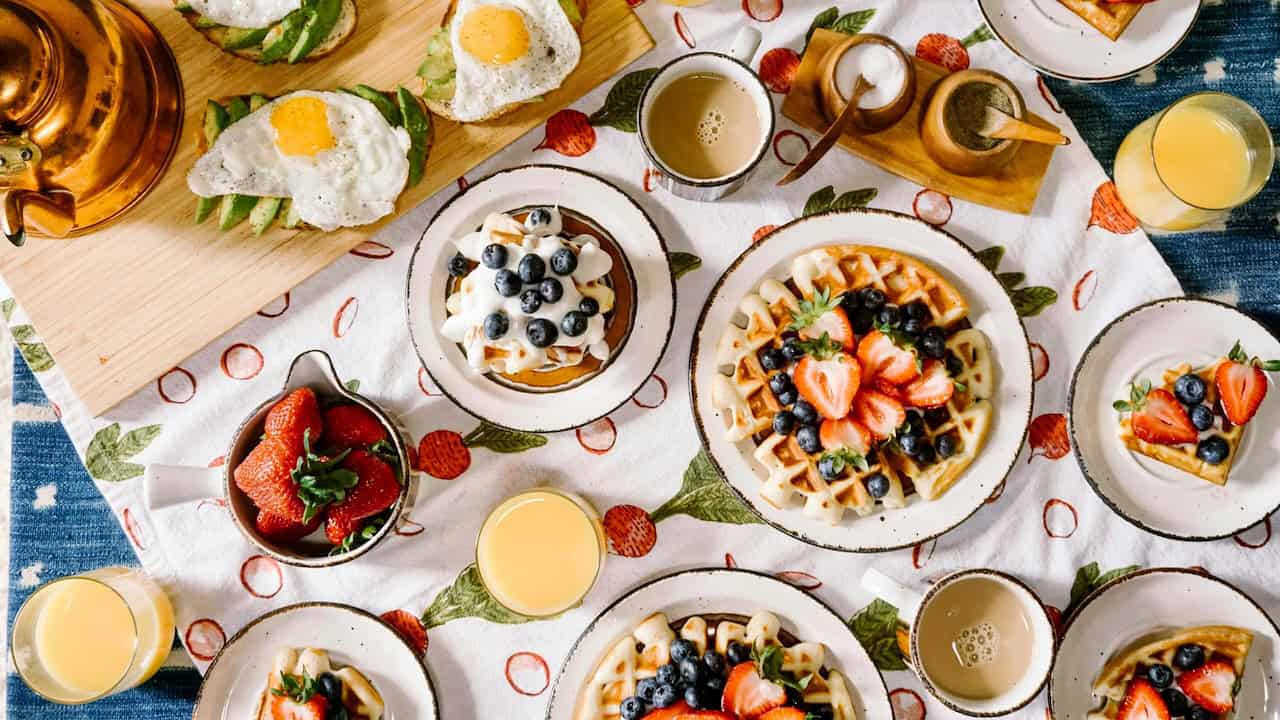
Brunch turns on one decision, and you make it the day before. Anything that holds overnight, a strata, a tray of baked oats, fruit cut and chilled, is a dish you are not cooking while guests stand in your kitchen with empty coffee cups.
The instinct is to add more dishes. The better move is the opposite: fewer dishes, started earlier, each one pulling real weight. Two or three things that can sit overnight feed a table of twelve as well as a menu twice the length, and they let you sit down with everyone else.
These brunch menu ideas are built as a spread you assemble, not a pile of recipes you cook to order. Below: the handful of anchors that actually feed people, how much of each to make per guest, and the order to make them in, so at ten in the morning you are pouring coffee and not flipping eggs.
At a Glance
- A working brunch menu is built from five anchors: a make-ahead egg dish, a sweet baked good, a breakfast meat, fresh fruit, and one self-serve drink.
- Choose one dish for each anchor, and add a second only as the guest count climbs.
- Cook everything that can wait the night before, so the morning is reheating and pouring.
- Plan one 9×13 egg dish per ten guests as your baseline for scaling.
What Makes a Brunch Menu Work
Brunch sits between two meals and borrows the best of both: the comfort of breakfast, the ease of lunch. Try to cook eggs to order for a room and you spend the gathering at the stove while everyone refills their coffee without you.
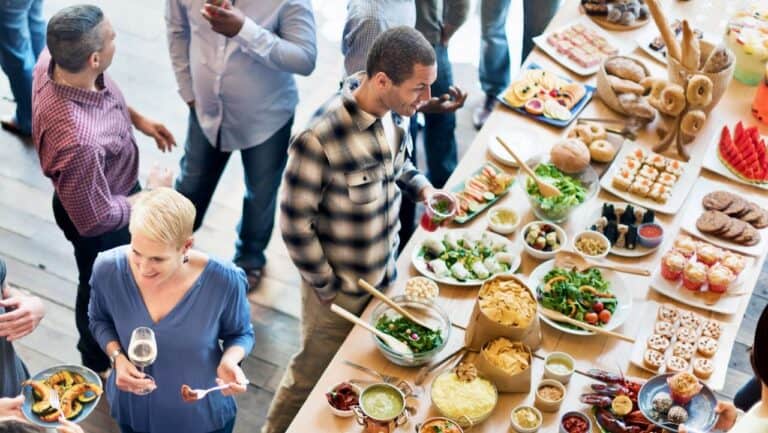
A spread fixes that, and it is the approach we come back to every time we host one. Instead of plating individual meals, you set out a few generous dishes and let people serve themselves. It looks abundant, holds at room temperature, and frees the one thing a host wants on a slow morning: the chance to be at the table.
Five anchors cover everything a brunch needs, savoury, sweet, protein, fresh, and a drink, with no overlap. Pick one dish for each and the menu is complete. A few steady habits make hosting brunch easier than almost any other meal you will put on.
Make-ahead is the unlock. A dish that bakes from cold or sits happily at room temperature turns the morning from a cooking shift into a few minutes of finishing. Build the menu from those and the spread mostly runs itself.
Five Anchors of a Brunch Spread
A make-ahead egg dish
This is the centre of the table and the dish that saves your morning. A spinach and cheese strata, assembled the night before and baked from cold, does the heavy lifting. A crustless quiche or a frittata works the same way. One 9×13 pan feeds eight to ten.
A sweet baked good
Something that reads as a treat and needs no last-minute fuss. A baked cream cheese French toast casserole assembled overnight, a batch of classic scones, or overnight cinnamon rolls shaped the night before. Plan one to two pieces per guest.
A breakfast meat
Bacon, breakfast sausage, or a roasted ham. Bacon cooked on a sheet pan in the oven, rather than fried in batches, runs hands-off while you handle the eggs. Allow two to three pieces per person, fewer if the egg dish already carries meat.
Fresh fruit
The plate that makes the spread look generous and gives people something light between the rich dishes. A winter fruit salad, or a simple charcuterie board of fruit, cheese, and nuts that covers grazing too. Figure on half a cup to a cup per guest.
One self-serve drink
A single pour you batch ahead so you are never taking orders. A pitcher of mimosas, or a batched welcome drink with no alcohol, plus coffee and a jug of water. Plan two servings per guest across a relaxed brunch.
|
Keep This Menu Plan Together |
Setting Up a Self-Serve Brunch Table
A spread only works if people can move through it without a traffic jam. Set the table so the food flows and you are not refereeing it.
Lay it out in serving order
Plates first, then the egg dish and meat, then the sweet, then fruit. A single line that starts with plates and ends before the drinks keeps guests moving in one direction instead of reaching over each other.
Keep it simple to hold
The egg dish and bacon hold well at room temperature for a brunch’s length, so a two-hour spread needs no warming trays. Slice the egg dish in the kitchen first, so the opening guest is not left carving it.
Set the drinks apart
A separate drink station, coffee, water, and the one batched pour, keeps the food line moving and gives people a reason to drift and mingle. Refills happen without anyone reaching across the table.
Add one warm touch
A pot of good coffee and a kettle for tea is enough warmth to anchor the table. If the morning is cool, a small pan of something hot from the oven, the cinnamon rolls or the bacon, fills the room with a smell that says brunch before anyone sits down.
|
Hosting Tip: Protect the Final Prep Hour |
Easy Swaps for Different Diets
A mixed table is easier to feed than it looks, because the egg dish and the sweet are the only anchors that usually need a swap. Decide these before you shop, not at the stove with a guest waiting.
Vegetarian. Build the strata or quiche on sautéed vegetables and cheese instead of sausage, and serve the meat on the side. Nobody at the table loses the centre dish.
Gluten-free. A crustless quiche or frittata skips the bread entirely, and baked oatmeal covers the sweet anchor. Keep that platter clearly separate so a stray crumb does not undo it.
Dairy-free. Many egg bakes work with a splash of unsweetened oat milk and no cheese, and a fruit-forward sweet keeps it easy. Label it so guests are not left guessing.
Nut-free. Leave nuts off the fruit and the board, and lean on cheese and seeds instead. It is the simplest swap on the table and the one most worth checking in advance.
|
Share Every Prep Task Clearly |
How Much to Make Per Guest
Scaling is where a brunch quietly goes wrong: you either run short an hour in or cook for an army. Use this as a starting point, and round up a little for a hungry crowd or a long, lazy morning.
| Anchor | Per guest | For 10 guests |
|---|---|---|
| Make-ahead egg dish | 1 generous square | One 9×13 pan |
| Sweet baked good | 1 to 2 pieces | 12 to 18 pieces |
| Breakfast meat | 2 to 3 pieces | 1.5 to 2 lb |
| Fresh fruit | ½ to 1 cup | 6 to 8 cups |
| Self-serve drink | 2 servings | 1 to 2 pitchers + coffee |
The ratio that holds at any size: one egg pan per ten people, and a second sweet or fruit option only once you pass twelve.
Make a little more of the egg dish than the table needs. It is the one thing everyone goes back to, and cold strata is a quiet win for the host the next morning.
Make-Ahead Order: What to Cook When
A calm morning is built the day before. We have hosted enough of these to trust the order more than the recipes.
The night before. Assemble the egg dish and refrigerate it unbaked. Cut the fruit and store it covered. Mix any batter that holds, or bake the sweet dish fully if it keeps overnight. Set the table now, while the kitchen is empty. This last step is the one we find quietly saves the whole morning.
Ninety minutes out. Take the egg dish out to lose its chill as the oven heats. Start the bacon in the oven. Bake the sweet dish alongside the eggs or just after.
Thirty minutes out. Pull and rest the egg dish so it sets and slices cleanly. Batch the drink and get the coffee going. Set out the fruit.
As guests arrive. Pour. That is the whole job. Everything is already made, and you are in the room instead of the kitchen.
Matching the Menu to the Occasion
The five anchors stay the same. What changes is the dish you slot into each one, so the occasion becomes a styling choice on top of the same frame.
A holiday crowd. Bigger headcounts and richer dishes. Scale to two egg pans and a make-ahead casserole, and lean on a roasted ham that carves at the table.
A brunch for someone. When the morning is for a person rather than a date on the calendar, the gesture matters as much as the food. Keep the menu short so you are sitting with them, not stuck at the stove.
A shared effort. When everyone brings a dish, the anchors become assignments. Agree what each guest should bring so the spread stays balanced and nothing arrives in triplicate.
A real crowd. Feeding sixteen or more is really cooking for a large group, where the math changes more than the menu does. Double the egg pans, add a second sweet, and keep the anchor list short so the kitchen does not grow with the guest list.
Why You Should Be at the Table, Too
Brunch is the one gathering nobody is rushing. No reservation to make, no evening winding down, just a long, bright stretch of late morning with the same unhurried feeling as a long lunch with friends. People linger because the day is wide open.
That lingering is the whole point, and it only happens if the host is part of it. Cook the night before, set the table early, and the morning asks almost nothing of you.
You get to sit down with a coffee while the table fills, which is the version of hosting worth doing. The food is the reason people came. You being there is the reason they stay.
Frequently Asked Questions
What should be on a brunch menu?
A complete brunch menu has five things: a make-ahead egg dish, a sweet baked good, a breakfast meat, fresh fruit, and one self-serve drink. One for each covers savoury, sweet, protein, and fresh with no overlap. Add a second dish in any category only as the guest count grows.
What is the easiest brunch to make for guests?
Cook it the night before. A strata or baked French toast casserole assembled and chilled overnight, sheet-pan bacon, cut fruit, and a batched drink means the morning is reheating and pouring. Nothing needs your attention once guests arrive, which is what makes it feel easy.
How much food do I need for a brunch?
Plan one 9×13 egg dish per ten guests, one to two sweet pieces per person, two to three pieces of breakfast meat, half a cup to a cup of fruit, and two drink servings each. Round up a little for a long, lazy brunch or a hungry crowd.
What can I make ahead for brunch?
Nearly all of it. Egg dishes like strata and quiche are assembled the night before and baked in the morning. Cut fruit, mix or bake the sweet dish, and batch the drink ahead. Save only the baking and the final pour for the day itself.
How do I balance sweet and savoury on a brunch spread?
Aim for roughly one third sweet to two thirds savoury. Guests reach for eggs, cheese, and bread first, then take something sweet at the end. One pastry platter and one baked sweet dish is plenty, and the rest savoury keeps the table from reading as dessert before noon.
What drinks go with brunch?
One self-serve drink plus coffee and water is plenty. A pitcher of mimosas or a non-alcoholic citrus spritz lets guests pour their own while you host. Batch it ahead so you are never taking orders, and plan two servings per guest across a relaxed brunch.
Continue Reading:
More on brunch:
- Easy Mother’s Day brunch ideas to host at home
- Christmas brunch ideas: a stress-free holiday menu
- Brunch potluck ideas: what to bring and how to host
- Thanksgiving brunch ideas before the big dinner
- Simple brunch for a crowd: make-ahead menu ideas
More from The Gourmet Host
- Main Course Ideas That Wow Dinner Party Guests
- Graduation Party Centrepiece Ideas to Celebrate
- 6 White Wine Substitutes for Cooking Beyond Vinegar
- Coed Baby Shower Ideas: Tips for Fun Couples Showers
- Complete Dinner: Plan a Full Meal Start to Finish
Explore TGH Categories
- Set the Scene
- Drinks and Bar
- Plan the Meal
- Engage with Guests
- Games and Toasts
- Tools and Techniques
- Why We Gather