6 Spring and Summer Ingredients Worth Hosting Around
 14 min read
Ten weeks. That is the working window for asparagus, roughly April through June, before the spears toughen at the base and the per-pound price doubles at the same market stall. The host who buys in week three gets the cheapest, sweetest version and the least work at the stove. The host who reaches for it in July pays more for a vegetable that needs more peeling and tastes like less.
Every warm-weather hero runs on a window like that. Rhubarb hands off to stone fruit, stone fruit overlaps with corn, berries thread through the middle of summer. Plan backward from each peak and the menu almost writes itself.
What follows maps six hero ingredients across the spring-and-summer calendar by region, names the dinner party each one anchors, and gives the asparagus-to-corn handoff from April through September.
At a Glance
- Six hero seasonal ingredients carry the warm-weather table: asparagus and rhubarb in spring, stone fruit, sweet corn, and summer berries through the hotter months.
- Each ingredient has a peak window of six to twelve weeks. Buy inside it for the cheapest, sweetest version and the least cooking.
- Plan one hero per dinner party rather than three. A single peak ingredient threaded through two courses reads more intentional than a scattered menu.
- A farmers market in season beats a grocery aisle for peak produce, but frozen corn and berries out of window outperform sad fresh imports.
- The mistake that wastes peak season is buying at the start of the window and cooking it like the depth of winter.
What Are Seasonal Ingredients for a Host?
Seasonal ingredients are the fruits and vegetables harvested at their local peak, when sugar, texture, and aroma all land at once and the supply is high enough that the price drops. For a host, that peak is a planning signal rather than a grocery footnote: the ingredient at its window needs the least intervention, so cooking with seasonal ingredients means less time at the stove and more at the table. A spring asparagus spear or a July peach carries a dinner party in a way the same item flown in out of window never will, which is why this calendar plans menus around the harvest instead of the recipe.
How the Spring and Summer Hosting Calendar Actually Lines Up
The warm-weather table runs on a relay, not a single season. Spring opens with two sharp, green flavors, summer fills in with sugar and stone, and the handoffs overlap by a few weeks so a host never runs short of a hero. Reading the calendar as a relay is what turns a produce list into a menu plan.
The handoff, month by month, for most of the continental United States:
- April to June: asparagus and rhubarb run together. These are the spring seasonal ingredients that open the season, both sharp and both short.
- June to August: stone fruit and summer berries arrive, the sweet center of the calendar, with peaches and cherries leading and plums closing.
- July to September: sweet corn is the peak-summer anchor, overlapping berries on the front end and carrying the table into early fall.
The exact dates shift north to south. The USDA’s seasonal produce guide gives the national baseline, and the regional seasonal food guide for California in summer shows how much earlier a warm-climate window opens.
The TGH guide to seasonal dinner party themes for every time of year pairs this calendar with table and theme ideas for each window. Read your own region against the baseline, and the calendar below shifts with you.
|
Keep the Menu Plan Together |
Asparagus: April Through June, Spring’s First Splurge
Asparagus is the first vegetable worth a dinner-party slot each year, and asparagus season is the shortest of the six heroes. Thin spears want a fast char or a raw shave, thick spears want the oven. Either way, the spear that snaps cleanly an inch from its cut end is the one to buy.
What asparagus anchors at the table, and how it feeds a room:
- A first course of roasted spears with a soft egg and lemon, four to five spears per guest, ready in under twenty minutes.
- A spring main alongside salmon, where a bright dressing keeps the green from going flat.
- A make-ahead soup that holds for a day, freeing the host on the night itself.
Food & Wine’s roasted honey-Dijon salmon with spring vegetables shows the salmon-and-spears pairing at its easiest. The full deep dive lives in the asparagus satellite, but the calendar point holds: buy it in May, cook it fast, and let the spear do the work.
Rhubarb: April Through Early June, the Sour Anchor
Rhubarb runs alongside asparagus on a roughly six-week window, and rhubarb season closes before most cooks have stopped thinking dessert. It is a vegetable, not a fruit, which is the whole reason it earns a savory dinner-party slot. The stalks that are firm, glossy, and deep red carry the most flavor.
Three ways rhubarb earns the spring table, savory first:
- A chutney spooned over roast pork, where the tartness cuts the fat the way a good acid should.
- A quick vinaigrette over duck or salmon, bright pink and sharp against the richness.
- A strawberry-rhubarb crumble at the end, the one dessert that beats the pie for a crowd.
The savory framing is rare, which is exactly why it works for a host who wants the table to feel considered. The rhubarb satellite covers the chutney and the vinaigrette in full. For now, note the window: shop it in early May, because by mid-June the stalks turn stringy and the market moves on.
|
Hosting Tip: Build Around One Peak Ingredient |
Stone Fruit: June Through August, Peaches, Plums, Apricots, Cherries
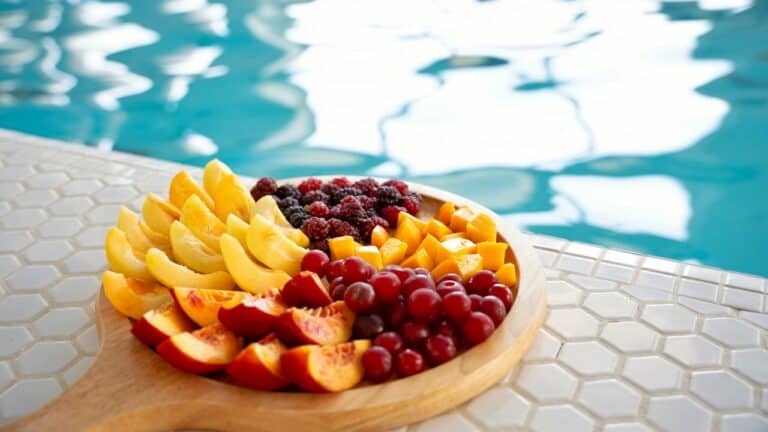
Stone fruit is the sweet center of the summer calendar, and stone fruit season is the most forgiving window of the six. Peaches and cherries lead in June, apricots peak midsummer, and plums close in August. A ripe peach gives slightly at the shoulder and smells like a peach from a foot away.
How stone fruit anchors a hot-night menu, sweet and savory both:
- Grilled peaches with burrata as a five-minute first course, the char playing against the cream.
- Apricots or plums roasted into a savory glaze for chicken or lamb, a move borrowed from Persian and Moroccan kitchens.
- Cherries baked into a make-ahead clafoutis, the dessert a host can build before guests arrive.
The Mediterranean Dish’s summer pasta salad is a useful template for how peak fruit and herbs share a plate without one drowning the other, and the TGH guide to summer lamb, duck, and seafood menus shows where a fruit glaze fits a richer main. The stone fruit satellite carries the four-fruit framework in full, but the calendar lesson is patience: buy the fruit two days before the party and let it finish ripening on the counter.
Sweet Corn: July Through September, the Peak-Summer Grill MVP
Sweet corn is the hosting headliner of high summer, and sweet corn season runs longest of the six heroes. The sugar in a freshly picked ear starts converting to starch within hours, which is why corn bought at a farmers market in season tastes worlds better than a supermarket bin. The husk should be tight and green, the silk pale and slightly sticky.
What corn carries at a summer party, in order of effort:
- Grilled on the cob: rubbed with a flavored butter, the lowest-effort headliner on any backyard menu.
- Elote-style salad: cut off the cob, it holds for hours and feeds a crowd cold.
- Corn chowder: the stripped cobs build the broth, so nothing on the ear goes to waste.
Half Baked Harvest’s summer salads meal plan shows how corn slides into a larger spread without taking over. The sweet corn satellite covers the three-ways-at-one-party plan, but the calendar takeaway is speed: cook it the day you buy it, because day-old corn has already lost half its sugar.
Summer Berries: June Through August, Strawberry, Blueberry, Raspberry, Blackberry
Summer berries thread through the whole middle of the calendar, with strawberries first in June and blackberries last in August. The summer berries season rewards a host who looks past the crumble. A berry holds its shape and color when it is ripe, with no soft spots or weeping juice staining the bottom of the carton.
Where berries earn a slot beyond dessert:
- Strawberries with balsamic in a caprese, the salad that replaces the crumble at the start of a meal.
- Blueberries cooked down into a quick salsa over grilled fish, sweet against the smoke.
- Raspberries crushed into a make-ahead vinaigrette that dresses any summer green.
Cookie and Kate’s summer dessert recipes and A Couple Cooks’ summer salad recipes bracket the two ends of how berries can land, dessert and savory. The summer berries satellite goes deep on the savory wedge, while the calendar note is simple: berries do not ripen after picking, so buy them ready to eat.
Build a Dinner Party Menu Around One Hero Ingredient
The strongest warm-weather menu picks one hero and threads it through two courses, rather than crowding three peak ingredients onto one table. Cooking with seasonal ingredients works best as restraint, not abundance. One hero, used twice, reads as a host who planned.
A simple framework for a one-hero menu, June example with stone fruit:
- First course: grilled peaches with burrata and basil, five minutes of active work, plated cold.
- Main: a roast chicken with an apricot glaze, the same fruit family carried into the savory center of the meal.
- Dessert: a make-ahead cherry clafoutis, so the host is at the table instead of the oven when guests arrive.
The TGH guide to a summer dinner party menu built around the season walks the course-by-course logic in depth, and the piece on designing a menu that fosters closer connections covers why a focused menu lets a host stay present. Pick the hero first, then build the courses outward from it.
Sourcing: Farmers Markets, Whole Foods, and When to Buy Frozen
Where peak produce comes from matters as much as when. A farmers market in season delivers the freshest version, a good grocery covers the gaps, and the freezer beats a sad import every time. Knowing which source to use for which hero saves both money and a flat-tasting dinner.
How to source each hero by channel:
- Farmers market: best for corn, berries, and stone fruit, where hours off the field show up directly in sugar and aroma.
- Grocery and Whole Foods: fine for asparagus and rhubarb, which travel better, and useful for filling a window’s edges.
- Frozen: the right call for berries and corn out of season, since both are frozen at peak and beat a pale, woody fresh import.
For a sense of what a real producer region offers, the TGH roundup of the best farms and producers in Prince Edward County shows how much a host gains from buying close to the source. Match the channel to the hero, and the peak version is almost always within reach.
|
Share Every Prep Task Clearly |
Where Hosts Waste Peak Season, and the Fix
The most common way to waste a peak ingredient is to buy it at the very start of its window and then cook it like the depth of winter, with long heat and heavy sauce that bury the flavor that made it worth buying. Peak produce wants the lightest possible hand. The fix is to treat the season as the seasoning.
The second waste is the scattered menu: three heroes on one table, none of them given room to land. A May dinner of asparagus, rhubarb, and early strawberries sounds abundant and eats confused. One hero, threaded through two courses, always reads cleaner.
Three peak-season fixes worth keeping at the front of the planning:
- Cook peak produce fast and light. A char, a quick roast, or a raw dressing beats a long braise on a June vegetable.
- Buy in the window’s middle, two days ahead, and let ripening finish on the counter rather than in the bag.
- Choose one hero per party. The fresh seasonal ingredients calendar gives a different anchor every few weeks, so there is no need to crowd.
Serious Eats’ ten-minute chermoula shrimp with spring vegetables is a clean model of the light hand peak produce wants, and Love and Lemons’ summer pasta recipes along with Pinch of Yum’s healthy summer salad recipes show how little a peak ingredient needs to shine. Plan backward from each peak, keep the hand light, and the warm-weather table looks after itself.
Frequently Asked Questions
What are the best seasonal ingredients for spring?
The best seasonal ingredients for spring are asparagus and rhubarb, both peaking from April through June. Asparagus brings a sweet, green snap to a first course or a salmon main, while rhubarb adds a sharp, savory edge to chutneys and vinaigrettes. Peas, radishes, and early strawberries round out the spring window.
What summer ingredients are in season in June?
In June, the summer calendar opens with cherries and the first peaches, strawberries and early blueberries, and the tail end of asparagus. Stone fruit and berries lead the month, which makes June ideal for a one-hero menu built around peaches or cherries before corn arrives in full in July.
How do I cook with seasonal ingredients?
Cooking with seasonal ingredients means buying produce at its local peak and using the lightest hand the ingredient allows. A quick char, a fast roast, or a raw dressing lets peak flavor lead, while long braises and heavy sauces bury it. Plan one hero ingredient per dinner and build the courses around it.
What’s in season in May?
May is peak spring, with asparagus and rhubarb both at their sweetest and shortest window. Strawberries arrive in warmer regions, peas and radishes fill out the market, and the first stone fruit appears in the South. May rewards a host who plans a menu around asparagus or rhubarb specifically.
What is a seasonal produce list for summer?
A summer seasonal ingredients list runs roughly: cherries and peaches in June, blueberries, raspberries, and apricots through July, sweet corn from July into September, and plums and blackberries closing in August. Tomatoes, zucchini, and stone fruit fill the center, with corn as the peak-summer anchor for backyard hosting.
Why does cooking with seasonal ingredients matter for a dinner party?
Cooking with seasonal ingredients matters for a dinner party because peak produce needs less work and tastes better, which lets a host spend less time at the stove and more at the table. A peak peach or fresh-picked ear of corn carries a course on its own, making the menu feel considered without extra effort.
Continue Reading:
More On Spring and Summer Ingredient Heroes
- 5 Easy Asparagus Recipes for a Spring Dinner Party
- 4 Rhubarb Recipes Worth a Spring Dinner Party Slot
- 5 Stone Fruit Recipes That Win a Summer Dinner Party
- 4 Easy Sweet Corn Recipes for a Summer Dinner Party
- 4 Summer Berry Recipes Beyond the Crumble and Pie
More from The Gourmet Host
- 8 Mediterranean Salads to Make for a Crowd at Home
- Family Picnic Ideas: Food and Games for Every Age
- 14 Easy Sliders for a Big Graduation Party Crowd
- Engagement Party Etiquette: What Every Host Knows
- Potluck Etiquette: 12 Rules for Hosts and Guests
- Winter Citrus Fruits That Brighten Salad and Roast
Explore TGH Categories
- Set the Scene
- Drinks and Bar
- Plan the Meal
- Engage with Guests
- Games and Toasts
- Tools and Techniques
- Why We Gather