Baby Shower Food Ideas: Easy Finger Foods Guests Love
 20 min read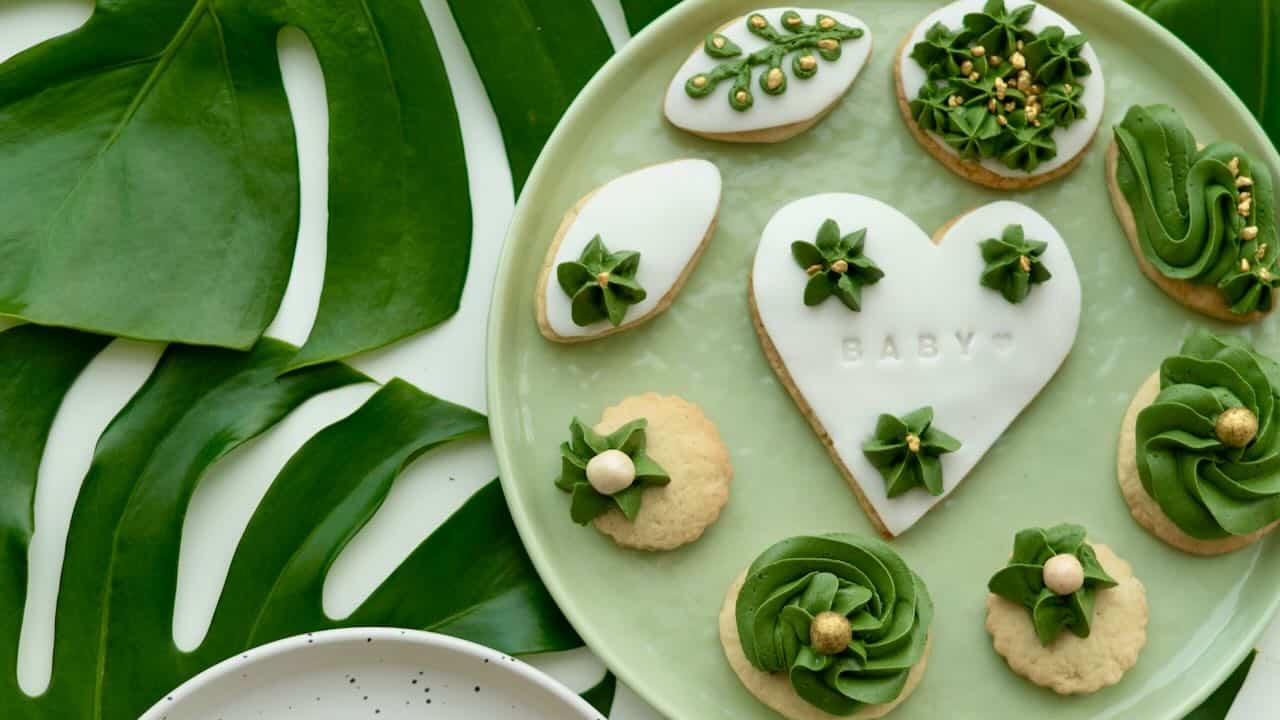
Forty-eight hours before the shower is when the food plan has to be finalized — not because of cooking, but because of shopping logistics for a menu nobody will sit down to eat. A standing, graze-style event with guests aged eight to eighty means quantities, textures, and prep sequence all run on different rules than a plated dinner. Hosts who try to adapt a dinner party menu end up with food that either runs out at the ninety-minute mark or sits half-eaten because nobody wanted to juggle a plate while making conversation.
The shift isn’t about different recipes — it’s about treating the spread as event logistics.
We cover timing, quantities, dietary range, and the make-ahead sequence that lets you enjoy the afternoon instead of refilling platters from the kitchen.
What You’ll Learn
This isn’t a recipe roundup. It’s a logistics framework for feeding fifteen to forty guests across a two-to-three-hour window.
- Why baby shower food operates differently from dinner party food — the host isn’t the parent-to-be, the menu accommodates a wider age range, and everything has to be edible while standing.
- Ten savoury finger foods and ten sweet bites that hold up at room temperature for two hours without looking tired.
- Morning vs afternoon shower timing and how the hour you pick shapes whether you serve brunch or grazing food.
- Dietary accommodations worth planning for beyond the obvious vegetarian and gluten-free tags.
- Quantities by guest count — how much food fifteen, twenty-five, and forty guests eat in practice.
- Make-ahead sequencing from 48 hours out so the day of the shower is about hosting, not cooking.
What Are Baby Shower Food Ideas?
Baby shower food ideas are the specific menu and serving choices that work for a standing, graze-style celebration where guests eat small portions while talking, holding gifts, or moving between activities. Unlike dinner party food — where courses arrive in sequence at a seated table — baby shower food has to stay appealing for two to three hours, accommodate guests from children to grandparents, and require no utensils beyond a small plate and napkin. The decisions that matter most are quantities per guest, dietary range, and the make-ahead timeline that keeps the host out of the kitchen once guests arrive.
A Baby Shower Menu Plan by Guest Count
Start with the shower time and headcount, then choose a menu that fits the kitchen you have. This gives you the working numbers before you pick individual recipes.
- For a two-hour afternoon shower: plan twelve savoury pieces and six sweet pieces per guest.
- For a brunch shower: plan four substantial savoury portions and six sweet pieces per guest.
- For menu variety: divide the total across four to six savoury choices and three to five sweets.
- For easier service: keep one hot item in a slow cooker and let the remaining food sit comfortably on the table.
| Group size | Afternoon quantity | Budget choice | Make-ahead window | Equipment plan |
|---|---|---|---|---|
| 15 guests | 180 savoury, 90 sweet | Hummus cups, pinwheels, mini sandwiches | Begin 48 hours ahead | One oven and fridge space for four trays |
| 25 guests | 300 savoury, 150 sweet | Mix three homemade items with bakery desserts | Bake two days ahead, assemble chilled items that morning | One oven, one slow cooker, two serving tables |
| 40 guests | 480 savoury, 240 sweet | Use batch-baked items and limit hand-assembled skewers | Split baking across two days | One oven in batches, two slow cookers, clear fridge shelves |
A Complete Afternoon Menu for 25 Guests
For a 2 PM shower, build the savoury count with sixty mini quiches, sixty puff pastry pinwheels, sixty hummus cups, sixty quartered mini sandwiches, and sixty bacon-wrapped dates. That reaches 300 pieces without asking one recipe to carry the table.
For the sweet count, serve thirty mini cupcakes, thirty fruit skewers, thirty cookies, thirty cake pops, and thirty mini cheesecakes. Bake the quiches, pinwheels, cookies, cupcakes, and cheesecakes two days ahead. Make the sandwich fillings one day ahead, then assemble the sandwiches, hummus cups, fruit skewers, and dates on the morning of the shower. Set out the savoury food as guests arrive and bring the sweets out thirty to forty minutes later.
How Baby Shower Food Differs from Dinner Party Food
Dinner party menus assume guests sit down and eat the same courses in sequence. Baby showers assume none of that. Guests arrive in waves across a thirty-minute window, stand to mingle or watch gift-opening, and eat whenever they can reach a plate.
The food has to survive that pattern — which rules out anything that needs a knife, anything that wilts, and anything that has to be served hot from the oven.
Shower menus also handle a wider demographic than a dinner party. Guests often include the parent-to-be’s grandparents alongside friends with toddlers, which means the spread has to work for someone in their eighties and for a five-year-old.
The Bump’s baby shower food guide notes that graze-friendly items and familiar flavours outperform experimental dishes — a pattern most hosting guides skip in favour of Pinterest-driven theming.
For hosts thinking about the broader spread architecture, TGH’s guide to building boards for any gathering applies the same principles in a dinner party context.
The Three Structural Differences That Shape Every Decision
- No plated courses. Everything lives on a communal table at once, which means temperature-stable items only. Hot dips work if they’re held in a slow cooker; anything that arrives hot and needs to stay hot doesn’t.
- Standing consumption. Food has to be edible with one hand while holding a drink or a baby gift, which rules out most pasta, anything saucy, and anything that needs cutting on a plate.
- Unpredictable quantities. RSVPs are less reliable for showers than for dinner parties — some guests bring plus-ones, others skip lunch expecting a meal, others snack beforehand. Plan for variance, not a fixed headcount.
The menu framework that emerges isn’t about picking photogenic recipes or chasing a single baby shower theme. It’s about choosing items that hold up, feed a range of appetites, and free the host to stay present with guests.
|
Plan the Baby Shower Menu |
Savoury Finger Foods That Hold Up for Two Hours
Ten savoury finger foods (or savory finger foods, for US readers) that hold up at room temperature and work as simple snacks guests can grab with one hand. A mix of healthy options and richer bites keeps the spread balanced — perfect baby shower food for a standing graze format.
Several of these items also work well beyond showers — see TGH’s easy starters your guests will love for the dinner party adaptations.
- Mini quiches — Two-inch quiches in cream cheese and cherry tomato or spinach-feta versions bake ahead, freeze well, and reheat in fifteen minutes; Taste of Home’s baby shower finger foods collection ranks these the most reliable choice for two-hour spreads.
- Caprese skewers — Fresh mozzarella balls, cherry tomatoes, and basil on a bamboo skewer, finished with balsamic glaze or balsamic vinegar twenty minutes before serving; a perfect appetizer across dietary preferences.
- Chicken salad cups — Scoop chicken salad made with sour cream and lemon into small phyllo cups or endive leaves; the cup provides structure so guests don’t need a fork. Tortilla chips in a separate bowl work as a sturdier scoop.
- Bacon-wrapped dates — Medjool dates wrapped in bacon, baked at 400°F for eighteen minutes, and held at room temperature; one of the few items that improves between oven and table.
- Cheese sliders — Two-inch Hawaiian rolls with baked ham, Gruyère, and caramelized onions, assembled the morning of and warmed for twenty minutes before guests arrive. Waffle sliders add a fun twist; mini mac-and-cheese bites work as a crowd-favourite alternative.
Vegetable and Pastry-Based Options
- Veggie sticks with hummus cups — Bell peppers, cucumbers, and carrots cut into four-inch spears in individual cups of hummus; Our Home Made Easy’s 48 finger food recipes notes this format lets guests grab one cup without double-dipping.
- Puff pastry pinwheels — Store-bought puff pastry rolled with pesto and feta cheese, sliced into one-inch rounds and baked until golden; thirty minutes of effort for sixty pieces.
- Mini sandwiches — Quarter-cut sandwiches on soft white bread in small squares with a variety of fillings (egg salad, cucumber-cream cheese, smoked turkey); hold for four hours under a damp tea towel.
- Savoury mini sausages — Cocktail sausages glazed with brown sugar and Dijon, held in a slow cooker on warm; reliably the first platter to empty.
- Fresh mozzarella and prosciutto skewers — Two mozzarella balls, a folded slice of prosciutto, and a basil leaf with olive oil before service; works for gluten-free guests without a separate label.
Pribbles’ 13 easy finger foods breaks down which items scale for large groups — quiches and pinwheels batch-cook well, while skewers bottleneck on assembly. Set the spread on a tiered tray near the food tables and add a label for kid-friendly snacks so parents can point their children to safe picks.
Sweet Bites and Dessert Table Items That Travel Well
A separate sweet station keeps these sweet treats accessible throughout the event rather than forcing a single dessert moment — which matters because most showers don’t have a seated cake-cutting ritual.
The visual layout matters as much as the menu; TGH’s guide to easy plating tips for cooks covers how to compose a dessert table that photographs well.
- Yogurt parfaits in individual cups — Greek yogurt, granola, chocolate chips, and fresh berries layered in four-ounce clear cups; assembled one hour before service so the granola stays crunchy.
- Mini pancakes with maple syrup cups — Silver-dollar pancakes stacked in threes with an individual cup of warm maple syrup; works for morning showers as a graze-style substitute for full brunch.
- Cake pops — Dipped in white chocolate with a pastel drizzle; One Sweet Nursery’s 55+ finger food ideas notes cake pops solve the “who cuts the cake” problem entirely.
- Fresh fruit skewers — Strawberries, pineapple, grapes, and melon threaded onto bamboo skewers; a rainbow fruit skewer pattern photographs well and holds up for two hours.
- Mini cheesecakes — Two-bite cheesecakes in paper cups with graham cracker bases; store 48 hours in the fridge and need zero day-of work.
Bakery-Friendly and Kid-Pleasing Picks
- Blue macarons or pastel macarons — Store-bought from a local bakery; baking macarons the morning of a shower is a category of suffering worth avoiding.
- Cookies with baby-themed cookie cutters — Sugar cookies cut into baby bottles, onesies, or footprints; bake two days ahead and ice one day ahead for crisp edges.
- Chocolate-dipped strawberries — Whole strawberries half-dipped in white or dark chocolate; assemble the morning of the shower so the chocolate stays glossy.
- Mini cupcakes in individual papers — Easier to grab than regular cupcakes; Mommy on Purpose’s 25+ best finger foods suggests a three-to-one ratio of mini to standard on the dessert table.
- Fruit-dipped waffle bites — Waffle squares with peanut butter and banana slices on a bamboo skewer; cut into fun shapes with a cookie cutter. For a summer baby shower, swap one dessert for mini ice cream cups or fruit ice pops.
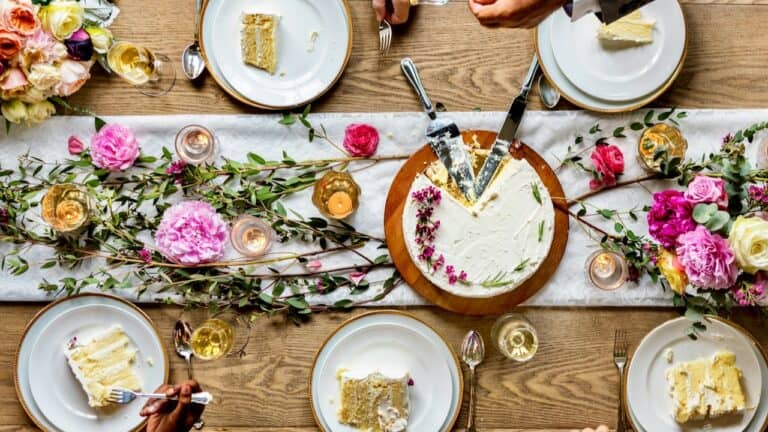
The sweet table should sit slightly separate from the savoury spread — ideally on its own small table or on the opposite end of a long table — so guests return to it at a different moment rather than piling everything onto one plate at once. Personal touches like a hand-lettered dessert sign make this corner feel like a special occasion without adding cost.
|
Assemble the Sweet Table Thirty Minutes After the Savoury Spread |
Morning Shower vs Afternoon Shower — How Timing Shapes the Menu
The hour of the shower changes what counts as appropriate food. An 11 AM shower reads as brunch and sets an expectation of egg-based dishes, pastries, and mimosas. A 2 PM shower reads as afternoon tea or graze-and-chat, with finger foods and desserts doing the work. Hosts who ignore this mismatch end up serving mini quiches with cocktail sausages at 10 AM, and guests leave hungry because nothing registered as a meal.
WebBabyShower’s brunch ideas guide lays out the morning shower template: egg-based mains (quiches, frittata squares, baked French toast), lighter fruit components, and one warm savoury item like a breakfast casserole.
Harry & David’s brunch menu guidance adds a useful distinction — a brunch shower expects guests to leave full, while an afternoon shower expects them to have eaten lunch.
Morning Showers (10 AM – Noon Start)
- Breakfast casseroles held warm in a slow cooker
- Mini pancakes or waffle bites with maple syrup cups
- Fruit salad or yogurt parfaits as a lighter counterpoint
- One egg-based centrepiece (baked French toast, breakfast strata, or quiche platter)
- Expect guests to eat at 1–1.5× the portions of an afternoon shower
Afternoon Showers (2 PM – 4 PM Start)
- Finger foods and desserts with no centrepiece main
- A sweet table separated from the savoury spread
- One warm savoury item (slider station or bacon-wrapped dates) for visual anchor
- No expectation that guests leave full — they’ve eaten lunch
- Plan quantities at 0.7× of a brunch shower
Kiss in the Kitchen’s brunch recipe collection offers a middle path for 1 PM showers: one breakfast casserole, one savoury platter, one sweet platter — the trio shapes a baby shower menu that works for guests who arrive hungry or having eaten.
Dietary Accommodations Worth Planning For
The assumption that “vegetarian and gluten-free” covers dietary needs at a baby shower underplays the range present at most showers. Guests arrive with different dietary preferences — the parent-to-be’s pregnancy diet, a guest with coeliac disease, a vegan, a lactose-intolerant guest, and a child with a nut allergy are all plausible in the same twenty-person group. Plan the spread with vegetarian options and a few light snacks distributed across the table so no guest ends up limited to one dish.
For a deeper framework covering every major restriction, see TGH’s host’s guide to every guest at the table.
- Pregnancy-safe options — Skip soft cheeses, cured meats like prosciutto, raw seafood, and anything with raw egg; offer pasteurized-milk cheeses, fully cooked meats, and fruit-forward desserts as alternatives.
- Gluten-free — Cheese and charcuterie plates, fruit skewers, bacon-wrapped dates, and caprese skewers work without modification; a baked cheese recipe using goat cheese and honey hits the same warm-dip craving without wheat; Serenity Kids’ baby shower food ideas offers a full gluten-free shower menu framework.
- Vegan — Hummus and veggie sticks, fruit skewers, and dairy-free dark chocolate-dipped strawberries cover most needs; offer at least two vegan-friendly savoury items, since one often runs out before vegan guests circle back.
- Nut allergies — A nut-free baby shower is safer to plan as a default than nut-free spots on a nut-containing spread; granola in yogurt parfaits and peanut butter waffle bites are the usual failure points.
Handling Lactose, Blood Sugar, and Kids’ Needs
- Lactose intolerance — Offer fruit-based desserts, hummus-based savouries, and coconut-milk alternatives for coffee service; avoid making lactose-intolerant guests eat only fruit while everyone else eats cheese.
- Child-friendly options — Mini pancakes, fruit skewers, and cheese cubes work for children aged three to ten without a separate kid menu.
- Low-sugar or diabetic-friendly — A savoury-heavy spread with one sugar-free dessert option (cheese platter, dark chocolate with nuts, or a fruit platter without chocolate drizzle) covers guests managing blood sugar.
- Allergy signage — Small cards next to each dish listing ingredients solve almost every dietary question without the host fielding them one by one.
Two notes that separate thoughtful hosting from checkbox accommodation: ask the parent-to-be about known restrictions two weeks out, and label dishes even when you think nobody has a restriction — the unasked guest is the one who quietly skips dinner.
|
Keep Every Dietary Note Handy |
Quantities by Guest Count: How Much Food Do You Actually Need?
Underbuying food is the single most common baby shower mistake. The rule-of-thumb from dinner party planning — eight to ten pieces per guest — is too low for a graze event where baby shower guests eat across two hours and pass the table three or four times.
TGH’s guide to easy meals that feed a crowd applies the same quantity math to larger dinner parties.
The reliable formula for a two-hour afternoon shower is twelve pieces of savoury food, six pieces of sweet, and two servings of drinks per guest. Morning brunch showers shift to four savoury mains per guest plus six sweet items because the savoury dishes are more substantial.
Instacart’s budget shower food guide corroborates roughly this ratio across its menu templates, and it matches the quantities we’ve landed on after years of hosting gatherings at TGH.
Spread the Count Across Multiple Items
Within each category, spread the count across four to six different items rather than stockpiling one or two. Forty-eight bacon-wrapped dates feels abundant; two hundred of them feels like a costco run gone wrong. The visual variety across the spread matters as much as the total quantity.
When you need to produce in large quantities, pick one or two bake recipe items (quiches, cupcakes) that scale cleanly from a single batch rather than ten separate mini-projects.
Two variance factors that adjust the formula:
- Meal-adjacent showers (11 AM–1 PM or 5 PM–7 PM start times) push guests toward expecting a meal, which bumps savoury quantities 25% higher.
- Afternoon showers with no-meal reputation (2 PM–4 PM starts) can safely plan 10–15% below the formula, because guests will have eaten lunch.
When in doubt, overbuy savoury and underbuy sweet. Leftover finger foods freeze well for the parent-to-be; leftover cupcakes don’t travel.
Drinks and Beverage Stations for a Graze-and-Chat Format
Beverages often get planned last, and that’s where hosts overspend on options nobody uses. A smart approach to baby shower drinks needs one substantial non-alcoholic option, one hot option, and water.
- Signature non-alcoholic punch — A large-batch punch recipe with sparkling water, cranberry juice, and citrus slices in a glass dispenser; the visual centrepiece of the drinks table and feeds twenty from a single batch.
- Fruit-infused water pitchers — Cucumber-mint, strawberry-basil, or lemon-rosemary; five minutes to prep the night before and signals thoughtfulness without cost.
- Coffee and tea station — One carafe of regular, one of decaf, and a kettle with tea selection; essential for morning showers and underused for afternoon ones.
- Sparkling water selection — Two or three flavoured sparkling waters in cans on ice; the non-alcoholic stand-in that pregnant guests appreciate without having to ask.
Seasonal and Prep-Light Options
- Hot chocolate or chai bar — For winter showers, a hot chocolate or spiced chai station with small mugs replaces what would be a cocktail bar.
- Iced tea pitchers — One unsweetened, one sweetened; classic afternoon-shower beverage that pairs with everything on the food table.
- Mocktail prep kit — Two or three make-your-own combinations with cut fruit, sparkling water, and juice; The Kitchn’s make-ahead approach applies here — prep is front-loaded so the bar stays organized.
- Plain water and lemon — The underrated base of every drinks table; gets used more than any fancy option.
Set the drinks table near the entry, separate from the food table, so guests grab a drink first and hold it throughout the shower — reducing crowding at the main spread.
Make-Ahead Sequencing: A 48-Hour Food Timeline
What separates a calm shower host from a frantic one is almost never the menu itself — it’s when the menu gets made. A 48-hour schedule moves 80% of the food work out of the shower day and into the two days before, which means the morning of the shower is about setup, not cooking.
Two Days Before (Thursday for a Saturday Shower)
- Grocery shopping for everything except fresh herbs and bakery items.
- Bake anything that stores well: cupcakes, cookies, mini cheesecakes, cake pops.
- Assemble and freeze: mini quiches, puff pastry pinwheels, breakfast casseroles.
- Prep dry components: cut fruit for next-day assembly, cook chicken for chicken salad, boil eggs for egg salad.
One Day Before (Friday Evening)
- Bakery pickup for macarons, bread, and any items not made at home.
- Ice cookies and finalize dessert decoration.
- Assemble (don’t skewer yet) ingredients for caprese skewers and fruit skewers.
- Make chicken salad and egg salad; store covered in the fridge.
- Prep the drinks: punch base without sparkling water, fruit-infused water, coffee setup.
Morning of the Shower (4 Hours Out)
- Assemble skewers (caprese, fruit, prosciutto).
- Wrap and bake bacon-wrapped dates; hold at room temperature.
- Reheat frozen quiches and pinwheels.
- Set up slow cookers for cocktail sausages or breakfast casseroles.
- Assemble the savoury table one hour before guests arrive; leave the sweet table for thirty minutes in.
The sequence works because it respects what each item needs. Baked goods improve slightly overnight. Assembled salads hold for twenty-four hours. Skewers and slider assembly happen last because they look best when fresh. The host who finishes the schedule by noon on shower day is the one who opens the door relaxed and ready to welcome guests, plate in one hand, conversation in the other.
Frequently Asked Questions
What finger foods are best for a baby shower?
The most reliable baby shower finger foods are mini quiches, caprese skewers, cheese sliders, bacon-wrapped dates, and puff pastry pinwheels. These items hold up at room temperature for two hours, work with one hand while standing, and accommodate a wide range of guest ages without utensils.
How much food do you need for a baby shower?
Plan twelve savoury pieces and six sweet pieces per guest at a typical two-hour afternoon shower. For twenty-five guests, that’s roughly 300 savoury items and 150 sweet items, spread across four to six different options. Morning brunch showers shift to four substantial mains per guest plus sweets.
What drinks should you serve at a baby shower?
One non-alcoholic punch, fruit-infused water, coffee and tea, and plain water cover almost every baby shower. Add sparkling water in cans for pregnant guests who want a drink that feels special without alcohol. Skip wine and cocktails unless the parent-to-be specifically requested them.
Can you do a full meal at a baby shower?
A full seated meal works for smaller showers of fewer than fifteen guests or brunch-timed events that read as meals. For larger or afternoon showers, a full meal creates logistical problems around seating and timing. A grazing spread with substantial items like sliders and quiches satisfies meal-adjacent hunger.
What baby shower foods can you make ahead?
Mini quiches, puff pastry pinwheels, cupcakes, cookies, cake pops, and mini cheesecakes all freeze or refrigerate well two days ahead. Chicken salad, egg salad, and hummus hold for twenty-four hours covered in the fridge. Skewers and sandwiches should be assembled the morning of to stay visually fresh.
How do you accommodate dietary restrictions at a baby shower?
Ask the parent-to-be about known restrictions two weeks before the shower, plan two vegan-friendly and two gluten-free options on the main spread, and label every dish with a small ingredients card. Treat nut allergies as a default constraint. Plan a nut-free shower rather than isolating one dish.
Continue Reading:
More On Baby Shower Hosting:
- How to Host a Baby Shower Your Guests Will Love
- Baby Boy Baby Shower Ideas: Themes, Decor, and Party Tips
- Baby Girl Baby Shower Ideas: Themes and Decor for Girls
- Baby Shower Games Ideas: Fun Activities Guests Will Love
- Baby Shower on a Budget: How to Plan for Less
- Coed Baby Shower Ideas: Tips for Fun Couples Showers
- Baby Shower Decorations: Ideas and Supplies for Every Party
More from The Gourmet Host
- Birthday Party Ideas for Adults That Feel Worth the Effort
- Fun Wine Tasting Games to Play at Your Next Party
- The Ultimate Dinner Party Planning Checklist (Time-Stamped)
- Types of Salt and Which Dishes Each One Belongs On
- Feast for the Ears: The Perfect Soundtrack to Enhance Your Dinner Party
Explore TGH Categories
- Set the Scene
- Drinks and Bar
- Plan the Meal
- Engage with Guests
- Games and Toasts
- Tools and Techniques
- Why We Gather