Kids Birthday Party Ideas You Can Host at Home
 13 min read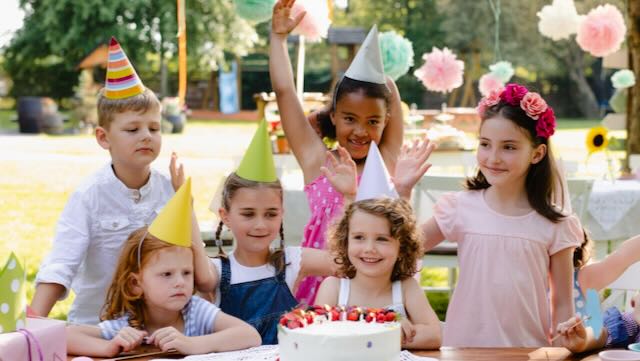
Fourteen days before the party is when a kids birthday party stops being a vague idea and starts being a logistics problem. That is the point where the guest list stabilizes, the theme gets locked in, and every decision — cake, goody bags, activity order — starts blocking the next one.
The hosts who look calm at the front door on the day of almost always did their real planning two weeks out, not two days out. A kids birthday party you host at home works when the structure is built early and the activities are matched to the birthday kid’s age — and the right plan makes the party fun without turning your living room into a war zone.
What You’ll Learn
Instead of a standard bulleted summary, this article is organized around four practical questions:
- How long the party should really run — timing by age group, 90 minutes to three hours
- Age-appropriate ideas for 3–5, 6–8, and 9–12 — because a sensory bin party and an escape room party are not interchangeable
- How to entertain kids at home — structured activity blocks that prevent the unplanned-free-play spiral
- Easy budget ideas — the three cost centres that blow a kids party budget and how to shrink each one
- Six of the most common questions — the best party for a 5-year-old, how long parties should last, when kids stop wanting them
What Is a Kids Birthday Party at Home?
A kids birthday party at home is a structured 90-minute to 3-hour celebration where the hosting happens inside the family’s own space rather than at a commercial venue. The real distinction is not the setting but the hosting model: at a trampoline park or arcade, the venue runs the schedule for you, but at home, you are the venue, the host, and the activity director all at once.
Unlike an adult birthday party, where guests can reasonably entertain themselves, a kids birthday party at home needs structured activity blocks, age-appropriate pacing, and a clear start-and-end signal — because without those, free play collapses into chaos somewhere around the 45-minute mark.
The Real Timeline for a Kids Birthday Party
The single most common mistake at a home kids party is running it too long. A party stretched to four hours is almost never four hours of fun — it is two hours of fun followed by meltdowns, overtired children, and parents checking their phones in the kitchen. The right length depends on the age of the birthday kid, and the numbers are tighter than most first-time hosts expect.
Party Length by Age Group
- Ages 2–4: 90 minutes maximum. Toddler attention and energy reserves are finite. A ninety-minute party with a short opening activity, cake, and brief free play is more than enough.
- Ages 5–7: 2 hours. This is the sweet spot for a single themed activity plus cake and presents. Anything longer and the focus starts to dissolve.
- Ages 8–12: 2.5 to 3 hours. Older kids can handle a structured game block, a meal or cake course, and a second activity without losing interest, but 3 hours is the ceiling even for tweens.
The Everymom’s guide to kids birthday party alternatives makes the case that short, well-paced parties create more positive memories than long unstructured ones — a point that matches what most seasoned parents eventually learn the hard way.
The Flow Within That Window
The flow matters as much as the length. A reliable structure: arrival and unstructured play (15 minutes), the main themed activity (30–45 minutes), food or cake (20–30 minutes), present opening or second activity (15–20 minutes), and a clear goodbye signal with goody bags at the door. Minted’s planning checklist for busy parents lays out a similar backbone, with the useful addition that goody bag distribution should happen at the exit rather than during the party.
TGH’s ultimate dinner party planning checklist covers the broader time-stamped planning framework that adapts well to kids parties too, especially the 48-hour-out shopping and prep windows.
The transition into activity-planning is where the age group matters most — a party time structure that works for a five-year-old will fall apart with nine-year-olds, and vice versa.
|
Shop And Prep From One List |
Party Ideas for Younger Kids (Ages 3–8)
A party theme that feels magical at four feels babyish at eight. The activities that make a child’s birthday party memorable are the ones calibrated to what the age group can do — and, just as importantly, what they still find fun. Cubby at Home breaks this down by developmental stage, and Minted’s gallery of kids birthday party theme ideas offers visual shorthand for the two practical age bands within this range.
Ages 3–5: Sensory, Simple, and Short
At this age, the fun is in the doing, not the theme. Younger children respond to tactile activities: a sensory bin with rice and scoops, an art projects station with washable paint and pre-cut shapes, or a dance party with scarves. Pinterest-perfect theming is wasted here — a three-year-old does not care whether the napkins match. What they care about: an adult running the activity, an obvious cake moment, and a parent nearby.
The best birthday party for a 5-year-old is almost always a single well-run activity plus cake. Overcomplicated parties at this age create sensory overload, not excitement.
Ages 6–8: One Big Theme, One Big Activity
The 6–8 range is where a specific theme starts to matter. This is peak theme-commitment territory — a pool party, pirate party, unicorn party, or science-experiment party — and the kids will remember it years later. Popular themes for this age group:
- Science or “mad scientist” party: Baking-soda volcanoes, slime-making, density experiments.
- Obstacle courses: A living-room or backyard course with pillows, hula hoops, and a stopwatch. Fun games with a clear winner tap the competitive streak that shows up around age six.
- Art projects party: Each kid paints a canvas, decorates a cookie, or builds a keepsake. Works indoors year-round, including the summer months when backyards get too hot.
Plan one main activity that runs 30–45 minutes, then transition to cake. The shift to older-kid hosting mechanics starts around age nine, where autonomy becomes the currency the party runs on.
|
Keep Every Little Guest Accounted For |
Challenge-Based Ideas for Older Kids (Ages 9–12)
Older kids want the hosting to feel less like a kids party and more like something they chose. The shift is toward challenge and autonomy — kids of all ages love being trusted with real responsibility, and tweens respond especially well to it. At this age, the birthday child is old enough to co-host parts of the party and make meaningful decisions about the format.
Ideas that work at home:
- At-home escape rooms: A boxed kit or a DIY puzzle hunt with clues hidden around the house. Scalable and endlessly replayable, and the format scales cleanly up to age 14 if the puzzles get harder.
- Movie night with upgrade: Not a plain movie — a themed experience with popcorn bars, glow sticks, and a concession-stand setup. A fun twist on a format they’ve outgrown in its basic form, but that still appeals when staged with some production.
- Cooking or baking challenge: Kids decorate their own birthday cake slices, assemble pizzas, or run a taste-test competition. Taste of Home has a collection of kids party food ideas that scale into interactive activities.
Give them a structured challenge, then step back. TGH’s icebreaker questions for kids work as a warmup when the guest list includes kids who don’t all know each other. Tweens especially appreciate a low-stakes entry point before the main activity begins.
Once the age-appropriate activity is picked, the remaining question is how to fill the gaps between the structured moments without losing energy.
How Do You Entertain Kids at a Birthday Party at Home?
The hardest stretch of any home kids party is the gap between scheduled activities. Unstructured free play sounds fine in theory, but in practice it means fifteen minutes of escalating chaos followed by an argument over the bounce house or the candy bar. The solution is to layer in low-effort backup activities that can absorb ten to twenty minutes at a time.
Structured Backup Activities That Work
- A themed craft station set up on the party table where kids can drift in and out — decorating paper crowns, stringing beads, stamping thank-you cards. Keeps hands busy and noise manageable.
- A music-based game like freeze dance or musical chairs. Requires zero prep, works for ages 4–10, and burns energy in a contained way.
- A scavenger hunt with simple clues hidden around the party space. Paperless Post’s indoor party ideas includes a useful template for age-scaled scavenger hunts.
- A dedicated quiet corner with books, colouring pages, or a puzzle for the kid who needs a break. Especially useful with younger children who hit a wall halfway through.
The goody bags matter more than parents think — not because of what’s inside, but because they function as the end-of-party signal. When the bags come out at the door, the party is over. Kids understand that, parents understand that, and the ending feels clean rather than drawn-out. Minted’s kids birthday party games list covers the mechanics of which games slot well into which time blocks, including a handful of fun activities that need no supplies at all.
Food and the Full-Meal Trap
Keep it simple — cut fruit, mini sandwiches, finger foods that don’t need utensils, and the cake. A full sit-down meal at a kids party almost always backfires because the kids want to get back to playing, not sit still for twenty more minutes. TGH’s guide to meal ideas for picky eaters has useful templates for kid-friendly spreads that avoid the full-meal trap. For drinks, TGH’s fun and healthy drinks for kids covers options that feel like a treat without a sugar crash mid-party.
Energy management across the party is the through-line — but budget tends to be the constraint that shapes every other decision.
Easy Kids Birthday Party Ideas on a Budget
A kids birthday party budget blows out in three places: the venue, the entertainment, and the goody bags. Hosting at home solves the first one entirely. The other two are where planning discipline saves the most money.
Venue and Entertainment Savings
Venue savings first: a commercial kids party venue in most North American cities runs $300–$600 for a two-hour package, and that is before food. Hosting at home removes that line item. A local park is a close second option for warm-weather parties — MomOf6’s practical guide to home birthday parties covers the logistics of park parties when the weather cooperates.
Entertainment on a budget:
- Skip the entertainer. A professional magician or character visit typically runs $150–$300 for a 30-minute appearance. Structured age-appropriate activities — a craft station, an obstacle course, a scavenger hunt — cost under $30 total and land just as well for most age groups.
- Borrow, don’t buy. A bounce house rental for a backyard party is $150–$250. Parent friends with a backyard often have a small one already, and a swap arrangement (they host one party, you host the next) works well for tight circles.
- Use what you have. A pool party at a neighbour’s pool, a backyard obstacle courses setup with garden-hose water features, or ice skating at a public rink all run under $50 per kid including admission.
Goody Bags Without the Waste
- One nicer item instead of five cheap ones. A book, a small puzzle, or a colouring kit beats a bag of plastic trinkets that hit the trash within 48 hours. Nourishing Minimalism makes the case for simple children’s birthday parties and covers alternatives that feel like real gifts rather than filler.
- Edible goody bags. A small box of homemade cookies, a chocolate-dipped pretzel stick, or a custom-labelled bag of popcorn. Costs under $3 per bag and gets used.
- Skip them entirely for ages 3–4. Toddlers do not register the absence of a goody bag. This is a parent-driven convention, not a child-driven expectation.
The whole family can contribute — a grandparent handling arrival greetings, a sibling running the music, a friend coordinating the cake moment. Extra hands cost nothing and cut the host’s workload roughly in half. If something goes sideways — the cake doesn’t set, cupcakes burn, the grocery store is out of birthday candles at 3pm — TGH’s hosting SOS guide covers the kitchen-disaster recoveries that save a party without a lot of work. That’s the move that turns a budget kids party into a birthday celebration the whole family enjoys.
Frequently Asked Questions
What is the best birthday party for a 5-year-old?
The best birthday party for a 5-year-old is a 90-minute to 2-hour home party with one main themed activity, a cake moment, and short free play. Five-year-olds do best with a single focused activity (a craft, a simple obstacle course, or a dance-and-music block) rather than a packed schedule of multiple events.
How do you entertain kids at a birthday party at home?
Entertain kids at a home birthday party by layering structured activity blocks with low-effort backup activities in the gaps. Run a main 30 to 45 minute activity, then cake, then a shorter scavenger hunt or music-based game. A quiet corner with books and colouring pages absorbs kids who need a break.
What are easy birthday party ideas for kids on a budget?
Host at home, run activities using supplies you already own, and give one nicer goody bag item instead of five plastic trinkets. A craft station, a scavenger hunt, or a music game costs under $30 total. Borrowing a backyard or bounce house through a hosting swap with another family cuts costs even further.
How long should a kids birthday party last?
A kids birthday party should last 90 minutes for ages 2 to 4, two hours for ages 5 to 7, and 2.5 to 3 hours for ages 8 to 12. Shorter parties create better memories than longer ones. An overstretched party ends in meltdowns. The length matches attention span, and 3 hours is the ceiling even for tweens.
What age do kids stop wanting birthday parties?
Most kids stop wanting traditional birthday parties around ages 11 to 13, when peer dynamics shift toward smaller friend gatherings like sleepovers or outings with 3 to 5 close friends, replacing the group party format. The desire for a celebration does not disappear, the format changes. Early teens often prefer a one-activity birthday.
What birthday party themes do kids love most?
Princess and superhero themes are the most loved overall, dominating ages 4 to 6. Space, science, and unicorn themes peak at ages 6 to 8, while escape rooms, movie nights, and cooking challenges win over kids ages 9 to 12. Theme matters most between ages 6 and 9; under 5, the activity matters more.
Continue Reading:
More On Birthday Party Planning:
- Birthday Party Planning: The Host’s Complete Checklist
- Birthday Dinner Ideas for a Home-Cooked Celebration
- Birthday Party Ideas for Adults That Feel Worth the Effort
- How to Throw a Surprise Birthday Party That Actually Works
- Birthday Party Decorations for Adults: Themes and Styling
- Birthday Party Games for Adults That Keep the Night Going
More from The Gourmet Host
- Party Decoration Ideas That Set the Scene
- Dinner Party Seating: 6 Rules for the Host’s Chart
- Icebreaker Questions for Couples That Deepen Connection
- Dinner Speech Topics: What to Talk About After the Meal
- The Best Hot Sauce Making Kits for a DIY Dinner Party Activity
- How to Host a Housewarming Party at Your New Home
Explore TGH Categories
- Set the Scene
- Drinks and Bar
- Plan the Meal
- Engage with Guests
- Games and Toasts
- Tools and Techniques
- Why We Gather