Birthday Party Games for Adults That Keep the Night Going
 17 min read
What makes a birthday game land, instead of feeling like a generic icebreaker you could pull out at any random Tuesday gathering? The answer is specific: a real birthday game has to reference the guest of honor. Their past, their personality, their year of birth, the stories only certain people in the room know.
Without that anchor, you’re playing a classic game with cake on the counter. The best birthday party games for adults — the ones guests still quote weeks later — are built around the person being celebrated.
They trade on shared history and friendly embarrassment, and they turn a birthday celebration from a vague reason for gathering into the actual content of the night.
At a Glance
- Birthday party games for adults land hardest when they require knowing something about the guest of honor — otherwise they’re just fun party games with cake nearby.
- “How Well Do You Know the Birthday Person” trivia, decade-of-birth pop culture quizzes, music bingo, and gift-opening games are the formats that consistently hold a room.
- Plan two to three games across a three-hour window rather than one continuous game arc — energy drops fast after 90 minutes of structured play.
- Group size dictates everything: games that work for eight close friends collapse at twenty-five guests, and the reverse is also true.
Pick the Right Birthday Game for Your Group
The best birthday games for adults fit the room before they test anyone’s knowledge. Use this quick selector to match the guest count, preparation time, energy, and supplies you already have.
| Game | Group size | Setup time | Energy | Supplies |
|---|---|---|---|---|
| How Well Do You Know [Name]? | 6 to 15 | Two to three weeks | Medium | 20 to 30 questions, answer sheets, pens |
| Music bingo | Up to 25 | Build cards and a playlist | High | Printed cards, speaker |
| Memory Lane | Flexible | None | Medium | None |
| Gift Guess | 10 to 15 | At gift opening | Low | Paper, pens |
| Three Words | 8 to 14 | None | Low | Paper, pen |
If you need happy birthday games for adults with almost no setup, start with Memory Lane or Three Words. Music bingo works when a mixed crowd needs more lift, while biography trivia gives close friends a reason to compare what they remember. Pick one main game and one lighter backup. That leaves room for cake and conversation, with the birthday person free to enjoy the night.
What Is a Birthday Party Game for Adults?
A birthday party game for adults is a structured group activity specifically designed around the guest of honor — their biography, their year of birth, their relationships with the people in the room — rather than a generic social game that happens to be played at a birthday celebration. The distinction matters because most lists of adult party games recycle the same mechanics (two truths, charades, trivia) without tying any of them to the birthday itself, which is the whole reason guests showed up.
Unlike board games or dinner party conversation starters, which travel to any occasion, a birthday-specific game cannot be lifted out and played at a random Thursday get-together, because its DNA is the birthday person.
|
Keep the Party Plan Together |
What Makes a Birthday Game Different From a Classic Party Game?
The fastest way to tell whether a game belongs at a birthday party is a simple test: remove the birthday from the equation and see if the game still works. If it does, you have a classic party game on your hands — fine for any night of the year but not doing any birthday-specific work. If the game falls apart without the guest of honor at its center, you’ve found a real birthday game.
Why Generic Lists Fall Short
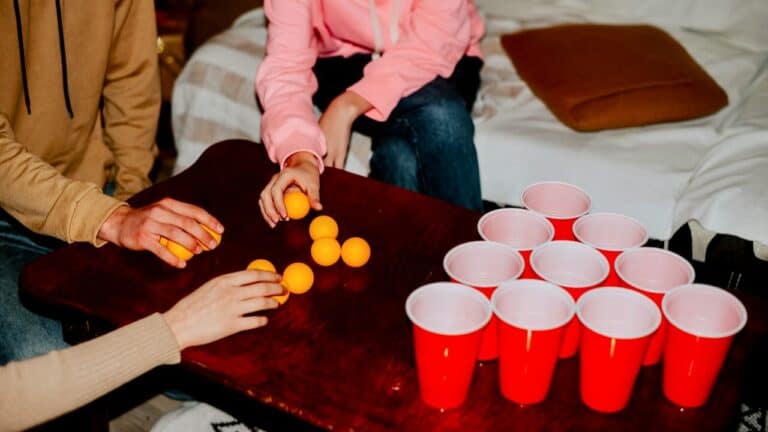
Most lists of adult party games feel interchangeable. Pass-the-parcel, beer pong, musical chairs, even classic board games — none of them needs a birthday person to function. The same fun way to fill a game night that works at a Tuesday board game night also works at a birthday, but the night feels generic because the entertainment isn’t about the celebration.
Mechanics built for other settings carry the same problem. None of the following reference the birthday person:
- Drinking games for a college house party — fine for raising the energy, zero birthday connection.
- Relay races and obstacle courses built for outdoor games with hand-eye coordination challenges, including the classic outdoor party game with water balloons or toilet paper ribbon races.
- Murder mystery games with pre-written historical figures as characters — strong for adult parties, zero tie to the guest of honor.
- Social-deduction games and interactive games like Werewolf or Mafia — scalable for any group, but generic unless you rename roles after her life.
The Three Categories That Carry a Night
The best birthday party games worth the effort of setting up fall into three structural buckets:
- Biography-driven. The game requires knowing facts, stories, or preferences about the birthday person. Trivia rounds, “most likely to” with their name inserted, and memory-sharing formats all sit here.
- Era-driven. The game references the guest of honor’s year of birth or the decade they grew up in. Pop culture quizzes, music bingo, and decade-specific costume challenges work this way.
- Ritual-driven. The game turns a birthday tradition — gift opening, candle blowing, toasts — into a structured activity. This is where the most underused material lives, because most hosts let these moments happen passively.
Why this matters: the awkward middle hour — after the food, before the cake — is where energy collapses at most adult birthday parties. A birthday-specific game placed in that slot reframes the whole night around the person guests came to celebrate.
How Well Do You Know the Birthday Person: Games That Spotlight the Host
The canonical birthday game, and for good reason, is a trivia round built entirely from the guest of honor’s life. Sometimes called “How Well Do You Know the Birthday Girl” or “How Well Do You Know [Name],” the format is simple and the payoff is large: you learn who in the room pays attention, and the birthday person gets the rare experience of hearing what friends remember. It’s one of the best birthday party games for a group that has known her across different chapters — and it rewards social interaction in a way most party mechanics don’t.
Setting Up the Trivia Round
Ask the birthday person 20 to 30 questions by text two to three weeks ahead. Mix factual with opinion and memory questions — opinion questions are where guests lean forward:
- Factual prompts: city of birth, first job, the year she moved. Warm-ups — three or four at the start.
- Opinion prompts: favorite dish at her go-to restaurant, the one song she’d pick as funeral music. These produce plenty of laughs when someone confidently guesses wrong.
- Memory prompts: the worst haircut she ever had, the first time she met her best friend. Use sparingly — no more than two per round.
Print the answer sheet with her responses hidden until the end, then divide players into small groups. Let’s Roam’s birthday trivia framework flags the same principle: the reveal is the entertainment, not the scoring. It’s the kind of conversation dynamic that keeps a table leaning in past the main course.
Sizing the Game to the Room
Smaller groups of six to ten play best as teams of two. Larger groups (15 or more) should run the game as a first-player-to-answer format — the correct answer is called out, the first person with it gets a point, and after ten rounds the high scorer wins. A variant for closer groups of ten or fewer: Guest of Honor, Unfiltered. Each guest writes one question anonymously on a question card, drops it in a bowl, and the birthday person pulls and answers across the night.
Keeping Prizes Personal
Small prizes land harder when they carry a personal touch. A candle she loves, a bottle of wine she always orders, a paperback of a book she keeps recommending — pulled from what she already talks about — outweighs a gift card.
Crate & Barrel’s birthday game rundown makes the same call: personal beats polished.
|
Hosting Tip: Collect Trivia Answers Two Weeks Early |
Decade-of-Birth Games: Pop Culture, Music, and Memory Rounds
The second reliable category is games built around the year or decade the guest of honor was born. These land hardest at milestone birthdays — 30th, 40th, 50th, 60th — where the decade framing carries cultural weight, but they work at any age when the room has shared reference points. They’re among the best indoor party games for rainy nights, and they scale for older adults who want modern twists on trivia.
Pop Culture Trivia Anchored to Birth Year
Decade-of-birth pop culture quizzes run like classic trivia with a strict constraint: every question references the birthday person’s birth year or decade. For a guest of honor born in 1985, the quiz covers the #1 songs of 1985, major films, world events, and TV shows.
Questions anchor the room in her era: same-age guests laugh at shared references; older or younger guests get an education in her cultural coordinates. The format rewards strategic thinking when teams triangulate from partial knowledge.
Music Bingo: The Strongest Mixed-Crowd Option
Music bingo is one of the best games when the crowd is mixed. Build bingo cards from 25 song titles spanning her formative decade — high school and college years. Play 30-second clips; guests mark songs as the music plays. First finished card wins.
Three execution notes separate a game that runs from one that flops:
- Draw from her own playlists. Her Spotify top-100 from ten years ago. Generic “80s hits” cards feel like a cruise ship; her favorite games and specific songs feel like her party.
- Pre-print extra cards. Guests will want a second round. A pre-printed list of games for the evening keeps the flow tight.
- Cap at 25 minutes with a hard time limit. Let the right games end before the room is ready to move on.
A fun variant: reserve a “high note” round where guests sing the next line of a lyric instead of marking the card.
Memory Lane Storytelling
For a no-supply alternative, Memory Lane has guests take turns sharing one story about the birthday person from a specific year the host calls out. “2008 — tell us a 2008 story about her.” “2014 — go.” TGH’s dinner party conversation starters use the same mechanic in a different register.
Stories land because they’re specific, and she gets to hear fun memories she may not have been present for. BuzzFeed’s rundown of storytelling-based interactive games notes the same draw — watchable, no equipment, adjustable to any group size. Set a 90-second cap per storyteller, or the game turns into a monologue.
Gift-Opening and Toast Games That Turn Rituals Into Entertainment
The most underused category of birthday-specific games lives inside the rituals that already happen at every adult birthday party: opening presents and giving toasts. Most hosts let these moments pass as passive events — she unwraps, people watch, someone raises a glass, the night continues.
Treating them as structured games instead turns five minutes of ambient attention into twenty minutes of entertainment. These formats scale from small groups to larger groups without extra prep, and they add an element of surprise to rituals that usually land flat.
Gift-Opening as a Game
The core idea: guests don’t watch passively; they predict, bet, or participate. Three easy game formats work:
- Gift Guess — each guest writes down what they think is inside each wrapped package (not their own) before opening, and after she opens each one, correct guesses are counted. Bonus points for the closest guess on any single package.
- Ribbon Count — save every ribbon, bow, and piece of paper as she unwraps. Whoever brought the most over-packaged gift has to give a two-minute toast, a rule that reframes excess packaging as a feature rather than an annoyance.
- Story Stamp — as each gift is opened, the giver has 30 seconds to explain why they picked that gift specifically, not in generic words but for the real reason, and she chooses the favorite explanation.
Event-planning coverage of surprise and milestone parties notes that structuring the gift portion prevents it from feeling hurried or awkward — this bucket of games forces the structure.
Toast Games That Don’t Fall Flat
Toasts at adult birthdays either don’t happen or happen awkwardly. Both failure modes are fixable.
The 15 Toasts format, adapted from Priya Parker’s The Art of Gathering, sets a theme and invites every guest to offer a toast. At a birthday, the theme is the guest of honor: “Toasts to her year ahead.” The twist: the last person to toast has to sing theirs.
Backyard and dinner party guides recommend running toasts after the main event but before the cake, with a 25-to-30-minute block for 10 to 15 guests. A lighter variant is Three Words, where each guest describes her in exactly three words, sequentially around the table, with no repeats.
By the eighth guest, people are reaching for “tenacious” and “unserious” to avoid repeating “kind” and “funny.” She writes them all down, and they become the keepsake of the night — the kind of small, specific detail that turns into fun memories the group still references years later.
|
Share Every Hosting Task Clearly |
Running the Games: Timing, Group Size, and When to Stop
Structure separates games that carry the night from games that kill the energy. The mistake most first-time hosts make is running too many games for too long, turning a relaxed adult birthday party into a cruise-ship activities hour. Two to three games across a three-hour evening is the right rhythm; five is too many. Pick the right games for the rhythm of the evening, not the maximum number you can fit.
Anchor Games to Natural Breakpoints
Tie each game to a natural breakpoint in the evening rather than a clock time. Three slots work reliably:
- Between arrivals and dinner (20 minutes). A light biography-driven game or simple game lives here. Low setup, short duration, easy to walk in and out of.
- Between dinner and cake (30–40 minutes). This is the main event slot. Music bingo, the full trivia round, or the 15 Toasts fit here, when guests are fed and warmed up but not tired.
- Around the gift opening (15 minutes). Gift-guess or ribbon-count games slot into the ritual without adding additional structure.
For a fuller evening arc, TGH’s walkthrough of the best dinner party games covers pacing decisions that carry over to birthday celebrations — the same rhythm rules apply once the cake is gone and the night shifts into a longer game-night feel.
Match the Game to the Group Size
Group size changes what works. Cozymeal’s adult birthday activities guide and the Sandbox VR group birthday framework both flag that intimate games collapse at 20-plus guests and scaled games feel thin at eight. Ranges to keep in mind:
- Biography trivia: 6 to 15 guests. More and the reveal drags.
- Music bingo: up to 25 comfortably. The cards absorb the number of players.
- Gift-opening games: 10 to 15. Enough guessers without drowning her.
- Toast games: 8 to 14. Fewer than eight feels sparse; more than fourteen runs too long.
A social-deduction game (Werewolf, Mafia, Spy) with birthday-themed roles can work for groups of 8 to 20 as a late-evening option — but only if the group already plays these kinds of interactive games together. For a group that doesn’t, the learning curve eats the runway.
Knowing When to Stop
The birthday person’s energy is the signal. When she starts looking past the game toward the cake or a guest she hasn’t talked to, the games are done. End cleanly: finish the current question or next player’s turn, announce a winner with a small prize, and release the room back to conversation.
A game that ends while guests still want more is the one they’ll remember.
Frequently Asked Questions
What games can adults play at a birthday party?
Adults play three types of birthday games: biography-driven trivia about the guest of honor, era-driven games tied to her birth year, and ritual-driven games built from gift opening and toasts. “How Well Do You Know [Name]” trivia and decade quizzes are the most reliable formats, with music bingo pulling double duty as a mixed-crowd option.
What is a fun birthday game that involves the birthday person?
“How Well Do You Know the Birthday Person” is the canonical format. Collect 20 to 30 questions from the guest of honor two weeks ahead, divide players into small groups, and reveal answers aloud. The reveal, not the scoring, is the entertainment.
What are easy party games that need no supplies?
Three Words descriptions of the birthday person, Memory Lane year-prompted storytelling, and verbal “How Well Do You Know” trivia all run with zero setup. Have each guest share one specific story about the guest of honor from a year the host calls out. Think of it as a scavenger hunt through her own life.
How do you organize games at an adult birthday party?
Plan two to three games across a three-hour window, anchored to natural breakpoints: a light game before dinner, the main event between dinner and cake, and a ritual game during gift opening. Keep each game under 30 minutes and end before energy drops.
What are good birthday party games for large groups?
Music bingo scales to 25 comfortably because the bingo cards absorb the group size. First-player-to-answer trivia rounds also work well because scoring is individual rather than team-based. A card game format can work for large groups if you run multiple tables in parallel, with a winner from each table advancing to a final round.
What games work for both indoor and outdoor birthday parties?
Music bingo, trivia rounds, and storytelling games travel across settings because they need only sound and attention. Gift-opening games and toast formats work in either space. Avoid games that depend on specific floor layouts. A giant Jenga set, relay races toward a finish line, obstacle courses, scavenger hunt setups. If you might pivot because of weather.
Continue Reading:
More On Birthday Party Planning:
- Birthday Party Planning: The Host’s Complete Checklist
- Birthday Dinner Ideas for a Home-Cooked Celebration
- Birthday Party Ideas for Adults That Feel Worth the Effort
- Kids Birthday Party Ideas You Can Host at Home
- How to Throw a Surprise Birthday Party That Actually Works
- Birthday Party Decorations for Adults: Themes and Styling
More from The Gourmet Host
- Best Fun Trivia Games for Adults at Your Next Party
- 7 Creative Table Setting Ideas For Your Next Dinner Party
- Father to Daughter Wedding Speech: Proud Dad’s Guide
- The Best Non-Alcoholic Drinks to Order at A Bar, According to a Bartender
- Small Kitchen Appliances Every Home Chef Needs in 2026
Explore TGH Categories
- Set the Scene
- Drinks and Bar
- Plan the Meal
- Engage with Guests
- Games and Toasts
- Tools and Techniques
- Why We Gather