10 Potluck Ideas for a Crowd That Make Hosting Effortless
 14 min read
Not every memorable dinner party requires the host to do all the cooking. A themed potluck dinner party distributes the effort while amplifying the fun, giving everyone a role in creating the evening’s menu. The secret to a great potluck is structure: without a theme or category assignments, you risk ending up with seven desserts and no main course.
These potluck ideas for a crowd are designed to spark creativity, accommodate different cooking skill levels, and guarantee a balanced spread. Each one pairs beautifully with our dinner party planning checklist, which can help you coordinate who brings what without the back-and-forth.
|
💡 Pro Tip: The Assignment MethodRather than letting guests choose freely, assign each person a category (appetizer, salad, main, side, dessert, drink). This ensures a balanced spread and removes the stress of guests wondering what to bring. Include a note in your invitation with the assignment and any dietary restrictions to accommodate. |
10 Potluck Themes Your Guests Will Love
1. “A Taste of Home”
Ask each guest to bring a dish that represents their heritage, hometown, or a cherished family recipe. This theme turns dinner into a storytelling experience, as each course comes with a personal narrative. As noted in our article on essential event planning, purpose-driven gatherings create the most lasting memories.
2. One-Pot Wonders
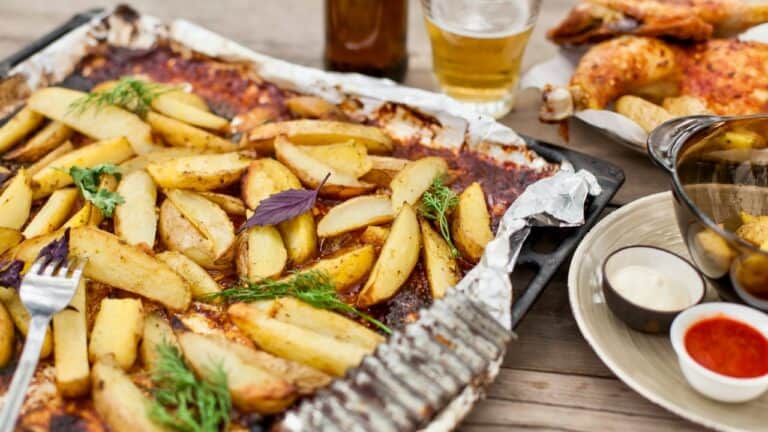
Every dish must be something that cooks in a single pot, pan, or baking dish. Think stews, casseroles, sheet-pan dinners, and one-skillet pastas. This constraint makes the theme accessible for beginner cooks and guarantees hearty, comforting food.
3. Color-Coded Potluck
Assign each guest a color. All ingredients in their dish must match that color—green for a guest bringing a salad, red for someone making a tomato-based dish, orange for a butternut squash soup. The visual result is a stunning, Instagram-worthy table.
4. Decade-Themed Dishes
Each guest prepares a dish iconic to a specific decade. Think fondue (1970s), Jell-O molds (1950s), avocado toast (2010s), or molecular gastronomy (2000s). Epicurious’ decade food retrospectives are a fun resource for menu research.
5. Comfort Food Classics
Everyone brings their ultimate comfort food—the dish they make when they need a hug in food form. Mac and cheese, meatloaf, chicken pot pie, and chocolate chip cookies are all welcome here. This is the potluck theme that never fails.
6. Farm-to-Table Potluck
Challenge each guest to source at least one key ingredient from a local farmers’ market. This encourages seasonal cooking and supports local producers while creating a fresh, vibrant spread.
7. Street Food Around the World
Each guest recreates a beloved street food from a different country: empanadas, banh mi, falafel wraps, samosas, or yakitori. The Netflix series Street Food offers endless inspiration for dishes that are both approachable and impressive.
8. DIY Pizza Party Potluck
The host provides dough and cheese; guests each bring a unique topping or two. Set up an assembly station and let everyone build their own personal pizza. If you have an outdoor pizza oven, even better—but a regular oven works perfectly.
9. Sweet and Savory Challenge
Each guest must bring a dish that combines both sweet and savory elements. Honey-glazed chicken, balsamic strawberry salad, brown-butter sage gnocchi with pear—the creativity this constraint inspires will surprise you.
10. Cookbook Club
Choose a cookbook that everyone agrees on, and each guest selects a different recipe from it to prepare. This works particularly well with cookbooks from notable chefs like Ottolenghi’s Flavor or Samin Nosrat’s Salt, Fat, Acid, Heat. By the end of dinner, you will have explored a curated sampling of one culinary mind’s best work.
How to Make Your Potluck Run Smoothly
- Send theme details and category assignments in your invitation at least two weeks before the event.
- Create a shared document or group chat so guests can see what everyone is bringing—this prevents duplicates.
- Collect dietary restrictions early. Our article on dinner party menu planning covers how to gather guest preferences efficiently.
- Have a few store-bought backups on hand: good bread, a simple green salad, and sparkling water cover most gaps.
- Set up a serving station with labels for each dish, including the contributor’s name—it becomes a natural conversation starter.
How to Assign Potluck Dishes by Guest Count
Start with the size of the room, then assign a limited number of slots in each food category. These quantities are a practical starting point, not a fixed formula. Adjust them for the appetites at your table and the size of each dish.
- For 8 to 10 guests: plan two mains, two sides, one salad, two desserts, plus bread and drinks from the host.
- For 12 to 16 guests: plan three mains, three sides, two salads, two desserts, and separate assignments for drinks and ice.
- For dietary needs: ask for allergies and restrictions before assigning dishes, then label each contribution when it reaches the table.
- For kitchen traffic: ask whether each dish arrives hot, chilled, or ready for a short reheat. Reserve oven space before guests arrive.
Copy-ready assignment message
We are planning a potluck for [date] with [number] guests. Could you bring a [category] that serves about [number]? Please tell me the dish by [date], along with any fridge, oven, or serving space you will need. I will share the full menu once every category is covered.
Do or avoid, based on the situation
| Situation | Do | Avoid |
|---|---|---|
| Two similar dishes | Ask one guest to change the side, sauce, or main ingredient. | Wait until both dishes arrive to solve the overlap. |
| Limited oven space | Prioritize dishes served chilled or at room temperature. | Assign several casseroles with the same reheat window. |
| A guest does not cook | Offer bread, drinks, ice, fruit, or a bakery dessert. | Give them a main course without an easier option. |
| Allergy information | Keep ingredient notes beside each serving dish. | Rely on guests to remember every ingredient during service. |
Once the slots are assigned, collect the dish names in one place and close each category as it fills. You can then choose one anchor dish for the host and keep the rest of the kitchen open for arrivals.
How to Host a Potluck Dinner That Feels Curated
A great potluck looks effortless because the host has done the work before the doorbell rings. The theme is set, the categories are assigned, the dishes are confirmed, and the table is staged. Each step removes a small failure mode that would otherwise surface at 7 p.m. on the day.
The cadence below keeps every guest one decision behind the host, never side by side.
- Three weeks out: send the headcount, the theme, and the date.
- Two weeks out: assign each guest a category (appetizer, main, side, dessert) and ask for dietary flags.
- One week out: confirm the specific dish each guest is bringing.
- Forty-eight hours out: send the arrival window, serving format, and reheat instructions.
Three small hosting moves separate a curated potluck from a chaotic one. First, write a single-page run sheet that lists every guest, their dish, and their arrival time. Second, anchor the table with one main course the host prepares (a roast, a braise, a tray of stuffed pasta). The centerpiece is then guaranteed. Third, reserve drinks for the host kitchen rather than a guest assignment. A single contributor cannot pour for fifteen without losing the rest of the evening.
Print the run sheet on the morning of the event and clip it to the fridge. Guests with logistics questions can read it without interrupting the cook. The host marks dishes off as they land in the kitchen.
The Assignment Method outlined above pairs naturally with this timeline. Our dinner party planning checklist includes a potluck-friendly version of the same arrival flow that you can adapt directly. By the end of the run sheet, you will have a potluck your guests remember next year.
A Potluck Party Planning Timeline That Holds
The two-week lead time from the original guidance above is the minimum. Three weeks is the comfortable version, and it spreads the host workload across four small windows instead of one panicked Saturday. Each window has a specific job. The host who skips one usually pays for it at 4 p.m. on the day of the event.
- Three weeks out (invitation): send the theme, the date, the time, and a single line asking for confirmation and dietary flags.
- Two weeks out (category assignment): reply to each confirmed guest with their category, the suggested portion target, and any theme constraint from the list of ten themes above.
- One week out (dish confirmation): ask each guest to name the specific dish, the serving temperature, and whether they need oven, stovetop, or fridge space on arrival.
- Forty-eight hours out (logistics note): send the arrival window, the parking situation, the serving utensil reminder, and any container instructions for leftovers.
The dish-confirmation pass is the most important of the four. If two guests are bringing similar dishes, this is the window to ask one of them to pivot. The conversation does not feel like a scramble seven days out. The pivot conversation is much easier seven days out than seventy minutes out.
The forty-eight-hour note is the one most hosts skip and then regret. A single five-minute message resolves the questions guests would otherwise ask on arrival. The host is mid-prep at that point and least able to answer them. Specify the arrival window as a 30-minute range rather than a single time. The kitchen never sees ten dishes land in the same five minutes.
For larger or holiday-scale potlucks, the same cadence stretches by one week at each step. Our holiday dinner party planning guide walks through the longer version, and the four-touchpoint shape is the same. By the end of the forty-eight-hour note, you will have a potluck whose only remaining variable is the food itself.
Crowd-Pleasing Main Dishes for a Large Potluck
The hardest category to assign at a large potluck is the main. Most home cooks pick recipes built for four diners and then panic when asked to deliver twelve. Steer main-course contributors toward dishes built for volume from the start.
Volume-native mains share three traits. They hold their temperature well, they reheat without losing texture, and they forgive a 15-minute serving delay. Most also taste better the day after they are made. That is a built-in advantage for the contributor cooking ahead.
- Baked ziti or lasagna: covers twelve from a single half-hotel pan and reheats covered at 325 degrees in about 25 minutes.
- Braised chicken thigh (cacciatore, Moroccan, coq au vin): scales by adding more thighs to a heavy pot without changing the technique.
- Pulled pork or short rib platter: feeds fifteen from a single shoulder or rack and genuinely improves overnight.
- Composed grain salad (farro, herbed couscous, Mediterranean rice): feeds the same fifteen and doubles as a vegetarian main.
- Whole-tray sheet-pan dinner: roasted protein and vegetables on the same pan, finished at the host’s house in 12 minutes.
Two mains the host should generally veto for a guest assignment. Anything reliant on a last-minute sauce reduction is risky, because the contributor will be hovering over your stove during cocktails. Anything sliced from a single hot piece of protein is risky too (a whole roasted fish, a standing rib roast, a beef Wellington). Those dishes belong on the host’s anchor list, not the guest list. The timing window is too narrow to coordinate with arrival traffic.
For the contributor who wants a route map, Bon Appétit’s collection of recipes for a crowd is a reliable starting point. Every dish there has been tested at volume rather than scaled up from a four-person original. Pair it with the how-to-host step-by-step guide we publish for non-potluck entertaining, and the contributor lands on a dish that travels well and serves cleanly.
Send the main-course contributor a one-line spec along with their category assignment: the format (braise, baked pasta, grain salad), the serving count, and the serving temperature on arrival. By the end of the assignment reply, you will have a main course built for the size of the room.
Frequently Asked Questions
What is the best potluck theme for a large group?
“A Taste of Home” and “Comfort Food Classics” are the two best themes for a large group, because both naturally produce more variety as the guest list grows. For 15 or more people, either theme creates a diverse, well-balanced spread without extra planning from the host.
How do I handle guests who are not confident cooks?
Assign less confident cooks to lower-pressure categories like appetizers, salads, or drinks rather than a main dish. You can also suggest store-bought contributions that still fit the theme, such as artisan bread from a bakery or a specialty cheese board, so nobody feels put on the spot.
Should the host cook at all for a potluck?
Yes, the host should prepare at least one anchor dish, typically a main course or a substantial side, so the table always has a guaranteed centerpiece. This anchor dish also sets the quality bar and signals the theme direction for the rest of the evening’s contributions.
Which categories should a potluck sign-up include?
Use five categories: mains, sides, salads, desserts, and drinks, with a cap on each one. Guests choose from whatever is still open, so the table stays balanced instead of arriving as nine desserts. Add a sixth line for ice, cups, and serving spoons, because those are the items everyone forgets.
What do I do when too many guests bring dessert?
Move the extras to a separate table and send them home as a takeaway tray at the end. Nobody minds, and three untouched cakes stop competing for counter space. Setting a cap on each category before you share the sign-up link prevents the pile-up from happening again.
Can a potluck work for thirty guests or more?
Yes, and thirty is the size where a potluck clearly beats cooking everything yourself. Assign categories by household rather than by person, ask for dishes that hold at room temperature, and set up two identical serving stations so the line never bottlenecks at a single table.
Continue Reading:
More from The Gourmet Host
- Dinner Party Conversation Questions That Keep the Table Talking
- Dinner Party Themes for Every Style: Casual, Cultural, Seasonal, and Creative Ideas
- Easy Food Garnishing Techniques for Stunning Art
- Potluck Dinner Party Themes That Your Guests Love
- Types of Miso and How to Use White vs Red Paste
Explore TGH Categories
- Set the Scene
- Drinks and Bar
- Plan the Meal
- Engage with Guests
- Games and Toasts
- Tools and Techniques
- Why We Gather