Dining Table Etiquette: Place Setting Rules for Hosts
 16 min read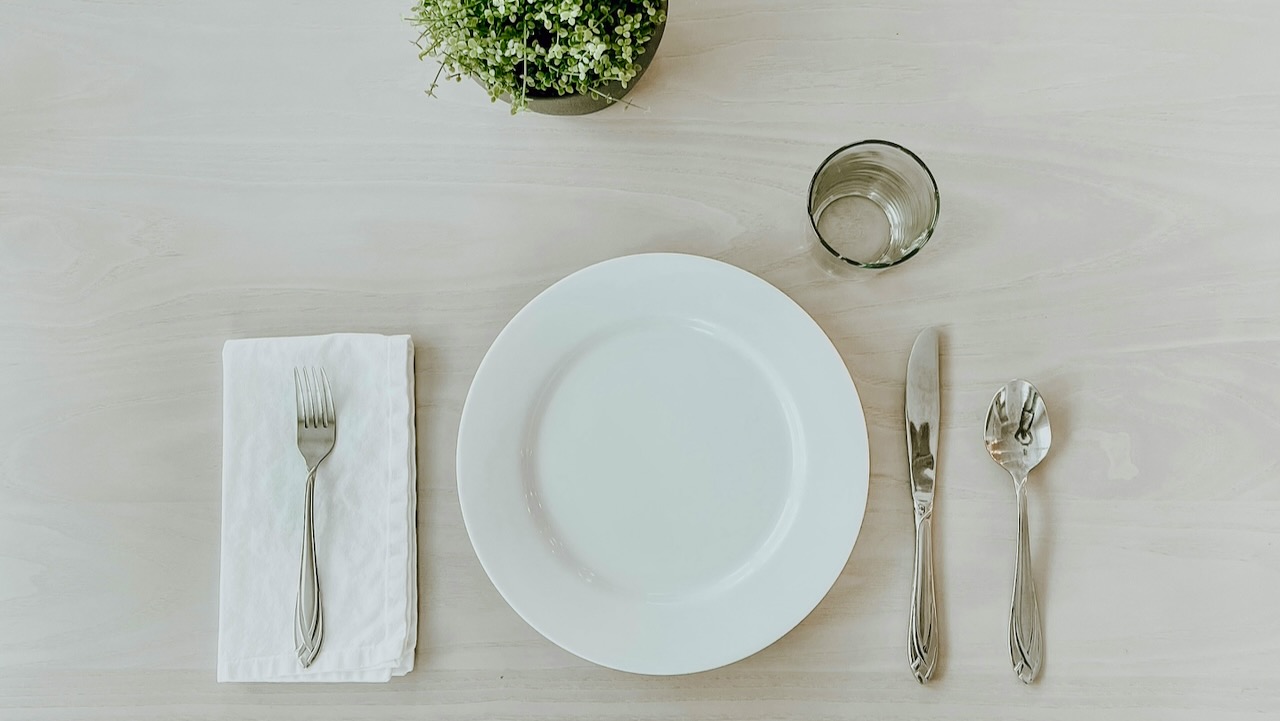
We’ve laid tables for years and still occasionally caught ourselves placing the bread plate on the wrong side at 6:48 p.m., eight minutes before guests, three voices already in the hall, the linen napkin held in one hand and a doubt in the other. The doubt is the useful part. A confident table isn’t a memorized diagram; it’s a series of small signals the host has chosen on purpose. Dining table etiquette, at the host’s level, is signal management: what the place setting tells a guest before the host says a word.
What follows is the host’s working playbook: where each piece sits and what it signals, how glass count cues formality, why the napkin position reads at five seconds, and the silent utensil language that lets a host clear a course without ever asking. Specifics, not theory.
At a Glance
- Why the place setting is the host’s opening sentence: the table speaks before you do.
- The hierarchy of every piece on the cloth (bread plate, forks, knife, glasses) and the single signal each one sends.
- The glass-count rule that decides whether the evening reads casual, intentional, or pairing-dinner.
- Napkin moves that lift any setting in under five seconds: fold, position, material.
- Lighting, linens, and the pre-plate cues that frame the food before it lands.
- The silent utensil language (resting, pausing, finished) that lets the host read the table without speaking.
- Three rules that make a casual setting feel intentional rather than bare.
What Is Dining Table Etiquette?
Dining table etiquette is the set of conventions governing how a host arranges utensils, glassware, plates, and linens, and how the resulting place setting cues formality, pace, and care to every guest who sits down. For the home host running a dinner party, it is a signal grammar more than a rulebook: the bread plate, the napkin fold, and the glass count each tell a guest something about the evening before the first course arrives. Unlike rules of table manners (the eater’s job), the place setting is the host’s piece, the part of the meal the host fully controls.
Why the Place Setting Is the Host’s First Sentence
The cloth, the candle, and the placement of the forks all do their work before anyone tastes anything. Etiquette on dining table arrangement is the host’s first sentence to every guest, read in the eight or nine seconds between sitting down and lifting the napkin. Etiquette on table manners gets all the attention in the eater’s literature; the host’s piece is the table itself. Get those nine seconds right and the rest of the evening earns goodwill the host hasn’t spent yet.
A few things the table communicates without anyone speaking:
- Formality level. Two glasses or five. Linen or paper. A folded napkin or a flat one. The density tells the guest what kind of evening this is.
- Care. Cutlery aligned at the table’s bottom edge versus dropped at random. Bread plates set or absent. A small candle lit or unlit.
- Pace. A single course’s worth of cutlery versus a full three-course spread. Guests pace themselves to the setting in front of them.
- Welcome. A name card, a folded note, or a sprig tucked into the napkin signals the host actually thought about this person, not just the table.
The detail here is small but real. Eight to ten seconds is the entire window. A guest’s read of the table sets the mood before the host even reaches the table. Gentleman’s Gazette’s primer on formal dining etiquette makes the same point with a different vocabulary: the setting carries the rules so the host doesn’t have to enforce them at the table.
TGH’s own 7 Creative Table Setting Ideas round-up extends the principle into specific configurations a home host can copy in twenty minutes. From there, the question becomes which piece does what.
The Place Setting Hierarchy: What Each Piece Signals
The grid, read outward from the plate
Every piece on the cloth occupies an assigned position. Once a host learns the grid, every dinner setting becomes a five-minute job rather than a tense one. The hierarchy reads outward from the plate, course by course:
- Service plate or charger (optional): the foundation, removed before the main course in formal settings.
- Dinner plate: center of the place setting, two inches from the table edge.
- Forks: left of the plate, tines up, ordered outermost-first by course (salad fork outside, dinner fork inside).
- Knife: right of the plate, blade facing the plate. Spoon, if used, sits right of the knife.
- Bread plate: upper left, above the forks. The bread knife rests across it, blade angled in.
- Glasses: upper right, water tumbler closest to the plate, wine glasses to its right.
- Napkin: on the plate, to the left of the forks, or under the forks. Three valid placements, one choice per evening.
Etiquette in dining table layout has a single mnemonic that closes most last-second questions: BMW. Bread on the left, Meal in the middle, Water on the right. The etiquette a table runs by stays consistent across most American and Continental settings; the local variations sit on top of the same skeleton. Any host who’s spent thirty seconds doubting which side gets the bread plate can run BMW once and resolve it.
How the references stack up
Emily Post’s place setting guide walks the full hierarchy with diagrams; Apartment Therapy and Auguste Escoffier School of Culinary Arts cover the casual-to-formal range with the same logic. The variations are small. The skeleton stays the same.
Etiquette for dining table arrangement isn’t memorization. It’s pattern recognition. Once the host runs three or four full settings, the muscle memory takes over and the table comes together in the time it takes the kettle to boil. Table etiquette and manners both rest on the same skeleton: the host sets the grid; the guests read it and respond.
Etiquette table manners (the layered convention covering both the setting and the eating that follows) is the host’s craft compressed into a few small choices. Etiquette Scholar’s elegance primer condenses the same logic into a single-page reference a host can pin inside a cabinet door.
|
Set the Table for Every Guest |
How Many Glasses Should Sit on a Dinner Party Table?
Glass count is the single fastest signal a host sends about formality. Two glasses read casual; three read intentional; five or more read pairing dinner. The number of glasses sets the expectation before the first pour, which makes glass count the most leveraged choice in the entire place setting.
The reliable mapping for a home host:
- Two glasses (water + a single wine): a weeknight dinner with friends, Sunday roast, brunch (the casual default). The setting feels warm and unfussy.
- Three glasses (water + red + white): the thoughtful dinner-party signal. Says the host planned the evening rather than improvised it.
- Four glasses (water + red + white + flute): an aperitif or champagne course is in play. The flute reads celebration.
- Five or more glasses: a tasting menu, a wine pairing dinner, or a formal evening. Each glass corresponds to a specific course.
Glassware layout follows the food. The water tumbler sits closest to the plate, top right, with wine glasses to its right in order of use: white first if the meal opens with a white pairing, red moving outward. Champagne flutes, when included, sit slightly behind the wine glasses.
Food Network’s wine glass shape guide walks through the specific bowl shapes (burgundy bowl for Pinot Noir, narrower for Cabernet, a fluted tulip for sparkling) that quietly raise the read of a setting. The shapes do work the count alone can’t.
One more practical note: glass density is a commitment to pours. Five glasses on the cloth signals five courses of beverage service, and a host who sets that many and then under-pours sends a confusing signal. Set the count the host can actually maintain. The napkin sits in the middle of all of this, a small piece doing outsized work.
Napkin Conventions That Quietly Lift the Room
Napkins do disproportionate work for their cost. Cloth napkins run about four dollars each and last roughly five years of weekend hosting. They are the single change to a place setting most guests notice within ten seconds of sitting down.
The host has three valid napkin positions, each sending its own signal:
- On the plate. Centered, folded simply: a flat rectangle or a single fold. The most formal of the three. Reads “I prepared the table tonight.”
- Left of the forks. Casual but composed. Works for relaxed dinners where the plate gets used for the appetizer right away.
- Under the forks. A discreet stack, appropriate when the dinner plate is the appetizer plate and stays in place through the first course.
Material matters more than fold. Linen reads premium, cotton reads warm and washable, paper reads casual, and any of the three works depending on the evening. The fold itself should stay simple. Elaborate origami folds (fans, swans, rose-petal towers) feel try-hard and date a setting in a way the host doesn’t intend.
Food Network’s table-setting walkthrough shows the three valid positions with annotated diagrams; Britannica’s etiquette overview traces why napkin convention varies by culture and century. The home host doesn’t need the full history to use the convention, only the read.
Cross-reference with TGH’s brunch table setting playbook for daytime variations. The rules don’t change, but the materials and color sense soften considerably. Napkin convention is where table manners and etiquette converge most visibly: a flat fold reads composed, a stuffed-in-the-glass fold reads improvised. The napkin sets the formality floor; the linens and lighting carry it the rest of the way.
|
Hosting Tip: Light Faces, Not the Centerpiece |
Lighting, Linens, and the Pre-Plate Tone Setter
Lighting and linen do the work the place setting can’t finish. Even a textbook layout reads cold under bright overhead light or a bare table, and a soft glow with a runner forgives an imperfect setting. The atmospheric layer is half the evening.
What’s on the cloth before the food arrives
Linen choice sets the temperature of the room. A natural linen runner over a bare wood table reads warm and modern; a full damask cloth reads classic and formal. A vinyl or paper liner reads casual, which is a valid choice for the right dinner. The texture of the cloth is one of the first things the seated guest registers. Fingers brush it before the bread basket arrives.
A few specific choices that quietly raise any setting:
- A low centerpiece. Anything tall enough to block sight lines kills cross-table conversation; eight to ten inches is the working ceiling.
- Candles lit, not just placed. Lighting one taper or two votives before guests arrive is the small move that registers most.
- An overhead dimmer, set to 60 to 70%. Most dining rooms run too bright by default. The dimmer is the highest-leverage purchase in the room.
- A second light source: a wall sconce, a side lamp. The single overhead fixture flattens faces; the second light source restores dimension.
The Kitchn’s five rules that still matter align with all of this: the rules that read modern, not Victorian. TGH’s dining-room centrepiece guide and floral arrangements playbook give specific configurations the host can build in fifteen minutes with what’s already in the kitchen.
Etiquette at the dining table is layered: the place setting handles the foreground, the linens and lighting handle the field around it. Once the food lands, the utensils take over the conversation between host and guest.
Reading the Silent Utensil Language: Resting, Pausing, Finished
The two positions to watch
The utensils talk to the host all evening. A guest who’s mid-course but pausing for conversation places knife and fork in one configuration; a guest who’s finished the course places them in another. Etiquette at the table includes reading these signals before clearing, never interrupting a paused guest to ask if they’re done.
The two positions every host should recognize:
- Resting / pausing. Knife and fork crossed at the plate’s center, tines down, blade facing inward. Or laid in an inverted V at roughly four and eight o’clock on the plate. The guest is taking a breath; the course continues.
- Finished. Knife and fork together at four o’clock on the plate, parallel, handles toward the table’s edge. Tines up in the American style, tines down in the Continental style. The course is over; the host may clear.
The American versus Continental distinction is real but rarely matters at a home table. American style: switch hands between cutting and eating; Continental: fork stays in the left hand, tines down, knife in the right. American hosts who want to read both signals fluently can practice either. The finished position is identical enough across styles that the host’s clear-the-plate read works either way.
Etiquette for table manners and the cleared plate both belong to the same beat in the evening. Table manners and table etiquette read as one signal once the host learns to watch the cutlery rather than ask the question.
What to pin in the kitchen
Lenox’s silverware etiquette primer shows the four canonical utensil positions with line drawings; Lenox’s broader dining etiquette guide places those positions in the wider context of a multi-course meal. The diagrams are worth pinning to a kitchen cabinet for the first half-dozen dinners a host runs.
Manners table etiquette at the host’s level is mostly observation: watching the cutlery, watching the plate, clearing on the silent cue rather than the spoken one. Table etiquette manners-wise, the move that quietly distinguishes hosts is the unspoken clear: plates lifted on the cue without anyone breaking the conversation thread. Most guests appreciate not being asked.
|
Share the Table Reset List |
When Less Is More: Casual Settings That Still Read Confident
Three rules for a confident sparse table
Casual dinners don’t need fewer rules. They need different rules. A confident casual setting still feels deliberate, and three small moves separate a sparse table from a confident one.
The three working principles:
- Consistency over completeness. A setting with one fork, one knife, one water glass, and a napkin reads confident if every place setting is identical. The same setting with a missing bread plate at one seat reads accidental. Match every place, even if each one is spare.
- Anchor with one premium detail. A linen napkin, a single candle, or a small individual butter dish per setting is enough to lift a four-piece setting into hosted territory. The premium piece signals choice; the rest can stay simple.
- Leave intentional negative space. A casual table benefits from breathing room: a runner without a tablecloth, a setting placed slightly off-center on purpose. Crowding small surfaces makes them feel cluttered; spacing them lets each piece read.
The casual setting works especially well outdoors. Plates on a wood plank table, linen napkins, mismatched glassware with shared color. The setting reads relaxed and confident at once. TGH’s outdoor table setting playbook shows configurations a host can stand up in twenty minutes with what’s on hand.
Etiquette of dining at this register is forgiving. The host who runs a casual setting with intention reads as confident; the host who runs the same setting apologetically reads as unprepared. Etiquette dining at home doesn’t require a full formal kit. Dining and etiquette have always tracked the host’s intent more than the inventory of pieces on the cloth. The cloth, the napkin fold, and the candle do the talking; the host walks the room without footnoting choices.
The setting carries the evening. Specific choices (three glasses or two, candle or no candle, linen on the plate or under the forks) accumulate into the room’s mood faster than any verbal welcome ever does.
Frequently Asked Questions
Which side does the fork go on at a place setting?
The fork goes on the left of the plate, tines up, with the knife on the right and the blade facing the plate. Multiple forks are arranged outermost-first by course. The salad fork sits to the outside of the dinner fork. The general rule: utensils used first are placed furthest from the plate, working inward course by course.
Where do you place the bread plate?
The bread plate sits at the upper left of the place setting, above the forks. The mnemonic BMW (Bread on the left, Meal in the middle, Water on the right) settles every last-second placement question a host gets at the table. The bread knife rests across it, blade angled in.
How many glasses should be on a dinner party table?
Two glasses cover a casual dinner; three signal a thoughtful one. Four glasses signal a celebration with an aperitif round; five or more signal a tasting or pairing dinner. The count sets the formality expectation faster than any other choice on the cloth, which is why glass density doubles as a quiet RSVP to the evening’s tone.
Should I use cloth napkins for a dinner party?
Yes, for any host-driven dinner. Cloth napkins cost about four dollars each and last years of weekend hosting. They are the single change to a setting most guests notice within ten seconds of sitting down, and the easiest premium signal to add to any table.
Where does the napkin go before guests sit down?
On the plate, to the left of the forks, or under the forks, three valid positions. A simple fold is preferred over elaborate folds, which feel try-hard. A flat rectangle or a single fold reads premium without straining for effect. Avoid stuffed-in-the-glass arrangements that read improvised rather than planned.
What is the silent utensil language?
The silent utensil language uses cutlery position to signal pause or finish. Knife and fork crossed at the plate signals pausing; knife and fork together at four o’clock signals finished. A host who reads these positions can clear without interrupting conversation. The signal works in both American and Continental styles.
Continue Reading:
More On Hosting Etiquette
- Table Manners for Hosts: 9 Cues That Set the Tone
- Japanese Table Etiquette: A Host’s 8-Rule Quickstart
- French Dining Etiquette: A Host’s Continental Primer
- RSVP Etiquette: 8 Host Rules for Replies and No-Shows
- Hostess Gift Etiquette: A Host’s Guide to Receiving
- Dinner Party Seating: 6 Rules for the Host’s Chart
More from The Gourmet Host
- Fun Wine Tasting Games to Play at Your Next Party
- The Ultimate Dinner Party Planning Checklist (Time-Stamped)
- Types of Salt and Which Dishes Each One Belongs On
- Feast for the Ears: The Perfect Soundtrack to Enhance Your Dinner Party
- Brunch Setup Ideas: Creative Table Setting Decor for Home
Explore TGH Categories
- Set the Scene
- Drinks and Bar
- Plan the Meal
- Engage with Guests
- Games and Toasts
- Tools and Techniques
- Why We Gather