RSVP Etiquette: 8 Host Rules for Replies and No-Shows
 18 min read
“Will let you know!” The text lands three days before the dinner, the third one like it from the same guest in a year.
It reads warm. It feels considerate. It does nothing for the host who is on Wednesday afternoon trying to confirm a headcount of nine for Friday at seven — the seating chart, the protein order, the wine count, the bottle of something the guest mentioned liking in October.
“Will let you know” is the polite version of no answer, and the host who lets it stand becomes the one absorbing every cost of the uncertainty.
Eight rules below carry the host through the language that gets a real answer, the polite two-day follow-up with the exact script, the cutoff that holds without making anyone an enemy, the plus-one phrasing up front, and the three options at the door when the no-show finally surfaces. None of it is wedding etiquette.
All of it is the modern dinner party.
At a Glance
- RSVP responses are the floor of the social contract — a definite yes or no by a specified date, given so the host can plan headcount, seating, and food without absorbing the cost of ambiguity.
- Six wording patterns get a real reply roughly three times as often as “RSVP by Friday,” because they make the ask concrete, attach it to a specific dinner, and tell the guest exactly what “yes” commits them to.
- Channel etiquette: paper invitation gets a paper or phone reply, email invitation gets an email reply, text invitation gets a text reply. The reply channel mirrors the invitation channel.
- The polite follow-up runs two days past the deadline with a short, named script — not three days, not a week, and never with apology language attached.
- Plus-one rules belong on the invitation, not in the day-of conversation. Address the invitation specifically and add one clean line in the body that closes the door without seeming to close it.
What Are RSVP Responses, in Modern Hosting?
RSVP responses are the definite yes or no a guest gives by a specified date in reply to an invitation, on the channel that matches the invitation, with enough lead time for the host to set the table and order the food. Modern hosting treats the reply as the floor of the social contract — not a polite gesture, not a tentative commitment, but a binding piece of information the host plans against. RSVP meaning in modern usage covers more than the French phrase répondez s’il vous plaît (“please respond”) on the card; it covers the channel of the reply, the deadline behavior, the polite follow-up, the plus-one phrasing, and the host’s read of a no-show.
What RSVP Actually Asks Of Your Guests (and What It Doesn’t)
RSVP asks for a definite yes or no by the date on the invitation. Nothing more, nothing less. The phrase comes from répondez s’il vous plaît — the literal RSVP meaning and pronunciation is “please respond” — and the social weight Emily Post still places on it is exactly what the host is owed in return for the work of planning a dinner. Anything softer than a yes or no is the guest opting out of the contract while pretending to honor it.
Where the modern reply diverges from a 1950s reply card is the format, not the substance. Emily Post’s editors describe the continuing importance of the RSVP across decades of changing channels, and Paperless Post’s editors land in the same place in their what does RSVP mean explainer — channels change, the obligation does not.
What the reply does for the host:
- Sets the headcount. Nine confirmed seats means nine cuts of lamb, nine wine pours per bottle, nine chair placements at a ten-person table with one for the spare bottle of olive oil.
- Anchors the seating. A confirmed yes lets the host start the seating chart on Wednesday rather than at six-fifty on Friday with one place setting still in the cupboard.
- Sets the timeline. Two confirmed dietary notes get folded into the menu on Monday. A late “actually, I’m gluten-free” arrives Thursday and costs the host an extra grocery run.
Treating an invitation as a polite suggestion is a recent habit. Decline to absorb it. The host’s ultimate dinner party planning checklist puts the reply deadline on the planning timeline two weeks out for a reason — every subsequent step waits on it.
|
Keep the Party Plan Together |
Six Phrases That Actually Get a Real Reply
“RSVP by Friday” is the version of the ask that produces the least useful information. It separates the request from the dinner, treats the reply like a minor errand, and gives the guest no sense of what “yes” commits them to.
Six phrasings consistently outperform it because each one makes the ask concrete, attaches it to a specific evening, and tells the guest exactly what they are agreeing to. The pattern matters more than the exact words — anchor the dinner, give the date, name the cost of a missing reply.
Six Patterns Worth Stealing
Use any of the six below as the closing line of an invitation. Each is a working rsvp confirmation message in plain English:
- “Can you confirm by Sunday the 9th? We’re seating eight at the table and want to set your place.” Names the date, names the headcount cost, names the seating consequence. The guest who reads it understands the host has already begun planning around them.
- “Let me know by Sunday so we can finalize the menu — if there’s anything you don’t eat, mention it then.” Combines the reply deadline with the dietary check, which makes the response feel like a small administrative favor rather than a formal commitment.
- “Kindly RSVP by Sunday the 9th — a yes or no either way is what helps.” An invitation rsvp etiquette classic: it makes the “no” legitimate, which is what unblocks the guests who would otherwise default to silence.
- “Dinner’s at seven on Friday the 14th. Please confirm by Sunday so I can order the cut from the butcher on Monday.” The named operational consequence does the work. A reply now affects something concrete on Monday morning.
- “Hosting eight people for dinner on the 14th — can you let me know by Sunday if you’re in?” Reframes the question as “are you joining the dinner I’m hosting” rather than “are you completing an RSVP.” Guests answer the first phrasing much more reliably.
- “A quick yes or no by Sunday would be a huge help — menu and seating both ride on it.” The “a huge help” framing converts the request into a small favor the guest can grant immediately, which most do.
Paperless Post’s editors collected a long set of what to write in a dinner party invitation patterns, and the working ones share the same DNA: specific date, specific dinner, specific cost.
The TGH birthday party planning checklist carries the same invitation language across to celebration formats — ask once, ask concretely, ask for a yes or no.
Three Channels: Paper, Email, Text — When Each Works
The channel a host uses to invite is the channel a host should expect the reply on. This is the single etiquette rule for rsvp via email, rsvp via text for birthday party, or how to rsvp to a wedding by text — the channel of the reply mirrors the channel of the invitation.
Paper invitations expect a reply card or a phone call. Email invitations expect an email back. Text invitations expect a text back. Mixing channels reads as informality bordering on dismissiveness.
Channel Signals: What the Host Communicates
Each channel communicates a different level of formality, and the reply channel completes the signal:
- Paper invitation. Hosted formality. The reply card or the phone call is part of the format. The dinner is being treated as an occasion rather than a casual weeknight meal.
- Email invitation. Professional warmth. Email rsvp etiquette borrows from work norms — reply within forty-eight hours, name the date in the reply, and end with the line thank you for your rsvp confirmation from the host’s side once received.
- Text invitation. Casual warmth. Appropriate for a casual dinner with close friends, a small Sunday roast, a weekend cookout. The reply is short and quick: “We’re in. See you Friday.”
MIT Sloan’s review of the modern email problem and reply-time decay is worth a host’s read; the same forty-eight-hour reply window applies to dinner invitations. Inside the host’s working file — the one some keep on the fridge, more keep inside the best apps for planning a dinner party — every channel touchpoint gets a timestamp.
|
Hosting Tip: Send One Follow-Up Only |
Polite Follow-Up: How and When (With the Exact Script)
Two days past the deadline, the polite follow-up goes out. Not three days. Not a week. The two-day window is short enough that the host still has the grocery and seating runway, and long enough that the guest does not feel pursued. The script is short, friendly, and direct — the kind of how to ask for rsvp confirmation sample any host can paste into a text and send without overthinking it.
Emily Post’s editors have written at length on what to do when guests don’t RSVP, and the polite nudge they recommend is essentially this.
The Two-Day Follow-Up Script
Copy any of the three below — each is a working rsvp confirmation message or how to reply to rsvp confirmation by email starter:
- For the casual dinner: “Just circling back on the dinner Friday — will you be able to make it?” Short. Friendly. Names the dinner and the day. A reply lands within hours roughly nine times in ten.
- For the formal dinner: “Hi [Name] — just confirming for Friday the 14th. A quick yes or no helps us finalize the table.” Slightly more formal language without the apology preface. The named consequence (finalizing the table) gives the reply a small purpose.
- For the repeat offender: “Dinner is still on for the 14th — are you in or out? Either is fine, but I need to lock the count tonight.” Direct, time-bounded, and clean. The host names the deadline without naming a grievance, and the guest who was going to bail gets the polite off-ramp.
What never goes in the follow-up: apology language, hedging, or a long preface. “So sorry to bother you again, I know you’re busy, I just wanted to gently nudge you on” is the version that gets a slow reply and trains the guest to ignore the next one. Send a sentence. The reply rate is what tells the host whether the friendship is healthy on both sides.
Late RSVPs: The Cutoff and the Grace Period
The grace period is the two-day window past the invitation’s stated deadline. Past that, the host’s response shifts from polite follow-up to polite cutoff. The cutoff is not an argument and not a sermon — it is a single, calm sentence delivered by the same channel as the invitation, and it is the one piece of etiquette rsvp that most hosts under-perform.
The cost of the missing cutoff is real: the host spends Thursday in a kind of headcount limbo, the table runs short or long, and the late yes lands at five-thirty on Friday with nowhere to sit.
Three Cutoff Lines That Hold Without a Grievance
Three working cutoff lines, delivered without preface, three days past the deadline:
- “Hadn’t heard back — sorted the count without you. Catch you next time.” For the repeat offender. Friendly, final, no grievance.
- “Going to assume you can’t make it on the 14th. Let’s find a date that works in March.” For the close friend who simply lost the thread. Reads as care, not as punishment.
- “Finalizing the table tonight — if you’re still in, send a yes by 6 p.m.” For the still-on-the-fence guest. Hard deadline, no penalty, and the call is theirs.
Gentleman’s Gazette’s party guest etiquette dos and don’ts makes the same point from the guest’s side — the late reply is the guest’s problem to fix, not the host’s problem to absorb.
Art of Manliness’s editors push parallel rules in their perfect party guest guide — reply on time, on the right channel, and accept the cutoff when it comes. The cutoff returns the cost to where it belongs.
One short rule prevents the cutoff from feeling cruel: the cutoff sentence and the next-time line live in the same message. The host who closes the door on Friday opens a door on the calendar for March. The dinner ends; the friendship doesn’t.
Plus-One Question: How to Phrase It Up Front
Plus-ones are decided on the invitation, not in the day-of text exchange. The day-of negotiation is the version that puts both the host and the guest in an awkward spot — the host saying no on Thursday afternoon reads as cold; the host saying yes reads as a host who didn’t plan.
The fix is to address the invitation specifically and add a single clean line in the body that closes the question before it forms. Done well, the plus-one rule never comes up at the door.
Three Phrasings That Close the Question Cleanly
Three phrasings that close the question cleanly, drawn from the same pattern:
- “We’re keeping the table to ten this time, so we’re not able to extend plus-ones.” Names the constraint (table capacity), names the decision (no plus-ones), names the time frame (this dinner, not every dinner). Reads as warmth with a boundary.
- “The dinner is just our core group of six — looking forward to having you at the table.” Reframes the rule as a quality choice (the core group) rather than a prohibition. The guest hears “I was included in the small list,” which is a compliment.
- “Seating is tight on the 14th, so just you this time — next dinner we’ll make space for [partner’s name].” Addresses the absence head-on and previews the next opportunity. Works especially well for partners the host knows and likes.
The addressing line on the invitation does half the work before the body line even arrives. “John and Sarah” communicates two seats. “John and Guest” communicates two seats with the second one open. “John” communicates one seat.
Resist the urge to write “John and Guest” when the host means “John” — the response to rsvp yes from a single-addressed guest with a date in tow is the most common day-of plus-one scramble, and the address line is where it gets prevented.
|
Share Every Hosting Task Clearly |
No-Show: What You Say at the Next Encounter
The no-show is the rarest RSVP situation and the most uncomfortable. The guest confirmed, the seat was set, the place card was lettered, and the chair sat empty across from a half-eaten first course. Three responses are available at the next encounter, and the right choice depends almost entirely on the relationship and on whether this is the first time it has happened.
Three Options, Ranked by Relationship
- Ignore it (first-time, acquaintance). A first-time no-show from an acquaintance gets one pass. People have hard days, family emergencies, and lives the host does not see. The next encounter passes without mention, the warmth holds, and the next invitation is the test.
- Ask once, calmly (close friend, any frequency). For a close friend, a single check-in is right — not on the night, not at the door, but the next day or at the next encounter. “Everything alright Friday? We missed you” opens space for the real answer. NPR’s science desk has covered the science of declining social invites, and the data suggests most no-shows reflect overload rather than disinterest.
- Name it directly (repeat offender). On the third no-show in eighteen months, the friendship benefits from a clean sentence at the next encounter: “Hey — I love having you over, and I want to keep that going. The last few have been hard to plan around. Can we make a real plan this time?” Calm, specific, and entirely focused on the friendship rather than the dinner.
Harvard’s long-running study of adult development across eighty years keeps landing on the same finding — the quality of close relationships is what carries a life forward. The no-show conversation, handled directly once, is what keeps the dinner table open. The conversation avoided is what closes it.
What never works at the next encounter: passive-aggressive humor, public commentary, or the host’s decision to bring it up in front of other people. The same rules that govern table manners govern this conversation. Private, calm, once — then move on.
RSVP Etiquette in the App Era — The TGH Approach
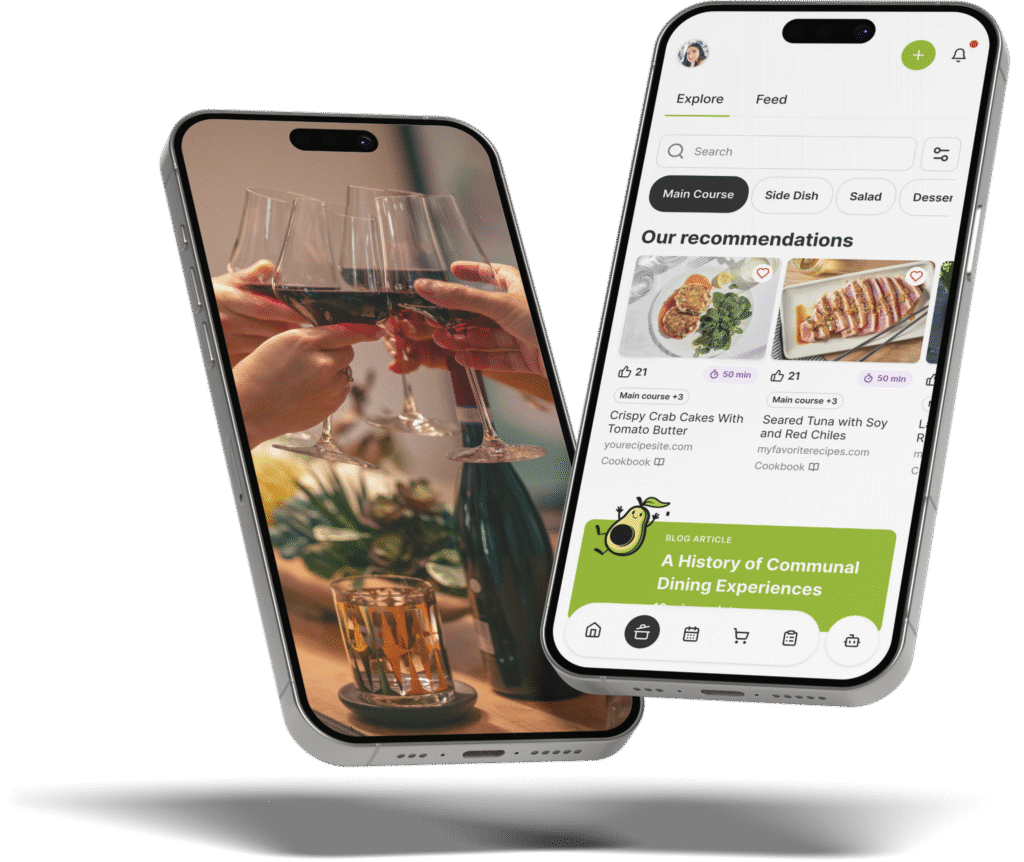
RSVP responses live almost entirely on text now, with email running second and paper a distant third — a shift that has changed the channel without changing the contract. The host who tracks every yes and no in a single place rather than three open phones spends Wednesday night planning the menu instead of scrolling for the latest “maybe.”
Tracking is a planning tool, not a guilt tool; the goal is to know the headcount on Thursday morning, not to keep a ledger of who replied first.
How the TGH App Handles RSVP Responses
Four pieces of the RSVP workflow that the modern host owns:
- One channel for invitations. Choose paper, email, or text per dinner and stick with it. Mixing channels for the same dinner is the fastest way to lose two replies.
- One view of replies. Yes / no / maybe across all guests in a single screen. The number at the top is the seating count. The TGH app surfaces this as the first thing on the dinner card.
- One automatic two-day nudge. The follow-up message goes out two days past the deadline to anyone who has not replied, drafted by the host once and sent automatically thereafter. Reply rates climb to roughly ninety percent on the follow-up.
- One private note per guest. Dietary restrictions, plus-one decisions, and seating preferences attached to the guest record — not floating in a text thread. The host stops searching for the gluten note from October.
A summer dinner party menu guide is only as good as the headcount feeding into it, and the headcount is only as good as the RSVP system behind it. Closing the loop on replies is the planning move that lets the host walk into Friday with the menu, the seating, and the wine count settled by Wednesday — and arrive at dinner present rather than scrambling.
The host’s broader dinner party planning 101 framework sits on top of exactly this foundation: a real headcount, a real timeline, a real evening.
Reply by reply, the modern dinner party still runs on the same contract Emily Post named a century ago. Honored properly — by the host who asks well and the guest who answers cleanly — the table fills with the right number of seats on Friday night, and the host pours the first glass at seven-oh-three instead of seven-twenty-eight.
Frequently Asked Questions
What does RSVP actually mean in modern hosting?
RSVP stands for répondez s’il vous plaît. French for “please respond.” In modern usage, it asks for a definite yes or no by a specified date so the host can plan headcount, food, and seating. It is not a polite suggestion. It is the floor of the social contract between host and guest.
How long do guests have to RSVP to a dinner party?
Two weeks is standard for a dinner party, one week for casual gatherings, and four weeks for events that require advance planning. The host sets the date in writing on the invitation and treats anything past that date as a tacit decline unless they hear otherwise from the guest.
Is it rude to follow up if someone doesn’t RSVP?
No. A polite follow-up two days after the deadline is standard hosting. The script stays short: “Just confirming. Will you be able to make it on the 14th?” The follow-up gets you a real answer roughly nine times in ten without making the guest feel pursued or scolded.
How do you politely ask for no plus-ones?
Put the plus-one rule on the invitation itself, not in a day-of conversation. Address the invite by name, “John and Sarah” rather than “John and Guest,” and add one clean line in the body: “We’re keeping the table to ten this time, so we’re not able to extend plus-ones.” That clarity heads off the awkward last-minute question at the door.
What do you say to someone who didn’t show up?
Three approaches work depending on the relationship. Close friend: send a one-line text the next day asking if everything is okay. Acquaintance: leave it alone the first time. Repeat offender: ask once, calmly, in person, “Everything alright? We missed you Thursday”, then drop it.
Can you RSVP by text for a casual dinner party?
Yes. Text is appropriate for casual hosting, especially when the invitation arrived by text. Email matches email invitations. Paper invitations expect an RSVP card or a phone call back. The channel of the reply should always mirror the channel of the original invitation.
Continue Reading:
More On Hosting Etiquette
- Table Manners for Hosts: 9 Cues That Set the Tone
- Dining Table Etiquette: Place Setting Rules for Hosts
- Japanese Table Etiquette: A Host’s 8-Rule Quickstart
- French Dining Etiquette: A Host’s Continental Primer
- Hostess Gift Etiquette: A Host’s Guide to Receiving
- Dinner Party Seating: 6 Rules for the Host’s Chart
More from The Gourmet Host
- Irish Wedding Toasts: Traditional Celtic Blessings
- How to Plate Food Like A Pro: Easy Plating Tips
- Gluten-Free Dairy-Free Hors d’Oeuvres: 6 Safe Bites
- How to Host a Baby Shower Your Guests Will Love
- How to Use Anchovy and Colatura Without Tasting Fishy
Explore TGH Categories
- Set the Scene
- Drinks and Bar
- Plan the Meal
- Engage with Guests
- Games and Toasts
- Tools and Techniques
- Why We Gather