6 Types of Edible Mushrooms Worth Cooking for Guests
 13 min read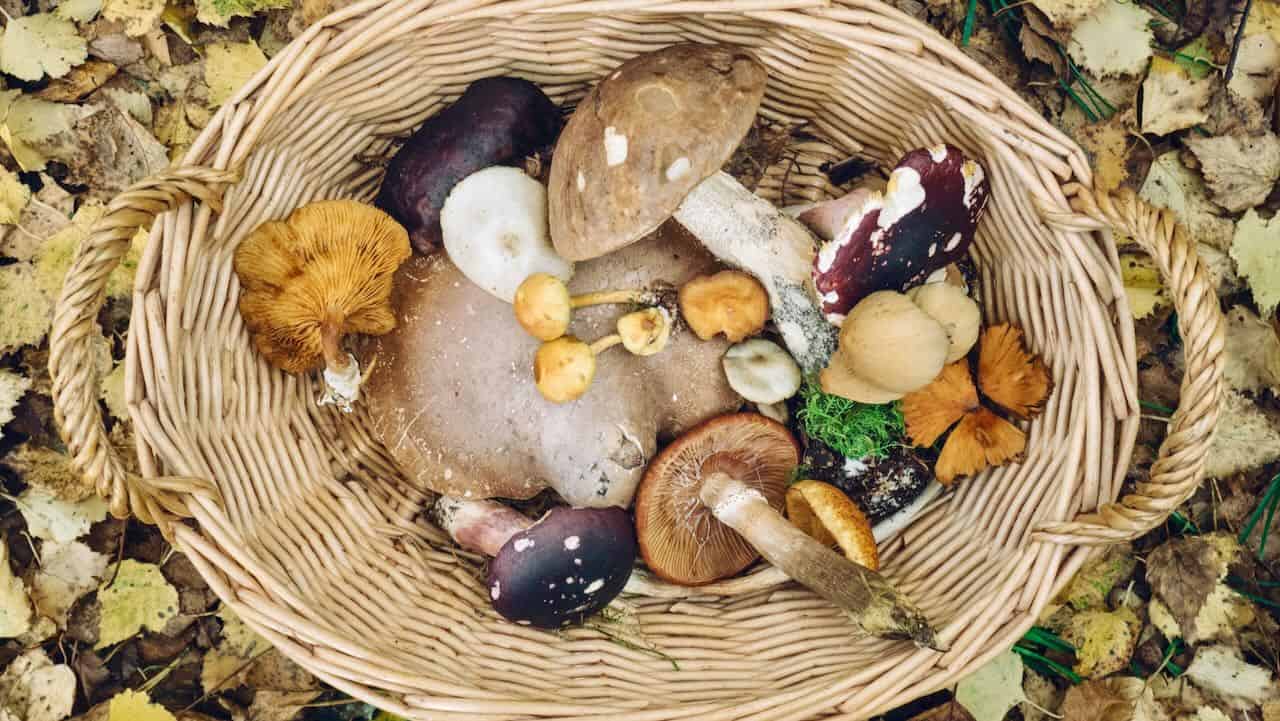
Cremini, shiitake, oyster, maitake, morel, and dried porcini are the six types of edible mushrooms worth a host’s money, ranked by how much of their difference the finished plate shows. Picking, storing, quantities, and pours follow.
You are at the mushroom case on a Saturday in November with a clamshell in each hand, working out whether one of them is worth the extra four dollars. Eight people are coming that night. The recipe says only mushrooms.
Take the shiitake home, slice them thin, and stir them into a cream sauce for pappardelle, and the smoky depth you paid a premium for goes missing under the cream. Cremini at a third of the price would have finished the same plate.
Mushrooms are one of the few things in the produce aisle where the dish is decided at the case, not at the pan.
Six kitchen mushrooms cover almost everything a host cooks between September and February, ordered here by how much of their difference reaches a guest’s fork, along with what to look for at the case, how to keep them dry, how much to buy, and what to pour.
At a Glance
- Six types of edible mushrooms cover nearly every hosting dish: cremini, shiitake, oyster, maitake, morel, and dried porcini.
- Cremini is the everyday buy. It carries sauce, risotto, and stuffing, where mushroom is the background flavor rather than the headline.
- Shiitake and oyster are texture buys. Roast them dry and hot, and guests notice the chew and the crisped edges before they name a flavor.
- Maitake, morel, and dried porcini are showpieces. Give them a course of their own, or their price disappears into the pan.
- Buy firm, dry caps and store them in paper rather than sealed plastic, so the pan can brown them instead of steaming them.
- Quantities are a judgment call, not a published standard. Our working rule of thumb is four ounces of raw mushrooms per guest as a side, doubled when mushrooms carry the main.
What Are the Types of Edible Mushrooms Worth Cooking?
Types of edible mushrooms worth cooking are the cultivated and commercially dried varieties a home kitchen can buy year round and use without any identification skill: cremini, shiitake, oyster, maitake, morel, and dried porcini. For a host, the useful distinction is not species but job, because each one is better than the rest at exactly one thing and unremarkable at everything else. That is why a mushroom variety guide built for hosting sorts by the dish the mushroom is going into, not by the shelf it came off.
Mushroom Choice Happens at the Case, Not at the Pan
Which species goes in the bag is the decision that changes a mushroom dish, and it gets made in the produce aisle before any pan is hot. Species sets the water content, the cap structure, and how much flavor survives cream, stock, or a long braise. Technique can only work with what you carried home.
That is why thinking in types of mushrooms for cooking beats thinking in recipes. FoodWise keeps a guide to specialty mushrooms beyond the button that walks through what separates the varieties once you get past the white cap.
What to Check Before the Clamshell Goes in the Cart
Freshness beats variety at this stage, because a tired specialty mushroom cooks worse than a fresh common one. The Mushroom Council covers the same signals in its notes on hunting for good mushrooms in the grocery store.
- Dry to the touch: a slick or beaded cap has been misted or has sweated inside the package, and that water goes straight into your pan.
- Firm caps and taut edges: softness at the rim is the first sign a mushroom is on its way out, well before there is any smell.
- Clean gills: dark, matted, or damp gills on a cremini or a shiitake mean the clamshell has been sitting.
- Weight for the size: a light package usually means the mushrooms gave up their water on the shelf rather than in your kitchen.
Storage is the same short list. Keep them in paper, on a middle shelf rather than the chilliest one, and slit or remove the plastic wrap the moment you get home. Our roundup of pantry and fridge staples worth keeping on hand treats paper bags as equipment rather than packaging.
With the buying habit fixed, the six varieties sort themselves by how far their difference travels onto the plate.
Six Kitchen Mushrooms, Ranked by What the Plate Notices
Six varieties cover almost every dish a host cooks once the weather turns, and they rank cleanly by how much of their character survives onto a fork. Growers draw a similar line when they separate the types of food mushrooms from the ornamental and medicinal species. Far West Fungi publishes a grower’s guide to cultivated mushroom varieties that maps the cultivated side.
Six is a deliberately short types of mushrooms list. Ranked here means ranked by what a guest notices, not by what the shelf charges.
From Everyday Base to Showpiece
- Cremini: the everyday base for sauce, risotto, and stuffing, and for anything where mushroom is the background rather than the headline.
- Shiitake: deep savory flavor and a firm, almost meaty chew that holds its shape in a stir-fry, a broth, or a hot dry pan.
- Oyster: frilled caps that crisp at the edges in minutes, which makes this the fastest texture win on the list.
- Maitake: a whole cluster roasts into a fanned, crackling slab that can sit in the middle of a plate as a course.
- Morel: honeycombed caps with a cream-friendly flavor nothing else duplicates, sold fresh for a few spring weeks and dried the rest of the year.
- Dried porcini: the least expensive way to buy concentrated mushroom flavor, and the only one here that improves a dish it never headlines.
The order matters when the budget is finite. Money spent at the top buys reliability, and money spent at the bottom buys a moment guests talk about, but only when the dish leaves that moment room. Our guide to designing a menu that brings guests closer together sorts by the same axis.
Mushrooms sit at the front of the winter ingredient set for that reason: they are the one item on the winter shopping list where paying more can buy you nothing at all. The types of cooking mushrooms that earn a permanent place are the ones that change a specific dish, and cremini earns its place first.
|
Keep Every Mushroom Recipe in One Place |
Cremini Carries the Dishes Where Mushroom Is the Background
Cremini mushrooms are the right buy whenever mushroom is a component rather than the point. They brown reliably, hold their shape in liquid, and cost little enough that you can use a full pound without flinching. That combination is exactly what a sauce, a risotto, or a stuffing needs.
A white button and a cremini are the same species at different ages, which is why cremini reads as a deeper version of a familiar flavor rather than a new one.
Long, slow winter dishes are where that depth shows. Food52’s notes on a mushroom risotto built for cold weather put the mushrooms in early, so their liquid becomes part of the cooking medium instead of a puddle at the end.
Where Cremini Beats a Pricier Cap
- Cream and stock dishes, where a delicate variety gets swallowed whole.
- Anything chopped fine, since texture is not the reason you are buying.
- Big-batch cooking for eight or more, where a pound of specialty mushrooms becomes a real expense.
- Make-ahead dishes that get reheated, because cremini does not go stringy the way oyster does.
Learning how to cook mushrooms well starts here, on the inexpensive variety, where a ruined pan costs three dollars. Our walkthrough of core kitchen methods and when to use each one covers the dry sear this section leans on. Once that pan is reliable, texture becomes worth paying for.
Shiitake and Oyster Put Texture Where Guests Can Feel It
Shiitake mushrooms and oyster mushrooms are texture purchases, and both reward a hot dry pan more than a saucepan. Shiitake gives a firm, almost meaty chew, while oyster gives frilled edges that crisp in about the time it takes to toast bread. Guests register both before they name a flavor.
Shiitake also anchors most types of asian mushrooms a Western grocer stocks, alongside enoki and king oyster, which makes it the easiest entry point into that shelf.
- Stem the shiitake: the stalk stays woody however long it cooks, so save it for stock and cook only the cap.
- Tear the oyster, do not slice it: torn edges catch fat and crisp, while a knife cut leaves flat faces that steam.
- Start both in a dry pan: fat added at the beginning slows the browning that produces the texture you paid for.
- Finish fast: oyster mushrooms go from crisp to limp in under a minute once any liquid arrives.
Garlic and butter belong at the end, not the start. Food With Feeling’s garlic butter oyster mushrooms follow that order, letting the mushrooms take color before anything fatty joins them.
Texture a guest can feel is a genuine step up from background flavor. The next three go further and ask for a course of their own.
|
Hosting Tip: Salt the Pan Last, Not First |
Maitake, Morel, and Dried Porcini Earn a Course of Their Own
Maitake mushrooms, morel mushrooms, and dried porcini mushrooms are the three worth overspending on, and each asks for a different kind of room on the menu. Bury any of them in a mixed saute and the money vanishes. Give them a course, or a dish with their name on it, and they carry the evening.
Maitake: The Roast That Reads as a Main
Maitake arrives as a cluster rather than as separate caps, and that is the whole advantage. Roasted whole at high heat and pressed lightly, the frills crisp while the core stays dense enough to slice like a small steak. On a puree with something acidic alongside, it becomes a vegetarian main that needs no apology.
That makes it the useful swap when a menu is otherwise meat-led. Our three complete main-course menus with a vegetarian option build on the same idea of one plate that stands up on its own.
Morels and Dried Porcini: Two Very Different Splurges
Morels sell fresh for a few weeks in spring and dried for the rest of the year, and they have to be cooked through. Forager Chef’s guide to identifying and cooking true morels is the reference worth reading before a first purchase, especially on the false-morel question.
Dried porcini is the opposite kind of splurge. An ounce costs less than a restaurant appetizer and lifts a dish it never headlines, and the soaking liquid becomes the most concentrated mushroom stock in the kitchen. Marx Foods explains how to reconstitute dried porcini without the grit that puts people off them.
- Maitake: one cluster for every two guests, roasted whole and plated as the center of a course.
- Fresh morels: stuffed, or in a cream sauce over something plain, and never served raw.
- Dried morels: rehydrated into a braise, where the honeycomb catches sauce.
- Dried porcini: a small handful blitzed to powder as seasoning, or soaked whole for stock.
Spending well on these three depends on buying the right amount, and that is the part of the plan with the least reliable published guidance.
How Do You Scale Mushrooms for Eight Guests?
Buy by the pan, not by the guest. Mushrooms give up most of their water in heat and shrink to a fraction of what went in, so the useful question is how much raw volume your largest skillet or sheet pan can brown in one layer. Buying mushrooms for hosting is a volume question before it is a variety question.
No published standard exists for mushrooms per person, which is worth saying plainly rather than inventing a figure. Treat the figure here as a working rule of thumb and nothing more: about four ounces of raw mushrooms per guest for a side, doubled when mushrooms carry the main.
Quality matters more than precision on the scale anyway. Zombie Myco’s notes on what to look for at the mushroom case are a better use of five minutes, because a fresh pound outperforms a tired pound and a half. The figures below are that same rule of thumb applied.
- Plan on roughly two pounds of cremini for eight as a side, which is also about what fits one half-sheet pan in a single layer.
- Plan on one maitake cluster, roughly half a pound, for every two guests when it is plated as a course.
- Plan on an ounce of dried porcini to carry a braise for six, soaking liquid included.
- Scale down anything folded into sauce or risotto, where the mushroom works as seasoning rather than substance.
Getting the amount roughly right is what lets the last decision, how the mushrooms reach the table, stay simple.
|
Build the Whole Menu Around One Ingredient |
On the Night: Pours, Timing, and What Goes Wrong in the Pan
Serve a mushroom course with something that carries earthiness or age, and give the pan more room than feels necessary. Those two choices do most of the work on the night.
Pinot Noir is the reliable red, and an older white with some oxidative character is the more interesting alternative. Glass of Bubbly makes the case for matching wine to a mushroom-forward course with sparkling wine as well, which suits a maitake roast better than its reputation suggests.
- Pinot Noir: the safe red for cremini or morel dishes that have cream in them.
- Aged white or sparkling: cuts the fat in a butter-heavy pan roast without flattening the mushroom.
- Sherry or vermouth in the pan: a splash at the end lifts everything and costs nothing on the table.
- Leave the big tannic reds alone: they read as bitter next to a browned mushroom.
The crowded-pan rule turns out to be softer than it sounds. Cooking Issues went at the question directly in why a crowded, wet pan of mushrooms still works, and the practical upshot is that crowding costs you time rather than color.
The habits that genuinely cost you are wetness and impatience. Rinsing under a running tap loads the mushroom with water it dumps straight back into the pan, and moving them every thirty seconds prevents the contact that browns them. Our complete list of cooking techniques for home hosts covers the dry sear and the deglaze that fix both.
Wipe the caps with a damp cloth, leave the pan alone for three minutes, and buy the variety that suits the dish you are making rather than the one with the best story. Buying for the dish rather than for the story is what saves the four dollars, or spends them well.
Frequently Asked Questions
What are the different types of mushrooms used in cooking?
Cremini, shiitake, oyster, maitake, morel, and dried porcini cover almost every home-kitchen use. Cremini handles sauce and stuffing, shiitake and oyster bring texture to a hot pan, and the last three work as showpieces. Button mushrooms are simply younger cremini, so the different types of mushrooms on a grocery shelf overlap more than the labels suggest.
Which mushrooms are best for eating?
All six varieties here are cultivated or commercially dried, which makes them the safest types of mushrooms for eating without any identification skill. Cremini is the best everyday choice on price and reliability. Maitake is the best single mushroom to serve when you want guests to notice it on the plate.
Which edible mushrooms are the most common?
White button, cremini, and portobello are the most common edible mushrooms in North American stores, and all three are one species at different stages of growth. Shiitake and oyster follow close behind them. Those five plus dried porcini make up the types of common mushrooms you can count on finding year round.
How much mushroom should I buy per person for a dinner party?
No published standard exists, so treat any figure as a rule of thumb rather than a rule. Ours is roughly four ounces of raw mushrooms per guest for a side dish, doubled when mushrooms carry the main course. Buy by what your largest pan browns in one layer and adjust from there.
Which Asian cooking mushrooms are most popular?
Shiitake, enoki, king oyster, and wood ear are the types of asian mushrooms most Western grocers stock, and shiitake is the one worth learning first. It brings the deepest savory flavor of that group and holds its chew in broth, stir-fries, and long braises without going soft.
How do you clean and store fresh mushrooms?
Wipe them with a damp cloth or a soft brush rather than rinsing, because a soaked mushroom steams instead of browning. Store them in a paper bag in the fridge, never in sealed plastic, and use them within four or five days. Knowing how to clean mushrooms this way protects the texture you paid for.
Continue Reading:
More On Fall and Winter Ingredient Heroes
- Brussels Sprouts Recipes: Roasted, Crispy, With Bacon
- Sweet Potato Recipes Past the Casserole and the Pie
- Winter Citrus Fruits That Brighten Salad and Roast
- Leek Recipes: From Potato Soup to a Winter Gratin
- Fennel Recipes With Roasted Bulb, Salad, and Negroni
More from The Gourmet Host
- Essentials Series: Ingredients for a Well-Stocked Kitchen
- Beyond the Plate: How to Design a Menu that Fosters Closer Connections
- Different Methods and Techniques For Cooking Like a Chef
- Main Course Meat Dishes For Entertaining: 3 Complete Menus (Vegetarian Option Included)
- The Complete Cooking Techniques List for Confident Home Hosts
Explore TGH Categories
- Set the Scene
- Drinks and Bar
- Plan the Meal
- Engage with Guests
- Games and Toasts
- Tools and Techniques
- Why We Gather