Types of Onions Every Smart Home Cook Should Know
 17 min read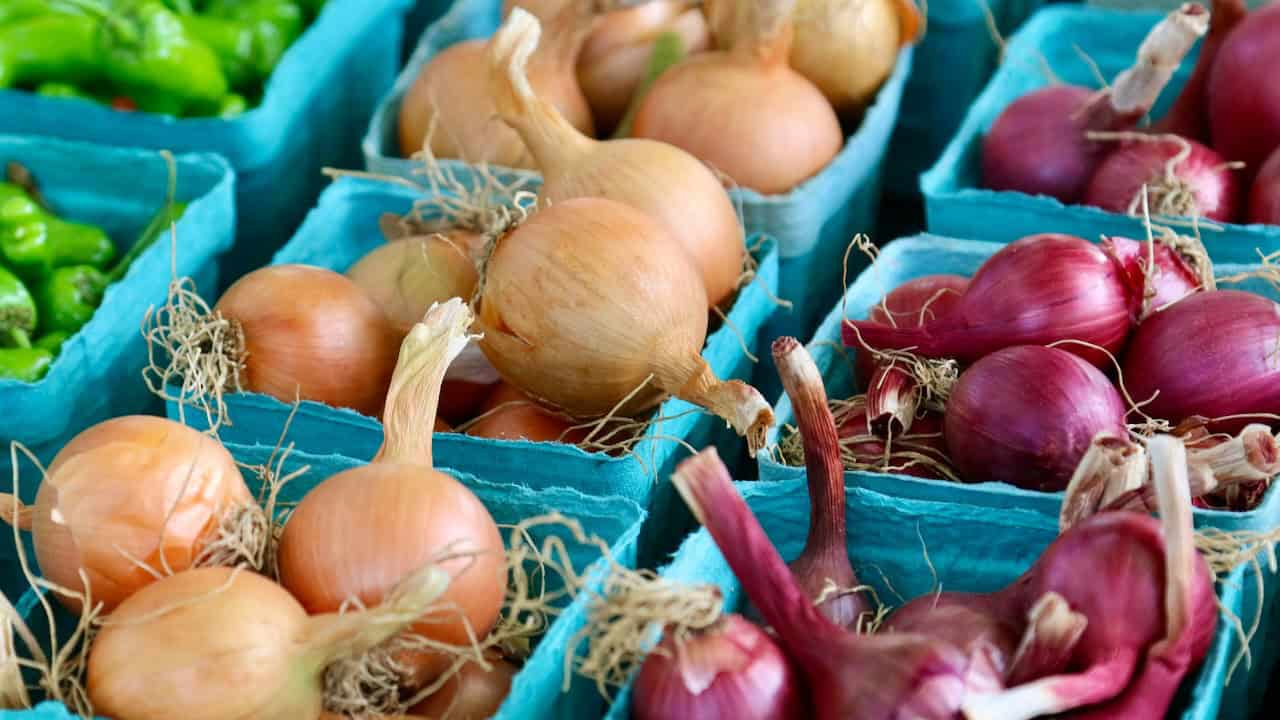
Watch a French cook finish a pan sauce, and somewhere between the deglaze and the butter, a small pile of minced shallot slides into the pan. Not a yellow onion. A shallot. That single switch is the move that makes the sauce taste finished, and it is the difference between guessing at the onion bin and reaching for the right bulb without looking.
Every onion in this guide has one job the others cannot fully cover. Yellow sweats into the soup, white sharpens the salsa, red holds its bite raw, sweet caramelizes for soup, shallot quiets a vinaigrette, scallion finishes a bowl. Stock all six and the recipe never sends you back for the wrong bulb.
At a Glance
- Five onions plus the shallot cover almost every hosting dish: yellow, white, red, sweet, shallot, and the scallion family.
- Yellow cooks. White salsas. Red goes raw. Sweet caramelizes. Shallot quiets pan sauces and vinaigrettes.
- Color alone does not pick the onion. Sugar level, water content, and pungency do, and each varies by variety.
- Onions store best dry, dark, and breathable. Mesh bags or a dedicated drawer beat plastic and the fridge.
- Matching the onion to the job is the cheapest upgrade in a host kitchen.
What ‘Types of Onions’ Actually Means in a Host Kitchen
Types of onions refers to the five working varieties a host pulls off the shelf for different dishes: yellow, white, red, sweet, and the shallot, plus the green-onion family (scallions, spring onions) used for finishing. Each variety differs in sugar content, water content, and sulfur compounds, which is why a yellow caramelizes into a sweet jam while a red stays sharp and crunchy in a salad.
The host’s view of onions runs on three working axes:
- Sugar level: higher sugar means deeper caramelization. Sweets win, yellows are middle, whites and reds run drier.
- Water content: higher water means faster bruising and shorter shelf life. Sweets again, on the wrong side.
- Sulfur bite: raw pungency before cooking. Whites and yellows sharp, reds and sweets milder, shallots gentlest.
Those three axes drive every dish-to-onion match the rest of the guide walks through.
Why Five Onions Cover Almost Every Hosting Dish
The five working types of onions for cooking map directly to the five jobs a host kitchen does week after week: building a soup base, sharpening a salsa, garnishing a salad raw, caramelizing slowly, quieting a pan sauce. Pick one bulb for each job and the kitchen runs without an emergency grocery run.
As Saveur’s onion guide puts it, the difference between a yellow and a white in a pico de gallo is not subtle. Different types of onions release different sulfur and sugar profiles, and the recipe’s flavor balance was usually written around one variety.
The five host-grade onions, each with one job
- Yellow onion: daily workhorse for soups, sautés, stocks, and braises. Default cooking onion in almost every American and French recipe.
- White onion: sharper and crisper, the right pick for Mexican cooking, salsas, and any dish that needs raw bite without color.
- Red onion: raw-use onion for salads, sandwiches, and quick pickles. Color and crunch hold up against vinegar and citrus.
- Sweet onion (Vidalia, Walla Walla, Maui): the caramelizing onion. High sugar, low sulfur, perfect for French onion soup or a long roast.
- Shallot: quiet star of vinaigrettes and pan sauces, where onion flavor should disappear into the dish rather than declare itself.
Scallions and spring onions sit alongside this core five as the finishing layer. The timing of when each onion enters the pan also matters, which is covered in our complete cooking techniques list for confident home hosts. The variety-by-variety walk begins next.
The onion shelf at a glance, with the bite each one brings and the dish it suits best:
| Onion | Profile | Best for |
|---|---|---|
| Yellow | All-purpose cooking | Soups, sautes, stocks, braises |
| White | Sharp, crisp raw | Salsas, Mexican cooking, light stocks |
| Red | Color, holds raw | Salads, sandwiches, quick pickles |
| Sweet (Vidalia) | High sugar, low bite | French onion soup, slow caramelizing |
| Shallot | Gentle, refined | Vinaigrettes, pan sauces, mignonette |
| Scallion | Bright, fresh | Finishing and garnish |
|
Keep the Cooking Plan Together |
Yellow Onion: The Daily Workhorse for Soups and Sautés
The yellow onion is the bulb the recipe means when it says only ‘one onion, diced.’ Coppery skin, pale yellow flesh, balanced sugar and sulfur, and a flavor that softens and deepens under heat. Yellows sweat into mirepoix, caramelize partway in fifteen minutes, and dissolve into a long-cooked braise without leaving structure behind.
When the yellow onion is the right pick
- Soups and stocks. Chicken stock, beef stock, vegetable broth, almost every soup base. The yellow’s balance gives backbone without dominating.
- Sautéed sides. Onion-and-pepper sauté, onion gravy, smothered pork chops. Any pan-cooked side where the onion should land soft and golden.
- Braises and stews. Beef bourguignon, lamb tagine, coq au vin, chili. The yellow holds up to long cooking and rounds out the sauce.
The failure point is using yellow onions raw. As The Kitchn’s guide on cooking onions correctly notes, the yellow’s flavor only becomes the rounded, sweet note hosts want after seven to eight minutes of medium heat. Eat it raw and the sulfur burn shows up first.
Buy yellows in three-pound bags, store in a dark drawer, and they hold for six to eight weeks. Cut yellows wrap in plastic and last four days in the fridge, so a Sunday-night mince still works for Wednesday’s chili.
|
Hosting Tip: Rinse Raw White Onion Briefly |
White Onion: The Sharp One for Salsas and Mexican Cooking
White onions look almost identical to yellows at first glance, but the flesh is whiter, the skin is papery and pale, and the bite is sharper. Mexican cooking is built on the white onion the way French cooking is built on the yellow. Pico de gallo, salsa verde, cebolla en escabeche, ceviche, and most fresh salsas across Latin America are written for a white onion. Swapping a yellow into a salsa flattens it.
Where white onions belong by default
- Salsas and pico de gallo: the crisp bite cuts through tomato sweetness and lime acid without going muddy.
- Mexican and Tex-Mex cooking: tacos, enchiladas, tortas, ceviche, agua de cebolla, any recipe coded for that cuisine.
- Quick pickled onions for tacos: the white holds shape and color better in a lime-and-salt pickle than the yellow or red.
- Light-colored stocks and brines: when a stock should stay pale (chicken consomme, fish stock), the white avoids the amber tint a yellow adds.
The white’s other quiet job is in raw-bite applications where color matters. A red onion stains everything it touches; a white stays clean. The Kitchn’s piece on yellow versus white onions for cooking makes the same point: the swap looks invisible on the cutting board, but the dish tastes different by a clear margin.
Buy two or three whites alongside the yellow stock when planning Mexican or Latin American menus. They store identically to yellows (dark, dry, six to eight weeks) and behave the same way once cut.
|
Share Every Prep Task Clearly |
Red Onion: The Raw-Use Onion for Salads and Salsas
Red onions are the bulb a host reaches for whenever the onion needs to land on the plate raw and stay there as a visible color. Purple-magenta skin, white flesh with bright red-violet rings, and a flavor that walks a line between sharp and sweet. Types of red onions vary by region (Italian Tropea, Spanish red, standard supermarket red), but they share raw crunch, raw color, and a bite that mellows on contact with acid.
Where red onions earn their shelf space
- Green salads with vinaigrette: thin rings or slivers contribute color and crunch alongside the dressing.
- Sandwich and burger toppings: the bite cuts through fat and the color reads through the bun.
- Quick pickles: in red-wine vinegar or apple cider vinegar with sugar and salt. Ready in twenty minutes, holds two weeks in the fridge.
- Salsas with chunky structure: pico de gallo with red instead of white is a different dish, not worse, just more visual.
The trick with raw red onion is the soak. Slice thin, dunk in cold water for ten minutes, drain, and the harshest sulfur compounds wash out while crunch and color stay. David Lebovitz’s Zuni-style pickled red onion recipe and The Kitchn’s quick-pickled red onions reference both walk through the soak and the brine.
Cooked reds lose color (gray-brown in the pan) and flavor flattens, so the red rarely belongs in a cooked application unless the dish needs the color to bleed (red onion jam, for instance). Stock one or two reds at a time; they bruise more easily than yellows.
Sweet Onion: Vidalia, Walla Walla, Maui for Caramelizing
Sweet onions are the host’s caramelizing onion. Vidalia from Georgia, Walla Walla from Washington, Maui from Hawaii. All share two traits: very high sugar content (almost twice the yellow’s) and very low sulfur, which is why the bite stays mild raw and turns into a sticky brown jam under slow heat.
The two host jobs sweet onions own
- French onion soup. Four to six pounds of Vidalia or Walla Walla, sliced thin, cooked low for forty-five to sixty minutes until amber and jammy. The sugar produces the deep color.
- Caramelized-onion toppings. Flatbreads, pizzas, burgers, grilled cheese, onion tarts. Sweet onions hit the sticky-jam stage faster than yellows and stay there longer without burning.
- Raw on a sandwich, when the bite should be mild. Vidalia rings on a tomato sandwich is a classic Georgia move the red onion would overpower.
Types of sweet onions and types of mild onions overlap, which is why supermarket labels blur. The reliable signal is the variety name on the sticker (Vidalia, Walla Walla, Maui, OSO Sweet). A bag labeled just ‘sweet onion’ is usually a generic hybrid that caramelizes acceptably but loses some sugar depth. Simply Recipes’ classic French onion soup walkthrough calls out the variety specifically.
Sweet onions store badly. High water content means they bruise and rot inside three weeks. Buy them as needed and keep them separated from potatoes (potatoes accelerate sweet-onion spoilage).
Shallot: The Quiet Star of Vinaigrettes and Pan Sauces
Shallots are a different species from the common onion (Allium cepa var. aggregatum), behaving like a cross between an onion and garlic. Coppery papery skin, two cloves nested inside a single bulb, and a flavor gentler, sweeter, and more aromatic than any other type of onion in the lineup. French cooks reach for the shallot in pan sauces and vinaigrettes by default.
Where shallots beat every other onion
- Vinaigrettes: mince in red wine vinegar for fifteen minutes before whisking in olive oil. The acid mellows the bite while the shallot perfumes the dressing.
- Pan sauces: after searing steak or chicken, sweat minced shallot in the fond, deglaze with wine, reduce, mount with butter. The aromatic backbone of every French pan sauce.
- Mignonette for oysters: minced shallot in champagne or red wine vinegar, cracked black pepper. Three ingredients, built on the shallot.
- Beurre blanc and beurre rouge: the classic French butter sauces start with shallot reduction.
On the substitution question, The Kitchn’s reference on swapping shallots for onions explains the ratio: use about half the volume of yellow onion as you would shallot to avoid overpowering the dish, since yellow has more sulfur bite. The reverse swap (shallot for yellow) works in nearly every cooked application.
Shallots cost more per pound, but the per-recipe use is tiny (one or two cloves). Pair shallot with the host’s seasoning logic from our guide to seasoning food so every dish tastes intentional, the same way small precise choices compound in our French dining etiquette primer for hosts.
Green Onions and Scallions: When the Recipe Needs Bright, Not Pungent
Green onions, scallions, and spring onions sit in a separate category from the bulb varieties above. The white-and-green stalks contribute a fresh, grassy, almost herbal note that no mature onion delivers. Types of green onions come in two supermarket forms: scallions (no bulb, slim white base) and spring onions (small round bulb).
How scallions belong in a host kitchen
- Finishing layer. Sliced thin and scattered on top of a finished bowl. Ramen, fried rice, congee, grain bowls, a baked potato. The green note lifts the dish.
- Asian cooking. Stir-fries, dumplings, scallion pancakes, ginger-scallion oil, Korean banchan. The everyday allium across most East Asian cuisines.
- Soft cheese and dip applications. Minced scallion in cream cheese, sour-cream dips, herbed butter. The grassy note plays where a raw yellow would be too aggressive.
- Garnish for soup, salad, and eggs. The visual signature on top of an omelette, a chowder, or a Caesar.
The white base and green tops cook differently. The Kitchn’s explainer on scallions versus green onions versus spring onions clears up the naming: in the U.S., ‘green onions’ and ‘scallions’ are interchangeable for the same plant; ‘spring onion’ refers to the slightly older variety with a small developed bulb. The white base sweetens with brief heat; the green tops bruise easily and belong raw on top.
Scallions are the only onion variety that lives in the refrigerator. Wrap in a damp paper towel, store in a produce drawer, and they hold seven to ten days. Pair the scallion finish with the technique in our basic knife skills guide and the bias-cut comes off clean every time.
Onion Pairings by Dish: Roasts, Salads, Salsas, Soups, Sauces
Types of onions and their uses become memorable once a host thinks dish-first instead of onion-first. The pairing chart below covers six common host dishes with the right pick and the reason it works.
Six dishes, six right onions
- Roasted vegetables and pan roasts: yellow onion in big chunks. Caramelizes at oven heat without dominating the other vegetables.
- Green salad with vinaigrette: red onion, slivered thin, soaked five minutes in cold water. Color and crunch, no aggressive bite.
- Fresh salsa or pico de gallo: white onion, fine dice, salted briefly. Clean sharp bite belongs against tomato, lime, and cilantro.
- French onion soup: Vidalia or Walla Walla sweet onions, sliced pole-to-pole, cooked low for forty-five minutes.
- Pan sauce after searing protein: shallot, fine mince, sweated in the fond. Yellow works in a pinch but flattens the sauce.
- Finished bowl or grain salad: scallion or sliced spring onion on top. The bright green note finishes the plate.
The substitution map: yellow for white in a cooked Mexican dish (acceptable). White for yellow in a French sauté (workable, slightly sharper). Red for white in a salsa (color shift but bite holds). Shallot for yellow or red in nearly any cooked application (an upgrade). The Kitchn’s collected onion recipes, ideas and tips runs through several substitutions.
Pairing the onion to the dish is the same logic that guides the menu, the planning frame in our dinner party menu guide for meals guests remember. Onion choice is one of the cheapest upgrades on the sequence.
Common Onion Mistakes: Wrong Color, Wrong Cut, Wrong Order
Five mistakes show up at almost every home dinner party, all stemming from treating the onion bin as one category rather than six distinct ingredients. Catching these moves the dish from competent to noticeably better, with no extra ingredient cost and almost no extra prep time.
The five recurring onion mistakes
- Using a yellow in a fresh salsa. The cooked onion in the recipe tastes raw and harsh next to lime and tomato. White is the right call almost every time.
- Caramelizing a yellow when the recipe wants a sweet. Yellows caramelize, but Vidalia or Walla Walla produces deeper color, faster, with less risk of scorch.
- Slicing with the grain when caramelizing. Pole-to-pole slicing keeps rings intact for forty-five minutes; equator-cut slicing collapses and burns.
- Storing onions in plastic or in the fridge whole. Mesh, paper, or open air at room temperature. Plastic traps moisture and the bulbs sprout in ten days.
- Salting cooked onions at the end instead of the start. Salt in the first thirty seconds pulls water out and accelerates the sweat. Salt at the end and the onions stay watery instead of golden.
On the cut, David Lebovitz’s French onion dip walk-through calls out the pole-to-pole cut as the move that separates a deep caramelized dip from a mushy one. True caramelization is amber-brown and takes the full forty-five minutes; the half-translucent end-state most cooks call ‘caramelized’ is just sweated onion.
Cooks running through these fixes once notice the difference on the first follow-up dish, and the dish-by-dish match-up becomes habit by the third or fourth menu.
Frequently Asked Questions
What are the main types of onions and what is each one used for?
The main types of onions are yellow, white, red, sweet, shallot, and scallion, each suited to one kitchen job. Yellow builds soups, white sharpens salsas, red adds raw crunch to salads, sweet caramelizes for French onion soup, and shallot quiets pan sauces. Scallions finish it off with a fresh, grassy note.
What’s the difference between yellow, white, and red onions for cooking?
Yellow onions have balanced sugar and sulfur, ideal for cooked applications like soups, sautés, and stocks. White onions are sharper and crisper, the right pick for salsas and Mexican cooking where raw bite is wanted. Red onions are the raw-use onion, with bright color and crunch that holds up against vinegar and citrus in salads and quick pickles.
Which onion should I use raw in a salad or salsa?
For green salads and sandwiches, use red onion sliced thin and soaked in cold water for ten minutes to remove harsh sulfur compounds. For fresh salsas and pico de gallo, use white onion in a fine dice; the clean sharp bite belongs against tomato, lime, and cilantro. Yellow onions are too pungent for raw use in either application.
How do I substitute shallots for yellow onions in a recipe?
Use shallots at roughly the same volume as the yellow onion called for, since shallots are milder and sweeter. The reverse swap (yellow for shallot) requires roughly half the volume of yellow onion to avoid overpowering the dish with sulfur bite. Shallots almost always work as an upgrade in cooked applications like pan sauces, vinaigrettes, and braises.
What’s the best onion for caramelizing for French onion soup?
Sweet onions (Vidalia from Georgia, Walla Walla from Washington, or Maui from Hawaii) are the best onion for caramelizing into French onion soup. The high sugar content (nearly twice the yellow onion’s) produces deeper amber color and sweeter flavor in forty-five to sixty minutes of low, slow cooking. Yellow onions caramelize acceptably but take longer and finish less sweet.
Which type of onion is sweetest for grilling or eating raw?
Vidalia, Walla Walla, and Maui sweet onions are the sweetest types of onions for grilling or raw use. The naturally high sugar content and low sulfur content mean the bite stays mild even uncooked, which is why a Vidalia ring on a sandwich works where a yellow or red would be overpowering. Spring onions are also notably mild raw.
Continue Reading:
More On Ingredient Variety Guides
- Kitchen Essentials Every Home Host Should Stock
- Types of Salt and Which Dishes Each One Belongs On
- Types of Vinegar and the 5 You Should Always Pour
- Cooking Olive Oil vs Finishing Olive Oil Explained
- 5 Types of Potatoes and Which to Pick for Each Dish
More from The Gourmet Host
- Date Night at Home Dinner Ideas Worth Cooking for Two
- 16 Mashed Potato Bar Toppings and Easy Setup Ideas
- Different Methods and Techniques For Cooking Like a Chef
- Winter Party Activities: 7 Ideas from Wonderland Nights to Solstice Suppers
- Beyond the Plate: How to Design a Menu that Fosters Closer Connections
Explore TGH Categories
- Set the Scene
- Drinks and Bar
- Plan the Meal
- Engage with Guests
- Games and Toasts
- Tools and Techniques
- Why We Gather