Types of Salt and Which Dishes Each One Belongs On
 17 min read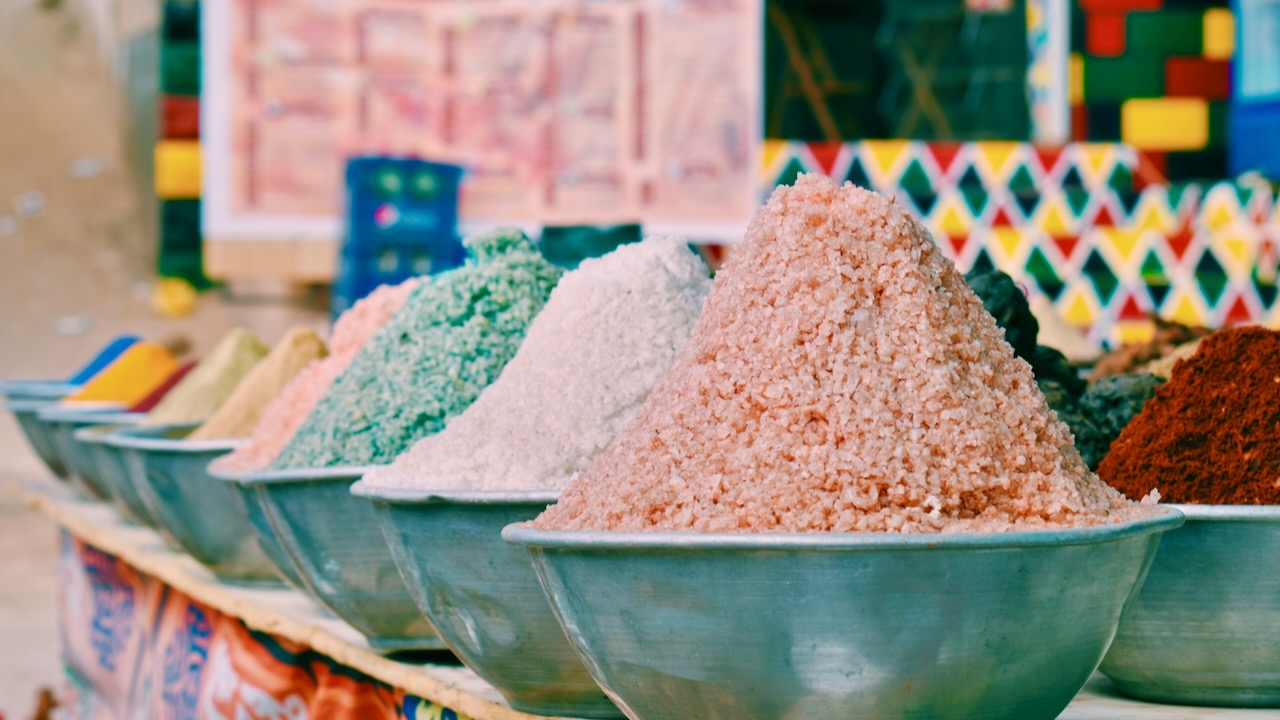
Salt is not salt. One teaspoon of Diamond Crystal kosher salt weighs roughly half what one teaspoon of Morton kosher weighs, and Morton itself weighs less than the same teaspoon of table salt. The same recipe seasoned “to taste” can land twice as salty depending on which box is open.
That is the reframe at the heart of every cooking school’s first knife-and-salt lesson. The salt-to-dish pairing is the variable, not the brand on the label. Hosts who keep three salts within arm’s reach (kosher for daily, fine sea for brines and doughs, flaky for the moment before plating) stop chasing flavor at the end of cooking and start placing it on purpose.
Three salts cover almost every hosting scenario worth cooking. The next box on the shelf is the one that finishes the dish, not the one that started it.
At a Glance
- Crystal size, density, and dissolve rate change how a salt seasons, finishes, or brines a dish.
- Three salts cover almost every hosting scenario: kosher for daily cooking, fine sea for brines, flaky sea for finishing.
- Diamond Crystal and Morton kosher are not interchangeable. A tablespoon of Diamond Crystal weighs about half what a tablespoon of Morton does.
- Finishing salts (Maldon, fleur de sel, smoked) go on after cooking. Cooking with them wastes the texture you paid for.
- Season in three passes (start, mid-cook, just before plating) so flavor builds in layers instead of arriving all at once.
- Table salt belongs in the back of the cabinet. Its fine grain and additives make it the least forgiving choice for hosting dishes.
What Are the Types of Salt?
The types of salt that matter to a home host break into three categories: cooking salts (kosher and fine sea for prep and stove), finishing salts (Maldon, fleur de sel, smoked for crunch after cooking), and table salt (iodized fine grain, best left out of hosting). Each category has a different crystal size, density, and dissolve rate, which is why a recipe in tablespoons of one salt can taste dramatically different in another. The host shortlist is three to four salts, and the real question is which one belongs on which dish.
Why Hosts Need More Than One Salt (and Why Table Salt Comes Last)
Every cookbook author has a default salt, and that default is almost never table salt. Of all the various types of salt on a grocery aisle, table salt is ground fine and packed with anti-caking agents, so it dissolves fast, hides into a dish, and reads faintly metallic when used heavy-handed. For hosts cooking by feel, that combination is unforgiving.
Kosher salt is the workhorse because its crystals are coarser. They pinch cleanly between fingers, distribute visibly on a steak or tomato, and dissolve at a rate the cook can actually track. Fine sea salt covers brines, doughs, and any application where uniform dissolve matters. Flaky finishing salt sits on top of a dish at plating and delivers a small audible crunch.
The Kitchn’s three-salt setup is the same shortlist most professional cooks reach for: each one solves a problem the others can’t.
A few specifics worth memorizing:
- Crystal size drives perceived saltiness. Larger crystals = less salt per teaspoon by weight, which is why the same measure tastes saltier or milder depending on brand.
- Anti-caking agents matter for taste. Table salt’s additives are the reason it reads metallic. Most kosher and sea salts do not contain them.
- Dissolve rate matters for control. Kosher dissolves slower than table salt, giving a wider seasoning window before over-salting.
- Texture matters for finishing. Flaky salts shatter on the tooth. Fine salts disappear. That difference shows up at the table.
What separates a confident host is rarely a fancy ingredient. More often, it is a stocked salt drawer.
The host’s salt shelf at a glance, with where each one belongs:
| Salt | Profile | Best for |
|---|---|---|
| Kosher (Diamond Crystal) | Daily driver | Cooking and seasoning as you go |
| Fine sea | Dissolves fast | Brines, doughs, even seasoning |
| Flaky (Maldon) | Finishing crunch | Steak, tomatoes, roasted veg at the plate |
| Fleur de sel | French finishing | Caramel and steak |
| Smoked | Smoky layer | Grilled meats, root veg, soups |
Kosher Salt (The Daily Driver and Why Brand Matters)
Kosher salt is what the cook reaches for ninety percent of hosting nights. It seasons proteins before a sear, salts pasta water, seasons vegetables before roasting, dry-brines a turkey, and goes into stocks and braises. The Kitchn’s review of Diamond Crystal calls it a pantry must-have, and most chef-driven cookbooks measure salt by Diamond Crystal volume because the larger flake makes recipe calibration consistent.
The catch is that Diamond Crystal and Morton are not the same product. Crystal shape and density differ, and that difference translates directly into how much salt ends up in the pot.
The brand math, in round numbers:
- Diamond Crystal kosher salt: hollow, light, pyramid-shaped flakes. One tablespoon weighs roughly 8 to 9 grams.
- Morton kosher salt: denser, flatter crystals from a roller-pressing process. One tablespoon weighs roughly 14 to 16 grams.
- Standard table salt: fine cubic crystals. One tablespoon weighs roughly 18 grams.
A recipe that calls for “one tablespoon kosher salt” without specifying brand has built-in ambiguity. The Kitchn’s piece on kosher salt origins covers why the name stuck (larger flakes drew moisture from meat surfaces in koshering) and why density matters today.
In our years of hosting, we’ve watched cooks salt a roast by feel with the wrong brand and not realize what happened until tableside carving for guests, when one slice tasted twice as aggressive as the marinade suggested. The fix was simple: read the box.
|
Note The Salt Every Recipe Needs |
Fine Sea Salt (For Brines, Doughs, and Even Seasoning)
Fine sea salt is the salt for any application where uniform dissolve matters more than visible distribution. Bread doughs, pizza doughs, brines for poultry, simple syrups, custards, ice cream bases, and any baked good where a kosher flake might stay undissolved in a hot spot.
The grains are smaller than kosher flakes but not as fine as table salt, and the absence of anti-caking agents means it dissolves cleanly without that metallic edge.
Different types of sea salt span a range: fine sea salts (cooking), coarse sea salts (grinders and crusts), grey sea salts (sel gris, mineral-heavy), and flake-style sea salts (finishing). Most hosts only need the fine version on the cooking shelf and a flake version on the finishing shelf.
When fine sea salt earns the swap from kosher:
- Brines for whole poultry or pork shoulders dissolve fine sea salt in under a minute, where kosher crystals can take five.
- Bread, pizza, and focaccia doughs measure salt by weight, and fine sea salt distributes through flour without leaving undissolved pockets.
- Custards, caramels, and ice cream bases show every undissolved flake in a smooth texture. Fine sea salt vanishes into the base.
- Quick pickles and vinaigrettes call for fine sea salt because unheated liquid and short dissolve time outpace kosher crystals.
The Escoffier school’s salt overview explains why crystal size and dissolve speed matter in professional kitchens. The takeaway: keep fine sea salt next to the flour and the brine bag, and reserve kosher for the stove.
Flaky Sea Salt (Maldon and the Finishing Crunch)
Flaky sea salt is the only salt designed to be tasted, not dissolved. Maldon is the canonical example: pyramid-shaped flakes that shatter cleanly between the teeth and add an audible crunch to the bite. The Kitchn’s piece on what makes Maldon special covers the company’s three-hundred-year history and the slow-evaporation process that produces those hollow pyramids.
For hosts, flaky salt is a plating tool. It sits on top of food in the last thirty seconds before service:
- On sliced steak: a pinch just after carving, so each slice picks up a few flakes.
- On a tomato salad: a pinch just before the oil hits the plate, so the flakes hold their shape.
- On chocolate and caramel desserts: a pinch on a chocolate chip cookie, dark chocolate ganache, or salted caramel, where the contrast pulls sweetness forward.
- On roasted vegetables: a pinch on carrots and squash right as they come out of the oven.
Save Maldon for after cooking, never during. Stirred into a stew, the flakes dissolve and the texture investment disappears. Reserve it for the moment between the pan and the plate.
|
Hosting Tip: Finish With Flaky Salt |
Fleur de Sel (The French Finishing Salt for Caramel and Steak)
Fleur de sel is what flaky sea salt aspires to be. Hand-harvested from the surface of salt pans along the Atlantic coast of France (Guérande and Île de Ré are the most famous), the crystals are slightly damp, irregular, and faintly mineral on the tongue.
David Lebovitz’s piece on fleur de sel walks through the harvest by paludiers who skim the top crystals with wooden rakes during a narrow afternoon window when wind and sun conspire correctly.
What separates fleur de sel from a Maldon-style flaky salt:
- Fleur de sel retains a small percentage of seawater, which gives it a softer crunch and a slightly briny finish than a fully dried flake.
- Mineral content is higher. A steak finished with fleur de sel carries a faint trace of minerals that Maldon does not deliver.
- Cost runs four to six times the price of Maldon. Reserve it for moments where the dish is the centerpiece (a roast, a caramel, a piece of dark chocolate).
For everyday finishing work, Maldon is the right reach. For the once-a-season showpiece (a standing rib roast on a holiday table, salted caramel sauce over vanilla ice cream, a seared duck breast with crisp skin), fleur de sel earns its premium.
Lebovitz’s broader piece on different kinds of salt for baking and cooking covers when each finishing salt earns the plate. Sprinkled on a slice of seared duck breast at plating, it changes the dish.
Smoked Salt (When the Dish Needs One Last Layer)
Smoked salt is the optional fourth on a host’s shelf, and it earns its spot only if smoke is a flavor the kitchen reaches for often. (Types of rock salt sit in the same optional category: typically reserved for ice cream-churning or salt-baked preparations.)
The Spruce Eats overview of types of salt categorizes smoked varieties by source wood: alderwood (mild, slightly sweet), hickory (assertive, classic barbecue), applewood (fruity, lighter), and beechwood (the traditional Danish smoked salt used on rye bread and pickled fish).
When smoked salt belongs on a dish:
- Grilled or seared meats: a pinch where a real smoker is not in play (chicken thighs, pork tenderloin, a sear-finished ribeye).
- Roasted root vegetables: a finishing pinch in fall and winter menus where smoke complements caramelized sugars.
- Soups and stews: a pinch on corn chowder, tomato bisque, or a hearty bean stew, where smoke deepens the dish without adding smoked meat.
Among the different types of salt for cooking, smoked is the easiest to overuse. Skip it in dishes that already include smoked meat (bacon, chorizo) and in delicate dishes (fish, seafood, custards) where smoke would overwhelm the base. A finishing pinch of alderwood smoked salt on roasted carrots and parsnips during fall hosting has done more to make a side dish memorable than any glaze or honey drizzle.
|
Stock The Finishing Salts You Need |
How to Season as You Go (Three Tastes Before Plating)
Salting once at the end of cooking is the most common reason a dish lands flat. The Kitchn’s piece on properly salting and seasoning food walks through the chef’s habit of seasoning in layers. The shorthand is three tastes.
Taste one. At the start of cooking, salt the base aromatics (onions, garlic, shallots) as they soften. A pinch drawn from a small bowl gives a visible amount and a tactile sense of what a teaspoon feels like.
Taste two. Mid-cook, after a sauce has reduced or a braise has tightened, taste with a clean spoon and adjust. The flavor at minute thirty is not the flavor at minute sixty, because reduction concentrates everything, including salt.
Taste three. Just before plating, taste once more. If the dish will be finished with flaky salt, hold back ten percent of the seasoning and let the finishing pinch close the gap.
A three-bowl pinch system makes the difference between seasoning by guess and seasoning by feel:
- A small ramekin of kosher salt next to the stove.
- A second pinch bowl of fine sea salt next to the brine area.
- A third ramekin of Maldon at the cutting board for finishing.
Hosts who set up this three-bowl system before guests arrive cook noticeably calmer. Seasoning stops being a fumble into a box.
Salt Pairings by Dish (Steak, Salad, Caramel, Roasted Veg, Tomatoes)
The fastest way to land salt right is to memorize the pairing. Across the different types of cooking salt a host uses in a single menu, the assignments are predictable. The Kitchn’s nine types of salt guide covers the broad map, but for hosts the working shortlist by dish is tighter.
A pairing map worth keeping next to the stove:
- Steak (seared, roasted, grilled): kosher salt before the sear (dry brine overnight when possible). Flaky sea salt or fleur de sel on sliced meat at the cutting board. (Pair the salted steak with the right pour from our guide to the best wine with steak.)
- Tomato salad or sliced summer tomatoes: fine sea salt on the cut surface to draw out moisture, ten minutes before serving. Flaky salt at the plate before the oil hits.
- Salted caramel and caramel desserts: fine sea salt in the caramel base. Fleur de sel on top of the dessert at plating.
- Roasted vegetables (carrots, parsnips, squash, brussels sprouts): kosher salt before roasting. Flaky or smoked salt at the table. Salt-and-roast vegetables are the workhorse of easy oven dinners for busy weeknights.
- Chocolate cookies and dark chocolate desserts: fine sea salt in the dough. Maldon on top before the cookies cool.
- Pasta water and brines: kosher salt for pasta water, until it tastes mildly briny. Fine sea salt or kosher by weight for brines, dissolved before the protein goes in.
The principle is simple. Salt going in during cooking should dissolve fully. Salt going on at plating should retain texture and arrive on the bite. The Spruce Eats salt guide reinforces this split. The question “what types of salt are there for each dish” has a working answer hosts can memorize in an afternoon, alongside their premium wine and food pairings playbook.
Common Salt Mistakes (Same Salt for Everything, Wrong Volume)
Mistakes that hold home cooks back come down to using the wrong salt for the moment or the wrong volume of the right salt. David Lebovitz’s facts about different kinds of salt for baking and cooking is a useful corrective for any cook still seasoning every dish from the same box.
The shortlist of mistakes worth fixing this week:
- Using one salt for every job wastes each salt’s strength. Table salt in a brine, kosher in a caramel base, Maldon stirred into a stew. Pick the salt that fits the moment.
- Treating Diamond Crystal and Morton as interchangeable lands a recipe too salty or noticeably under. Read the box and adjust the volume accordingly.
- Salting once at the end of cooking flattens flavor. A dish needs three passes. The end pass cannot rescue a base that was never seasoned.
- Skipping the flaky finishing pinch leaves a two-hour dish reading flat. A final pinch of Maldon or fleur de sel is twenty seconds of work and the most visible upgrade.
- Stirring flaky salt into a dish during cooking dissolves the crystals, kills the texture, and wastes the spend. Reserve flaky salts for the plate.
- Skipping the pinch bowl invites over-pouring from the box. The pinch bowl is the cheapest of the small kitchen hacks for cooking that change a meal.
Keep three salts within arm’s reach, season in three passes, finish at the plate. The salt itself is rarely the bottleneck. The decision of which salt to reach for at which moment is what changes the dish.
Frequently Asked Questions
What are the main types of cooking salt and which one should I use day-to-day?
The three main types of cooking salt are kosher salt, fine sea salt, and table salt. For day-to-day cooking, kosher salt (Diamond Crystal or Morton) is the right reach: the larger flake is easier to pinch and dissolves at a controllable rate. Reserve fine sea salt for brines, doughs, and custards; keep table salt off the cooking shelf.
What’s the difference between kosher salt and sea salt?
Kosher salt is typically mined or evaporated from brine and shaped into hollow flakes (Diamond Crystal) or flat dense crystals (Morton). Sea salt is evaporated directly from seawater and retains trace minerals. The key practical difference is crystal shape and dissolve rate. Kosher salt is the cooking salt; fine sea salt covers brines and baking; flaky sea salt finishes plates.
Is Diamond Crystal kosher salt really different from Morton kosher salt?
Yes. The two brands look similar but the crystal shape is different. Diamond Crystal makes hollow pyramid flakes that weigh roughly 8 to 9 grams per tablespoon. Morton makes denser flat crystals that weigh roughly 14 to 16 grams per tablespoon. A recipe written in one and seasoned by feel with the other lands twice as salty or noticeably under.
When should I finish a dish with flaky sea salt or fleur de sel?
Use flaky sea salt (Maldon) on the everyday finish: sliced steak, summer tomatoes, roasted vegetables, chocolate cookies. Use fleur de sel on showpiece dishes where the spend is justified: a holiday standing rib roast, salted caramel sauce over vanilla ice cream, or a seared duck breast. Both go on after cooking, never during.
How many types of salt are there that hosts actually need?
Most hosts only need three salts: one kosher salt for daily cooking and seasoning proteins, one fine sea salt for brines and baking, and one flaky sea salt for finishing at the plate. A fourth (smoked salt or fleur de sel) is optional if smoke or premium finishing matches the menu. More than four is shelf clutter.
Which salt should I use for roasting vegetables vs finishing a steak?
For roasting vegetables, kosher salt goes on the raw veg before they hit the oven, so the salt draws moisture and seasons through caramelization. For a finished steak, kosher salt seasons before the sear, and flaky sea salt or fleur de sel goes on the sliced meat at the cutting board for visible flake and audible crunch.
Continue Reading:
More On Ingredient Variety Guides
- Kitchen Essentials Every Home Host Should Stock
- Types of Onions Every Smart Home Cook Should Know
- Types of Vinegar and the 5 You Should Always Pour
- Cooking Olive Oil vs Finishing Olive Oil Explained
- 5 Types of Potatoes and Which to Pick for Each Dish
More from The Gourmet Host
- Tea Sandwiches: 12 Classic Fillings for Tea Time
- Dining Table Etiquette: Place Setting Rules for Hosts
- Who Makes Toasts at a Wedding: The Reception Guide
- Co-Hosting and Progressive Dinner Party Planning
- A History of Eastern Knife-Making and Japanese Chef Knife Types
Explore TGH Categories
- Set the Scene
- Drinks and Bar
- Plan the Meal
- Engage with Guests
- Games and Toasts
- Tools and Techniques
- Why We Gather