Winter Citrus Fruits That Brighten Salad and Roast
 12 min read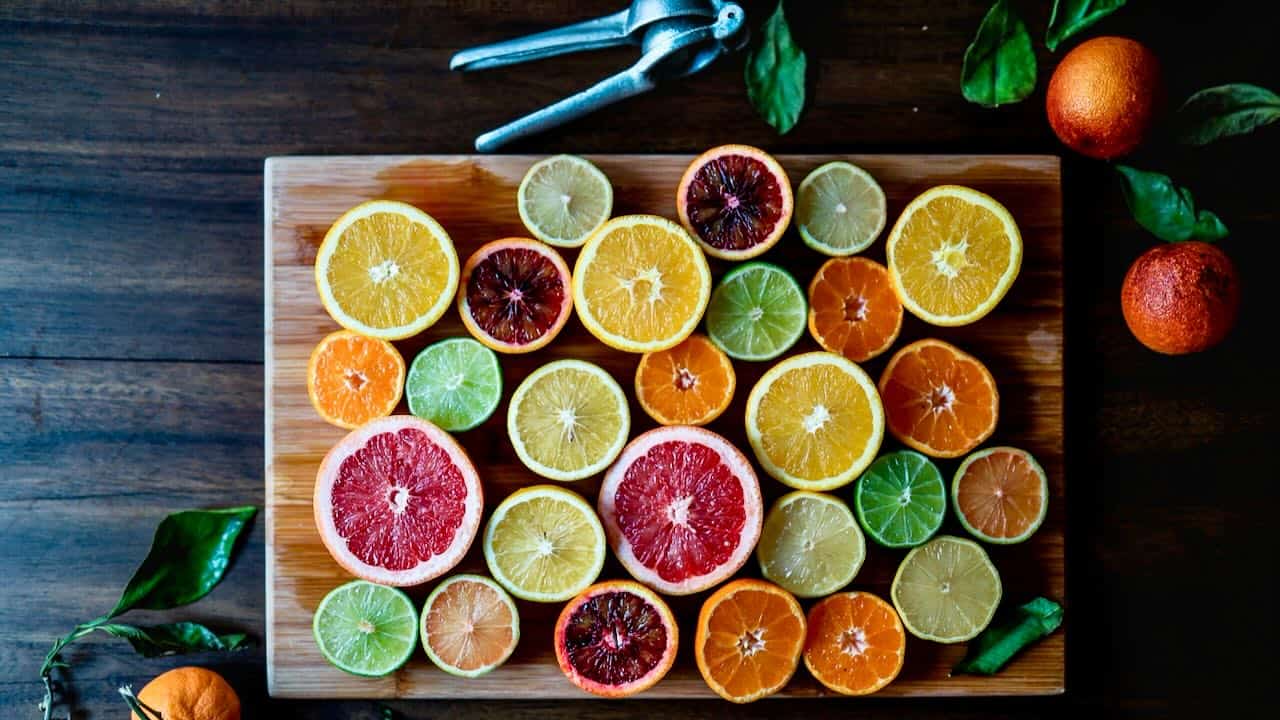
Acid is what a heavy winter table runs short of, and citrus ripens through the cold months rather than the hot ones. Five fruits cover the salad, the roast, the sweet course, the garnish, and the glass.
Sweetness is not what makes a blood orange red. Cold is: the pigment that stains the flesh only develops when the fruit sits through cool nights, which is why blood oranges land on North American shelves in December and are gone by early spring. That crimson is a seasonal reading, not a decoration.
The rest of the hero list runs on the same clock. Meyer lemon, blood orange, Cara Cara, kumquat, and grapefruit overlap for roughly four months, December through March, and each one carries a different acid level and a different segment strength once the knife goes in. Those two properties decide where a fruit belongs on a menu.
Sorted that way, the season splits into jobs: the two that hold their segments in a dressed salad, the two that belong under heat and turn into the sauce, the one you serve whole, and the three-minute knife move that supplies clean segments for any of them.
At a Glance
- Winter citrus runs roughly December through March, when Meyer lemon, blood orange, Cara Cara, kumquat, and grapefruit all overlap in one crate.
- Sort by acid level and segment strength, because those two properties decide whether a fruit survives a dressing or a hot pan.
- Blood orange and Cara Cara hold their segments, so they go into the winter citrus salad raw and stay there.
- Meyer lemon and grapefruit break down under heat, which makes them the roasting-pan and broiler fruit instead.
- Kumquats are eaten whole, peel and all, which is why they work as a garnish and as a compote.
- Supreme any of them in about three minutes: flat both ends, cut the pith away in strips, then free each segment.
What Is Winter Citrus?
Winter citrus is the group of oranges, lemons, and grapefruit that ripens between roughly December and March, when it is the one ingredient on a winter table supplying acid and color at the same time. For a host the useful sorting is not by variety but by behavior, because some of these fruits hold clean segments under a dressing while others collapse into juice the moment they meet heat. That single difference decides whether a fruit belongs in the bowl or in the roasting pan.
Sorting by behavior is what turns five varieties into a menu. Why the season peaks in midwinter at all is where the mechanism starts.
Cold Nights, Not Sunshine, Set the Citrus Calendar
Citrus hangs on the tree through autumn and finishes ripening in cool weather, which is why the citrus fruits in winter markets taste sharper and read brighter than anything shipped in August. The trees flower in spring and the fruit takes most of a year to mature, so the harvest lands exactly when the rest of the produce aisle turns brown and starchy.
Blood oranges make the point visible. The pigment that turns the flesh from orange to burgundy develops in response to cool nights, and that is what gives a blood orange its color rather than any trick of ripeness.
- December: Meyer lemons and the first blood oranges arrive, along with kumquats still on the branch.
- January: the middle of the citrus winter, when all five can sit on the same table at once.
- February: Cara Cara and grapefruit are eating at their best, and blood orange is at its deepest color.
- March: the window narrows, and the last kumquats and Meyer lemons are worth buying in bulk.
Read a guide to winter citrus varieties before the first market trip, because varieties rotate week to week and the sign at the stand often just says orange. Plan the table around the window rather than around a single date, and winter theme party ideas for cozy gatherings give the rest of the evening somewhere to sit. What the calendar cannot tell you is which fruit does which job.
Buy Each Fruit for the Job It Does on the Plate
Two properties do all the sorting: how much acid the fruit carries, and whether its segments hold together after they are cut. Everything else is downstream of those two.
Color is the last thing to shop for.
- Meyer lemon: sweeter and less acidic than a Eureka, with a thin fragrant peel and segments too soft to plate. Cook it or juice it.
- Blood orange: moderate acid, firm segments, and a color that survives a dressing, which makes it the salad fruit.
- Cara Cara: low acid, pink flesh, seedless, and the cleanest segments of the five.
- Kumquat: all peel and no practical segment, sweet skin over sour flesh, eaten whole.
- Grapefruit: the highest acid and the most bitter pith, best tamed by heat or by sugar.
Acid Level Decides the Dressing
High-acid fruit behaves like a seasoning, and low-acid fruit behaves like an ingredient. Grapefruit juice will cut a rich dish on its own, while Cara Cara juice needs a squeeze of lemon behind it or the winter citrus dressing tastes like syrup. Taste the juice before you build anything with it, because acid moves week to week inside the same variety.
Segment Strength Decides the Bowl
A segment that holds is one you can supreme, dress, and plate an hour later without it turning to pulp.
Blood orange and Cara Cara hold their shape best. Meyer lemon is too soft to plate, and grapefruit carries enough bitterness and loose juice that heat or sugar usually suits it better than a dressed bowl.
Cara Cara or Navel: What Actually Changes
Cara Cara orange is a navel, a pink-fleshed mutation of the Washington navel found in Venezuela. It is seedless like any navel, lower in acid, faintly berry-scented, and salmon pink inside rather than orange. On a plate that buys one extra shade of contrast against a blood orange, and that is exactly why the two belong in the same bowl.
A farmers-market guide to citrus is the fastest way to learn which stands carry which variety in your region, and winter party activities from wonderland nights to solstice suppers can be planned around the week the market peaks. Start with the bowl, because the salad is the course that shows the fruit off unchanged.
|
Check Dietary Notes Before Building the Salad |
Salad: Blood Orange and Cara Cara Keep Their Edges
Build the winter citrus salad on two oranges of contrasting color, one sharp allium, one fat, and one crunch. That is the whole architecture, and it works because these segments sit in dressing for twenty minutes without weeping.
Supreme two blood oranges and two Cara Caras, catching the juice in the bowl underneath. Shave half a fennel bulb and a quarter of a red onion paper-thin. Scatter pistachios, torn mint, and flaky salt over the top.
- Dress with the caught juice, good olive oil, and salt, whisked in the bowl rather than in a jar.
- Let the salad sit ten minutes before serving so the onion softens and the juice pulls into the fennel.
- Add avocado or burrata at the table, since both dull against acid within the hour.
- Skip vinegar entirely, because the fruit is already supplying it.
A winter citrus carpaccio takes the same idea further, laying the wheels flat and dressing them like crudo, and it is the version to serve when the salad opens the meal rather than sitting beside it.
Kept in the same proportions this becomes the winter citrus salad recipe you repeat all season, the kind of citrus salad winter guests actually finish. Heat asks for entirely different fruit.
Roast: Meyer Lemon Under the Chicken, Grapefruit Under the Broiler
Meyer lemon is the roasting fruit because its peel is thin and low in bitterness, so it can go into the pan whole and cook down into something you would spoon over the meat. A Eureka lemon in the same position turns acrid.
Halve three Meyer lemons, tuck them under and around a four-pound chicken with thyme and a head of garlic, and roast at 425°F until the skin is deep gold, the method behind a Meyer lemon roast chicken. The fruit collapses into the fat and the juice, and that mixture is the sauce.
- Citrus roast chicken: halved Meyer lemons in the pan and more under the skin, none squeezed over at the end.
- Broiled grapefruit: halve it, score the segments, dust with brown sugar, and broil until the top bubbles.
- Pan sauce: deglaze with the juice already sitting in the tray, then finish with a knob of cold butter.
- Roasted wedges: Meyer lemon wedges caramelize alongside carrots and parsnips and go soft enough to eat whole.
Between them, Meyer lemon recipes and grapefruit recipes carry the main course without a single wedge on the rim of a glass. Serving a roast this bright also changes what you pour, and the ultimate guide to spirit, cocktail, and food pairings is worth reading before the bottle is opened. The next fruit on the list never gets cut at all.
|
Hosting Tip: Taste a Kumquat Whole Before Serving |
Kumquats Do the Work of a Garnish and a Dessert
Kumquats are eaten whole, and the sweetness sits in the peel while the sourness sits in the flesh, so biting one is a two-stage event. That is the entire reason they earn a place on a cheese board and on top of a cake.
Nothing else in the crate can be served without a knife.
- Slice them into thin wheels and scatter them over a cheese board, flicking the seeds out with a knife tip.
- Simmer halves with sugar and water for twenty minutes for a compote that keeps in the fridge.
- Candy them whole for the top of a winter citrus tart, where the bitterness cuts a rich custard.
- Drop one into a glass of sparkling wine and let it perfume the drink slowly.
Candied kumquats are the version worth learning first, and a look at why kumquats are in season now explains the short window they arrive in. Kumquat recipes and blood orange recipes overlap here, since both hold their color through sugar.
Winter citrus desserts stay simple: a compote over yogurt, an olive oil cake with the zest folded in, or segments in syrup with a spoon of cream. For guests who are not drinking, non-alcoholic cranberry drinks for every holiday table take a kumquat garnish well. All of it depends on cutting the fruit cleanly, which is a three-minute skill.
How Do You Segment Citrus Without Losing Half the Juice?
Cut both ends flat, stand the fruit upright, slice the peel and pith away in curved strips that follow the fruit’s shape, then cut each segment free between the membranes. Working over a bowl catches every drop that escapes, and the sequence takes about three minutes once your hand knows it.
The move that costs the most juice is peeling with your hands first.
Hand-peeling tears the membrane and leaves pith stuck to the flesh, so you either serve ragged segments or spend twice as long tidying them. A thin sharp blade and a flat cutting surface do the whole job.
- Use a serrated or thin-bladed knife, since a heavy chef’s knife crushes more than it cuts.
- Cut deep enough to take all the white pith off, because pith is where the bitterness lives.
- Keep the stripped membrane and squeeze it into the dressing rather than binning it.
- Segment no more than an hour ahead and hold the segments in their own juice until service.
Learning how to supreme citrus in four steps is the one technique that makes every other use on this list faster.
Cut Late, Not Early
Whole citrus is patient. It sits in a bowl on the counter or in the crisper drawer without complaint, and the peel dries long before the flesh does.
Cut fruit is the opposite: segments hold overnight in their own juice, juice loses its edge quickly, and zest is worth grating at the last minute because the oils flash off fast. With clean segments and a sharp calendar, the last decision is what goes into the glass.
|
Keep the Citrus Drinks With the Menu |
Pour the Same Fruit You Just Cooked With
The simplest winter citrus cocktail is the one that echoes something already on the table, because the palate reads it as a single idea rather than two. Squeeze the fruit you are already cooking with and the pairing is made for you.
A Blood Orange Garibaldi is two ingredients, Campari and fluffy fresh orange juice, and it is the best argument for buying an extra bag of blood oranges. A Winter Paloma does the same work with grapefruit, where the bitterness that is hard to place in a salad becomes the entire point in a glass.
- Before dinner: a Garibaldi or a grapefruit spritz, both light enough to run for an hour.
- With the roast: a dry white with real acid, or sparkling water and a Meyer lemon wheel.
- With dessert: a small glass of something sweet, or kumquat syrup topped with soda.
- For a crowd: batch the juice the morning of and keep it cold, since fresh citrus juice dulls fast.
Best batch cocktails for effortless entertaining covers the ratios for scaling any of these, and a winter citrus dinner party needs that when twelve people arrive inside the same ten minutes.
Buy the fruit for a winter citrus brunch the day before rather than the week before, and let the crate sit where you will see it. The season runs four months and does not come round again until December, so the sane move is to use it twice a week instead of saving it for one occasion.
Frequently Asked Questions
What citrus is in season in winter?
Meyer lemon, blood orange, Cara Cara orange, kumquat, and grapefruit are the five in season from roughly December through March. Mandarins, clementines, and pomelo overlap with them. Regular lemons and limes are sold year-round, and lemons peak alongside the rest of the winter citrus fruits while limes run heaviest later in the year.
Why is winter the season for citrus fruit?
Citrus flowers in spring and takes most of a year to ripen, so the harvest lands in midwinter. Cool nights also develop color and mellow the acid, which is why a blood orange turns red in winter and reads flat when the same variety is grown somewhere warm.
What goes in a winter citrus salad?
Two oranges of contrasting color, a sharp allium, a fat, and a crunch. Supremed blood orange and Cara Cara with shaved fennel, thin red onion, olive oil, flaky salt, and pistachios is the working version. Dress it with the juice caught while segmenting rather than with vinegar.
What desserts can I make with winter citrus?
Olive oil cake with zest folded through, a winter citrus tart with a set curd, candied kumquats over yogurt, and segments in light syrup all work well. Meyer lemon makes the sweetest curd because it carries the least acid, and blood orange gives the best color without any help.
What is the difference between a Cara Cara and a navel orange?
Cara Cara is a navel orange with pink flesh, found as a natural mutation in Venezuela. It is seedless like any navel, but lower in acid, faintly berry-scented, and salmon pink inside rather than orange. On a plate it reads sweeter and gives a salad a second shade of color.
How do you segment citrus for a salad?
Slice both ends flat, stand the fruit upright, and cut the peel and pith away in curved strips that follow its shape. Then cut each segment free between the membranes, working over a bowl to catch the juice. Squeeze the leftover membrane into the bowl for the dressing.
Continue Reading:
More On Fall and Winter Ingredient Heroes
- Types of Edible Mushrooms Worth Cooking for Guests
- Brussels Sprouts Recipes Roasted Crispy With Bacon
- Sweet Potato Recipes Past the Casserole and the Pie
- Leek Recipes From Potato Soup to a Winter Gratin
- Fennel Recipes With Roasted Bulb, Salad and Negroni
More from The Gourmet Host
- Winter Theme Party Ideas for Cozy Gatherings
- Winter Party Activities: 7 Ideas from Wonderland Nights to Solstice Suppers
- The Ultimate Guide to Spirit, Cocktail, and Food Pairings
- Non-Alcoholic Cranberry Drinks for Every Holiday Table
- Best Batch Cocktails for Effortless Entertaining
Explore TGH Categories
- Set the Scene
- Drinks and Bar
- Plan the Meal
- Engage with Guests
- Games and Toasts
- Tools and Techniques
- Why We Gather