7 weekly meal planner templates for easy hosting
 13 min read
Planning dinner for a group of friends requires solid weekly meal planner templates to keep the evening focused on good company rather than frantic kitchen tasks. You want to serve beautiful food and paired drinks without spending the entire party hovering over a hot stove.
This guide walks you through seven modular approaches to organizing menus, batching ingredients, and structuring timelines for gatherings of four to twelve guests. These templates show you exactly what to prep early.
Applying a clear structure removes the chaos from group cooking entirely. You regain control over your kitchen and actually get to sit down at the table with your friends.
At a Glance
- Map out preparation steps on a digital or printed calendar starting a month in advance.
- Prepare base ingredients and pre-batched cocktails early to minimize day-of cooking.
- Freeze doughs and structural components to free up valuable counter space.
- Scale recipes intentionally to secure leftover meals for the rest of your week.
What “weekly meal planner templates” means for modern home hosts
A weekly meal planner template acts as a structured timeline that divides a large dinner party into manageable daily tasks. Instead of treating the gathering as an isolated event that demands a full day of cooking, you fold preparation steps into your normal weekday routine.
This method involves scheduling grocery trips, ingredient prep, and table styling days before your guests arrive.
It differs from a standard daily recipe log by focusing heavily on workflow rather than just ingredients. You build a dinner party timeline to organize exactly when to chop, mix, and bake.
You use these blueprints to track which components can sit in the fridge, which doughs can freeze, and when to batch cocktails. Employing these structured outlines guarantees you spend less time cooking in isolation.
Why should hosts schedule dinner party prep on a calendar?
Using a calendar prevents last-minute panic by spreading cooking and staging tasks across several days. By outlining exactly what can be made ahead, hosts significantly reduce day-of pressure, avoid dinner contemplation fatigue, and ensure they have plenty of time to enjoy the party alongside their arriving guests.For more preparation ideas, see Kitchen Organization Pantry Ideas for Easy Storage.
The Emily Post Institute advises printing a blank calendar one month prior to hosting a formal dinner party to schedule and organize prep tasks.
Working backward from your event date gives you a clear picture of when to shop and when to chop. Map out your grocery runs, vegetable chopping, and table setting tasks starting three days before the gathering.
This prevents the common trap of trying to execute a complex menu in a single afternoon.
When you rely on a visual timeline, you immediately spot bottlenecks in oven space or refrigerator storage before they become an issue. You can adjust the menu before you ever buy a single ingredient.
Without a plan, figuring out what to make becomes exhausting. A survey of adults found that 28 percent have spent more than an hour contemplating dinner options before resorting to takeout.
Scheduling removes that decision fatigue completely.
By organizing tasks day by day, you protect your energy for the actual party. You dedicate Thursday to picking up specialty items and Friday to washing vegetables.
Saturday morning then becomes a simple assembly process.
| Prep Day | Action Item | Storage Method | Time Saved |
|---|---|---|---|
| 3 Days Prior | Grocery shopping and dry goods sorting | Pantry staging area | 90 minutes |
| 2 Days Prior | Wash and chop hearty root vegetables | Airtight glass containers | 45 minutes |
| 1 Day Prior | Mix and chill signature batch cocktails | Sealed glass pitcher | 30 minutes |
| Day of Event | Final heating and table arrangement | Stovetop and dining table | 120 minutes |
|
Plan Your Menu Together |
How can you batch ingredients for a group dinner?
Batching ingredients involves preparing base components early in the week to streamline group cooking. This modular template approach allows hosts to quickly assemble complex, multi-person dishes without spending hours isolated in the kitchen while friends are socializing in the living room.For more preparation ideas, see Kitchen Counter Organization Ideas for Easy Hosting.
You can adopt the logic of daily meal prep and apply it to dinner parties. Japanese meal prep bowls rely on preparing pre-portioned carbs, proteins, and vegetables in advance to mix and match customized daily meals.
You can scale this exact concept for a gathering of ten guests.
Pre-cook and store your base grains, sauces, and marinated proteins in airtight containers up to two days in advance. When you browse 7 weekly meal planner recipes for host success, you identify overlapping ingredients across different courses.
If your appetizer and main course both require roasted garlic, you roast all of it on Wednesday.
This approach minimizes the number of cutting boards and pans you have to wash on the day of the event. You pull the prepped containers from the fridge and simply apply heat.
Your kitchen stays clean while your guests arrive, leaving you available to take their coats and pour drinks.
Building a menu around batched ingredients gives you incredible flexibility. If someone has a dietary restriction, you simply keep their portion separate before mixing in a sauce or marinade.
What is the best way to handle make-ahead doughs and baked goods?
Preparing bread or pastry dough ahead of time frees up valuable counter space and oven time on the day of your gathering. Freezing dough is highly effective for advance preparation, though it requires slight adjustments to your recipe’s leavening agents to account for temperature drops.For more preparation ideas, see How to Set Up a Home Bar for Hosting That Actually Works.
King Arthur Baking recommends increasing yeast by 1/4 to 1/2 teaspoon per 3 cups of flour if freezing yeast dough to offset yeast mortality from extreme cold.
This simple adjustment ensures your dinner rolls rise beautifully even after a week in the freezer. Mix and freeze dinner roll dough up to a week early, then move it to the fridge to thaw the night before your dinner party.
Handling baking projects early removes the need to dust your counters with flour hours before guests arrive.
It also guarantees your oven is available for roasting the main course. Puff pastry tarts and pie crusts act exactly the same way.
You can blind bake tart shells on a Tuesday, freeze them, and fill them on Saturday afternoon.
When you rely on an app for meal prep to track your baking times, you never lose track of what is sitting in the freezer.
Fresh bread makes any dinner feel special. Freezing the dough allows you to provide that bakery experience without sacrificing your Saturday morning to kneading and proofing.
Health Canada recommends refrigeration at 40°F (4°C) or below and prompt cooling in shallow containers. Refrigerate perishables within two hours, or one hour above 90°F (32°C); reheat leftovers to 165°F (74°C). Freeze cooked portions intended beyond their two-to-three-day refrigerated storage window.
How do you plan beverages and cocktails for a crowd?
Planning the home bar is just as critical to a successful gathering as the food menu. Pre-batched cocktails and dedicated self-serve beverage stations ensure guests have drinks immediately upon arrival without turning the host into a full-time bartender for the evening.For more preparation ideas, see Gluten-Free Dairy-Free Dinner Recipes: A Host’s Guide.
Serving pre-batched and pre-diluted cocktails on tap reduces beverage service time down to three to five seconds per pour.
That kind of speed completely transforms the first thirty minutes of your party. Mix a large format signature cocktail in a stylish pitcher the morning of the party and chill it until the first guest arrives.
You add water to the batch to mimic the dilution that usually happens when shaking with ice.
This ensures the drink tastes perfectly balanced straight from the fridge. Set up a dedicated station away from the kitchen workspace to direct foot traffic.
Include glassware, ice, garnishes, and non-alcoholic options in one accessible spot.
Guests feel more comfortable helping themselves when the station is clearly defined.
You want to avoid shaking individual margaritas while also trying to plate a hot appetizer. A pre-batched drink pitcher solves this timing conflict instantly, allowing you to participate in the conversation.
|
Hosting Tip: keep the timeline visible. |
How should you pair wine with a structured weekly menu?
Pairing wine effectively relies on balancing the dominant flavors of your planned dishes against the beverage’s profile. By analyzing your menu template’s taste profile early in the week, you can deliberately select wines that complement rather than overpower the central meal.For more preparation ideas, see Best Party Planning Apps for Hosts and Their Guests.
Wine Folly identifies six foundational taste elements to consider when pairing food and wine: salt, acid, sweet, bitter, fat, and spice.
When you plan your meals days in advance, you have ample time to analyze these components and shop accordingly. Review your menu template for high fat or highly acidic dishes, then purchase wines with contrasting acidity or tannins during your weekly grocery run.
A rich cream sauce demands a wine with enough acidity to cut through the richness.
Conversely, spicy foods often clash with high tannin red wines. Integrate your wine shopping directly into your main grocery trip to save time.
Buying bottles on a Wednesday prevents the frantic Saturday afternoon scramble to the liquor store.
You can chill the white wines and champagnes immediately upon returning home.
Label your bottles with sticky notes detailing which course they accompany. This small organization trick means any early arriving guest can help you pour the right wine when it is time to sit down.
How can freezing leftovers improve your weekly meal plan?
Factoring leftovers into your templates ensures you maximize your grocery budget and eliminate post-party food waste. Choosing recipes that scale up easily means you can feed a large crowd and still safely store extra portions for your own weekly dinners.
Selecting easily freezable recipes for big-batch meal prep prevents food waste by allowing leftover portions to be stored safely for later.
Cooking for twelve people provides a massive opportunity to stock your own freezer for the upcoming month. Intentionally over-prepare stews or braised dishes for your gathering, cooling portions promptly in shallow containers and refrigerating them within two hours, or one hour above 90°F (32°C), before freezing.
Braised short ribs or hearty vegetable curries often taste better after freezing and reheating.
You do the hard work once and reap the benefits for weeks. Provide small takeout boxes for your friends to take food home.
Guests always appreciate waking up to a delicious reminder of a fun evening.
This practice also clears out your refrigerator instantly, leaving room for regular groceries.
Planning for leftovers changes how you look at the cost of hosting. When a single batch cooking schedule feeds a dozen friends and covers your lunches for a week, the value becomes undeniable.
How do you integrate dietary needs into group menus?
Accounting for allergies and dietary preferences early in the planning phase ensures every attendee can eat the main course safely. Building a menu around naturally accommodating recipes prevents the need to cook entirely separate meals for specific friends.
The difference between a cohesive menu and a disjointed one lies in selecting a naturally inclusive base recipe.
If a guest cannot eat gluten, you serve a risotto or a braised meat dish that is inherently gluten-free. This works because you are not forcing substitutions into a rigid recipe.
Request dietary information from your friends at least ten days before the event.
You plug this information into your meal tracker before finalizing the grocery lists.
Tracking this data early removes the shock of discovering an allergy while you are serving the appetizer. Keep allergen components in separate serving bowls.
If one person has a dairy allergy, leave the parmesan cheese on the side rather than mixing it into the entire salad bowl. This modular serving style protects guests while allowing others to customize their plates.
When you build dietary accommodations directly into your early planning stages, the resulting meal feels intentional and welcoming.
|
Share the Preparation |
How The Gourmet Host Helps You Apply Weekly Meal Planner Templates
Transitioning from paper templates to a digital solution streamlines the entire hosting workflow. Modern hosts need systems that handle not just the recipes, but the guests, the allergies, and the grocery runs.
By digitizing your weekly meal planner templates, you can easily shift from cooking for a few to managing a multi-course dinner party of twelve.
The right tools bridge the gap between finding a great recipe and actually getting it on the table alongside perfectly paired drinks.
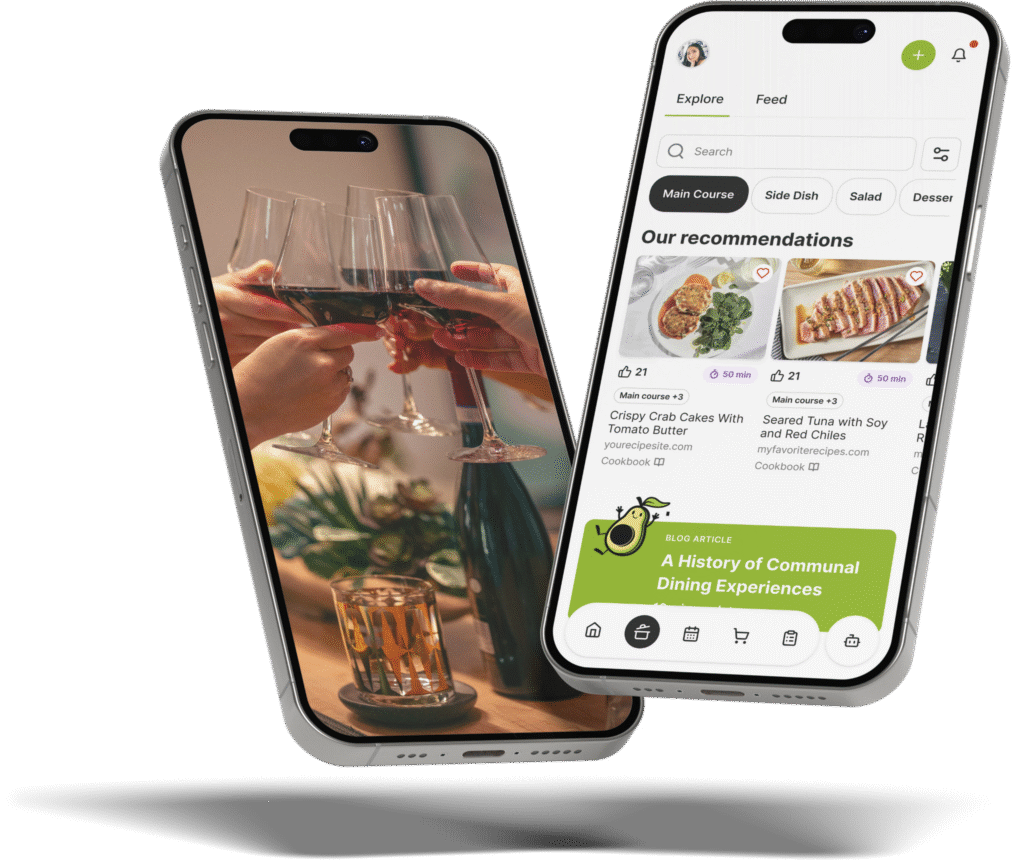
The Gourmet Host acts as a central hub for your entire gathering. Create an interactive event page in The Gourmet Host app to collect guest dietary notes, build synchronized shopping lists, and track RSVPs in one place.
You input your guest list and review their dietary preferences against your proposed menu.
Keep those dietary notes with your recipes while you check ingredients and choose suitable replacements.
You can keep your recipes and shopping list together in The Gourmet Host mobile app while you check ingredient quantities for your exact headcount. Keeping the plan together helps you focus on cooking and socializing.
Start with hundreds of recipes from professional test kitchens, then save and share your chosen dishes with co-hosts. Everything lives within a single recipe organization dashboard. Stop juggling five different note apps and separate lists to organize one dinner with friends.
Frequently Asked Questions
How do I create a meal plan for a dinner party?
Start by selecting a main dish that can be partially prepared in advance. Build your side dishes and appetizers around the oven temperatures and timing required for that central course, then schedule specific days for grocery shopping and final cooking steps.
What are the best free weekly meal planner templates?
The most effective templates organize tasks by day rather than just listing recipes. Look for printable calendars or digital spreadsheets that include sections for a master grocery list, a daily prep schedule, and an hour-by-hour timeline for the day of the event.
How do you handle dietary restrictions on a meal planner?
Log all guest allergies at the very top of your planning document before choosing any recipes. Select base dishes that naturally accommodate these restrictions, such as naturally gluten-free rice dishes or dairy-free roasted meats, and serve common allergens in separate bowls.
Can I use a weekly meal planner for holiday hosting?
Yes, holiday hosting requires the exact same structural approach as a standard dinner party, just on a larger scale. You map out your turkey thawing days, pie baking schedule, and table setting tasks across the entire week preceding the holiday to avoid chaotic mornings.
How do you split the cost of a group dinner?
Track all grocery and beverage receipts during your shopping trips. Use a digital platform that calculates the total cost and divides it equally among attendees, communicating upfront that the dinner is a shared expense so friends know what to expect.
What is the ideal timeline for dinner party prep?
Begin outlining your menu and sending invitations one month in advance. Complete your grocery shopping three days before the event, spend the day before washing vegetables and mixing batch cocktails, and reserve the actual day of the party for final heating.
Continue Reading:
More On Meal and Menu Planning Apps
- 8 Ways An App For Meal Prep Upgrades Your Dinner Party
- 7 Weekly Meal Planner Recipes for Host Success
- 7 Printable Weekly Meal Planner Tips for Home Hosts
- 7 Ways A Meal Prep App Perfects Your Dinner Party
- 1 Easy 7 day family meal plan For Home Hosts
More from The Gourmet Host
- Kitchen Organization Pantry Ideas for Easy Storage
- Kitchen Counter Organization Ideas for Easy Hosting
- How to Set Up a Home Bar for Hosting That Actually Works
- Gluten-Free Dairy-Free Dinner Recipes: A Host’s Guide
- Best Party Planning Apps for Hosts and Their Guests
Explore TGH Categories