Sweet Potato Recipes Past the Casserole and the Pie
 12 min read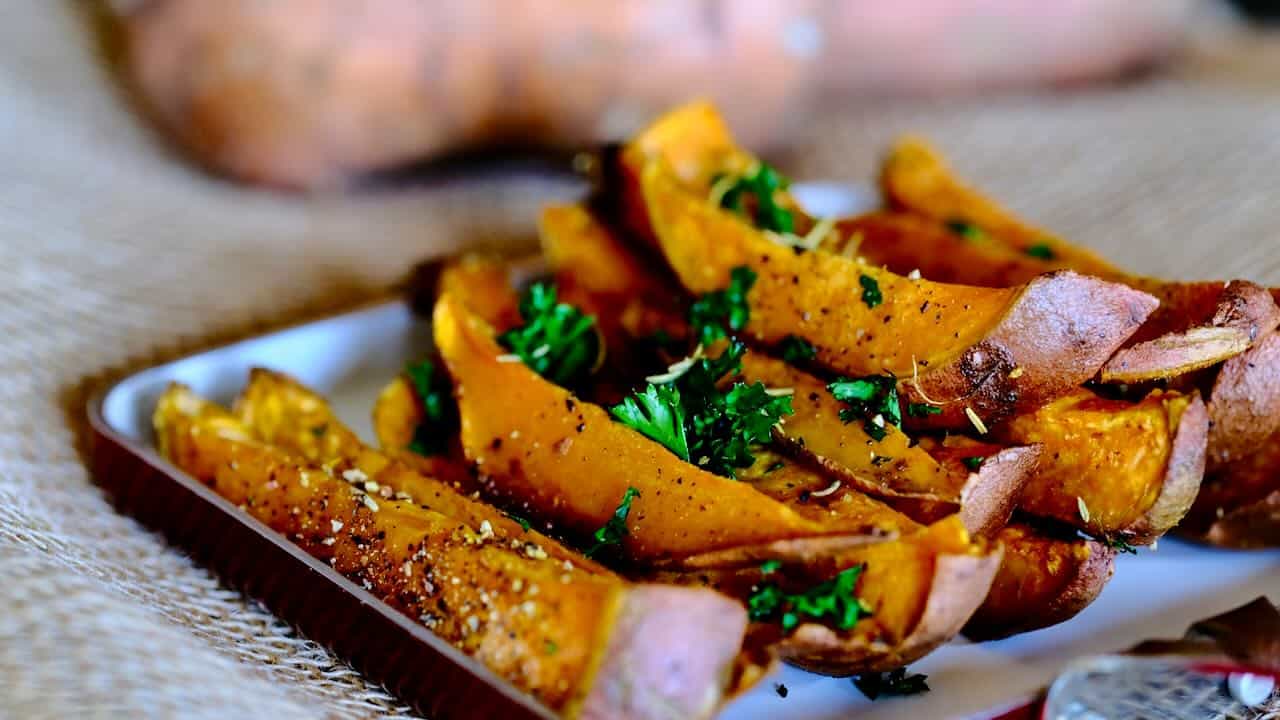
Shop for sweet potatoes by the dish rather than by the bag, because one two-pound tuber can land as a side, a salad base, a soup, a stuffed main, or dessert. Casserole and pie are the two uses that ask the least of it.
Heat and moisture do the sorting. A Garnet roasted hard collapses into something sweet and jammy that belongs next to pork, the same tuber steamed and cooled holds its edges well enough to cube into a salad, and a drier Japanese variety bakes closer to chestnut than to syrup. Cooking method decides the course long before the variety does, which is why one shopping bag can cover most of a menu.
At a Glance
- Roasting, steaming, simmering and stuffing pull four different textures out of the same sweet potato, so the technique picks the course.
- A side, a salad, a soup, a stuffed main and a sweet finish all come off a single two-pound purchase.
- Roasted wedges at high heat are the fastest hot vegetable you can put on a dinner party table.
- Casserole earns its space when the sweetness comes from the tuber and the topping stops being the headline.
- Variety matters more for sweet potato pie recipes than for anything savoury on the list.
What Are Sweet Potato Recipes for a Dinner Party?
Sweet potato recipes for a dinner party are built around a cooking method rather than around the holiday menu the ingredient usually turns up on: roasted for a side, steamed and cooled for a salad, simmered and blended for a soup, split and filled for a main, baked into the sweet course. Texture is the working distinction, because the same flesh reads as jammy, firm, silky or floury depending on how much water it loses and how fast it loses it. Choosing among recipes using sweet potato for guests means naming the texture the plate needs first, then picking the variety that delivers it.
Moisture and Starch, Not the Label, Decide What a Sweet Potato Becomes
Two sweet potatoes sitting in the same bin can behave like different vegetables. Potato and sweet potato recipes are not interchangeable either, because a russet gives up starch where a Garnet gives up sugar.
Orange-fleshed types run wet and sugary; pale, purple and Japanese types run dry and starchy. Saveur has catalogued sixteen distinct sweet potato varieties, and the split between them is almost entirely about water and starch.
That difference shows up the moment heat hits. A wet Garnet gives up liquid, concentrates, and slumps. Satsumaimo, the drier and starchier Japanese sweet potato, holds its shape and turns chalky-sweet in a way that reads closer to roast chestnut.
Here is how the two families sort out on a host’s counter:
- Garnet, Jewel and Beauregard: deep orange, high moisture, the ones that mash smooth and caramelise fastest at the edges.
- Hannah and O’Henry: pale gold flesh, drier crumb, good when you want cubes that stay cubes in a salad.
- Murasaki and satsumaimo: purple skin, ivory flesh, floury texture that bakes rather than melts and takes salt beautifully.
- Okinawan and Stokes Purple: violet flesh, dense and low in water, striking on a plate and slow to cook through.
Ask the bin question before the recipe question: does this dish want flesh that collapses or flesh that holds? Answer that and the five hosting slots below sort themselves.
Which Course Should One Tuber Take? Five Slots, One Shopping Bag
Five courses can come off the same purchase, and the method assigns each one. A single two-pound sweet potato roasted whole gives you a side; the same weight steamed gives you salad cubes; simmered, it gives you a soup base; split and filled, it becomes a main. Sweet potato black bean enchiladas as the main-course use show how far the ingredient travels once it stops being a garnish.
| Course slot | Method | What the flesh does | Best on a menu when |
|---|---|---|---|
| Side | Roast, high heat | Caramelises at the edge, softens inside | The main needs a sweet counterweight |
| Salad | Steam, then cool | Holds cube shape, firms up | You want a course that waits |
| Soup | Simmer and blend | Goes silky, carries spice | The starter has to be made a day ahead |
| Main | Bake whole, split, fill | Becomes an edible bowl | A vegetarian plate has to look like a plate |
| Sweet | Bake, then puree | Turns floury and custardy | Dessert should taste of the ingredient |
Quantities are worth working out on your own scale rather than from a rule of thumb, because tuber size varies enormously between one bin and the next. Three steps get you there:
- Decide the portion you want plated, since a roasted side and a stuffed main draw very different raw weights from the same tuber.
- Weigh one raw sweet potato before you buy the rest of the bag.
- Divide, then add a margin for trim, skin and the water that leaves during cooking.
That approach also keeps a mixed table honest, which matters on one dinner party menu that works for every diet where the same tray has to feed people eating differently.
The fastest of the five slots is the side, so that is where the plan starts.
|
Keep the Roasting Method Within Reach |
Roasted Sweet Potatoes Earn the Side Slot on Speed Alone
Roasting is the fastest hot vegetable on a dinner party stove, which is why the roasted sweet potato side dish is the default rather than the fallback. High heat drives off water at the cut face while the interior steams in its own moisture, and the sugar that concentrates at the edge is what makes the dish taste finished without a sauce.
The sequence is short enough to run while guests are still arriving:
- Cut into wedges or half-inch cubes, not slices, so every piece has at least two flat faces.
- Toss with oil until the surfaces gloss rather than pool, then salt before the tray, never after.
- Spread on a single hot tray with visible gaps between pieces.
- Roast hot, turn once at the halfway mark, and pull them while the edges still have bite.
A twenty-minute roasted sweet potato side is realistic at 425F if the cubes are small and the tray is genuinely hot when the food hits it. Crowding is the only step that reliably ruins it, because steam trapped between pieces stops the surface from browning.
Recipes for sweet potato sides that take longer are worth knowing for a different night. A sweet potato gratin wants an hour and a covered dish, and sweet potato fries want a second tray and more oil than a roast does.
Roasted wedges also slot into an autumn table without renegotiating the rest of the menu, which is why they appear so often in fall themed dinner party ideas and menus.
What happens if you let those same cubes cool instead of serving them hot? A different course opens up.
Salad and Soup Pull the Same Tuber in Two Directions
Cooling changes the job. Sweet potato cubes that have been steamed and left to come down to room temperature firm up and stop weeping, the two things a salad needs from them. Sweet potatoes with pecans and goat cheese is the version worth copying, because the goat cheese supplies acid and salt against flesh that is already sweet.
Blending takes the same tuber the other way. Once the flesh is simmered soft and pureed, it turns silky and carries spice further than a potato ever does, which is why a sweet potato soup handles ginger, curry and chilli without tasting confused. A make-ahead sweet potato coconut soup reheats without splitting, so it can be finished the day before.
Two courses, two treatments, one shopping trip:
- For the sweet potato salad: steam or roast gently, cool uncovered so surface moisture escapes, then dress with something sharp such as sherry vinegar, lime, or a mustard vinaigrette.
- For the sweet potato soup: simmer in stock with aromatics, blend hot, and hold back a little coconut milk to stir through at service so the colour stays bright.
- For both at once: cook the whole batch at the same time, pull the firmest cubes for the salad, and let the softer ones go into the pot.
Running one ingredient across two courses is a scaling trick as much as a flavour one, and it is the same logic behind easy meal ideas for 10 people.
Because a starter and a salad both hold, the pressure moves to the plate that cannot: the main.
|
Hosting Tip: Bake the Potatoes Before Guests Arrive |
Stuffed Sweet Potatoes Carry a Main Course Without a Roast
A sweet potato main course needs no carving, no resting and no last-minute sauce. Baked whole until the skin puckers, then opened and filled, it arrives at the table looking composed rather than assembled, and it holds heat long enough to survive a slow dining room.
The filling decides whether it reads as a main or a side. Sweet potatoes stuffed with classic stuffing turn a holiday component into the centre of the plate, while Caribbean-loaded stuffed sweet potatoes bring black beans, lime and heat against the sweetness.
Fillings that hold up on a plate:
- Black beans, charred corn and lime, with pickled red onion on top for acid.
- Braised greens and a soft egg, for a main that works at brunch as easily as at dinner.
- Spiced lamb or mushroom ragu, spooned in so the sweetness reads as a foil rather than the flavour.
- Herbed ricotta and toasted seeds, when the rest of the menu is already rich.
Stuffed sweet potatoes also scale better than a roast, since they cook in a single oven pass and can be filled in batches. That reliability is why they turn up in easy meals for 20 people, where oven space is the real constraint.
That leaves the two dishes the ingredient is famous for, and both deserve a look on their own terms.
Casserole and Pie Deserve a Rework, Not a Retirement
Sweet potato casserole recipes survive because the format genuinely works. One dish feeds a long table, it holds warm on a counter for the length of a meal, and it is the only sweet potato dish most guests already have an opinion about.
Sweet potato pie recipes earn their place for a different reason: the filling is made a day ahead, the slice holds its shape, and it travels to someone else’s house better than almost any other dessert.
Both dishes get better when the ingredient does more of the work.
- Reduce the added sugar and roast the tubers whole first. Roasting concentrates what is already there, so the casserole tastes of sweet potato rather than of the topping.
- Rebuild the top layer for texture, not sweetness. Toasted pecans, oats and brown butter give crunch that marshmallow cannot, and they stop the dish from reading as dessert in the middle of dinner.
- Choose a drier variety for the pie. Recipes for sweet potato pie differ on spice, but variety decides the set: Hannah or a Japanese type firms up cleanly, while a wet Garnet needs extra egg to hold a slice.
- Season the pie filling like a savoury dish first. Salt, then spice, then sweetness last, so the custard has structure underneath the cinnamon.
Food52 makes the useful point that a casserole works marshmallow-topped or not, and that the topping is a preference rather than a rule.
Keeping one dish that feeds everyone is also plain good planning when the table is large, the same instinct behind food for large groups.
Keeping both on the table changes what the rest of the menu has to supply.
|
Balance the Whole Sweet Potato Menu |
Pair the Rest of the Menu Around the Sugar Already on the Plate
Sweetness is the constant across a sweet potato dinner party menu, so the rest of the table has one job: supply acid, salt and bitterness. Pork, duck and roast chicken all work because their fat wants something sweet next to it. Bitter leaves, pickles and a sharp cheese do the rest.
Drinks follow the same rule. An off-dry riesling or a lightly chilled gamay has enough acid to cut a roasted tray, and the ingredient even holds up behind the bar, where sweet potato as a cocktail ingredient turns up in autumn drinks built on rum and rye.
Build the counterweights in this order:
- Acid first: a vinaigrette, a squeeze of lime or a pickled element on at least two of the five courses.
- Salt second: cured pork, feta, goat cheese or capers somewhere in the savoury run.
- Bitter third: radicchio, chicory, charred broccolini or a bitter aperitif before the meal.
- Fat last: brown butter, tahini or creme fraiche, added only where the dish still tastes thin.
The working method is smaller than the shopping list suggests. Decide which texture you need on the plate, buy the variety that delivers it, and let the cooking method choose the course. Built that way, one ingredient carries four separate courses and still tastes different at each of them.
Frequently Asked Questions
What can I make with sweet potatoes besides casserole?
Roasted wedges, a cooled salad with goat cheese, a blended soup, a stuffed main and a baked custard all come from the same ingredient. The method changes the texture, and the texture decides the course, so a single two-pound purchase can cover four separate plates on one menu.
How do you make a sweet potato side dish for a dinner party?
Cut the flesh into half-inch cubes or wedges, toss with oil and salt, and roast hot on a preheated tray with gaps between pieces. Turn once, then pull them while the edges still have bite. Crowding the tray traps steam and is the main reason a roasted tray goes soft.
What’s the best sweet potato casserole recipe for Thanksgiving?
Roast the tubers whole before mashing, cut the added sugar sharply, and rebuild the topping around toasted pecans, oats and brown butter. The dish then tastes of sweet potato instead of the topping, holds warm through a long meal, and still fills the one-dish role a big table needs.
Can you make sweet potato as a main course?
Yes. Bake the potatoes whole until the skins pucker, split them, and fill them with something salty and acidic: black beans and lime, braised greens and a soft egg, or a spiced ragu. A stuffed sweet potato needs no carving and holds heat well enough to survive a slow dining room.
What goes into a sweet potato soup for a dinner party?
Simmered sweet potato, stock, aromatics and a fat that carries spice, usually coconut milk. Blend the flesh hot so it goes silky, then hold back a little coconut milk to stir in at service. The soup reheats without splitting, which makes it the easiest course to finish a day early.
How many sweet potatoes do I need per person?
Buy by finished weight rather than by count, because tuber size varies too much for a fixed number to hold. Decide the portion you want plated, weigh one raw sweet potato on a kitchen scale, and divide. Roasted and stuffed portions need noticeably more raw weight than blended ones.
Continue Reading:
More On Fall and Winter Ingredient Heroes
- Types of Edible Mushrooms Worth Cooking for Guests
- Brussels Sprouts Recipes, Roasted Crispy with Bacon
- Winter Citrus Fruits That Brighten Salad and Roast
- Leek Recipes, from Potato Soup to a Winter Gratin
- Fennel Recipes with Roasted Bulb, Salad and Negroni
More from The Gourmet Host
- One Dinner Party Menu That Works for Every Diet
- Fall Themed Dinner Party Ideas and Menus
- Easy Meal Ideas for 10 People: 3 Tested Blueprints
- Easy Meals for 20 People That Survive Real Ovens
- Food for Large Groups: Easy Meals That Feed a Crowd
Explore TGH Categories
- Set the Scene
- Drinks and Bar
- Plan the Meal
- Engage with Guests
- Games and Toasts
- Tools and Techniques
- Why We Gather