Brussels Sprouts Recipes, Roasted Crispy with Bacon
 12 min read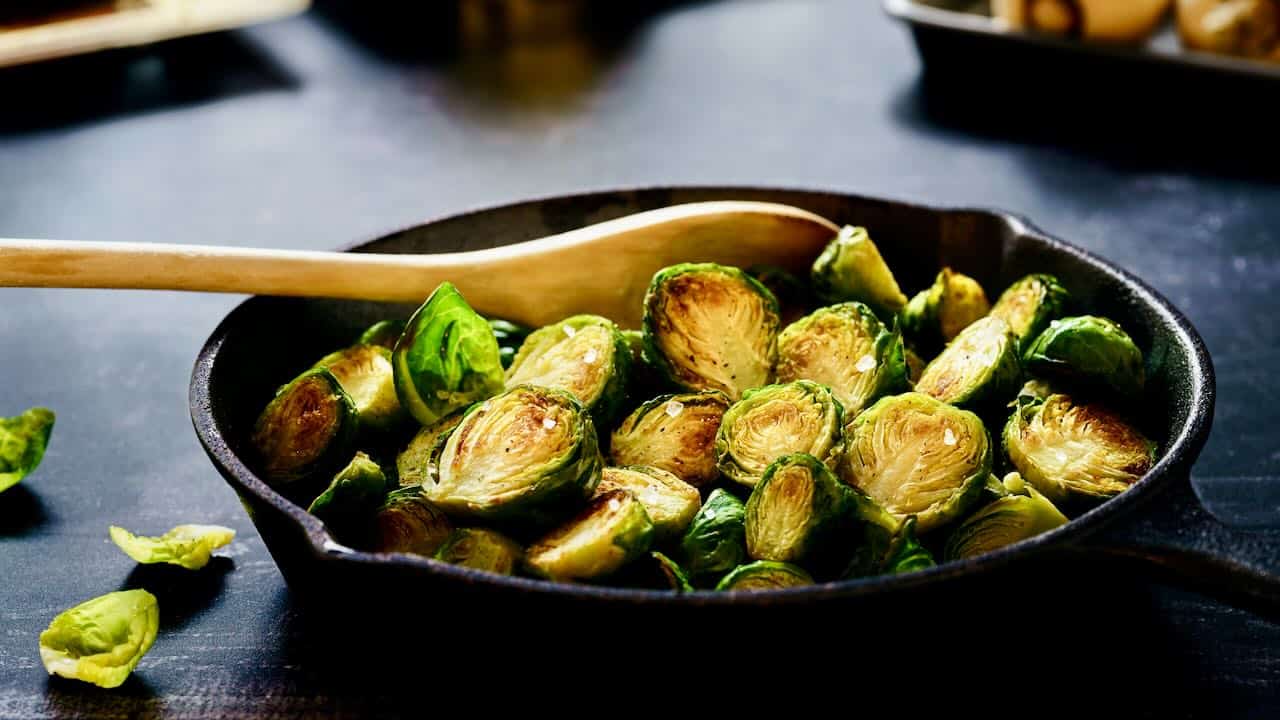
Surface water and a crowded pan decide whether brussels sprouts crisp, not the oven dial. Only one of the three crispy methods still lands crunchy after an hour of holding.
Brussels sprouts lose their crust in the stretch between the oven and the table, not in the oven. Roast them, cover the bowl to keep them warm, and trapped steam softens every crisp edge before the plates go down. Leave the tray uncovered and they hold.
That holding window is the whole decision. Roasting, pan frying, and shaving raw each hold their crunch for a different stretch, so the clock picks the method, and picking it right lets you cook early and still set down a crisp plate.
At a Glance
- Dry surfaces and an uncrowded single layer do more for crunch than any oven setting.
- Roasting at 425°F, cut side down and unstirred, builds the deepest crust and the longest hold.
- Render bacon on the pan first, then roast the sprouts in the fat so both finish crisp together.
- Pan frying lands crunch in about fifteen minutes, though the crust fades inside twenty.
- Shaved brussels sprouts skip the crisp question entirely and hold through a whole buffet.
- Plan half a pound of untrimmed sprouts a guest for a side, a third of a pound on a crowded holiday table.
What Are Crispy Brussels Sprouts Recipes?
Crispy brussels sprouts recipes are the versions built around pulling water off the sprout and pressing a cut face against a hot surface, so browning starts before the inside has time to steam. For a host, that mechanism matters more than the seasoning, because a tray that goes soft between the oven and the table lands as a different dish by the time guests sit down. The three that survive a real hosting schedule are the high-heat roast, the stovetop pan fry, and the raw shaved salad, and they differ mainly in how long the crunch lasts once the cooking stops.
Why Sprouts Steam Instead of Browning
Sprouts steam because water leaves them faster than a crowded pan can carry it away. Each halved sprout holds moisture in its cut face and between the outer leaves, and a tray packed edge to edge traps that steam exactly where browning is supposed to start.
Turning the oven up does not fix that on its own. Wet sprouts on a full sheet still come out pale and soft, which is why the biggest mistake home cooks make roasting brussels sprouts happens before the oven is involved at all.
- Dry the surface: pat the cut faces and leave them uncovered for twenty minutes before any oil goes on.
- Give them room: one layer, with roughly a thumb’s width between halves so steam has somewhere to go.
- Preheat the metal: a sheet pan heated with the oven starts the crust the second a cut face lands on it.
Heat still matters, just second. Once the water and the spacing are handled, the question of how to crisp brussels sprouts turns into a scheduling question, and the answer comes off the clock rather than the recipe.
Three Crispy Methods, Compared by How Long They Hold
Pick the method by the serving window first and by taste second. Roasting, pan frying, and shaving raw all produce crunch, and each keeps it for a different length of time once the heat is off.
| Method | Active time | Crunch holds | Best for |
|---|---|---|---|
| Oven roast at 425°F | 30 minutes | 45 to 60 minutes uncovered | A plated dinner or a holiday table |
| Stovetop pan fry | 15 minutes | 15 to 20 minutes | A weeknight side served from the skillet |
| Raw and shaved | 10 minutes | All afternoon, dressed late | A buffet or a make-ahead salad course |
Roasting is the one that survives a real hosting timeline. The sprout sits on hot metal long enough to dry out completely, and a fully dried crust resists the moisture that comes back later, which is why roasted brussels sprouts recipes are the ones worth learning first.
- Roast when the sprouts have to wait, or when the oven is already running for a main.
- Pan fry when the skillet is free and the side needs to be on the table in a quarter of an hour.
- Shave raw when the crunch has to survive a buffet line or a long grazing hour.
- Reach for an air-fried alternative for crispy sprouts when the oven is committed and the batch is small.
Among the cool-weather ingredients a host builds a menu around, sprouts are the one where technique rather than shopping decides the result. Even a stovetop pan-fried method for crispy sprouts leans on those same three levers, and TGH’s holiday dinner party ideas worth celebrating show where the side lands on a full table.
The roast earns the most detail, because it is the version a brussels sprouts dinner party actually runs on.
|
Keep the Roast Recipe Within Reach |
Roasting at 425°F, Cut Side Down, in a Single Layer
Halve two pounds of sprouts, toss them with three tablespoons of oil and a teaspoon of salt, and lay every half cut side down on a preheated sheet. The brussels sprouts recipes baked at 425°F need no stirring at all, and that is the part most trays get wrong.
The Cut and the Dry-Down
Trim only the dry stem end. Cutting deeper releases the outer leaves, and loose leaves burn while the halves are still pale, so a shallow trim keeps the sprout in one piece and the tray in one color.
- Trim and halve: cut off the dry stem end, pull any loose leaves, and split each sprout through the core.
- Dry thoroughly: pat the cut faces and let them sit uncovered for twenty minutes while the oven preheats.
- Oil and season: three tablespoons of oil to two pounds of sprouts, salted just before the tray goes in.
- Roast undisturbed: 22 to 28 minutes at 425°F, cut side down, until the faces are deep mahogany.
Why the No-Stir Rule Holds
Stirring costs most trays their crust. Every turn lifts a cut face off the metal and lets it cool, and a cooled face gives moisture back to the crust it just built.
That is the logic behind high-heat, single-layer roasted brussels sprouts, and it is why oven roasted brussels sprouts recipes call for a hands-off tray rather than a mid-bake toss.
That tray is the base. Bacon changes the fat, the order, and the timing, and it deserves better than a scatter of lardons over a finished pan.
Bacon Belongs in the Pan Before the Sprouts Do
Render the bacon first and roast the sprouts in the fat it leaves behind. Six ounces of thick-cut bacon, cut into half-inch pieces and started on the sheet pan for eight minutes at 425°F, renders enough fat to coat two pounds of sprouts.
Render First, Roast Second
Order matters because the two crisp on different clocks. Bacon needs roughly eight minutes before a sprout should touch the pan, and that head start is what lets both finish inside the same window.
The brussels sprouts recipes bacon lovers ask for start with rendering, not with scattering. Pieces added at the end sit in a wet layer and never firm up, while pieces that rendered first stay chewy in the middle and crisp at the edge.
- Six ounces to two pounds: enough fat to coat the tray and enough pork for a piece in most bites.
- Cut thick and short: half-inch pieces render evenly instead of shattering into dust.
- Finish with acid: a spoon of cider vinegar off the heat cuts the fat and sharpens the sweetness.
What to Add at the End
Sweetness earns its place here. Roasted bacon brussels sprouts with salted honey show what a spoonful does against smoke and salt, and maple works the same way when honey is already on the table.
With brussels sprouts recipes with bacon settled, the two faster methods cover the nights the oven is already committed.
|
Hosting Tip: Pick the Method by Serving Time |
Pan-Frying and Shaving Cover the Nights the Oven Is Busy
Skillet sprouts land crisp in about fifteen minutes because metal moves heat faster than air. Press the halves cut side down in a single layer, leave them alone for four minutes, then finish off the heat.
The brussels sprouts recipes balsamic fans reach for belong here, glazed after the pan comes off the burner so the sugar never scorches. Balsamic brussels sprouts recipes that add the vinegar early turn sticky and dull instead of glossy.
- Use a heavy skillet and enough oil to slick the whole surface, not just the middle.
- Salt after browning so it does not draw water into the pan early.
- Dress shaved sprouts no more than thirty minutes ahead so the leaves stay firm.
- Toast nuts or breadcrumbs separately and add them at the table for a second texture.
Shaving solves the crunch question by never cooking it out. Sliced thin, raw sprouts behave like a sturdy cabbage, which is what lets a shredded brussels sprouts and arugula salad hold through a long buffet, and why brussels sprouts salad recipes travel better than a hot side.
Pan fried brussels sprouts also win over a wary table, since the caramelized cut face reads as sweet rather than green, which pairs neatly with TGH’s dinner recipes for picky eaters. A tighter version, cut-side-down pan-fried brussels sprouts, gets there in one skillet.
Neither method answers the question a host asks on the day, though: what happens to the crunch in the hour between cooking and serving.
How Do You Hold Crispy Brussels Sprouts for an Hour?
Hold them uncovered on the same sheet pan in a 200°F oven for up to an hour. Covering the tray or tipping the sprouts into a bowl traps steam against the crust, and the crust softens quickly once that happens.
Kitchens use the same approach for fries. How to hold fried food crispy without steaming it soft comes down to airflow rather than temperature, and sprouts behave the same way.
- Leave them on the pan: slide the roasting tray onto the lowest rack at 200°F, uncovered.
- Skip foil and lids: anything that traps moisture undoes the crust you just spent half an hour building.
- Refresh before plating: five minutes back at 425°F revives a tray that has waited longer than an hour.
Cooking further ahead than that calls for a different plan. Roast to just short of done in the morning, cool the tray completely, and finish with a hot ten minutes while the main rests, which is the same staging a cook-ahead dinner party menu runs on.
Make ahead brussels sprouts work on exactly that split, and it scales: make-ahead recipes for large groups push most of the day’s cooking into the days before it.
A crowded sheet, a wet surface, and heat that never gets high enough are the most common brussels sprouts mistakes on any tray. Fix those three and the only thing left is how many sprouts to buy.
|
Build the Sprout Shopping List |
Buy Half a Pound a Guest and Judge the Tray by Color
Half a pound of untrimmed sprouts per guest is the working number for a standalone side. Two pounds feeds four generously, four pounds covers eight, and a brussels sprouts Thanksgiving side sharing the table with five other dishes drops to about a third of a pound a head.
Cook a little over for a buffet. Sprouts are a dish people return to, and a per-person guide to planning the Thanksgiving table puts most vegetable sides at that same half-pound mark for the same reason.
- Look for mahogany: the deepest browning sits on the cut face, not on the round side.
- Listen at the tray: a crisp sprout makes a dry sound when a spoon moves it across the pan.
- Serve warm plates: a chilled platter pulls heat out and pulls moisture straight back in.
Sprouts do their best work as the vegetable that makes a heavy plate feel lighter, the same job Thanksgiving appetizers served before the feast do at the other end of the meal. That is also why the best brussels sprouts recipes are judged on texture rather than on the glaze.
Crispy is not a finishing touch. Recipes for brussels sprouts come down to a dry sprout, a hot pan with room on it, and a tray nobody covered.
Frequently Asked Questions
How do you make brussels sprouts crispy?
Dry the cut surfaces, use a single uncrowded layer, and roast at 425°F cut side down without stirring. Moisture is what stops browning, so a dry sprout on a hot preheated pan builds a crust in about twenty-five minutes. Crowding the tray traps steam and undoes all of it.
Why are my roasted brussels sprouts not crispy?
Wet sprouts and a crowded pan are the usual reasons, not the oven temperature. Water released during roasting has nowhere to escape on a packed tray, so the sprouts steam in their own moisture. Give each half a thumb’s width of space and pat the cut faces dry first.
What’s the best way to cook brussels sprouts with bacon?
Render the bacon on the sheet pan first, then roast the sprouts in the fat it leaves behind. Six ounces of thick-cut bacon started eight minutes ahead of two pounds of sprouts gives each one the time it needs. Finish with cider vinegar or honey off the heat.
Can you make brussels sprouts in the air fryer?
Yes, and air fryer brussels sprouts recipes run on the same principle as the oven: dry surfaces, one layer, high heat. Set the basket to 380°F and shake it once at the halfway mark. The smaller chamber browns faster, so start checking them at twelve minutes.
How many brussels sprouts should I serve per person at Thanksgiving?
Plan half a pound of untrimmed sprouts per guest as a standalone side, and about a third of a pound when five or six other dishes share the table. Two pounds feeds four comfortably. Buy a little over, because sprouts are a dish people go back to.
Can you prep brussels sprouts ahead of time and still get them crispy?
Yes, as long as you split the cooking in two. Trim and halve them a day ahead, keep them uncovered in the fridge so the cut faces dry, then roast to just short of done. Cool the tray completely and finish with ten minutes at 425°F before serving.
Continue Reading:
More On Fall and Winter Ingredient Heroes
- 6 Types of Edible Mushrooms Worth Cooking for Guests
- Sweet Potato Recipes Past the Casserole and the Pie
- Winter Citrus Fruits That Brighten Salad and Roast
- Leek Recipes, from Potato Soup to a Winter Gratin
- Fennel Recipes with Roasted Bulb, Salad and Negroni
More from The Gourmet Host
- Thanksgiving Appetizer Ideas to Serve Before the Feast
- Holiday Dinner Party Ideas Worth Celebrating
- Cook-Ahead Dinner Party Menu: Make It All in Advance
- Make-Ahead Recipes for Large Groups: The 7-Day Chain
- Dinner Recipes for Picky Eaters: Easy Crowd-Pleasing Mains
Explore TGH Categories
- Set the Scene
- Drinks and Bar
- Plan the Meal
- Engage with Guests
- Games and Toasts
- Tools and Techniques
- Why We Gather