Fennel Recipes with Roasted Bulb, Salad and Negroni
 12 min read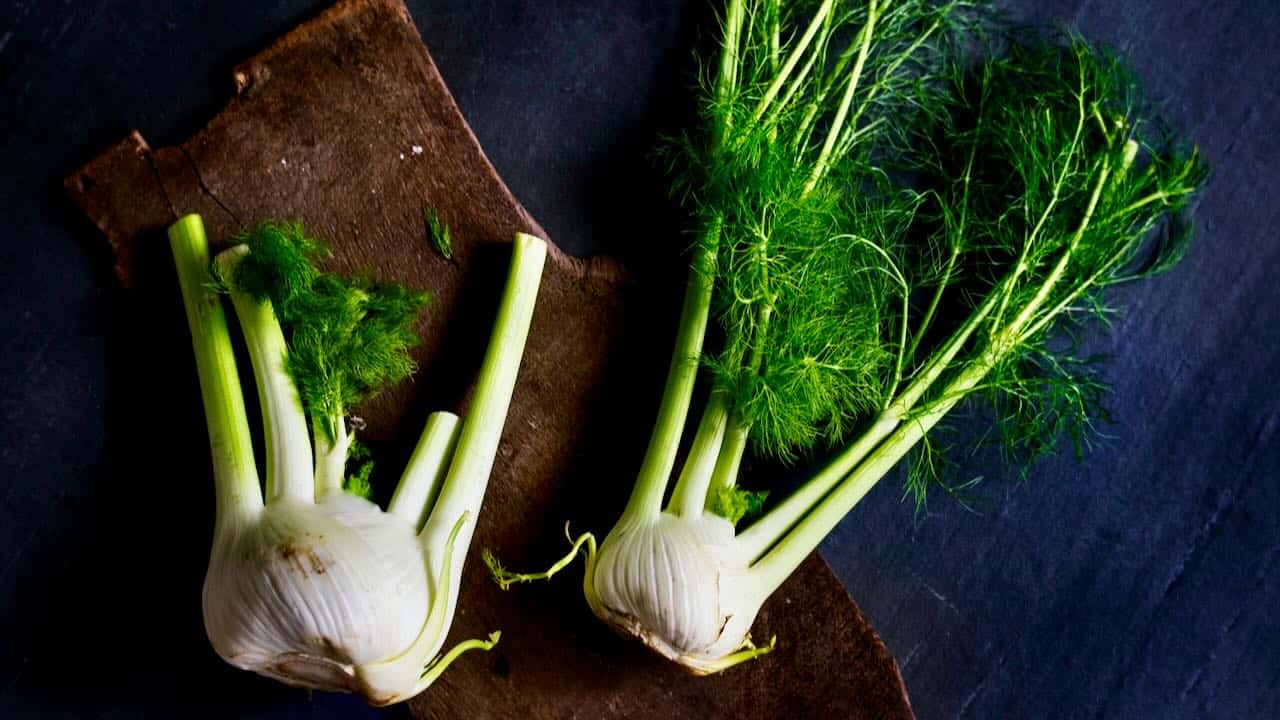
Roasting turns fennel sweet and mild; slicing it raw keeps the anise sharp. Three treatments follow, a roasted bulb, a shaved salad, and a fennel Negroni, so one vegetable can carry a side, a first course, and the drink.
Roast two whole fennel bulbs for eight guests, halved and oiled, at 400°F for forty minutes with no lid and no splash of stock, and they come out pale at the edges, squeaky at the core, and loud with licorice. A few slices go, the rest come back to the kitchen, and the bulb gets written off for a year.
Heat was the variable, not the recipe. Hard, uncovered roasting collapses fennel’s anise into something closer to caramelized onion, while a raw bulb sliced thin keeps that sharpness on purpose and asks for citrus and salt instead of an oven. Same bulb, two ingredients, and a third once the seed and a strip of stalk go into gin.
At a Glance
- Roasting at 425°F, cut side down, turns fennel sweet and mild; shaved raw, it stays crisp and sharply anise.
- One medium bulb, about a pound, is a side dish for two guests or a shaved salad for three to four.
- The roast wants parmesan, lemon, and space on the pan; the salad wants orange, olives, and salt.
- A fennel Negroni starts with gin left on crushed fennel seed for twenty-four hours, then built in equal parts.
- Fronds, stalks, and pollen keep the anise that a long roast drives off, so nothing needs binning.
What Is Fennel, and What Changes When It Meets Heat
Fennel is a pale bulb vegetable with a celery-like crunch and a clean anise flavor, sold with feathery fronds and hollow stalks still attached. The useful fact for a host is not the botany but the behavior: raw fennel is bright, crisp, and unmistakably licorice, while the same bulb roasted long and hot turns soft, sweet, and closer to caramelized onion. That one split is why fennel recipes divide into three families, a roasted side, a raw shaved salad, and an infusion for the glass, and why a guest who dislikes one will often happily eat another.
Fennel Is Two Ingredients, and the Oven Decides Which One
Heat is the variable that matters most in recipes with fennel, more than the cut, the pan, or the seasoning. Long exposure to high heat breaks down the compounds that read as licorice, and no heat at all leaves them fully intact.
Everything else is a consequence of that one fact.
It also explains the third form. Fennel’s aromatics dissolve in alcohol, so seed and stalk trimmings steeped in gin carry the anise into a glass without any of the vegetable’s texture. Every fennel cocktail worth making starts there.
- Roasted: sweet, soft, faintly nutty, almost no licorice. Sits well with parmesan, lemon, sausage, and pork.
- Raw and shaved: crisp, chilled, sharply anise. Needs acid, salt, and fat beside it.
- Infused: aroma only, no texture. Carries into gin, vermouth, syrup, and soda.
The three parts of the plant behave differently too, and the Great Italian Chefs breakdown of how fennel’s three edible parts differ is worth reading before you pick up a knife. Which form you can pull off, though, starts at the market with the bulb you carry home.
How Do You Pick a Fennel Bulb and Trim It Without Waste?
Pick a heavy bulb with tight, unsplit layers, no browning at the cut edges, and fronds that still look like dill rather than straw. Weight is the honest signal, because a bulb that feels light for its size has already lost water and will roast dry.
Size matters less than shoppers assume. A softball-sized bulb and a grapefruit-sized bulb roast the same way if both are firm, and how to select and store fennel at the market comes down to squeeze, smell, and the state of the fronds. Written recipes for fennel assume a firm bulb, so the trim is where a tired one gets saved.
- Cut the stalks off where they meet the bulb and set them aside. They are stringy raw but excellent in stock.
- Snip the fronds into ice water. They wilt within an hour on the counter.
- Trim a thin slice off the root end, leaving the core intact if you plan to roast in wedges.
- Halve the bulb top to root, then slice with the grain for roasting or across it for a salad.
Direction of the cut is the part worth getting right, and the right way to slice a fennel bulb changes depending on whether the piece needs to hold together or fall apart. Fennel bulb recipes tend to skip that step, which is why the same ingredient behaves so differently from one kitchen to the next.
|
Keep All Three Fennel Treatments Together |
Roasted Fennel Needs High Heat, Cut Side Down, and Room
Roasted fennel recipes fail in one predictable way: the oven runs too cool and the pan carries too much. Fennel is roughly ninety percent water, so a crowded sheet steams it into that pale, squeaky state.
Set the oven to 425°F, lay the wedges cut side down, and leave an inch of bare pan around each piece. Forty minutes gets you amber edges and a core soft enough to cut with the side of a spoon.
The version that converts skeptics
Olive oil, salt, a hard squeeze of lemon at the end, and parmesan shaved over the hot pan is the treatment to default to, and golden roasted fennel with parmesan and lemon is the clearest write-up of it. Among vegetable fennel recipes, this is the one that changes a skeptic’s mind at the table.
- Cut into six wedges through the root so every piece keeps its own hinge.
- Toss in oil before salting, because salt on a dry surface pulls water straight back out.
- Roast on the lower third of the oven for the first twenty minutes.
- Add the cheese in the last three minutes, or off the heat if it browns fast.
Recipes for roasted fennel scale better than most vegetables for a crowd. The wedges hold heat for twenty minutes on the counter without collapsing, which is one reason fennel works alongside an Italian buffet built for a big room. The same bulb, left raw, asks for the opposite treatment.
Shaved Fennel Wants Orange, Olives, and Salt, Never an Oven
A shaved fennel salad is a knife exercise more than a recipe. Slice the bulb as thin as you can manage, ideally on a mandoline at the second-thinnest setting, and the licorice reads as freshness rather than medicine.
Thickness is the difference between a salad and a pile of raw vegetable.
The Sicilian version, and why the orange matters
Orange and fennel salad recipes come out of Sicily, where the citrus supplies the acid and the dressing is little more than good oil and salt. Cara Cara or blood orange segments, cured black olives, and a scatter of fronds is the whole build, and an authentic Sicilian fennel and orange salad keeps it that plain on purpose.
- Slice thickness: one to two millimeters. Any thicker and the fennel fights back.
- Acid: orange segments plus the juice they release; lemon only if the oranges are very sweet.
- Salt timing: ten minutes before serving, no earlier.
- Fat: olive oil, or shaved pecorino when the table wants something richer.
Fennel salad recipes travel well through a menu because they reset the palate between richer courses, which is why fennel bulb salad recipes slot in ahead of a braise rather than beside it. That sequencing logic is the same one behind a full Italian dinner party menu. What neither the roast nor the salad uses is the seed, and that is where the drink begins.
|
Hosting Tip: Taste the Fennel Gin at Twelve Hours |
Sipping Fennel Works When the Gin Does the Infusing
A fennel Negroni is a standard Negroni built with gin that has been sitting on fennel seed. Equal parts infused gin, sweet vermouth, and Campari, stirred over ice, served with a wide strip of orange peel and a frond laid across the top.
Infusing the gin
- Add one tablespoon of lightly crushed fennel seed to 375 ml of a juniper-forward gin.
- Drop in two inches of trimmed fennel stalk, cut into coins.
- Seal it and leave it at room temperature for twenty-four hours, tasting at twelve.
- Strain through a coffee filter and keep the bottle in the fridge.
Longer than a day and the seed turns the gin bitter and faintly soapy. A fennel Negroni built on fennel-infused gin uses the same principle at bar scale, with the infusion doing the work and the build staying classic.
The fennel Negroni is a real aperitif rather than a novelty, which is why it pours comfortably alongside the classic aperitifs worth serving before dinner.
The non-alcoholic version
Fennel cocktail logic transfers to a zero-proof glass with very little loss, since the aromatics are what carry. Steep the seed in hot simple syrup instead of gin, then build with mandarin juice and soda, the approach behind a non-alcoholic mandarin-fennel mocktail.
Both versions sit in the same rotation as the Italian bitter drinks that open a table, where the point is appetite rather than volume. The seed, though, is only one of the parts the bulb leaves behind.
Fronds, Stalks, and Pollen Carry What the Bulb Cooks Off
Recipes with fennel bulb at the center leave the fronds and stalks on the board, which wastes the two parts that still taste loudly of anise after the oven has finished. Roasting drives most of that flavor off, and it only matters if you have thrown away everything that still holds it.
Fennel pollen is the concentrated version, harvested from the flower heads and used a pinch at a time. It costs a lot by weight and almost nothing by use, and it is what makes a simple fennel pasta with sausage taste like it came from somewhere specific.
- Fronds: chop them like dill into the salad, over the roast, or through a yogurt sauce.
- Stalks: simmer them into stock, or lay them under a roasting fish as a rack.
- Pollen: a pinch over pork, roast chicken, or the shaved salad just before serving.
- Cores: dice them and cook them into soup rather than discarding them.
None of this is thrift for its own sake. Putting fennel fronds and stalks to use reads as technique rather than rescue, because each part lands somewhere the bulb cannot. Knowing what every part is for also makes the failures easier to catch early.
|
Separate the Three Fennel Prep Lists |
Where Fennel Goes Wrong, and How to Catch It Early
Three failures account for nearly every disappointing plate of fennel, and all three show themselves before the dish is finished: a tough bulb, a crowded pan, and a salad dressed too soon.
Toughness is the one you cannot cook out. Split outer layers and stalks that bend rather than snap mean the bulb sat too long, and how to tell if fennel has gone tough or past its prime is worth reading before you buy four of them at once.
- Squeaky, pale roast: the oven sat under 400°F or the pan was full. Spread the wedges over two sheets and give them another fifteen minutes at 425°F.
- Watery salad: salt went on too early. Drain it, pat it dry, and dress it again.
- Bitter drink: the gin sat on the seed past a day. Cut it with a measure of fresh gin.
- Stringy bite: the outer layer stayed on. Peel it away like a celery stalk.
Every one of these is a five-minute fix while the kitchen is still open. Catching it once guests are seated is a different conversation, which is why the buying decision matters as much as the cooking.
One Bulb, Three Courses: Quantities and Pours That Fit
One medium bulb, about a pound, is a side dish for two guests, the base of a shaved salad for three or four, or enough stalk trimmings to infuse a bottle of gin twice over. Buy one bulb per two guests when fennel is the vegetable of the night and the trimmings will cover the drink.
| Fennel form | Per guest | For eight guests |
|---|---|---|
| Roasted side | Half a medium bulb | Four bulbs |
| Shaved salad, first course | A quarter bulb | Two bulbs |
| Negroni infusion | Stalks and seed only | One bulb, one bottle |
What to pour
Fennel’s anise pushes wine in a specific direction, and the direction moves with the form. Raw and shaved, it wants something high-acid and unoaked; roasted, it can take a rounder white or a light chilled red, and wine pairing ideas across raw, roasted, and braised fennel sorts them along exactly that line.
- Shaved salad: Vermentino, Grüner Veltliner, or a dry Sicilian white.
- Roasted side: Fiano, white Rioja, or a lightly chilled Frappato.
- Fennel Negroni: pour it first, before anything on the wine list.
Of the fall and winter ingredients worth building a menu around, fennel is the only one that also turns up in the glass. A fennel dinner party does not need all three forms on one night, and the drink is the easiest of them to add, which is the same logic behind a welcome drink that sets the tone.
A wasted bulb is rarely a bad ingredient. It is usually a good one given the wrong forty minutes, and the fix costs nothing but a hotter oven and a sharper knife.
Frequently Asked Questions
How do you cook fennel for a dinner party?
Roast it. Cut a firm bulb into six wedges through the root, oil and salt them, and roast at 425°F for forty minutes until the edges go amber. Finish with lemon and shaved parmesan. It holds heat on the counter for twenty minutes, so it fits around a main course.
What goes well with shaved fennel salad?
Citrus, salt, fat, and something briny. Orange or blood orange segments supply the acid, cured black olives supply the salt, and olive oil or shaved pecorino rounds it out. Serve it before a braise or a rich roast, where its crunch resets the palate rather than competing with the main.
How can you roast fennel without it getting soggy?
Raise the heat and empty the pan. Fennel is about ninety percent water, so anything under 400°F steams it. Roast at 425°F with the wedges cut side down and an inch of bare pan around each piece, and give the sheet the lower third of the oven for the first twenty minutes.
Can you eat fennel fronds and stalks?
Yes, and both are worth keeping. Fronds behave like dill and go into salads, sauces, and over a finished roast. Stalks are too stringy to eat raw, but they simmer into a clean stock or work as a roasting rack under fish. Only browned or slimy pieces should be discarded.
What does a fennel Negroni taste like?
Like a Negroni with the bitterness softened and lengthened. The infused gin adds a warm anise note that sits between the juniper and the Campari, so the drink reads rounder and slightly sweeter without any added sugar. Orange peel pulls the fennel forward. Twelve hours of infusion gives a gentler version.
What’s the best orange and fennel salad recipe?
The Sicilian one, because it asks for the fewest ingredients. Thin-shaved fennel, orange segments with their juice, cured black olives, olive oil, and salt, dressed ten minutes before serving. Fennel orange salad recipes often add too much, when the crunch is the point rather than the dressing.
Continue Reading:
More On Fall and Winter Ingredient Heroes
- 6 Types of Edible Mushrooms Worth Cooking for Guests
- Brussels Sprouts Recipes, Roasted Crispy with Bacon
- Sweet Potato Recipes Past the Casserole and the Pie
- Winter Citrus Fruits That Brighten Salad and Roast
- Leek Recipes, from Potato Soup to a Winter Gratin
More from The Gourmet Host
- Classic Aperitifs for Dinner Parties: 15 Best Picks
- Italian Dinner Party Menu: A Complete Host’s Guide
- Welcome Drinks That Set the Tone for Any Gathering
- Easy Italian Party Food Buffet Tips to Host Any Crowd
- Italian Drinks: Aperol, Spritz, and Crodino
Explore TGH Categories
- Set the Scene
- Drinks and Bar
- Plan the Meal
- Engage with Guests
- Games and Toasts
- Tools and Techniques
- Why We Gather