Indian Drinks: The Four-Pour Menu for Your Dinner
 15 min read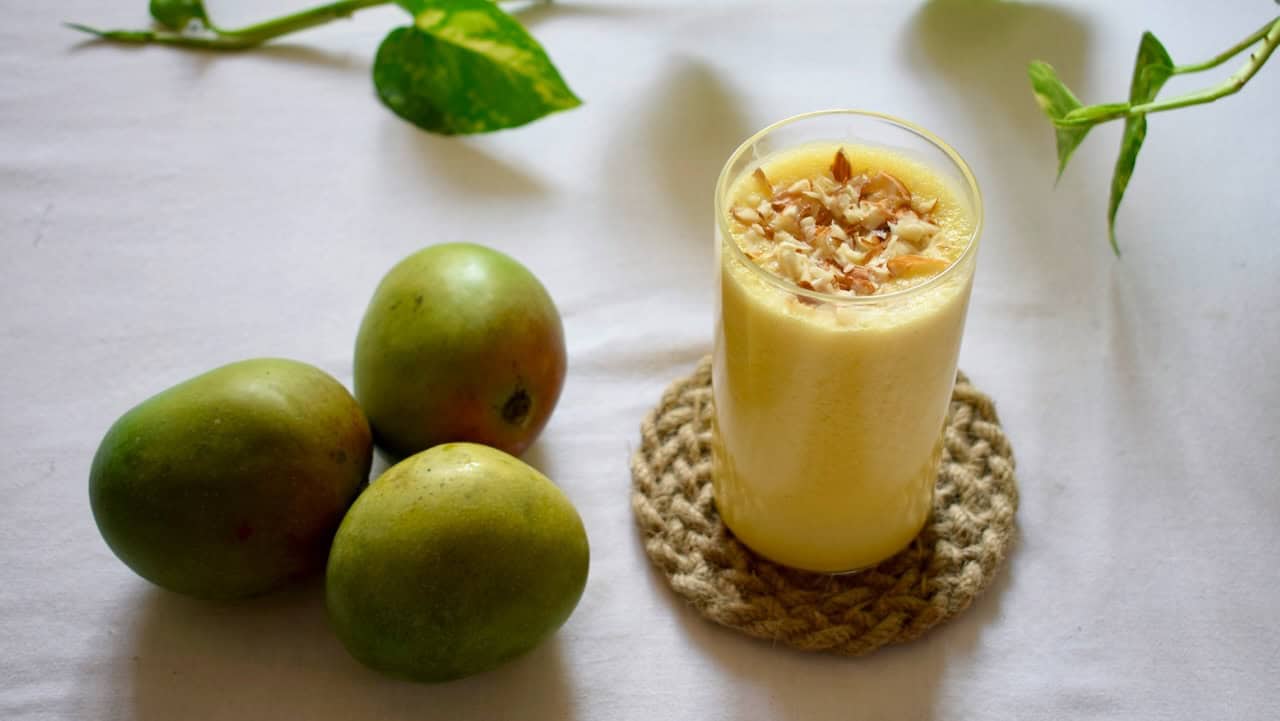
Mango lassi isn’t a smoothie, and Indian drinks aren’t a list; they’re a temperature-and-dairy system the host runs against the spice level of the meal. Cold yogurt cools the chili burn faster than water, lime-and-black-salt sharpens the palate between bites, masala chai resets the table between courses, and a chilled Kingfisher carries the alcoholic side of a menu that leans non-alcoholic.
Four pours cover almost any Indian dinner for six to twelve guests: mango lassi during the meal, nimbu pani as the lighter cooler beside it, Kingfisher beer for drinkers, and masala chai at the close. Below: the build for each pour, the timing rules that decide which lands when, and the pairing logic for the spice profile coming out of the kitchen.
At a Glance
- The Indian dinner table leans non-alcoholic by design: one strong NA anchor (mango lassi or nimbu pani) plus one cold Kingfisher beer per gathering.
- Mango lassi: thick yogurt blended with mango pulp, cardamom, sugar, and ice; texture lands between drinkable yogurt and a thin smoothie.
- Masala chai is brewed, not steeped: black tea boiled with whole spices and milk for six to eight minutes, served after the meal.
- Nimbu pani: four ingredients (lime, water, sugar, black salt) for the dairy-free cooler when lassi feels too heavy.
- Kingfisher beer beats wine with spicy food; pour at 38°F, not American-restaurant 33°F, so the flavor reads through the spice.
What Are Indian Drinks, in Modern Hosting?
Indian drinks are the eight or so traditional pours (sweet and salty lassi, chaas, masala chai, nimbu pani, jaljeera, aam panna, thandai, falooda) that organize an Indian table around heat, dairy, and citrus rather than around an alcohol pairing. The menu is mostly non-alcoholic by tradition, with Kingfisher beer or Indian whisky as the alcoholic anchor on tables that include them. For the home host, the working definition is narrower: four pours (lassi, chai, nimbu pani, Kingfisher) that cover almost any Indian dinner with one grocery trip and roughly thirty minutes of day-of prep.
The Indian Drinks Menu Is Mostly Non-Alcoholic, and That’s the Strength
The Indian dinner table is built around cold dairy and lime, not around a wine pairing. The framework simplifies the bar: one chilled NA anchor (lassi or nimbu pani), one cold beer (Kingfisher), one pot of masala chai at the end. That covers a six-to-twelve-person dinner without a cocktail shaker.
Spicy food rewards cold and creamy or cold and acidic on the palate. Cold yogurt coats capsaicin receptors and shortens the burn; cold lime-water with black salt sharpens the palate between bites. The non-drinkers are handed mango lassi, the most popular Indian drink on American restaurant menus for exactly this reason.
The host’s two-pour Indian table:
- One non-alcoholic anchor: Mango lassi, or nimbu pani if the menu skews lighter. Both function as full pours, not drinks for kids.
- One alcoholic anchor: Kingfisher beer in cold bottles. Indian whisky on a single-pour basis on request.
- One closing pour: Masala chai brewed fresh at the end; the table’s natural pause between dessert and the door.
That three-line menu carries through almost any Indian-themed dinner. The headline pour comes first.
|
Build Your Indian Drinks Menu Fast |
Mango Lassi: The Headline Pour of Indian Hosting
Mango lassi is the dinner-table pour, served chilled in a short tumbler. Restaurant versions lean sweeter and looser; the home version sits closer to a drinkable yogurt with mango pulp folded through. Either is correct.
The restaurant-texture ratio, drawn from a restaurant-style mango lassi recipe: one cup full-fat yogurt, three-quarters cup cold mango pulp (alphonso ideal, frozen acceptable), two tablespoons sugar, a pinch of green cardamom, and ice. Blend thirty seconds.
Sweet vs Salty Lassi
Sweet (mithi) lassi reaches for sugar and fruit; salty (namkeen) lassi reaches for salt, cumin, and sometimes mint. A Tea for Turmeric mango lassi guide covers the consistency math: a sweeter mango wants less sugar, a tarter yogurt wants more.
The Host’s Four-Step Lassi Prep
Mix the pitcher one hour ahead and chill until pour:
- Whisk the yogurt smooth: Thirty seconds in the blender jar breaks the curds first.
- Add mango pulp and sugar: Taste once; alphonso pulp is sweeter than fresh mango most months.
- Cardamom and ice last: A pinch of green cardamom for a half-pitcher, six to eight cubes.
- Chill the pitcher, not the glass: A frosted glass dilutes the lassi; a chilled pitcher holds the texture.
The yogurt pour is the host’s headline. The brewed pour at the close earns its own H2 because most American hosts get it wrong first try.
Masala Chai: The After-Dinner (or All-Day) Pour Done Properly
Masala chai is brewed, not steeped. Steeped chai tastes flat because whole spices need a six-to-eight-minute boil to release. The proper method pulls out a small saucepan, not a teapot, and brings water, milk, black tea, and crushed whole spices to a low boil together.
The Reference Build, Whole-Spice
Drawn from an authentic masala chai recipe: one cup water, one cup whole milk, two teaspoons loose Assam or Darjeeling, one inch smashed ginger, two crushed cardamom pods, one clove, one peppercorn, a half-stick cinnamon, and a teaspoon of sugar. Boil six minutes, strain, serve in small cups. For a thicker, milk-forward signature, the Some Like It Salty take on Bon Appétit’s chai is the home-cook reference.
Where Most American Hosts Go Wrong
The four shortcuts that kill the pour:
- Pre-mixed chai concentrate: Bottled syrup is sugar-water; never the pour for a hosted dinner.
- Bagged chai tea: Steeped, not boiled; two minutes of steeping produces a thin pour with none of the layered spice.
- Plant milk swaps without adjustment: Oat milk holds; almond milk separates under a hard boil and needs to come in last.
- Serving in a coffee mug: Chai is served in small cups (4-6 oz) so the second pour is part of the ritual.
Hosts already running a coffee station can fold the chai pot into the guide to setting up a coffee bar for guests workflow, paralleling the cozy non-alcoholic fall drinks for autumn hosting framework for spiced warm drinks. The daytime cooler is the third pour.
Nimbu Pani: Indian Lemonade with Black Salt, in Four Ingredients
Why the Black Salt Matters
Nimbu pani is the cooler the host pours when the meal is heavy on spice and the lassi is already doing dairy work. Four ingredients (lime, water, sugar, black salt), under ten minutes, and the black salt brings a sulfurous, mineral edge that sharpens rather than sweetens.
The reference ratio, drawn from a Tasting Table nimbu pani recipe: juice of three limes, four cups cold water, two tablespoons sugar, a quarter-teaspoon black salt (kala namak), a pinch of roasted cumin powder, fresh mint, and ice. Stir well; the salt dissolves slowly and the cumin needs a moment to bloom.
Three Variations Worth Knowing
Ranked by closeness to base nimbu pani:
- Shikanji, the elaborate cousin. Per Easy Indian Cookbook’s shikanji method, adds ginger, mint, and sometimes black pepper, closer to a spiced lemonade.
- The Hari Ghotra house version. Chef Hari Ghotra’s British-Indian nimbu pani recipe adds chaat masala for a more aromatic finish.
- The mint-forward version. A My Heart Beets shikanji recipe runs heavy on fresh mint; the summer dinner default.
Two more references for the host’s shelf: a Food52 editorial take on nimbu pani covers the Western-host variations, and the Veg Recipes of India nimbu pani standard is the authoritative Indian-author version. Nimbu pani holds three to four hours in the fridge before the lime turns bitter; the cousin pour lives in the buttermilk family.
|
Hosting Tip: Let the Lager Warm Slightly |
Chaas and Other Indian Yogurt Drinks: The Cooler That Follows Spice
Chaas is thin spiced buttermilk, served in a tall glass alongside the spiciest dishes on the table: the cooler for heat-forward food (vindaloo, Andhra chili-fried fish, a heavy garlic-and-chili dal) rather than the milder cream-based curries lassi pairs with. The pour is salty rather than sweet, and the yogurt is whisked thin with cold water. Chaas is the most useful Indian yogurt drink for the host’s emergency rescue when the spice level surprises a guest.
The Five-Minute Chaas Build
Mix in a single pitcher and pour cold:
- One cup plain full-fat yogurt, whisked smooth: Greek yogurt thinned with water works; Indian dahi is closer.
- Two cups cold water, whisked in slowly: The texture is drinkable, closer to a thin milk than to yogurt.
- A quarter-teaspoon each of black salt and roasted cumin powder: Grated ginger adds warmth; fresh mint or coriander folds in at the end.
- Ice, last: Six cubes per pitcher; ice melts faster in chaas than in lassi because there’s less fat to insulate it.
Chaas pairs the way a dry riesling pairs with Thai: cuts fat and tames chili without competing. A chaas pitcher beside the lassi covers the full dairy-cooler range. For NA holiday pours, see non-alcoholic cranberry drinks for the holiday table. Beyond the yogurt family sits a quieter range of spiced coolers.
Jaljeera and Aam Panna: The Less-Known Spiced Coolers Worth Knowing
Jaljeera is a cumin-mint-tamarind cooler, dark and savory rather than sweet, made from roasted cumin, mint, tamarind pulp, ginger, and black salt blended with cold water. The daytime drink Indian street vendors sell from earthen pots; on a Western dinner table it lands as a digestive between courses.
Aam Panna: The Green-Mango Cooler
Aam panna is sour, slightly sweet, and bright green. Cook raw green mangoes until soft, peel and pulp, then mix with sugar, roasted cumin, black salt, mint, and cold water. The summer pour for any Indian dinner April through September.
When each cooler earns the pour:
- Jaljeera lands best between courses on a heavier menu, resetting the palate the way an Italian digestif resets a long meal.
- Aam panna belongs to summer; too tart for winter, and unripe mangoes are easier to source in May than December.
- Both pour as five-ounce glasses, not full tumblers; tasting pours served as a course element.
For a fruit-forward NA reference outside the Indian frame, easy strawberry mocktail recipes guide covers the pour size that translates to aam panna. The festive end of the range pulls in two more pours that are almost dessert.
Thandai and Falooda: The Festive End of the Indian Drinks Range
Thandai is the almond-saffron pour from northern India, drunk at Holi but year-round otherwise. Grind soaked almonds, fennel, melon, and poppy seeds with cardamom, peppercorns, and saffron into a paste; stir into cold milk with sugar. Creamy, lightly spiced, aromatic; anchors a celebratory dinner the way a Christmas dessert anchors a December table.
Falooda: The Drink That Eats Like Dessert
Falooda layers rose syrup, soaked sabja (basil) seeds, soaked vermicelli noodles, cold milk, and a scoop of kulfi or vanilla ice cream into a tall glass. Basil seeds add a jellied bite; vermicelli adds noodle pull; the ice cream melts into rose-milk over five to seven minutes. Some falooda lands closer to a drink, some closer to a sundae.
The festive pour rules:
- Thandai for celebration dinners: Serve in small tumblers as the after-meal pour for a six-to-eight-person seated dinner.
- Falooda as a course, not a drink: Plate as dessert in tall sundae glasses with long spoons; the ice cream lands the falooda after the food, not alongside it.
- Make-ahead notes: Thandai paste holds two days; whisk into cold milk thirty minutes before serving. Falooda noodles cook two hours ahead, basil seeds soak twenty minutes ahead, ice cream at the table.
These two pours signal the host has taken the table beyond the four-pour menu. The alcoholic anchor for drinking guests is the next decision.
|
Save Every Festive Pour Recipe |
Kingfisher and Other Indian Beers: Why Lager Beats Wine with Spicy Food
Kingfisher is the default Indian beer on most American restaurant menus, and it earns the pour at home: cold lager handles spicy food in a way most wines cannot. Carbonation lifts oil and chili off the palate, malt sweetness partners with dairy-rich curries, and moderate alcohol (~4.8% ABV for Kingfisher Premium) keeps the table from going horizontal on a spicy menu.
Why Lager Beats Wine with Indian Food
High-tannin red wine collides with chili heat and amplifies the burn; most white wines either lose acidity against rich curries or get overrun by spice. A cold lager (Kingfisher, Taj Mahal, Cobra, Bira 91) sits in the same temperature register as the cold NA pours. Pour in a tall glass with a slight tilt, not a frosted mug; frost kills carbonation.
Four Indian Beers Worth Stocking
Ranked by availability at an American grocer:
- Kingfisher Premium Lager. The default; light, mildly hoppy, pairs from butter chicken to vindaloo. Six-pack $10–13.
- Taj Mahal Lager. Maltier than Kingfisher; pairs with creamier North Indian dishes (korma, kofta, paneer butter masala).
- Cobra Premium Lager. Brewed for Indian food; lower carbonation, easier across a longer meal.
- Bira 91 White Ale. Wheat-forward, citrusy; choice for South Indian or seafood menus.
For dry tables, the four-pour NA menu still works in full. Indian whisky (Amrut, Paul John, Rampur) is the second alcoholic option for longer gatherings, poured neat before the food lands. The two-pour rule closes out the framework.
The Two-Pour Indian Dinner Menu (Lassi + Kingfisher) as the Host’s Default
The simplest Indian drinks menu is two pours: a pitcher of mango lassi and a six-pack of cold Kingfisher. That covers NA and alcoholic anchors for six guests, one grocery trip, and roughly forty-five minutes day-of: fifteen to blend the lassi, ten to chill the beer, twenty to brew chai for the close.
The Expansion Path
Add nimbu pani for chili-forward South Indian or Goan menus; the citrus cooler does what lassi can’t when the food sweats. Add chaas for the spiciest dishes. Add falooda only when dessert is the main event; falooda replaces the dessert plate rather than accompanying it.
The Shopping List for Six
One grocer trip covers the default menu:
- One quart full-fat plain yogurt: Stonyfield or Maple Hill work; Indian dahi is closer.
- One 850g can alphonso mango pulp: Frozen chunks as backup; fresh mangoes peak May–August.
- Green cardamom, sugar, ice: Verify cardamom is in the pantry the day before.
- Two six-packs of Kingfisher: Twelve handles four drinkers across three hours; six for a smaller contingent.
- Whole-spice chai kit: Loose Assam, ginger, cloves, peppercorns, cinnamon; one run covers four to six chai dinners.
Two pours plus the chai close, and the host has run a table that reads as deliberately Indian. The framework holds across menu sizes, spice levels, and guest counts; the only variable is how many Kingfisher bottles land in the fridge.
Frequently Asked Questions
What is the most popular Indian drink?
Masala chai is the most-consumed Indian drink overall, with an estimated billion-plus cups served daily across India. Mango lassi leads on restaurant menus outside India and is the headline pour American hosts recognize first. For hosting, the two cover most needs: chai after a meal, lassi during. Nimbu pani sits third as the warm-weather cooler.
What are traditional Indian non-alcoholic drinks?
Traditional Indian non-alcoholic drinks span eight core pours: lassi, masala chai, nimbu pani, chaas, jaljeera, aam panna, thandai, and falooda. Lassi (yogurt-based), chai (spiced black tea with milk), and nimbu pani (lime water with black salt) lead everyday tables, while chaas, jaljeera, aam panna, thandai, and falooda cover heat-forward, seasonal, and festive pours across regional India.
What is Indian sweet lassi made of?
Indian sweet lassi blends thick plain yogurt with cold water or milk, sugar, a pinch of cardamom, and ice. The texture sits between drinkable yogurt and a thin smoothie. Mango lassi adds ripe mango pulp (alphonso for the best version) and reduces or removes added sugar depending on how sweet the fruit lands.
What is a good Indian drink to serve with spicy food?
Cold yogurt drinks lead: sweet lassi for sweet-spicy dishes, salted lassi or chaas for heat-forward dishes. Nimbu pani also cools the palate without dairy, useful for lactose-sensitive guests. Avoid carbonated soda, which amplifies the burn rather than muting it. A cold Kingfisher beer is the alcoholic option that holds up against the spice.
Do Indians drink alcohol at dinner?
Many Indians do drink alcohol, but a large portion of Indian households are dry by religion or preference. The dinner-party host should always pour at least one alcoholic option (Kingfisher or Indian whisky) plus two strong NA options. Lassi and nimbu pani both function as full pours for adult guests, not as a polite alternative.
What is the easiest Indian drinks menu for a host?
Pre-made mango lassi (yogurt, frozen mango, sugar, cardamom, blended one hour ahead and chilled), a pitcher of nimbu pani, and a six-pack of cold Kingfisher cover an entire Indian dinner for six guests. Chai brewed fresh at the end of the meal closes the evening with theater the menu has already earned.
Continue Reading:
More On International Drinks
- Drinks by Country (Host’s Guide to 12 Cuisines)
- Welcome Drinks by Country (10 Ideas That Set the Tone)
- Mexican Drinks Menu: 4 Pours That Run the Night
- Italian Drinks: Aperol, Spritz, and Crodino (Host)
- Japanese Drinks: Sake, Highball, Yuzu, Calpis (Plan)
- Classic Aperitifs for Dinner Parties (15 Best Picks)
- Three-Bottle Home Bar Essentials: Global Starter
More from The Gourmet Host
- Cook-Ahead Dinner Party Menu: Make It All in Advance
- Anniversary Dinner Ideas to Cook at Home for Any Milestone
- Winter Theme Party Ideas for Cozy Gatherings
- The Most Unique Dining Experience in Toronto: Home by Elva’s Secret Supper Club
- 15 Office Minute to Win It Games for Work Teams
Explore TGH Categories
- Set the Scene
- Drinks and Bar
- Plan the Meal
- Engage with Guests
- Games and Toasts
- Tools and Techniques
- Why We Gather