How to Build a Mediterranean Mezze Platter at Home
 14 min read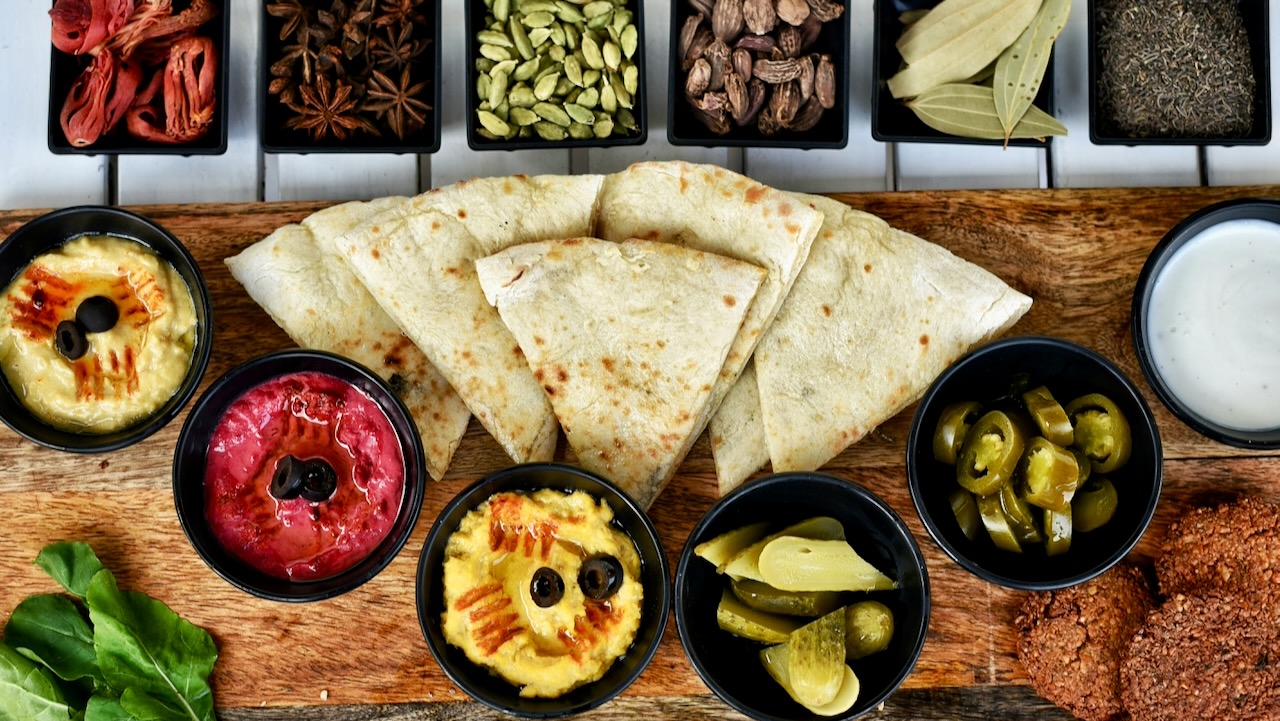
Mezze is not an appetizer course so much as a way of eating: a low table of dips, warm bread, olives, and stuffed grape leaves that guests graze for an hour while conversation does the work. The Mediterranean mezze platter is the home version of that table, and it leans almost entirely plant-forward, with hummus, baba ganoush, and muhammara doing the heavy lifting instead of sliced meat.
Five anchor dips, a supporting cast of olives and dolmas, a bread plan, and a per-guest amount: that is the whole build. By the end you will know what goes on the board, how much to make for six or eight guests, what to prep the day before, and how to arrange it so a vegetarian-friendly spread looks generous rather than sparse.
At a Glance
- A Mediterranean mezze platter centers on dips, warm pita, olives, dolmas, and marinated feta, not cured meats. It is mostly plant-based and built for scooping and sharing before dinner.
- Five anchor dips carry the board: hummus, baba ganoush, muhammara, tzatziki, and a whipped feta. Three of the five is plenty for most gatherings.
- The supporting cast does the texture work: olives, dolmas, marinated vegetables, and a handful of nuts add salt, tang, and crunch around the dips.
- Plan roughly a quarter to a third of a cup of dip per guest across the board, plus two pieces of warm pita and a small handful of olives and vegetables each.
- Make the dips one to two days ahead, slice vegetables the morning of, and assemble the board within two hours of guests arriving so nothing dries out.
What Is a Mezze Platter, and How Does It Differ from Charcuterie
A mezze platter is a shared Mediterranean and Middle Eastern spread built around dips, warm bread, olives, and marinated vegetables, designed for guests to scoop and graze rather than plate a single serving. For a home host feeding mixed eaters, the appeal is that the board is largely plant-based, so it suits vegetarians without a separate menu, and the warm-bread-and-dip format reads as generous on a budget. Where a cured-meat charcuterie board leads with sliced salami and hard cheese, a mezze platter leads with hummus, baba ganoush, and dolmas meant to be spread and shared, which changes both the shopping list and the way the board is arranged.
Why a Mezze Spread Reads Differently from a Meat Board
Two boards can sit on the same table and ask for completely different things. A charcuterie board is a picking board: guests lift a slice of meat, a wedge of cheese, a cracker. A mezze platter is a scooping board, so the geometry, the serving tools, and the make-ahead plan all shift. Knowing which one you are building keeps the shopping list honest.
What changes when dips lead
- Serving motion: guests scoop and spread rather than pick, so every dip needs a spoon or a stretch of bread within reach, and the bowls need a rim a piece of pita can drag across.
- Temperature: the bread wants to be warm and pliable, the dips cool, which means a quick reheat just before serving rather than a board that sits out cold all evening.
- Diet: the spread is vegetarian by default, so a mixed table eats off the same board instead of you scrambling for a meat-free corner.
If you already host with a meat-and-cheese board, the build is worth contrasting. TGH’s guide to building a charcuterie board walks the picking-board logic, and the companion piece on charcuterie board ingredients covers the meat and cheese math, much as TGH’s hors d’oeuvres menu planning playbook frames the wider pre-dinner spread. A mezze board borrows the abundance and the family-style feel but swaps the centerpiece from cured meat to dips, which is the single decision that sets everything else.
|
Keep Every Dip Recipe In One Place |
The Five Anchor Dips That Carry the Board
Dips are the engine of a Mediterranean mezze platter, and five cover almost any table: hummus, baba ganoush, muhammara, tzatziki, and a whipped feta. Three of these is the working minimum for a board of six to eight guests; the full five suits a larger graze. Pick for contrast so the board offers something earthy, something smoky, something tangy, and something bright.
The earthy and smoky pair
- Hummus: The non-negotiable anchor: chickpeas, tahini, lemon, garlic, blended until silky and pooled with olive oil. Smooth texture matters more than any other single factor on the board.
- Baba ganoush: Roasted eggplant whipped with tahini and lemon, smoky from charring the eggplant skin over a flame. It plays the deeper, savorier counterpoint to the brightness of hummus.
- Muhammara: A roasted red pepper and walnut dip with pomegranate molasses, sweet, tart, and a little spicy. It adds the color and the surprise most boards are missing.
The bright and creamy pair
- Tzatziki: Strained yogurt with cucumber, garlic, and dill or mint, cool and sharp. It cuts the richness of the tahini-based dips and doubles as a sauce if you add a hot bite later.
- Whipped feta: Feta blitzed with a little yogurt or olive oil until airy, finished with chili and honey. The saltiest dip on the board and the one guests are most surprised by.
For the anchor itself, Budget Bytes’ homemade hummus is a reliable starting point, and the texture trick of over-processing with ice water from Inspired Taste’s smooth, easy hummus is what separates a silky dip from a grainy one.
For the third dip, Rainbow Plant Life’s muhammara, a roasted red pepper dip, gives you the pomegranate-and-walnut version worth the effort. For the cool, yogurt-based option, Key to My Lime’s homemade tzatziki is the one to copy. Once the dips are decided, the rest of the board fills the space around them.
Supporting Cast: Olives, Dolmas, Marinated Vegetables, Nuts
Dips give the board its base, but the supporting cast gives it texture and the look of abundance. These are the items that fill the gaps between bowls, add salt and crunch, and let a guest build a varied bite. Most need no cooking, which keeps the build manageable.
The salty, briny layer
- Olives: a mix of green Castelvetrano and dark Kalamata covers sweet and sharp. Leave the pits in for flavor and set out a small bowl for the discards.
- Dolmas: stuffed grape leaves, tangy and rice-filled, are the most authentic single addition you can make and need zero work if bought from a good deli.
- Marinated feta: cubes of feta tossed with olive oil, oregano, and lemon zest. Briny, sturdy, and a vegetarian protein that holds its shape on a crowded board.
Dolmas reward a little sourcing care. The Greek Foodie’s dolmadakia, stuffed grape leaves is the homemade route if you want to make them, but a jarred or deli version is a legitimate shortcut that no guest will fault.
The fresh and crunchy layer
- Marinated vegetables: roasted red peppers, artichoke hearts, and quick-pickled cucumbers add acidity that resets the palate between rich dips.
- Nuts: toasted almonds or spiced walnuts scattered into the gaps add crunch and a savory note, and they fill negative space without looking like filler.
Think of the supporting cast as the connective tissue of the board: it bridges one dip to the next and keeps a guest moving across the platter rather than parking on the hummus. With the dips and the extras chosen, the last component is what carries them to the mouth.
|
Hosting Tip: Warm the Pita Just Before Serving |
Breads and Dippers: Warm Pita, Crackers, Crudite
A mezze board lives or dies on what carries the dips. Warm pita is the classic, but a board with only one dipper tires fast, so plan two or three: one bread, one cracker, one fresh vegetable. Variety in texture is what keeps guests reaching back.
Getting the pita right
Warm pita is the heart of the board, and warm is the operative word. Brush the pita lightly with olive oil and heat it briefly, in a low oven or a dry pan, just until it turns soft and pliable rather than crisp.
Tear or cut it into wedges so it scoops cleanly, and warm it within a few minutes of serving so it does not stiffen on the table. A pliable wedge bends around a scoop of baba ganoush; a crisp one snaps and drops it.
Rounding out the dippers
- Seeded or whole-grain crackers add a crisp contrast to soft pita and hold up to thicker dips like muhammara without bending.
- Cucumber spears, pepper strips, endive leaves, and radishes give the board a fresh, raw element and a vegetarian, gluten-free way to scoop.
- A torn crusty baguette or a flatbread broadens the table and keeps the bread basket from emptying mid-graze.
Aim for enough carry that no dip sits stranded without something to scoop it. With the components settled, the host question becomes arithmetic: how much of all this do you actually need?
How Much to Make per Guest and How to Build It Ahead
The most common mezze mistake is guessing at amounts and either running short or drowning in leftover dip. The math is simple once you anchor it to a per-guest figure and decide whether the board is a starter or the main event.
The per-guest amounts
- Dip: plan a quarter to a third of a cup of dip per guest, totaled across all the dips on the board, not per dip. Three dips for six to eight guests lands around four to six cups total.
- Bread: two pieces of pita per guest as a starter, three if the board is dinner. Add crackers and crudite on top so the dippers never run dry.
- Extras: a small handful of olives and a few pieces of marinated vegetable per guest, plus two or three dolmas each if you are serving them.
Scale down for a pre-dinner graze and up for a main event. A mezze platter as the centerpiece wants more bread, more dolmas, and a fourth or fifth dip; the same board as a starter before a Mediterranean dinner can run leaner on all three.
The two-day build plan
- Two days ahead: make the dips. Hummus, baba ganoush, muhammara, and whipped feta all keep covered in the fridge and deepen in flavor overnight, so this is the heaviest task done early.
- Morning of: slice the vegetables and crudite, drain the olives, and cube the feta. Store everything in separate containers so nothing weeps onto the rest.
- Two hours before: assemble the board, leaving the pita off. Cover loosely and keep it cool.
- Just before serving: warm the pita, drizzle the dips with olive oil, and add any fresh herb garnish.
Because so much of the board is no-cook, mezze scales gracefully for a crowd. TGH’s guide to appetizers for a crowd that scale covers the broader portioning logic, and the dips-ahead approach mirrors the make-it-early thinking in TGH’s easy cold appetizers that need zero cooking. With amounts and timing settled, the only thing left is making the finished board look as good as it tastes.
|
Keep the Platter Setup on One List |
Arranging the Platter So It Looks Abundant
Arrangement is what turns a few bowls of dip into a board guests photograph before they eat. The goal is controlled abundance: full, varied, and easy to navigate, without a single bare patch of platter showing through. None of it is hard, and all of it takes about ten minutes.
The build order, big to small
- Anchor the dip bowls first. Place the dips around the board at uneven intervals, not in a neat row, so the eye moves across the platter rather than down a line.
- Add the bread and crackers in loose piles near the bowls, fanned slightly so a guest can grab one without disturbing the stack.
- Cluster the olives, dolmas, and feta in small groups between the dips, keeping like items together so the board reads as organized rather than scattered.
- Fill the gaps last with crudite, nuts, and herb sprigs, tucking them into any negative space so the platter looks full to the edges.
The finishing touches
Finish the dips with a swoosh of the back of a spoon and a pool of olive oil, a dusting of paprika or sumac, and a scatter of herbs or pomegranate seeds. Height helps too: a small bowl raised on an upturned cup or a folded napkin adds dimension so the board is not entirely flat. A bright salad alongside, like the one in A Couple Cooks’ classic Greek salad, rounds out the table without crowding the platter.
Styling cues are worth borrowing here. Half Baked Harvest’s abundant mezze platter is a strong reference for the layered, overflowing look, while Love and Lemons’ mezze platter blueprint and The Mediterranean Dish’s guide to build the perfect mezze party platter map out the plant-forward component layout.
For a more Greek-leaning version, Simply Delicious’s Greek mezze platter leans into feta, olives, and dolmades. Build it big, keep it cool, warm the bread last, and a mezze platter becomes the easiest generous thing you can put in front of guests.
Frequently Asked Questions
What goes on a Mediterranean mezze platter?
A Mediterranean mezze platter centers on dips like hummus, baba ganoush, and muhammara, plus olives, dolmas, marinated feta, cucumber and pepper strips, and warm pita or crackers. The mix is mostly plant-based, so it suits vegetarians and pairs well with a glass of wine before dinner.
How is a mezze platter different from a charcuterie board?
A mezze platter leads with Mediterranean dips, breads, olives, and marinated vegetables rather than cured meats and cheeses. It is largely plant-based and warm-bread-friendly, where charcuterie centers on sliced meats. Mezze is also meant to be scooped and spread, not just picked at.
How much mezze do I need per person?
Plan a quarter to a third of a cup of dip per guest, totaled across the whole board, plus two pieces of pita and a small handful of olives and vegetables each. Serve three to four dips for a group of six to eight. Scale down for a pre-dinner starter, up with extra bread and dolmas for the main event.
Can I make a mezze platter ahead of time?
Yes. Make the dips one to two days ahead and store them covered in the fridge, since flavors deepen overnight. Slice vegetables the morning of, then assemble the board up to two hours before guests arrive and warm the pita just before serving so it stays soft.
What bread is best for mezze?
Warm pita is the classic choice, torn or cut into wedges so it scoops dips well. Add a crusty baguette or seeded crackers for variety and some texture. Brush the pita with olive oil and warm it briefly so it is pliable, not crisp, which makes it easier to dip.
Do I need meat on a mezze platter?
No. A mezze platter is naturally vegetarian-friendly and stands on its own with dips, dolmas, marinated feta, olives, and bread. If you want a protein, add falafel or grilled halloumi rather than cured meats, which keeps the board in the Mediterranean register.
Continue Reading:
More On Mediterranean Hosting
- 9 Mediterranean Dinner Party Menu Ideas for Hosts
- 12 Easy Greek Appetizers to Serve at Your Party
- 8 Mediterranean Salads to Make for a Crowd at Home
- Middle Eastern Dinner Party Menu for a Full Table
- 10 Mediterranean Vegetarian Dinner Ideas for Guests
More from The Gourmet Host
- Finger Food for a Christmas Party: No-Fork Bites
- Make-Ahead Recipes for Large Groups: The 7-Day Chainv
- How to Host a Brunch Your Guests Talk About
- How to Host an Afternoon Tea Party in 7 Easy Steps
- How to Host a Mixed-Diet Dinner Party Confidently
Explore TGH Categories
- Set the Scene
- Drinks and Bar
- Plan the Meal
- Engage with Guests
- Games and Toasts
- Tools and Techniques
- Why We Gather