Leek Recipes, from Potato Soup to a Winter Gratin
 11 min read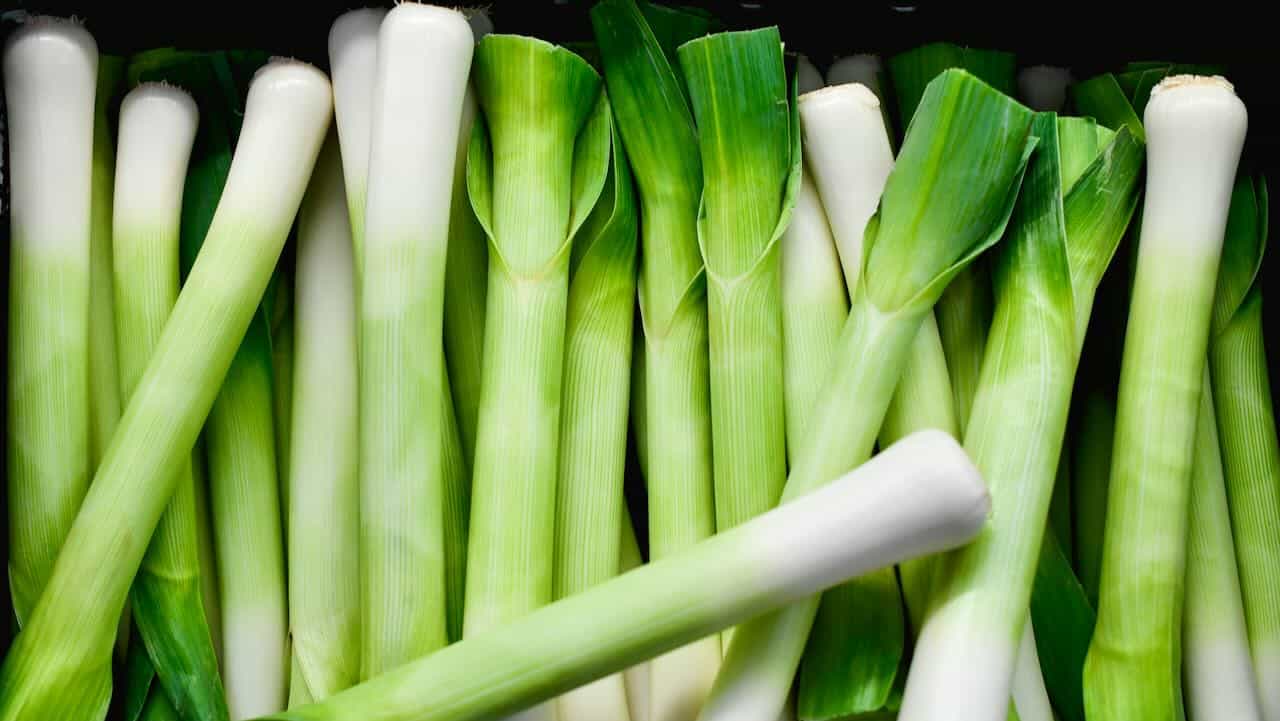
Two pounds of leeks, three or four stalks, yield about four cups of cleaned white and pale green: one pot of potato leek soup for six, or a gratin for four. Buying and cleaning decide the dish long before the recipe does.
Where does the other half of a leek go? Into the stockpot, if you are organized. Dark green tops and root plate account for close to half the weight of every bunch, which is why a recipe asking for four cups of sliced leek is quietly asking you to carry home two pounds.
Sand is the part nobody warns you about. It hides between the layers rather than on the skin, so a leek can look clean, feel clean, and still put grit in a bowl of soup you served to eight people.
At a Glance
- Two pounds of untrimmed leeks give you about four cups of cleaned slices, enough for potato leek soup for six or a gratin for four.
- Grit collects between the layers, so split the stalk lengthwise first and fan the layers under running water instead of rinsing the outside.
- Use the white and pale green only, roughly the bottom two thirds; the dark tops go into stock rather than onto the plate.
- Potato and leek soup is the one dish here that improves overnight, which makes it the make-ahead starter of the four.
- A leek gratin bakes at 375F for about forty-five minutes and holds its heat through a long first course.
- Leeks scorch before they soften, so sweat them in butter with a pinch of salt and a lid rather than browning them over high heat.
What Is a Leek, and Which Part Do You Cook?
Leeks are a winter allium in the onion family, grown with soil banked around the stalk so the lower section stays pale, which is why the bottom is white, the middle light green, and the top dark and fibrous. Cooks use the white and pale green, roughly the bottom two thirds, because that section turns sweet rather than sharp when cooked slowly in fat. Recipes with leek lean on that sweetness instead of an onion’s raw bite, which is how one bunch carries soup, gratin, braise, and tart.
Yield and grit are what stand between that definition and dinner.
Grit Hides Between the Layers, So Cut Before You Rinse
Rinsing a whole leek does almost nothing, because sand rides up inside the plant as it grows and settles between the tight concentric layers. Splitting the stalk lengthwise, from the pale green end down toward the root, opens every one of those layers at once. The short version of how to clean leeks is cut first, wash second.
Fan the halves under running water, root end up, and rub the layers apart with your thumb. Sliced leeks can go into a bowl of water instead: the grit sinks, the rings float, and you lift the rings off the top rather than pouring everything through a colander. David Lebovitz’s walkthrough on how to trim and clean a leek covers both routes in about two minutes of work.
Four Habits That Keep the Grit Out
- Cut at the color change: the white and pale green stay tender, while the dark upper leaves stay chewy no matter how long they cook.
- Keep the tops for stock: two leek tops, a carrot, and a bay leaf make a light broth that gives the same night’s soup more body.
- Trim the root last: leaving the root plate attached holds the halves together while you fan and wash them.
- Dry before the pan: wet leeks steam instead of sweetening, and a salad spinner takes thirty seconds.
Understanding what leeks actually are, a stalk grown deliberately under banked soil, explains why the grit is internal and why the top is tough. A wide knife and a board with a lip make the split easier, and our guide to dinnerware and utensils for the modern kitchen covers the pairing worth owning.
Clean leeks answer only half the shopping question, because the number you buy depends on the course they have to fill.
|
Share the Leek Shopping List |
Yield Sets the Shopping List Before the Recipe Does
Buy by cleaned weight, not by bunch. Two pounds of untrimmed leeks, usually three or four fat stalks, cook down to about four cups of sliced white and pale green. Leek hosting quantities start from that loss, not from the serving line printed on a recipe card.
What Two Pounds Actually Buys
- Soup for six: two pounds of untrimmed leeks and two pounds of floury potatoes, which fills six bowls with enough left for a second ladle.
- Gratin for four: a pound and a half of leeks, halved and packed cut side down into a shallow dish.
- Braise as a side for eight: four large leeks halved lengthwise, or eight slim ones left whole.
- Tart for a cocktail hour: one pound of leeks covers a standard sheet pan cut into twenty squares.
Store them unwashed and loosely wrapped in the refrigerator drawer, where they hold for about two weeks. A produce guide on how to select, store, and serve leeks is worth a scan before a big shop, because leeks washed in advance lose that patience quickly.
Sorted by course, leek recipes fall into four jobs, and which leek and potato recipes you cook follows the course slot rather than the mood. Soup carries a first course and can be made a day ahead, and a gratin holds the center of the table.
Braised leeks and a leek tart cover the smaller nights, so leek vegetable recipes stretch across a starter, a side, a main, and a savory bite from one bunch. The sequencing advice in our step-by-step guide to hosting a dinner party applies here without a single change.
That order puts one dish first, the one that gains the most from a night in the refrigerator.
Potato and Leek Soup Rewards Being Made a Day Early
Potato and leek soup is four ingredients and one rule: sweat the leeks in butter until they collapse, then add potato and stock and stop cooking the moment the potato gives. Blend past that point and the starch turns gluey.
Floury potatoes such as russet or Yukon Gold break down into the body of the soup, while waxy ones stay in stubborn cubes. Leek soup recipes that call for cream almost always add it off the heat, a spoon at a time, so it does not split.
- Sweat three cups of cleaned, sliced leeks in three tablespoons of butter over medium-low heat for ten minutes, lid on, until soft and still pale.
- Add a pound of peeled floury potatoes in half-inch dice and four cups of stock, then simmer for twenty minutes.
- Blend to a puree in short bursts, or crush half of it by hand for a rustic texture.
- Season, then finish off the heat with cream or creme fraiche and a scatter of thyme.
Among potato leek soup recipes, a silky potato and leek soup is the tidiest version of that method, and David Lebovitz’s make-ahead potato-leek soup covers what changes when you cook it a day in advance.
What Changes Overnight
Chilled soup thickens, so it wants a splash of stock and a fresh grind of pepper on reheating. Recipes for leek and potato soup freeze well without the dairy, so add cream after thawing and the texture stays smooth.
Serving it as a first course buys back the whole evening, which is why it sits at the front of our cozy winter dinner party menu ideas.
Not every winter night needs a pot of soup, and the leek scales down as easily as it scales up.
|
Hosting Tip: Braise Leeks a Day Ahead, Dress Them Later |
Braised Leeks and a Leek Tart Handle the Smaller Nights
Braised leeks ask for a lid, not a hot pan. Halve four leeks lengthwise, lay them cut side down in a single layer, and cook them in butter, stock, and thyme at a bare simmer for twenty-five minutes, until a knife meets no resistance.
Cream added in the last five minutes clings instead of pooling. Leeks braised in cream and thyme follow exactly that order, and the dish holds warm for half an hour without collapsing.
Four Ways the Same Leek Lands
- Braise for a plated course: the halves stay intact, so each guest gets a recognizable vegetable rather than a spoonful.
- Leek vinaigrette for the day before: braised leeks chilled and dressed with mustard vinaigrette are a classic French starter that improves after a night in the refrigerator.
- Leek tart for standing guests: a pastry base cut into squares travels around a room in a way a gratin never will.
- Chicken leek recipes for a main: chicken thighs roasted over halved leeks finish in the same pan, and the juices become the sauce.
A tart is the one to build when the guest list is standing rather than seated. A roasted leek and white bean galette shows the loose free-form version, which forgives a rough edge and bakes on a single sheet.
What happens when the same leeks meet a cheese sauce and an oven instead of a lid?
A Winter Gratin Turns Two Vegetables into the Table’s Centerpiece
A leek gratin is leeks softened first, packed into a shallow dish, covered in a dairy sauce, and baked at 375F for about forty-five minutes until the top browns and the edges bubble. Softening first is not optional, because raw leeks release water into the sauce and thin it.
Two pounds of leeks reduce to roughly half their volume in the pan, so pack the dish tighter than looks right.
Three Builds Worth Knowing
- Leeks alone in bechamel: a classic leek gratin where the sauce carries the dish and the halves stay whole.
- Leeks in cheese sauce: leeks baked in a silky cheese sauce adds Gruyere or sharp cheddar for a browner, saltier top.
- Leeks with potato: a creamy potato-leek gratin layers thin potato slices between the leeks, which turns a side into a main for four.
The cheese-sauce version is the one to assemble in the morning and bake in the evening. Gruyere with a spoonful of mustard in the bechamel is the build worth copying, and it should still be bubbling at the edges when it reaches the table.
Assemble the whole dish in the morning, refrigerate it, and add fifteen minutes to the bake. A gratin anchors a menu rather than accompanying one, and the course order in our guide to building a wine pairing menu assumes exactly that kind of centerpiece.
Every dish on this list fails the same way, and it happens in the first five minutes in the pan.
|
Keep the Leek Method Beside the Recipe |
Leeks Scorch Before They Soften Unless You Slow the Pan
Leeks burn at the edges while the middle is still squeaky, because the sliced rings are thin, dry, and full of sugar. Sugar caramelizes long before the fibers give up, so a hot dry pan browns the outside and leaves the texture raw.
Butter, a pinch of salt, a splash of water, and a lid change that. Salt pulls moisture out, the water turns to steam, and the leeks cook in that steam until they collapse, at which point the lid comes off and they can color on purpose.
The Order That Keeps Them Sweet
- Set the burner to medium-low before the butter goes in, not after the leeks do.
- Salt at the start rather than the end, so the leeks give up water while the pan is still gentle.
- Add a tablespoon of water if the pan looks dry, then cover for five minutes.
- Uncover once the rings turn translucent, then raise the heat if you want color.
The how to cook leeks question comes down to that one habit at the stove: low heat and a lid first, then heat and patience in whatever order the dish needs.
What to pour is a question for the rest of the plate rather than for the leek itself. A leek dinner party menu built on cream and cheese usually wants acid to cut it, and our guide to white wine food pairings is the place to work that out.
Leeks reward time in the pan more than technique on the board, and the four dishes here are four ways of giving them that time. Buy more than the recipe asks for, split them before they touch water, and keep the heat low until they surrender.
Frequently Asked Questions
How do you clean leeks properly?
Split the leek lengthwise from the pale green end down toward the root, then fan the layers under running water. Grit collects between the layers rather than on the outside, so rinsing a whole stalk leaves sand behind. Sliced leeks can instead be swirled in a bowl of water and lifted off the top.
What’s the difference between leeks and onions in cooking?
Leeks cook sweeter and softer than onions and never bring the raw bite. Their layers are flat rather than curved, so they collapse into a silky base instead of holding their shape. Swap one for the other by volume rather than weight, and give the leeks a few extra minutes in the pan.
What goes into a classic potato and leek soup?
Leeks, floury potatoes, butter, and stock, in that order. Sweat three cups of sliced leeks in butter until soft, add a pound of diced potato and four cups of stock, then simmer twenty minutes and blend. Cream goes in off the heat, and many leek and potato soup recipes stop right there.
Can you make leek soup ahead of time?
Yes, and it is better for it. Recipes for leek soup hold three days refrigerated and three months frozen, as long as the cream goes in after reheating rather than before freezing. Chilled soup thickens, so loosen it with a splash of stock and check the salt again before serving.
What part of a leek do you eat?
Eat the white base and the pale green section, roughly the bottom two thirds of the stalk. The dark upper leaves are fibrous and stay chewy however long they cook, though they make excellent stock. Trim the root plate away only after washing, so the halves stay together while you rinse.
What chicken dishes work with leeks?
Braises and one-pan roasts work best, because both give leeks the slow heat they need. Chicken thighs roasted over halved leeks finish in the same time and leave sweet pan juices for a sauce. A leek main course also works with poached chicken, cream, and tarragon over rice.
Continue Reading:
More On Fall and Winter Ingredient Heroes
- 6 Types of Edible Mushrooms Worth Cooking for Guests
- Brussels Sprouts Recipes, Roasted Crispy with Bacon
- Sweet Potato Recipes Past the Casserole and the Pie
- Winter Citrus Fruits That Brighten Salad and Roast
- Fennel Recipes with Roasted Bulb, Salad and Negroni
More from The Gourmet Host
- Cozy Winter Dinner Party Ambiance and Menu Ideas
- White Wine Food Pairings: A Host’s Guide to the Perfect Match
- How to Create the Perfect Wine Pairing Menu for Any Dinner Party
- How to Host a Dinner Party: Step-by-Step Guide
- Essentials Series: Dinnerware and Utensils for the Modern Kitchen
Explore TGH Categories
- Set the Scene
- Drinks and Bar
- Plan the Meal
- Engage with Guests
- Games and Toasts
- Tools and Techniques
- Why We Gather