Indian Dining Etiquette: A Complete Host’s Guide
 13 min read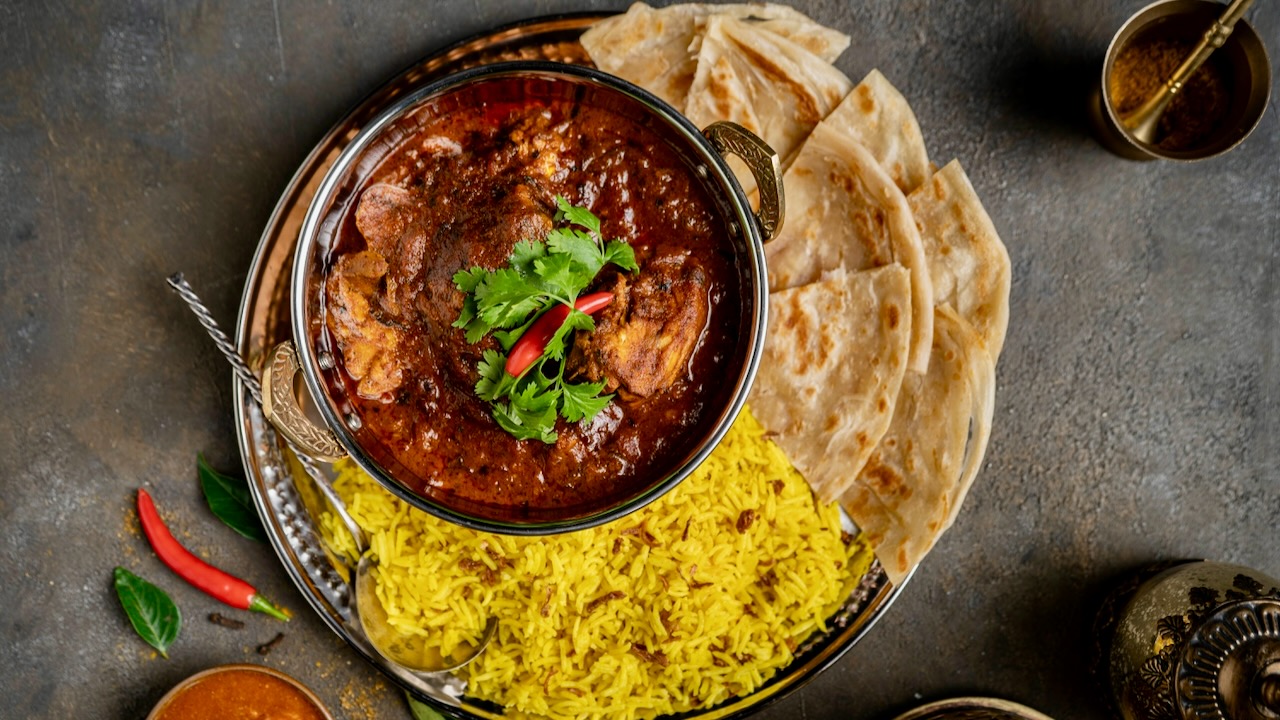
Tear a piece of warm roti with your right hand, fold it into a scoop, and lift a bite of curry with it: that one gesture resets how the whole table eats.
It tells your guests that this is a hand-eaten, shared meal, not a plated one, and that you know the difference. Cook a great dal and a good biryani, then set the table the way you would for a roast, and you can quietly miss the very guests you wanted to honor.
The food is only half of an Indian dinner. The other half is how you serve it, how often you offer more, and how you handle the dietary lines that matter to your guests.
What follows is a host’s working guide: right-hand eating, the thali and communal serving, the hospitality custom of offering more food, dietary care, the rhythm of hand-washing, and the few moves that read as rude so you can swap them for warmer ones.
At a Glance
- Indian dining etiquette centers on the right hand, communal serving, and a host who keeps offering more long after a guest has said enough.
- Many dishes are eaten with the right hand, using bread or rice to scoop, while the left hand stays away from shared food.
- The thali, a platter of small portions, and shared center bowls both work; serve with serving spoons, not fingers.
- Hospitality runs on abundance: offer generously, expect a polite first refusal, and keep dishes full without pressure to clean the plate.
- Ask about vegetarian and religious food customs ahead of time, keep dishes clearly separated, and set out water for hand-washing.
What Is Indian Dining Etiquette?
Indian dining etiquette is the set of table customs that shape how an Indian meal is served, shared, and eaten, centered on right-hand eating, communal dishes, and generous hospitality. For a host it matters most because the cuisine carries its own table with it: a meal built to be scooped by hand and shared from the center asks for a different setup than a plated, fork-and-knife dinner, and matching that setup is what turns a good curry into a welcome. Rather than a single rulebook, the host’s version is a handful of practical moves, serving, offering, and dietary care, that you can run at your own table.
Hosting an Indian Dinner: What Changes at Your Table
Indian dining etiquette reshapes two things first: how the food is eaten and how often you offer it. Many dishes are eaten with the right hand, and in many households a host keeps offering more food, often past the first polite no.
That changes your setup before anyone sits down. You plan for hand-eaten, shared food rather than individually plated courses, and you build in the abundance that signals care.
Much of India dining etiquette follows from those two ideas, and the Indian table manners your guests grew up with are easy to honor once you have set the table for them.
- Serve from the center: dishes sit communally and guests build their own plates, so you set out serving spoons and keep bowls topped up.
- Plan for hands: warm bread and rice do the scooping, which changes what you put on the table and how you set each place.
- Cook for abundance: make more than you think you need, because dining etiquette in India treats a full table and a second helping as the real welcome.
If this style is new to you, a primer on place-setting rules for hosts is a useful contrast for what you are adjusting away from, and a clear overview of Indian dining dos and don’ts maps the customs you are adjusting toward.
A short list of dos and don’ts for your next Indian meal is worth skimming before you finalize the table. The first custom your guests will notice is the one to get right first: eating with the right hand.
Eating With the Right Hand (and Why It Matters)
Eating with hands is central to Indian dining etiquette, and the rule that travels with it is the right hand only. The left hand is traditionally kept off shared food, so the right hand does the tearing, scooping, and lifting.
As a host, you do not need to lecture anyone on this. You set the table so eating with hands is easy, then model the move yourself.
- Set out the right tools: warm flatbread, a bowl of rice, and finger bowls or napkins at each place so guests can eat with hands comfortably.
- Tear and scoop with the right hand: pull a piece of roti or naan, fold it, and use it to lift curry or dal. Rice gets gathered into small bites the same way.
- Keep the left hand off shared food: use it to hold a glass or pass a dish, never to scoop from a communal bowl, and serve with serving spoons rather than fingers.
A walk-through of how to eat Indian food with your hands covers the scoop technique step by step, a short explainer on why the right hand is used for eating in India gives you the reason if a guest asks, and a broader guide to Indian dining etiquette rounds out the rest of the table customs.
Once the hand is sorted, the next decision is how you lay the food out.
|
Sort Out Who Brings Each Dish |
The Thali and Communal Serving
There are two ways to lay out an Indian meal, and both are correct. You can plate an individual thali for each guest, or set shared bowls in the center and let everyone build their own plate from the thali spread.
A thali is a platter holding small portions of several dishes, rice, and bread, so each guest gets a balanced taste of the whole meal. The communal version keeps the same variety but moves the serving to the table.
- Individual thali: give each guest a platter with rice, two or three curries, a dal, a vegetable, bread, and a small sweet, arranged in little bowls or katoris.
- Shared center: set the same dishes in larger bowls down the middle with a serving spoon in each, and let guests serve themselves in any order.
- Replenish, do not wait: watch the bowls and refill them before they empty, since a half-empty dish reads as the meal winding down.
A guide to building an Indian thali at home shows how to balance the dishes on a single platter, and a closer look at the structure of an Indian thali meal explains why the variety matters. For drinks alongside it, a planned Indian dinner drinks menu rounds out the table. However you lay it out, the way you keep offering food is what guests will remember most.
Hospitality and the Host Who Keeps Offering
In many Indian households, hospitality runs on abundance, and a host who keeps offering more is showing care. A second helping is a sign of warmth, not pushiness, and the custom has a quiet rhythm to it.
A guest may decline once or twice before accepting, so a single polite no is rarely a real no. Your job is to keep offering warmly without ever making anyone feel cornered.
- Offer more than once: circle back with each dish a second and third time, since the first refusal is often just politeness rather than a finished plate.
- Keep the plates moving: top up rice and refill bowls without asking, so a guest never has to flag you down for a second helping.
- Reassure, never pressure: make clear there is plenty for everyone, and let a firm, smiling no land without comment when a guest truly means it.
A rundown of Indian hospitality and the host who insists captures the spirit behind the custom, and the same warmth carries over to receiving guests well, which hostess gift etiquette for hosts covers from the other side of the door. Abundant hospitality only works, though, when the food on offer suits the people at your table.
|
Hosting Tip: Give Every Dish Its Own Spoon |
Vegetarian, Religious, and Dietary Customs
Dietary customs carry real weight at an Indian table, so ask before you cook rather than guessing. Vegetarianism is common, and several religious traditions set their own lines around meat, beef, pork, and fasting days.
The host’s move is to ask each guest in advance and plan dishes accordingly. Then keep the food clearly organized so everyone can serve themselves with confidence.
- Ask, do not assume: check with each guest about vegetarian, vegan, and religious food customs, and avoid deciding for anyone what they do or do not eat.
- Separate clearly: keep vegetarian and non-vegetarian dishes apart, with their own serving spoons, so nothing crosses over by accident.
- Label when you can: a small card by each dish noting vegetarian, contains dairy, or contains nuts lets guests choose without having to ask.
Research on religion and food customs shows how closely diet and faith are tied for many guests, and a cultural overview of the customs and cuisine of India gives helpful context on regional differences. Planning the right spread is easier when you treat it like any other guest list, which a dinner party planning checklist makes routine. With the food sorted, the last layer is the rhythm of the meal itself.
Washing Hands and the Rhythm of the Meal
Because much of an Indian meal is eaten by hand, washing up is built into the meal, not an afterthought. Guests rinse their hands before eating and again after, so the host sets that up as part of the table.
The pacing is communal too. The meal moves as a group rather than course by course, and there is no rush to finish first or clear plates early.
- Offer water before the meal: point guests to a sink or set out a jug, bowl, and towel so everyone can rinse their right hand before the food comes out.
- Let the table start together: wait until everyone is served and seated, and as host, invite guests to begin rather than starting alone.
- Pace to the group: keep the meal unhurried, offer seconds throughout, and have a way to rinse hands again once the eating winds down.
For the wider table-running habits underneath this, a guide to table manners cues that set the tone translates across cuisines, and a full Indian feast laid out for a crowd can borrow the same communal pacing. Even with the rhythm right, a few small moves still read as rude, so they are worth knowing before guests arrive.
|
Keep Dietary Details With Every Reply |
What Reads as Rude (and the Warmer Move Instead)
A few habits read as rude at an Indian table, and each has a warmer move that fixes it on the spot. None requires memorizing a rulebook; they follow from the same three ideas of right hand, sharing, and abundance.
Run your plan through these before guests arrive. Get them right and the table feels generous and easy, which is exactly the welcome an Indian meal is built to give.
- Left-handed serving: reaching into shared food with the left hand reads poorly, so serve and eat with the right hand and keep serving spoons in every bowl.
- Wasting food: a heaped plate left half-eaten looks wasteful, so encourage modest first helpings and let guests return for more.
- Refusing flatly: a blunt no to a host’s offer can sting, so as host you make declining easy by offering warmly and never keeping score.
- Rushing the table: finishing fast and clearing early cuts the meal short, so pace yourself to the group and let the food and conversation linger.
These same instincts of reading a cuisine and matching your table to it carry to any culture you cook for, whether you are hosting a French dinner with its continental dining customs, a Japanese table with its own quick-start rules, or simply learning how to host a dinner your friends will love. Set out the right hand, share from the center, and keep offering more, and an Indian dinner at your table reads exactly as warm as you meant it.
Frequently Asked Questions
What is considered impolite at an Indian dinner table?
Eating or passing food with the left hand is considered impolite in India, as is wasting food or flatly refusing what a host offers. Use your right hand for eating and serving, take what you can finish, and decline politely rather than abruptly when you have had enough.
Is it rude to leave food on your plate at an Indian meal?
Leaving food can read as wasteful and is generally avoided, so take modest servings and return for more rather than overloading your plate. As a host, encourage smaller first helpings, keep offering seconds, and make clear there is no pressure to finish a heaped plate.
Should I ask guests about dietary restrictions before an Indian dinner?
Yes. Vegetarianism and religious food customs are common and important, so ask in advance and plan dishes accordingly. Keep vegetarian and non-vegetarian foods clearly separated, label dishes when you can, and avoid assuming what any individual guest does or does not eat at your table.
Why do you eat with your right hand in Indian dining?
Many dishes are eaten with the right hand, and the left is traditionally kept off shared food. Use your right hand to tear bread and scoop food, and serve yourself from communal dishes with serving spoons rather than your fingers.
What is a thali?
A thali is a platter holding small portions of several dishes, rice, and bread, giving each guest a balanced sampling of the meal. As a host, you can serve individual thalis or set shared bowls in the center and let guests build their own plates from the spread.
Why might an Indian host keep offering more food?
Offering guests more food is a sign of hospitality and care, not pushiness. Guests may politely decline once or twice before accepting. As a host, offer generously and keep dishes full, and reassure guests there is plenty for everyone at the table.
Continue Reading:
More On Dining Etiquette
- Dining Etiquette Around the World: A Host’s Guide
- Korean Dining Etiquette: A Complete Host’s Guide
- Chinese Dining Etiquette: The Host’s Table Guide
- Mexican Dining Etiquette: The Host’s Table Guide
- Italian Dining Etiquette: The Host’s Table Guide
More from The Gourmet Host
- Meal Ideas for Picky Eaters the Whole Family Loves
- The Best Meal Train Apps to Organize Group Meals
- Japanese Drinks: Sake, Highball, Yuzu, Calpis (Plan)
- Backyard Entertaining Ideas for Every Season and Space
- Seasonal Dinner Party Themes for Every Time of Year
Explore TGH Categories
- Set the Scene
- Drinks and Bar
- Plan the Meal
- Engage with Guests
- Games and Toasts
- Tools and Techniques
- Why We Gather