Chinese Hors d’Oeuvres: 4 Dim Sum Cocktail Bites
 16 min read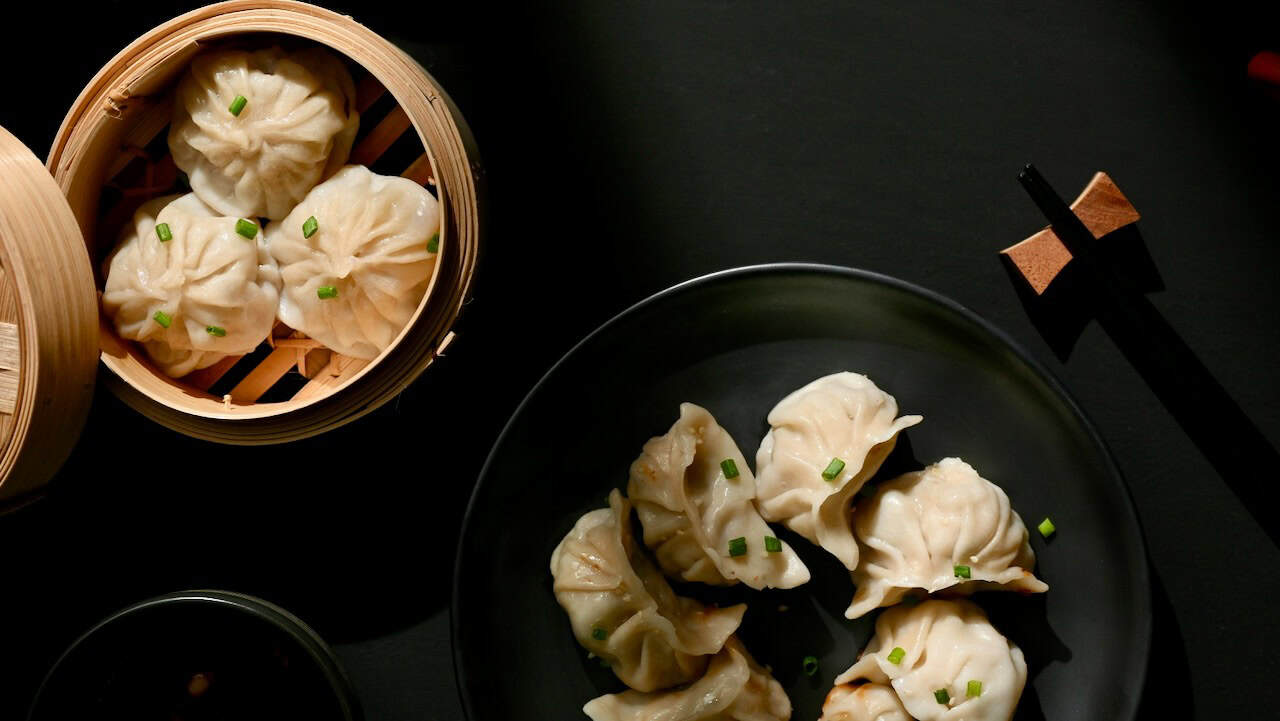
Scallion pancake dough hits the pan and the kitchen changes in twelve seconds: oil and allium and toasted sesame, the smell that signals dim sum before anyone says the word. That is the sensory anchor for a Chinese cocktail hour at home. Dim sum has always been small-bite, shared, paced with a pour. Cantonese yum cha is the cocktail-hour format with tea instead of cocktails, and it ports cleanly onto a host’s coffee table on a Friday night.
By the end of this guide, you will have a four-bite Chinese cocktail menu, a hot-pan stagger that keeps the kitchen calm, a make-ahead window that puts shumai in the freezer two weeks early, and a pour for each bite.
At a Glance
- Chinese hors d’oeuvres translate the dim sum cocktail bites format onto a host’s coffee table: small, shared, paced with a pour, anchored by tea or beer.
- A four-bite Chinese cocktail menu covers most occasions: scallion pancakes (hot), shumai (steamed), wontons (fried or boiled), turnip cake (pan-seared).
- Plan three to five bites per guest for a two-hour cocktail-hour spread. Almost every dim sum bite reads hot, so stagger pans rather than firing four burners at once.
- Make-ahead window: shumai freeze for two weeks, wontons fold a day ahead, scallion pancake dough rests overnight, turnip cake steams two days early and pan-sears at the bell.
- Pair with oolong or jasmine tea (the canonical pour), one off-dry Riesling, or a light lager. Tea service signals the format more than any other detail.
What Are Chinese Hors d’Oeuvres?
Chinese hors d’oeuvres are dim sum small bites served in a cocktail-hour format: scallion pancakes, shumai, wontons, char siu bao, turnip cake, and chilled cucumber salads, sized for one or two bites and shared from the center of a table. The format borrows directly from Cantonese yum cha (the dim sum tea-service tradition that has been cocktail-hour food in Chinese culture for two centuries), and it ports cleanly onto a Friday-night host running four to eight guests through a two-hour spread. For a home host, the rule is four bites total, paced cold-to-hot, anchored by tea or a light pour.
What Dim Sum Translates to a Cocktail Hour (And What Doesn’t)
Dim sum has always been cocktail-hour food in Cantonese culture. Yum cha (literally drinking tea) is the tea-and-bites tradition where small plates arrive on rolling carts, paced with a sip of oolong or jasmine. The format was built for grazing, conversation, and pours that anchor without overwhelming. Port it to a Friday night and almost nothing changes except the pour shifts from tea-only to tea-plus-beer-or-wine. The Woks of Life’s scallion pancake walkthrough is the gold-standard reference for the move-from-restaurant-to-home translation.
What ports cleanly and what does not
- Translates well to a cocktail hour: scallion pancakes, shumai, fried or boiled wontons, turnip cake (lo bak go), char siu bao, chilled cucumber salad.
- Skip for cocktail-hour: soup dumplings (xiao long bao) need a chopstick-and-spoon ritual that does not work standing, plus congee and chicken feet that live on a sit-down table.
- Keep on the bench: potstickers (work but lean dinner over cocktail), pork-and-chive dumplings, sesame balls (if a sweet ending is wanted).
Four bites covers most cocktail-hour spreads for four to eight guests. For warm-weather variants that lean lighter on fried items, the TGH easy summer appetizers guide runs the same logic with cold bites in the lead. The four-bite menu is the next layer of the plan.
Building a Four-Bite Chinese Cocktail Menu (Scallion Pancakes, Shumai, Wontons, Turnip Cake)
Four bites is the sweet spot for a Chinese cocktail-hour spread. Three reads thin; five spreads the prep too wide. The four-bite default covers one fried, one steamed, one pan-seared, and one boiled-or-fried, which gives a textural range across the spread that a single technique never delivers.
- Scallion pancakes (cong you bing): the sensory anchor. Pan-fried at the bell, sliced into wedges, served with a soy-vinegar dipping sauce. Plan one pancake (cut into eight wedges) for every two guests.
- Shumai: the steamed bite. Pork-and-shrimp open-topped dumplings, sized one bite, finished in a bamboo basket. Plan two per guest. Frozen in batches two weeks early, they steam from frozen in nine minutes.
- Wontons (fried or boiled): the wildcard. Fried for crunch with sweet-and-sour or chili oil, boiled in chicken stock for a soft-fold bite. Plan three per guest either way.
- Turnip cake (lo bak go): the pan-seared anchor. Steamed in a loaf the day before, cut into cubes, pan-seared in oil until the edges crust. Plan two cubes per guest.
Three to five bites total per guest covers a two-hour spread. The Woks of Life’s shumai recipe covers the freeze-and-steam-from-frozen technique that makes shumai a make-ahead anchor rather than a day-of project, and their turnip cake walkthrough maps the same steam-now-sear-later logic onto lo bak go.
The wider TGH appetizer planning context, from which Chinese cocktail bites inherits its scaling logic, is covered in the best appetizers for a crowd guide.
|
Plan Your Dim Sum Spread |
Hot Versus Cold (Almost All Hot, So Stagger the Pans)
Chinese cocktail bites tilt almost entirely hot. Scallion pancakes hot, shumai hot, fried wontons hot, turnip cake hot. The only routinely cold bite in the dim sum cocktail bites repertoire is chilled cucumber salad with garlic and chili oil, which earns a place on the menu precisely because it is the one bite that does not compete for stove space.
Four hot bites at the same time will drown a four-burner stove. The fix is staggering the pans across a forty-five-minute window: steam the shumai first (a single bamboo basket on a low simmer holds them warm), pan-sear the turnip cake next (cast iron, three minutes per side), pan-fry the scallion pancakes third (the bite that needs to land hot), and finish with the wontons (deep-fry in the same wok used for pancakes, or boil in chicken stock in a separate pot).
- Steam shumai first, twelve minutes start to finish, then hold warm covered for up to twenty.
- Pan-sear turnip cake second on cast iron, six minutes total, finishes warm on a sheet pan in a 200°F oven.
- Pan-fry scallion pancakes third, three minutes per side, slice and serve immediately.
- Wontons last: deep-fry or boil, plate while guests are still eating pancakes.
Chinese cucumber salad sits on the table the whole time, cold from the start, a palate-cleanser between the hot bites. The Woks of Life’s chilled cucumber salad recipe is the standard. Once the pan stagger is mapped, the per-guest quantities follow naturally.
How Much Per Guest (Three to Five Bites for a Two-Hour Spread)
Three to five bites per guest covers a two-hour cocktail-hour spread when dinner is not coming. The lower end (three bites) suits a light pre-dinner gathering; the upper end (five bites) suits a no-dinner reception where guests stay for the evening. The number scales linearly: eight guests at four bites each lands at thirty-two bites, which slots cleanly into a four-bite menu running eight portions per bite.
Scaling rules of thumb for the four-bite default: half a scallion pancake per guest (one full pancake feeds two), two shumai per guest, three wontons per guest, two cubes of turnip cake per guest. A spread for eight guests therefore needs four scallion pancakes, sixteen shumai, twenty-four wontons, and sixteen cubes of turnip cake, plus a single bowl of cucumber salad that holds about a pound of cucumbers.
- Light spread, three bites per guest: drop one bite from the menu or halve the per-guest count of one bite. Most hosts drop the wontons.
- Standard spread, four bites per guest: the default. Two hours, no dinner planned, light pour service. The four-bite menu in full.
- Heavy spread, five bites per guest: add a fifth bite (char siu bao or pork-and-chive dumplings) and run the spread closer to three hours.
For the seasonal cocktail-hour applications of the same four-bite logic, the TGH Christmas appetizer ideas roundup covers the same cocktail-hour spread sized for a holiday guest list. The next layer is the pour, and tea sets the tone before any other decision lands.
Pours That Match (Oolong, Jasmine, Riesling, Light Lager)
Tea service is the move that signals a Chinese cocktail hour more than any other detail. Yum cha is, after all, drinking tea: oolong or jasmine in a small pot, refilled across the spread, poured into small handle-less cups. Set out a teapot the moment guests arrive and the format reads dim sum from the first sip, before the food lands.
For guests who want a pour beyond tea, a Friday-night cocktail hour wants either an off-dry Riesling (the wine that handles soy, ginger, and chili together better than almost any other) or a light lager (Tsingtao is the canonical pour, but any pilsner-style works). Bon Appétit’s scallion pancake recipe notes the same pour logic in passing: the bite carries chili and scallion, and the pour needs to refresh without competing.
Tea, beer, and wine pours mapped to bites
- Oolong (especially Tieguanyin or Da Hong Pao): the default pour. Roasted, slightly sweet, holds across the whole spread. One teapot per six guests, refilled every twenty minutes.
- Jasmine: lighter and floral. Pairs especially well with shumai and steamed dumplings. One teapot per six guests, hot water on hand for refills.
- Off-dry Riesling: the single best wine match. The residual sugar tames the chili, the acidity cuts the fried texture, and the floral note bridges the scallion.
- Light lager (Tsingtao, pilsner, or any clean rice-style beer): the canonical beer pour. Cuts the fried items without competing, anchors the cocktail-hour read.
Two pours covers most cocktail-hour spreads: tea plus one alcoholic option. Three is fine if the guest list runs varied, but the host is now juggling more than the spread justifies. The pour decisions feed straight into the make-ahead plan, where almost everything in the menu lives in a fridge or freezer for days before service.
Make-Ahead Strategy (Shumai Freeze, Pancake Dough Rests, Wontons Wrap Ahead)
Almost every bite on a Chinese cocktail-hour menu makes ahead. That is the planning advantage of dim sum cocktail bites: the format was built for restaurant-scale prep, and the prep techniques port cleanly to a home freezer and fridge. The day-of work shrinks to staging hot pans rather than cooking from scratch.
Shumai freeze beautifully. Fold them in batches of forty at a time (a Sunday-afternoon project), arrange on a sheet pan in a single layer, freeze hard, then bag in groups of twenty. They steam from frozen in nine minutes, no thawing. The same logic applies to wontons: fold a hundred at once, freeze flat, bag, and fry or boil from frozen as needed.
- Shumai fold, freeze flat, and bag. Two weeks in the freezer, no quality loss. Steam from frozen for nine minutes.
- Wontons fold and freeze flat or refrigerate. Two weeks frozen, one day refrigerated. Fry from frozen at 350°F or boil from frozen for four minutes.
- Scallion pancake dough rests at least four hours, ideally overnight. The gluten relaxes, the layers laminate cleaner, and the pancake reads flaky rather than chewy.
- Turnip cake steams two days ahead, refrigerates uncovered, cuts into cubes the morning of, and pan-sears at the bell.
Fried-wonton crunch holds for about thirty minutes after frying, so they go last in the pan sequence. The Woks of Life’s fried wontons recipe covers the oil-temperature window (350°F to 360°F) that keeps the wrapper crisp without scorching the filling, and their cream cheese wontons variation offers an American-Chinese hybrid for guests who lean to the takeout-format end of the spectrum. Once the prep is mapped, the next decision is the table: how the food gets to the guest.
|
Hosting Tip: Steam Shumai Straight From the Freezer |
Plating (Bamboo Baskets, Small Plates, Chopsticks Out)
Plating carries the format. Bamboo steamer baskets on the table (stacked two or three high, lid askew on the top one) signal dim sum from across the room. A coffee table with bamboo baskets and a teapot reads Chinese cocktail hour before any food lands.
- One bamboo steamer basket per bite that steams (shumai, char siu bao if added). Line with cabbage leaves or parchment.
- Small round plates (six-inch) for the pan-fried bites: pancake wedges and turnip cake cubes.
- Small ramekins for dipping sauces: soy-vinegar for shumai, sweet-and-sour for wontons, chili oil for everything.
- Chopsticks out on the table, plus a small dish of toothpicks for guests who do not use chopsticks regularly.
Cucumber salad lives in a small shallow bowl with serving tongs. The Woks of Life’s New Year’s Eve appetizers roundup scales the same plating logic to a twelve-guest gathering. For a Thanksgiving cocktail-hour spread that pairs with a sit-down meal, the TGH Thanksgiving appetizer ideas guide ports the same dim sum cocktail bites logic to a holiday context. The non-alcoholic table is where many Chinese cocktail hours quietly succeed or fail.
Non-Alcoholic Chinese Anchors (Tea Service, Sparkling Plum, Calpis-Style)
Tea service is the canonical pour, the one anchor that signals dim sum from the first sip. Bring out the teapot the moment guests arrive, brew a high-grade oolong or jasmine in a small clay or porcelain pot, and refill from a kettle on the table. The ritual of pouring tea for a guest (and the guest tapping two fingers on the table as silent thanks) reads finished rather than themed.
Non-alcoholic pours mapped to the dim sum spread
- Oolong or jasmine in a small pot: the default tea service. Refill kettle of hot water beside it. One pot per six guests.
- Sparkling plum (sour plum soda or umeshu-style sparkling NA): tart, mineral, refreshing. Available at most Asian groceries in 250ml bottles.
- Calpis-style cultured drinks: the milky-sweet option for guests with a sweet tooth. Pour over ice with a slice of lime.
- Cold-brewed jasmine or genmaicha: an iced option for summer cocktail hours, brewed twelve hours ahead in a pitcher.
Tea service alone covers most guest lists. For a wider menu of easy host-side bite formats that pair with a non-alcoholic pour, the TGH easy appetizer ideas guide covers the same low-lift logic across cultural formats. The closing decision is the one that catches hosts off guard.
|
Save Your Best Tea Pours |
Common Chinese-at-Home Mistakes (Cold Dumpling, Soggy Pancake, Wrong Vinegar)
Three failure points catch hosts running the format for the first time: cold dumplings, soggy scallion pancakes, and the wrong vinegar in the dipping sauce. Each is a five-minute fix once spotted.
Three fixes for the three most common failures
- Cold shumai: steam in two batches twenty minutes apart. Hold the second batch warm covered with foil if guests run late.
- Soggy pancake: pan-fry one at a time across the spread. Slice immediately. Never stack on a plate.
- Wrong vinegar in dipping sauce: use Chinkiang black vinegar (Zhenjiang), not balsamic, not rice vinegar. Mix one part vinegar to two parts light soy with a few drops of toasted sesame oil.
The fourth quiet failure is forgetting to pour tea early. Bring the pot out with the first plate, not the last. The Woks of Life’s nine-layer scallion pancakes variation covers the laminated-dough technique that distinguishes a great pancake from a passable one, and their buffalo chicken potstickers spin offers a fusion option for guests who lean American-Chinese. Shop the bites, plan the pan stagger, steep the tea, pour the lager or Riesling, and the cocktail hour runs on a Cantonese rhythm.
Frequently Asked Questions
What is a Chinese hors d’oeuvre called?
Chinese hors d’oeuvres are typically called dim sum (literally touch the heart) in Cantonese, and the cocktail-hour format is yum cha (drinking tea). For home hosting, dim sum cocktail bites covers the same range: scallion pancakes, shumai, wontons, turnip cake, and char siu bao, sized for one or two bites.
What dim sum dishes can I make at home?
Scallion pancakes, shumai, wontons (fried or boiled), turnip cake, and char siu bao all make at home. Shumai and wontons freeze beautifully (two weeks), pancake dough rests overnight, and turnip cake steams two days ahead. Skip soup dumplings (xiao long bao) for a first cocktail-hour spread; the wrapper-and-soup ratio is restaurant-level.
How do I serve dim sum at a cocktail party?
Plan four bites for three to five servings per guest across a two-hour spread. Steam shumai in bamboo baskets on the table, pan-sear turnip cake last, pan-fry scallion pancakes one at a time, fry wontons in batches. Pour oolong or jasmine tea throughout. Add a light lager or off-dry Riesling for guests who want a pour beyond tea.
What drinks pair with Chinese appetizers?
Oolong or jasmine tea is the canonical pour for Chinese hors d’oeuvres and signals the dim sum format more than any food choice. For wine, an off-dry Riesling handles the chili and ginger without competing. For beer, a light lager (Tsingtao or any clean pilsner-style) cuts the fried bites. Sparkling plum works as an NA pour.
Can I make Chinese dumplings ahead of time?
Yes, and the format almost requires it. Shumai freeze for two weeks (steam from frozen, nine minutes). Wontons freeze flat or refrigerate one day. Turnip cake steams two days ahead and pan-sears at the bell. Scallion pancake dough rests overnight for flakier layers. Almost nothing on a Chinese cocktail-hour menu is made day-of.
What’s the order to serve Chinese small plates?
Start with cold cucumber salad and tea on the table when guests arrive. Steam shumai first (twelve minutes). Pan-sear turnip cake next. Pan-fry scallion pancakes third (one at a time, sliced fresh). Finish with wontons (fried or boiled). The hot bites stagger across forty-five minutes so no two pans run simultaneously.
Continue Reading:
More On Hors d’Oeuvres
- Hors d’Oeuvres Menu Planning (A Host’s Playbook)
- Japanese Hors d’Oeuvres (An Izakaya Host Guide)
- Heavy Hors d’Oeuvres (A No-Dinner Host Playbook)
- Canapés Guide (A Host’s French Single-Bite Plan)
- French Hors d’Oeuvres (Apéritif-Hour Host Guide)
- Tapas Ideas (A Host’s Spanish Small-Plates Plan)
- Gluten-Free Dairy-Free Hors d’Oeuvres (Host Plan)
More from The Gourmet Host
- Elegant Infusions: Beginner’s Guide to Tea and Its Enduring Appeal
- Order of Wedding Toasts: Traditional Speech Guide
- High Tea vs Afternoon Tea: What Sets Them Apart
- Japanese Table Etiquette: A Host’s 8-Rule Quickstart
- Cooking Olive Oil vs Finishing Olive Oil Explained
Explore TGH Categories
- Set the Scene
- Drinks and Bar
- Plan the Meal
- Engage with Guests
- Games and Toasts
- Tools and Techniques
- Why We Gather