Gluten-Free Dairy-Free Hors d’Oeuvres: 6 Safe Bites
 15 min read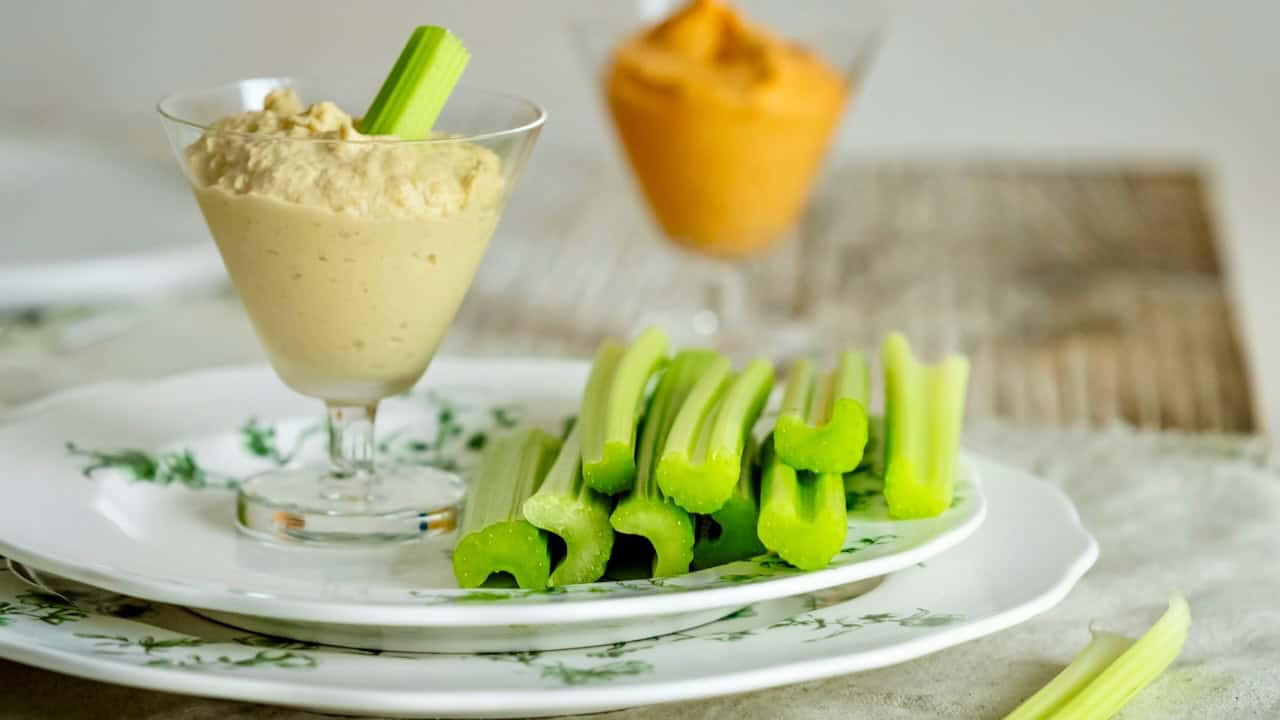
Hosts planning for a guest with a gluten and dairy intolerance usually start by trying to gluten-free-and-dairy-free-ify every recipe on the menu, swapping flour for almond meal in three places, cashew cream for butter in two more, sourcing a coconut puff pastry that crumbles on contact. The work piles up fast, and the spread loses its shape by the time the guests arrive.
The step-order pivot is to choose first, convert second. Six hors d’oeuvres are already gluten and dairy free with no adaptation, two more become compliant with a single ingredient swap, and the labeling pattern that follows lets everyone at the table reach in without checking a card.
This guide walks the planning playbook: the six default bites, the two swap rules, a labeling pattern that stays warm, a cross-contact protocol for boards and knives, and the pours that hold up beside the spread.
At a Glance
- Six naturally gluten and dairy free hors d’oeuvres need no adaptation: crudités with hummus, guacamole and corn chips, smoked salmon on cucumber, prosciutto-wrapped melon, marinated olives, and shrimp cocktail with cocktail sauce.
- Two swap rules convert eight more classic hors d’oeuvres to gluten free dairy free hors d’oeuvres without losing the visual format: a gluten-free cracker for wheat bread or puff pastry, and a coconut or cashew cream for butter and soft cheese.
- Label the spread with small wooden cards that name the bite and tag it with GF, DF, or GF/DF in a corner. The card carries the burden so guests do not have to ask.
- Cross-contact protocol: separate cutting boards for the bread bowl and the crudités, dedicated serving spoons for each dip, and a wash-hands moment between the wheat plate and the rest of the spread.
- Pours that match: a sparkling wine, a clean cocktail (vodka soda or Aperol spritz), a gluten-removed cider, and a non-alcoholic anchor like a citrus pressé.
What Are Gluten-Free Dairy-Free Hors d’Oeuvres?
Gluten-free dairy-free hors d’oeuvres are small plates and finger bites built so that a guest avoiding wheat and milk can reach across the entire spread without checking a card. For a host running a four-to-twelve guest gathering, the format is a planned set of bites, six chosen because they are already compliant and two converted with simple swap rules, plated alongside a labeling pattern that does not single anyone out. The decision framework matters more than the recipes: choose first, convert second, label visibly.
Why GF/DF Bites Are the Easiest Allergen-Friendly Format to Host
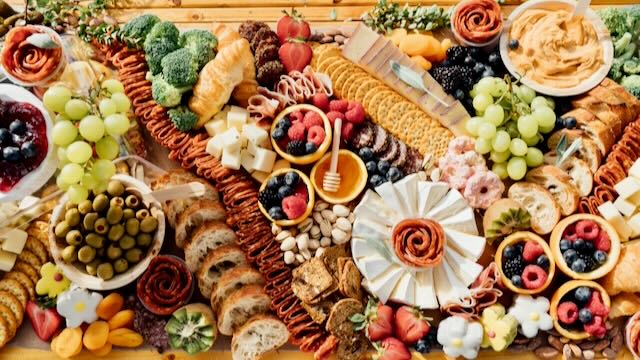
The hors d’oeuvres course is the friendliest part of a hosted evening for mixed-diet accommodation. Most of what already belongs on a cocktail-hour spread carries no wheat and no dairy in its base form: crudités, fruit, raw vegetables with a tahini-based dip, marinated olives, charcuterie without the cheese, smoked fish with cucumber rounds. The hard work happens at the entrée and dessert, not at the small-plate stage.
The category also leans visual and shareable, which means an inclusive spread reads abundant rather than restrictive. Meaningful Eats’ fifteen easy gluten-free appetizers walks through the same logic for a Thanksgiving table: lead with bites everyone can eat and the dietary plan disappears into the design.
- Default to one-bite formats: cucumber rounds, endive leaves, lettuce cups, prosciutto wraps, and skewers all serve as bases without bread.
- Skip the obvious traps: puff pastry bites, gougères, crostini, bruschetta on baguette, brie wheels, and any dip that leads with cream cheese.
- Let dietary tags carry the design: small placards naming the bite and tagging GF, DF, or GF/DF turn an accommodation into a host signal.
The TGH complete guide to mixed-diet dinner party hosting covers the same logic for the main meal: lead with what works, then convert one or two items rather than rewriting the whole menu. The next move is naming the six bites that need no adaptation.
Six Naturally GF/DF Bites Every Host Should Keep on Standby
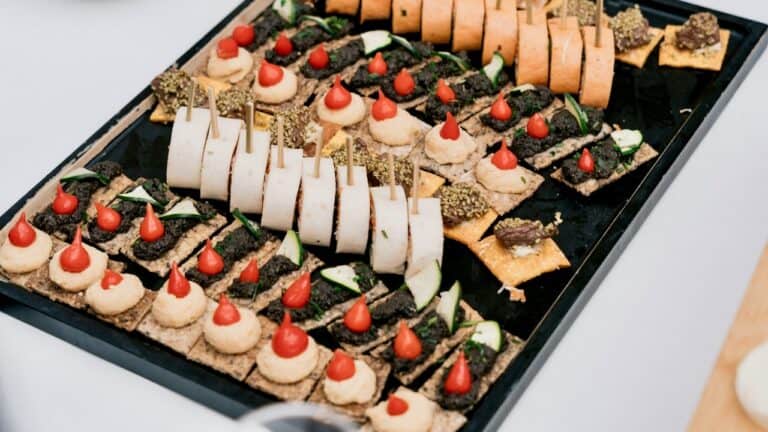
Six hors d’oeuvres need no adaptation to land on a mixed-diet cocktail hour. The set covers a range of textures (crunchy, creamy, briny, cool), a range of proteins (none, fish, pork, shellfish), and a range of prep windows (ten minutes to two hours ahead). One or two anchor the spread; the rest of the table fills out around them.
The Six Default Bites
- Crudités with hummus: raw carrots, radishes, bell pepper strips, snap peas, cucumber spears, and endive leaves arranged around a bowl of classic hummus. Cookie and Kate’s classic hummus recipe keeps the tahini-and-chickpea base, both naturally gluten and dairy free. Plan four ounces of vegetables and one ounce of dip per guest.
- Guacamole and corn chips: avocado mashed with lime, salt, red onion, jalapeño, and cilantro per Serious Eats’ best basic guacamole recipe. Pair with corn tortilla chips (verify the bag reads gluten-free). Holds an hour with the pit dropped in.
- Smoked salmon on cucumber rounds: half-inch cucumber slices topped with a strip of cold-smoked salmon, a sliver of red onion, a dill frond, and a squeeze of lemon. Builds in twenty minutes for twelve guests.
- Prosciutto-wrapped melon or fig: cantaloupe or honeydew cubes in summer, fresh fig halves in fall, each wrapped in a single strip of prosciutto. The salt-and-sweet bite reads finished without any base.
- Marinated olives and almonds: Castelvetrano olives warmed in olive oil with citrus peel, rosemary, and chili flake; Marcona almonds in a separate small bowl. The simplest hors d’oeuvre on the spread.
- Shrimp cocktail with classic cocktail sauce: boiled or poached peeled shrimp chilled over ice with a ramekin of ketchup-and-horseradish sauce. Verify the horseradish brand reads gluten-free; most do.
Deviled eggs slide in as a seventh option for anyone wanting to round out the table. Meaningful Eats’ deviled eggs with relish recipe and BBC Good Food’s devilled eggs recipe are both naturally compliant: yolk whipped with mayo, mustard, vinegar, and salt. No bread, no dairy. Cookie and Kate’s homemade tahini sauce adds a second naturally GF/DF dip option that varies the spread. The two-swap rules pick up the rest of the format.
|
Keep Your Safe Bites On Hand |
Two Swap Rules That Convert Eight Classic Hors d’Oeuvres
Two ingredient swaps cover most of the rest of the gluten-free dairy-free hors d’oeuvres world. The first swap is the carrier: replace wheat bread, baguette slices, and puff pastry with a gluten-free cracker, a corn or rice cake, or a cucumber or endive base. The second swap is the binder: replace butter, soft cheese, and sour cream with a coconut or cashew cream, a tahini-based spread, or an olive-oil emulsion.
The two swaps reach eight more classic hors d’oeuvres without rewriting them. Meaningful Eats’ gluten-free bruschetta recipe shows the carrier swap in action (gluten-free baguette under the tomato-basil topping), and the vegan party cheeseball walkthrough shows the binder swap (cashew cream rolled in herbs and chopped pecans).
Eight Conversions Worth Knowing
- Bruschetta: swap baguette for a gluten-free cracker or a thin slice of gluten-free seeded bread. Topping (tomato, basil, garlic, olive oil) stays the same.
- Cheeseball: swap cream cheese for cashew cream blended with nutritional yeast and lemon. Roll in chopped herbs or toasted nuts.
- Stuffed mushrooms: swap breadcrumb-and-parmesan stuffing for almond-flour-and-nutritional-yeast filling. Bake the same temperature, same time.
- Spinach-artichoke dip: swap cream cheese and sour cream for blended cashews and coconut cream. Serve with gluten-free crackers or vegetable crudités.
- Buffalo chicken dip: swap ranch and cream cheese for dairy-free yogurt and cashew cream. The hot sauce and shredded chicken carry the flavor.
- Caprese skewers: swap mozzarella for marinated artichoke heart or a cube of dairy-free cashew mozzarella. Cherry tomato, basil, and balsamic glaze stay.
- Crab cakes: swap panko for almond flour or crushed gluten-free corn flakes. Bind with egg and mayo (no butter).
- Hot artichoke dip: swap parmesan-and-mayo for blended cashew cream, lemon, and a vegan parmesan. Meaningful Eats’ gluten-free hot artichoke dip runs the conversion.
For the buffalo and spinach dip swaps specifically, Meaningful Eats’ dairy-free buffalo chicken dip and the dairy-free spinach-artichoke variation carry both swaps applied at once. Two rules, eight reliable conversions. The labeling pattern picks up the next layer.
How to Label a Mixed-Diet Spread Without Awkwardness
The labeling pattern matters more than any single recipe. A guest with a gluten or dairy avoidance should never have to ask, point, or wait. Small wooden cards or folded paper tents naming the bite and tagging the dietary status in a corner do the entire job. The card carries the burden, not the guest.
Tag every bite, not just the restricted ones. A spread where only the GF/DF items are labeled reads like an accommodation; a spread where every item carries a tag (GF, DF, GF/DF, or none for the standard spread) reads like a host who put the table together with care.
The TGH dietary-ask scripts library covers the conversation upstream of the spread, which sets the labeling list in advance.
- Write the name on top of each card in larger type and place the tag in the bottom-right corner in smaller type. White cards with a black hand-printed marker read crisp on any board.
- Use GF for gluten-free only, DF for dairy-free only, GF/DF for both, V for vegan, and VG for vegetarian. Keep the set under five tags total.
- Set each card directly in front of its bite, not behind it. The reader looks at the food first, the card second. The card finishes the sentence.
A small printed legend at the start of the table (one card explaining the tag set) does the heavy lifting for any guest who has not seen the system before. The card placement matters less than the consistency: every bite labeled or none, never half. The next layer is the protocol that keeps the labels honest.
|
Hosting Tip: Stage the GF/DF Platter on a Separate Surface |
Cross-Contact Prevention (Boards, Knives, Serving Spoons)
Labels only hold up if the food is actually compliant when it lands. Cross-contact, the kitchen term for trace amounts of wheat or dairy making their way into an otherwise clean bite, is the part most home hosts under-plan. A few small protocols keep the spread honest for guests with a real intolerance, not a preference.
Run the wheat plate and the rest of the spread on separate boards. A wood board that has held baguette slices that morning carries enough crumb dust to flag a guest with celiac. Use a dedicated cutting board for the gluten-containing bread, a dedicated knife for it, and a separate set of serving tongs for any plate that touches it.
Forks Over Knives’ vegan snacks and appetizers index runs the same separation logic by default because the recipes are written for a plant-based kitchen without animal-product cross-contact.
- Two boards minimum: one for the gluten-containing carrier (baguette, crostini), one for everything else. Color-coded boards work well when more than one cook is plating.
- Dedicated serving spoons: one spoon per dip, one set of tongs per platter. No shared spoon between the buffalo chicken dip and the spinach-artichoke dip even if both are dairy-free.
- Wash hands between stations: after plating the bread bowl, hands carry flour residue. A wash-and-dry between stations clears it.
- Glassware and bar tools: the bar shaker that handled a wheat-based beer foam needs a rinse before pouring a gluten-removed cider. Bar towels carry the same risk as plating towels.
For a guest with severe celiac, a dedicated section of the table (one platter physically separated from the rest by a clear gap) is the gold-standard accommodation. The TGH gluten-free dairy-free dinner recipes host guide covers the same protocol scaled up to the main course. The drinks side picks up next.
What to Pour Alongside (GF/DF Cocktails, GF Beer, NA Anchors)
The drinks side of a gluten-free dairy-free spread takes a small amount of planning and zero compromise on flavor. Most cocktail-hour pours are already compliant. Wine is gluten-free and dairy-free. Most distilled spirits are gluten-free by the distillation process even when the source grain is wheat or barley. The exceptions are beer (almost always wheat or barley), some flavored liqueurs, and any cream-based cocktail.
A two-pour cocktail-hour shape covers the spread. Lead with a sparkling wine (Prosecco, Cava, or a domestic sparkling) and a clean-cocktail option built on vodka, gin, or tequila with citrus and soda. Match the pour to the spread so the dry guest reads the room as included.
- Sparkling wine pour: Prosecco, Cava, or a domestic sparkling. Fully GF/DF, food-friendly, and reads celebratory without effort.
- Clean cocktail: vodka soda with lime, gin and tonic, paloma (tequila, grapefruit soda, lime), Aperol spritz. All five base spirits clear. Skip dairy creams and bourbon caramel cocktails.
- Gluten-removed beer or cider: Omission, Glutenberg, or a dry hard cider for guests who want beer-style refreshment. Label the bottle clearly on the bar.
- Non-alcoholic anchor: a citrus pressé (fresh-squeezed grapefruit or lemon over soda water with a sage leaf), a hibiscus iced tea, or a sparkling-water-and-bitters combination.
For an evening with mixed sensitivities at the table, the TGH easy dairy-free dinner recipes the whole table loves covers the next course up. The last layer is the short list of mistakes a host running this format for the first time should know to skip.
|
Keep Dietary Details With the Guest List |
Common GF/DF Hosting Mistakes (Soy Sauce Traps and Cracker Cross-Stacks)
Three patterns trip up first-time hosts running a gluten-free dairy-free spread, and each is fixable with a small upfront move. The first is the hidden-gluten trap, the second is the cracker cross-stack, and the third is the swap that loses the texture rather than keeping it.
Hidden gluten lives in places a host would not check: regular soy sauce (wheat is the second ingredient), most teriyaki glazes, many barbecue sauces, malt vinegar, beer-battered onion rings if they cross-contact a plate, and any spice blend that uses wheat as a flow agent.
Swap soy sauce for tamari, which is brewed without wheat, in any marinade or dipping sauce on the spread. Meaningful Eats’ gluten-free stuffed mushrooms recipe calls out the tamari swap explicitly.
- Swap soy sauce to tamari or coconut aminos in any marinade, glaze, or dipping sauce. Both read soy-savory without the wheat trace.
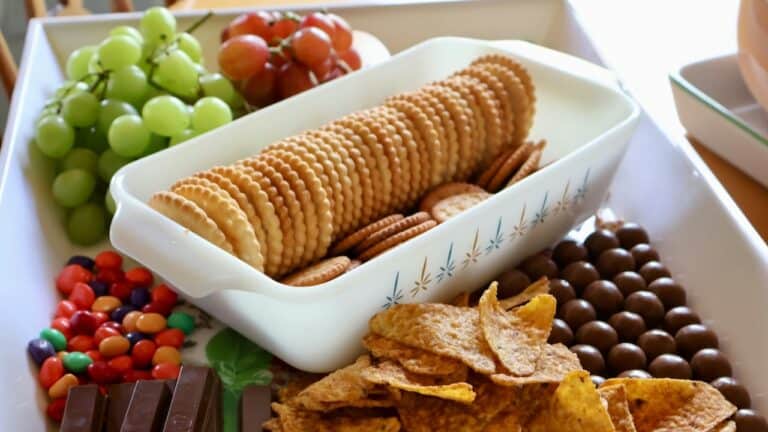
- Never stack wheat crackers on the same plate as gluten-free crackers. Crumbs migrate. Use two separate plates with separate serving tongs.
- Rice crackers under a wet bruschetta topping turn soggy in eight minutes. Swap to gluten-free seeded bread or thick-cut cucumber rounds, which hold moisture without collapsing.
- Avoid the over-converted spread. Trying to gluten-free and dairy-free every item produces a thin tray of similar textures. Default to six naturally compliant bites first, convert only two more.
The TGH easy gluten-free dinner recipes for family parties carries the same mistake list scaled up to dinner. For the cocktail-hour spread specifically, the rule holds: choose first, convert second, label every bite, separate the boards, and pour from a clean bar. The format runs itself once the small protocols are in place.
Frequently Asked Questions
What hors d’oeuvres are naturally gluten and dairy free?
Six classics need no adaptation: crudités with hummus, guacamole with corn tortilla chips, smoked salmon on cucumber rounds, prosciutto-wrapped melon or fig, marinated olives with Marcona almonds, and shrimp cocktail with classic cocktail sauce. Deviled eggs round out a seventh option for any cocktail hour.
How do I host a dinner party with mixed dietary restrictions?
Lead with bites everyone can eat, then convert one or two items rather than rewriting the whole menu. Six naturally gluten and dairy free hors d’oeuvres anchor the spread, two swap rules cover the rest, and a labeling pattern (small cards naming each bite with a GF, DF, or GF/DF tag) keeps the spread honest.
Can I substitute regular hors d’oeuvres to make them gluten and dairy free?
Two swap rules cover most classics: replace wheat bread or puff pastry with a gluten-free cracker, corn cake, or cucumber base, and replace butter or soft cheese with cashew cream, coconut cream, or tahini. Bruschetta, stuffed mushrooms, spinach-artichoke dip, and caprese skewers all convert.
How do I label gluten free and dairy free food at a party?
Tag every bite, not just the restricted ones. Use small wooden cards or folded paper tents naming the dish on top and tagging GF, DF, or GF/DF in a bottom corner. Place each card directly in front of its bite, and add one printed legend explaining the tag set at the start of the table.
What drinks are gluten free and dairy free?
Wine, sparkling wine, and most distilled spirits (vodka, gin, tequila, rum, even bourbon and Scotch by the distillation process) are gluten-free and dairy-free. Skip beer (almost always wheat or barley) unless it is gluten-removed, dairy-based cream cocktails, and any flavored liqueur built on milk or cream.
How do I prevent cross-contact at a cocktail party?
Run the wheat plate and the rest of the spread on separate boards with dedicated knives, serving tongs, and dipping spoons. Wash hands between stations. For a guest with severe celiac, stage the gluten-free dairy-free platter on a separate side table with a clear gap, never in line with the wheat platter.
Continue Reading:
More On Hors d’Oeuvres
- Hors d’Oeuvres Menu Planning (A Host’s Playbook)
- Canapés Guide (A Host’s French Single-Bite Plan)
- Heavy Hors d’Oeuvres (A No-Dinner Host Playbook)
- French Hors d’Oeuvres (Apéritif-Hour Host Guide)
- Tapas Ideas (A Host’s Spanish Small-Plates Plan)
- Japanese Hors d’Oeuvres (An Izakaya Host Guide)
- Chinese Hors d’Oeuvres (Dim Sum Cocktail Bites)
More from The Gourmet Host
- Welcome Drinks by Country (10 Ideas That Set the Tone)
- Short 3 Minute Speeches That Inspire Dinner Guests
- 20 Easy Minute to Win It Games (No-Prep Household)
- Why We Gather Matters: Start Planning Your Event With Purpose
- Pantry Staples Every Home Host Should Keep Stocked
Explore TGH Categories
- Set the Scene
- Drinks and Bar
- Plan the Meal
- Engage with Guests
- Games and Toasts
- Tools and Techniques
- Why We Gather