Breakfast Charcuterie Board: 5-Bucket Brunch Plan
 16 min read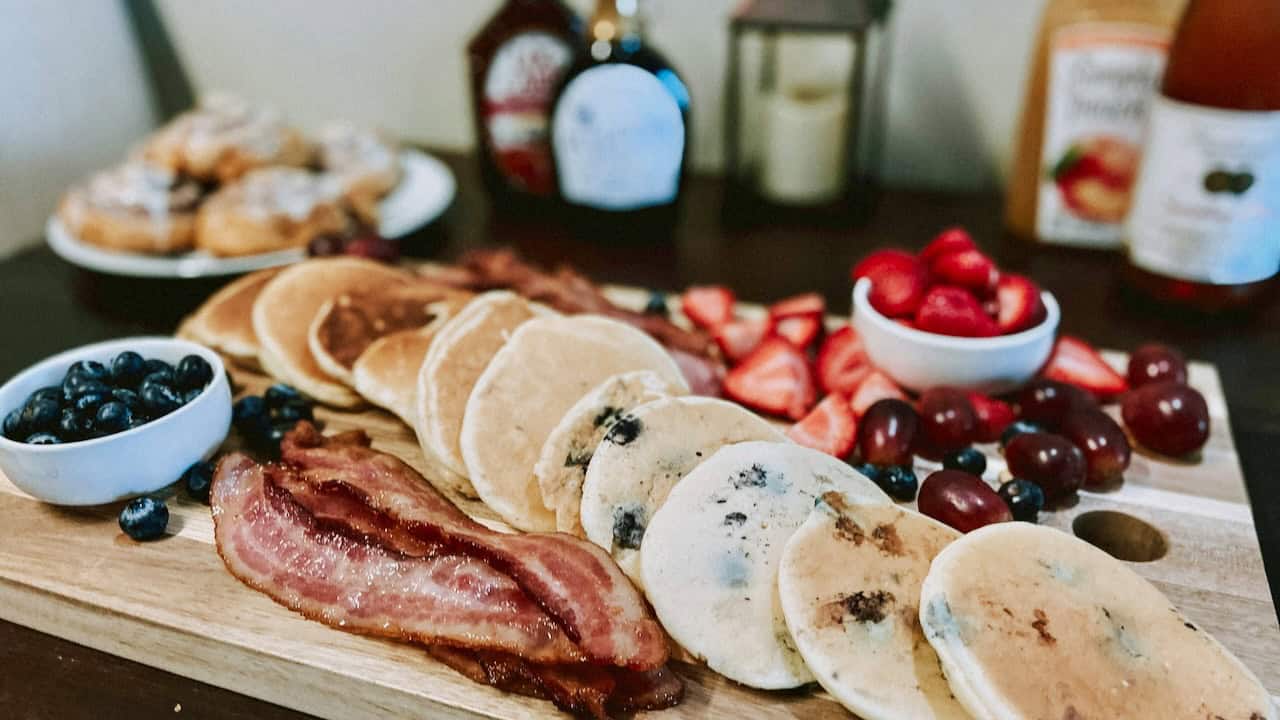
Trying to recreate an evening charcuterie board for a Sunday brunch is the fastest way to leave a tray of cold salami and aged blue cheese untouched until noon. Guests sip their first mimosa, eye the spread, and reach for the one croissant on a corner plate. Salty cured meat reads heavy at 10 a.m., aged Manchego reads sharp, and cornichons read wrong before lunch.
Brunch charcuterie is its own format. The swap is five buckets instead of four: sweet anchors, savory proteins, fruit, soft cheese, and carbs. By the end of this guide you can shop a breakfast charcuterie board for six in twenty minutes, plate it in fifteen, and pair it with a pour that holds the table together.
At a Glance
- A breakfast charcuterie board swaps cured meat for pastries, aged cheese for soft brie, and savory accompaniments for honey, jam, and granola.
- The five brunch buckets are sweet anchors, savory proteins, fruit, soft cheese, and carbs. One bucket each, twelve to fifteen items total.
- Plan one croissant or pastry per guest, two ounces of protein, three to four ounces of fruit, and one to two ounces of soft cheese per person.
- Build the board in fifteen minutes: pastries first to anchor volume, then proteins, then fruit in clusters, soft cheese in bowls, carbs last along the rim.
- Pair with a two-pour brunch logic: one sparkling pour (mimosa, Prosecco, or elderflower soda) plus one coffee or tea service.
What Is a Breakfast Charcuterie Board?
A breakfast charcuterie board is a brunch spread that borrows the visual format of an evening charcuterie board, then replaces every signature ingredient. Pastries take the place of cured meat, soft cheeses and cream-cheese spreads stand in for aged Manchego and blue, and small bowls of honey, jam, granola, and yogurt fill the role olives and mustard play after dark. For a host building a brunch board for four to twelve guests, the rule is one bucket from each of five categories, twelve to fifteen items total, plated in a way that reads bright rather than salty.
Why Breakfast Charcuterie Is Not Evening Charcuterie at 10 a.m.
The biggest mistake a brunch host can make is treating a breakfast charcuterie board as a scaled-down dinner one. Cured meat does not read at brunch. The salt-fat balance reads heavy in the morning, when guests want sweet, bright, and slightly sleepy food. Aged blue, washed-rind cheeses, and sharp cheddar feel out of place beside a coffee cup.
The morning palate wants the opposite: pastries for sweetness, soft cheeses for richness, fresh fruit for brightness, and a warm savory item (bacon, scrambled eggs, smoked salmon) for protein. My Everyday Table’s breakfast charcuterie walkthrough treats the format as a legitimate brunch hosting move, not a viral one-off.
- Skip at brunch: salami, prosciutto, capicola, aged cheddar, blue cheese, cornichons, hot mustard.
- Lean into at brunch: croissants, donut holes, brie wheels, cream cheese, fresh berries, honey, granola.
- Keep across both: soft cheeses, fresh herbs, sliced baguette (toasted at brunch), grapes.
Once the swap logic clicks, the rest of the build is straightforward. The first move is mapping the five brunch buckets, which sets the shopping list and the plating order in a single step.
The Five Brunch Buckets: Sweet, Savory, Fruit, Soft Cheese, Carb
Every ingredient on a brunch board belongs to one of five buckets. The model is the shopping list, and it works whether the guest count is four people at a baby shower or twelve at a holiday morning. One sweet anchor, one savory protein, one fruit category, one soft cheese, one carb vehicle.
- Sweet anchor: pastries, donut holes, mini muffins, or mini pancakes. The replacement for cured meat, takes up the largest visual share.
- Savory protein: crispy bacon, breakfast sausage, hard-boiled eggs, or smoked salmon. One is enough; two if the guest list runs hungry.
- Fruit: berries, grapes, sliced citrus, plus one stone fruit if in season. Three colors minimum so the board reads bright.
- Soft cheese: brie, herbed cream cheese, or honey-whipped ricotta. Skip aged or pungent cheeses. Place in bowls or whole rounds.
- Carb vehicle: quartered croissants, sliced bagels, English muffin halves, or bagel chips. Toasted, never raw. Crackers feel wrong at brunch.
Twelve to fifteen items covers a board for four to eight guests without overcrowding. Bubbly Side of Life’s brunch board walkthrough confirms the same five-bucket logic in slightly different vocabulary. For a wider survey of brunch hosting moves beyond the board, the TGH party brunch ideas roundup covers menu pacing, table flow, and drink staging that surrounds it.
|
Turn the Five Buckets Into One List |
Sweet Anchors: Pastries, Donut Holes, and Mini Pancakes
Sweet anchors are the visual replacement for cured meat. They take up the largest single share of a brunch board (roughly thirty percent of the surface) and they signal brunch from twenty feet away. Pick one anchor category, not three: croissants, or donut holes, or mini pancakes, and lean into the choice.
Croissants are the safest first call. Quarter them lengthwise rather than cubing them (which dries them out within an hour). For an eight-guest board, plan eight to ten croissants, quartered, for roughly forty pieces. Stack a few whole on a corner for guests with bigger appetites.
- Donut holes scale well: a dozen covers six guests, two dozen covers twelve. Mix glazed, chocolate, and powdered for color contrast.
- Mini muffins fill negative space: blueberry, banana-nut, and chocolate chip in equal parts. Cluster them in groups of three.
- Mini pancakes (silver-dollar size) lean Instagram: make ahead and warm briefly. Stack in short towers of three on opposite corners.
For a host running brunch monthly, Simply Scrumptious Eats’ breakfast board lineup rotates pastry categories across seasons (cinnamon rolls in winter, lemon scones in summer), which keeps the format from getting predictable. The next bucket carries the savory weight of the morning, and getting it right matters more than the pastries do.
Savory Proteins: Bacon, Sausage, Smoked Salmon, or Hard-Boiled Eggs
Savory proteins anchor a brunch board the way cured meat anchors an evening one, with one difference: they have to be cooked. A brunch board with cold prosciutto reads wrong; one with crispy bacon reads finished. Pick one or two proteins, never four.
Crispy bacon is the safest first call. Bake at 400°F on a foil-lined sheet pan for fifteen minutes, drain on paper towels, and cool to room temperature before plating. Folded in tight stacks of three or four slices, it reads as a savory tile rather than a flat strip. Britney Breaks Bread’s brunch board photo essay shows the folded-stack technique.
- Smoked salmon: four ounces for six guests, eight ounces for twelve. Pair with cream cheese, capers, and red onion slivers for a bagel-and-lox station on one half.
- Eight-minute hard-boiled eggs: the yolk stays bright yellow and slightly jammy. Slice in halves and season with a flake of Maldon salt.
- Breakfast sausage links: mini links or crumbled chorizo hold heat better than slab bacon and last an hour on the board without going limp.
Plan two egg halves per guest plus the bacon or salmon allocation. The TGH guide to hosting a brunch covers the food choices that pair with the board itself. Fruit is the next bucket, and it carries more visual weight than any other category.
Fruit That Works in the Morning: Berries, Citrus, Stone Fruit
Fruit does the job on a brunch board that color does on an evening one: it lifts the eye, fills negative space, and pairs with almost every other bucket. The rule is three colors minimum, generously portioned. A board with only grapes reads sparse; one with three colors of berries plus citrus reads abundant.
Berries are the brunch board’s signature. Strawberries (halved if large), blueberries in mounds, raspberries scattered between items, and blackberries clustered in groups of five to seven. For an eight-guest board, plan a pint of each. Berries pair with brie, ricotta, honey, and granola without further intervention.
- Orange supremes, two oranges per board, peeled and segmented. The bright color and tartness break up sweet pastries on the eye and the palate.
- Pink grapefruit segments, one whole grapefruit, segmented and arranged in a fan. Sharper than orange, and pairs well with smoked salmon.
- Lemon wheels, two per board, used as both garnish and palate-cleaner for the smoked-salmon section.
For stone fruit, sliced peaches in July, nectarines in August, plums in September, and sliced apples or pears the rest of the year. Pass Me Some Tasty’s simple board walkthrough makes the case for treating fruit as the structural element of the board, not the decorative one. A brunch board that gets the fruit right will almost build itself.
|
Hosting Tip: Plate the Fruit Last, Not First |
Soft Cheeses and Spreads: Brie, Cream Cheese, Whipped Ricotta
Soft cheese is where most evening-charcuterie hosts get the brunch swap wrong. The board does not need four cheeses. It needs one or two soft cheeses (rich without being sharp) plus one spreadable option. Aged Manchego, sharp cheddar, and washed-rind funky cheeses all belong at dinner, not brunch.
A small wheel of brie (eight ounces for six guests, sixteen for twelve) is the safest pick. Place it whole in the center and score the top rind in a cross so the first guest knows where to cut. Boarderie’s texture-first cheese guide argues that texture (soft, semi-firm, firm, blue) matters more than origin or flavor. At brunch the texture you want is soft, with one optional semi-firm exception (young gouda or fresh mozzarella).
- Herbed cream cheese: eight ounces whipped with chives, dill, and salt. Pairs with smoked salmon, bagel chips, and any toasted carb.
- Honey-whipped ricotta: fresh ricotta whipped with two tablespoons of honey and a pinch of sea salt. The drag-through-the-bowl move for sweet tooths.
- Plain cream cheese: an eight-ounce block, sliced into half-inch tiles. The default for guests who skip herbs.
Two soft cheese options is the sweet spot. One alone reads thin; three or more reads like the host could not pick. Place each in a ramekin or shallow bowl, never directly on the board, so guests can spread without dragging crumbs across the surface. The next bucket carries the load that makes every other ingredient work.
Carbs and Vehicles: Croissants, English Muffins, Bagel Chips
Carbs at brunch are vehicles, not centerpieces. Their job is to deliver the cheese, the spread, and the fruit to the mouth. Pick two carb categories total, both toasted or pre-baked, with at least one shape that reads explicitly morning (croissants, bagels, English muffins) rather than late-night cracker.
Quartered croissants double as both sweet anchor and carb vehicle. A sliced everything bagel, toasted and cut into eighths, gives the smoked-salmon section a clear home. English muffin halves, toasted and buttered, sit next to the egg-and-bacon side. Bagel chips play the role crackers play at dinner: small, sturdy, designed to hold weight.
- Skip water crackers, which read evening. Replace with bagel chips or pita crisps for brunch.
- Toast the baguette before slicing. Untoasted sliced bread on a brunch board goes stale within twenty minutes.
- Skip pretzels and party-mix carbs. They pull the board into Super Bowl territory, better reserved for evening or game day.
Plan one whole croissant per guest plus four pieces of secondary carb. The carb shelf-life on a brunch board is two hours before toasted items go soft, which sets the build window. Primal Kitchen’s gluten-free breakfast board variation swaps in seed crackers and grain-free wraps for guests who avoid wheat. The next bucket adds the touches that pull the whole table together.
|
Round Out the Board With One Menu |
Add-Ons: Honey, Jam, Granola, and Yogurt Cups
Add-ons are the brunch equivalent of fig jam and cornichons at dinner. They sit in small bowls around the perimeter, take up almost no shopping budget, and they carry more brunch signal than any other category. The yogurt-and-granola pair reads brunch the way fig jam reads evening. Four bowls fits a board of six to eight.
- Honey: a quarter-cup of local honey with a wooden dipper. Pairs with brie, ricotta, and any pastry.
- Jam or fruit preserve: raspberry, fig, or apricot. A quarter-cup in a ramekin with a tiny spoon. One jam is enough; two competing flavors confuses the palate.
- Granola: half a cup in a small bowl. Choose one with visible nuts and dried fruit so the texture reads varied.
- Yogurt cups: four-ounce cups of vanilla Greek yogurt, one per guest, clustered on one corner of the board.
For holiday brunches, a small bowl of dark chocolate chips or chocolate-covered espresso beans works as a sweet finish next to the pancake stack. I Heart Naptime’s hot chocolate charcuterie variation pushes the add-on logic further for winter mornings, where a hot drink anchors the entire board. Once the add-ons are in place, the build sequence becomes mechanical.
How to Assemble a Brunch Board in Fifteen Minutes
The brunch board build is faster than the evening one because nothing needs to be sliced from a salami or aged wedge. With every item prepped (croissants quartered, bacon cooked, eggs boiled, fruit washed), the assembly takes fifteen minutes from empty board to ready-to-serve.
- Pastries first to anchor the volume: quartered croissants in three loose clusters, mini muffins in groups of three between them, and a tower of pancakes on one corner.
- Savory proteins second: folded bacon stacks in the gaps; smoked salmon slices fanned along one side; halved hard-boiled eggs in the corners.
- Fruit third in tight clusters: berries in mounds, citrus segments fanned, stone fruit in shingled rows. The fruit fills negative space without crowding the plate.
- Soft cheese in bowls or whole rounds: the brie wheel in the center with its rind scored; cream cheese ramekins and ricotta bowls at uneven heights on either side.
- Carbs last along the rim: toasted bagel chips, English muffin halves, and bagel eighths line the edge so guests can grab them without disturbing the center.
Add the small bowls of honey, jam, granola, and yogurt cups around the perimeter, then garnish with mint sprigs tucked under the brie. The Organic Kitchen’s brunch charcuterie format runs the same sequence with seasonal substitutions, and the TGH easy brunch recipes guide covers made-ahead components like overnight French toast and baked frittatas. The final detail is the drink that pulls the whole spread together.
Pairing the Board with a Mimosa Bar or Coffee Service
A brunch charcuterie board lands its full effect when the drinks beside it match the format. The logic is two pours: one sparkling, one hot. Both sit on the table, both stay self-serve, and neither requires the host to play bartender.
A DIY mimosa bar with Prosecco plus three juices (orange, pink grapefruit, and one seasonal pick like peach or pomegranate) covers most brunch crowds. Set the Prosecco in an ice bucket beside the juice carafes and let guests pour their own ratio. The TGH step-by-step DIY mimosa bar guide covers glassware, ratios, and timing that keeps the Prosecco cold across a two-hour brunch.
- A French press of medium-roast coffee, ground coarse, steeped four minutes, poured into a thermal carafe with cream and sugar in small pitchers.
- A kettle of hot water with a basket of tea bags (black, chai, or herbal) for a flexible table that skips caffeine spikes.
- Non-alcoholic sparkling pours like elderflower soda, sparkling water with lemon, or kombucha for any morning that runs lighter.
Yellow daffodils or seasonal florals lift the brunch table; linen napkins in sage, blush, or pale blue read morning better than deeper jewel tones. Tiny Grocer’s charcuterie guide covers the surface details that lift the photo and the in-person experience together. The TGH brunch table setting playbook pulls the whole table around the board, which is how the format lands finished rather than clever.
Frequently Asked Questions
What goes on a breakfast charcuterie board?
A breakfast charcuterie board includes pastries, savory proteins, fresh fruit, soft cheese, and sweet add-ons instead of cured meat and aged cheese. Think croissants and donut holes for the sweet anchor, bacon, sausage, or smoked salmon for protein, brie or whipped ricotta for cheese, and small bowls of honey, jam, and granola to finish the board.
How do you make a breakfast charcuterie board?
Start with quartered croissants and pastries to anchor the volume, then fold in crispy bacon or breakfast sausage. Add berries and grapes in clusters, place a wheel of brie or cream cheese in the center, and finish with small bowls of honey, jam, granola, and yogurt around the perimeter.
What is the difference between a breakfast and dinner charcuterie board?
A dinner charcuterie board centers on cured meat, aged cheese, and savory accompaniments. A breakfast charcuterie board replaces cured meat with pastries and breakfast proteins, swaps aged cheese for soft brie and cream cheese, and uses fruit, honey, and yogurt where olives and mustard would go.
Is brunch charcuterie a real thing?
Yes, breakfast and brunch charcuterie boards have become a standard brunch hosting format since 2020. The board layout (variety of small bites, height variation, communal serving) works equally well for morning gatherings, baby showers, and casual weekend hosting. Search volume sits at 5,400 per month.
How much breakfast charcuterie do I need per person?
Plan one croissant or pastry per guest, two ounces of protein (bacon, sausage, or smoked salmon), three to four ounces of fruit, and one to two ounces of soft cheese per guest. A brunch board for six fits a 15-inch round; a brunch board for twelve needs a 20-inch rectangle.
What drinks go with a breakfast charcuterie board?
Pair the board with a mimosa bar (Prosecco plus three juices), a coffee and tea service, or a non-alcoholic sparkling option like elderflower soda. Two-pour brunch logic: one sparkling drink, one hot drink. Skip evening cocktails and bitter aperitifs, which clash with sweet brunch flavors.
Continue Reading:
More On Charcuterie Boards
- How to Build a Charcuterie Board (Step by Step)
- Charcuterie Board Ingredients (15-Item Checklist)
- Charcuterie Board Platter Setup (Host’s Playbook)
More from The Gourmet Host
- Places to Have a Graduation Party: 15 At-Home Ideas
- 6 Spring and Summer Ingredients Worth Hosting Around
- Mother of the Groom Speech: Examples, Tips, Ideas
- 12 BBQ Party Sides That Hold Up on a Hot Buffet
- Picnic Date Night Ideas: A Romantic Outdoor Spread
Explore TGH Categories
- Set the Scene
- Drinks and Bar
- Plan the Meal
- Engage with Guests
- Games and Toasts
- Tools and Techniques
- Why We Gather