6 Toast Glasses for Wedding Toasts and Receptions
 14 min read
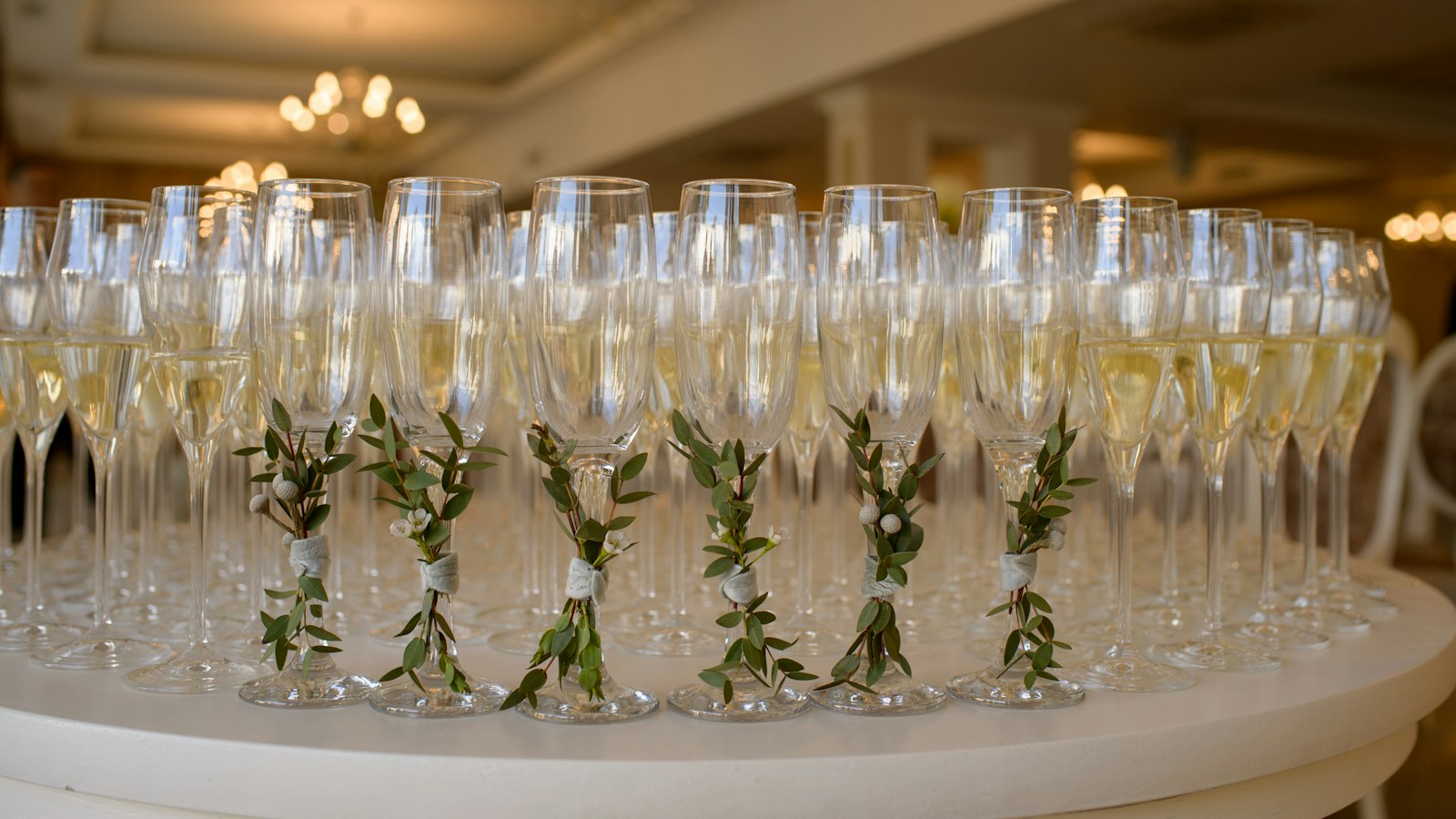
Versatility and durability matter more than rigid tradition when outfitting a beverage station for hundred-guest celebrations.
Ask yourself what temperature the champagne will actually be when the best man finishes his speech. How do you keep one hundred pours crisp and sparkling while the microphone gets passed around? A wider bowl dissipates carbonation rapidly, leaving guests with flat wine before the glasses ever clink.
The common advice is to rent the thinnest crystal flutes available to signal formality. That mandate ignores how long a reception toast actually takes, as paper-thin walls absorb room heat quickly and precarious stems tip easily on crowded tables. Prioritize a slightly thicker tulip glass, and the beverage stays vibrant through every tribute.
Below is a side-by-side comparison of six toast glasses for wedding receptions covering shape, durability, and volume, plus the exact pour math so you can plan a flawless service.
At a Glance
- Tulip shapes concentrate carbonation and aromas better than standard wide bowls.
- One 750-milliliter champagne bottle pours five to six ceremonial servings at 125 milliliters each.
- Event planners recommend ordering 20 percent more stemware than your final guest count.
- Standard coupes lack the structural locking base required for building stable champagne towers.
- Non-alcoholic cider utilizes the exact same stemware as alcoholic options for a cohesive table.
What Defines the Right Beverage Vessel?
Organizing the bar service for a reception requires outfitting the room with vessels that look beautiful in photographs while surviving a long night of mingling and dancing. You need stemware that balances the visual weight of a formal table setting with the practical demands of bulk pouring, tray passing, and inevitable guest clumsiness. The breakdown that follows compares six distinct glass profiles and dismantles expensive rental mandates. Reviewing these facts guarantees you select the perfect toast glasses wedding planners actually trust.
The Myth That You Must Buy Matching Crystal Flutes
Versatility and durability beat strict adherence to paper-thin rental stems. A sturdy, high-quality glass tulip or standard white wine vessel handles a bustling reception far better than premium crystal.
Searching for the perfect wedding toast champagne glasses often leads hosts toward ultra-thin crystal under the guise of superior tasting experiences. Because crystal can be spun thinner than standard glass, crystal champagne flutes allow less material interaction with the palate for a highly refined sip. That microscopic difference matters during a quiet sommelier evaluation.
It vanishes entirely when one hundred guests are cheering over a loud band.
Renting matching crystal for a massive crowd guarantees a hefty breakage bill. A sturdy glass survives the laughter following a great wedding toast example much better than premium crystal. Choose a robust glass, and the celebration runs on joy rather than anxiety over shattered stems.
- Test the rim of a standard wine vessel to feel the sturdier edge compared to delicate crystal.
- Ensure the foot of the rental option holds enough physical weight to prevent tipping on crowded tables.
- Review the caterer contract to understand exactly what a shattered crystal stem adds to the final invoice.
While durability dictates your rental strategy, the geometry of the vessel directly controls how long the wine stays vibrant.
Comparing Popular Glass Shapes Side by Side
Selecting the correct silhouette determines how long the beverage stays lively. Different shapes manipulate carbonation, direct aromas, and resist tipping at completely different rates.
Before reviewing toast for wedding examples, prioritize your venue’s atmosphere and the specific drink being poured. Sommeliers recommend using a tulip-shaped glass rather than a strictly narrow cylinder to enhance the full aromatic profile of champagne during wedding tastings. The slightly wider middle gives the wine room to breathe, while the tapered rim captures the scent.
Conversely, the strict vertical walls of a traditional flute limit the surface area exposed to air, which preserves effervescence and concentrates aromas directly beneath the nose.
Use the following parameters to evaluate the six main options for your reception table. Pick a design based on your beverage menu and your tolerance for replacing snapped stems.
| Glass Style | Core Shape | Standard Volume | Material Strength | Best Used For | Decision Rule |
|---|---|---|---|---|---|
| Classic Flute | Narrow vertical cylinder | 150 to 180 ml | Moderate | Preserving tight bubble streams | Pick this to prioritize carbonation retention over strong aroma. |
| Tulip Glass | Wide mid-bowl, tapered rim | 200 to 240 ml | Moderate | Premium vintage champagne | Pick this to capture complex aromatics during a formal seated dinner. |
| Standard Coupe | Shallow, wide basin | 180 to 240 ml | Fragile | Vintage-themed signature cocktails | Pick this for visual flair when serving drinks that do not require high carbonation. |
| Stemless Flute | Flat-bottomed narrow bowl | 240 to 260 ml | High | Casual outdoor garden parties | Pick this to eliminate snapped stems on uneven grass or patio surfaces. |
| White Wine Glass | U-shaped medium bowl | 250 to 350 ml | High | Prosecco and sparkling blends | Pick this to consolidate glassware rentals into one versatile, sturdy vessel. |
| Trumpet Flute | Flared rim, sharply angled base | 160 to 190 ml | Low | Highly styled modern tablescapes | Pick this when visual drama matters more than spill prevention. |
- Assess the venue: Outdoor garden parties require flat-bottomed vessels to prevent tipping on the uneven grass.
- Evaluate the pour: Vintage champagne rewards a wider bowl, while standard sparkling wine shines in a narrow cylinder.
- Factor in the timeline: Extended speeches demand a glass shape that retains carbonation actively for a long period.
Beyond the individual tasting notes, the silhouette you choose decides whether a stacked display is physically possible.
|
Map the Perfect Beverage Sequence |
Why Standard Coupes Fail the Traditional Champagne Tower
A dramatic beverage pyramid collapses immediately if you attempt to stack curved, traditional coupes. Only a specific, flat-bottomed coupe variant possesses the structural geometry necessary to bear the weight of glass and liquid above it.
Social media heavily promotes the aesthetic of a sparkling tower overflowing as the couple pours the first bottle. Guests love the visual, and it often signals the start of the Order of Wedding Toasts: Traditional Speech Guide. However, standard shallow coupes feature a sloping basin that causes the foot of the glass above to slide off-center the moment liquid hits the stack.
The Structure Behind the Stack
Building a stable structure requires using identical coupe glasses with flat interior bases rather than standard rounded wine glasses. The foot of the top tier must bridge exactly across the rims of the four glasses directly beneath it, creating a locked grid. Attempting this trick with your standard rented champagne glasses for wedding toast ceremonies usually results in a sticky, dangerous crash.
- Run a finger across the inside bottom of the coupe to verify a perfectly flat circle wide enough to catch a glass foot.
- Measure every single stem in the stack to guarantee zero millimeter variance, as one short stem breaks the load distribution.
- Never attempt to stack narrow cylinders, as their high center of gravity guarantees an immediate and sticky collapse.
Even if your glassware stack survives the cocktail hour, improper washing techniques will quickly ruin the next pour.
Real Reasons Narrow Flutes Are Actually Hard to Wash
Residual dish soap clinging to the interior walls of a narrow glass actively destroys carbonation. A sparkling wine poured into an improperly rinsed cylinder will look completely flat within minutes, ruining the visual appeal of the pour.
Any sample toast for wedding events runs long enough that the wine will sit in the glass for several minutes. Hosts often assume narrow rims just make it annoying to reach a sponge inside. The real threat is the invisible film left behind by commercial dishwasher detergents.
The tight geometry of a traditional flute traps rinse water, allowing alkaline soap residue to bake onto the glass.
Experts dictate that champagne glasses should be hand-washed in hot water without detergent, because soap residue ruins the formation of bubble streams. The chemical film breaks the surface tension of the wine, preventing the elegant columns of bubbles from launching off the bottom of the bowl. When selecting glasses for wedding toast service, a slightly wider opening ensures a cleaner rinse and a much livelier beverage.
- Rinse with hot water: Flush the bowl thoroughly to strip away any invisible chemical films left by dishwashers.
- Skip the commercial soap: Rely on heat rather than aggressive alkaline detergents to clean the delicate interior.
- Air dry inverted: Place the cleaned vessel upside down on a lint-free towel to prevent spots from forming at the bottom.
A spotlessly clean vessel prepares the bar for service, provided you have a plan for the guests skipping the alcohol.
|
Hosting Tip: Scrub Stems with Baking Soda |
Skipping Separate Glasses for Non-Alcoholic Beverages
Pouring mocktails into the exact same stemware as the alcoholic option keeps the table looking cohesive and prevents non-drinking guests from feeling singled out. A unified glassware aesthetic requires far less rental sorting.
A common planning mistake is renting distinct tumblers or goblets for guests skipping the sparkling wine.
This strategy clutters the trays during service and immediately broadcasts who is not partaking. Serving citrus-flavored sparkling water in champagne flutes provides non-drinking guests an inclusive alternative during the reception wedding toast. The carbonation behaves beautifully in the tall glass, catching the light and mimicking the festive texture of a traditional pour.
Reviewing toast wedding examples reveals that non-drinkers deserve a beautiful presentation too. Standard bubbly can easily be swapped for thematic non-alcoholic alternatives like pink lemonade for summer events or a chilled cider for autumn gatherings. Once you secure the final head count using your 5 Digital Invitations for Wedding Events to Send, reserve one uniform style for every seat.
- Serve pink lemonade or sparkling apple cider to mimic the visual weight of the standard wine options.
- Drop a single raspberry or lemon twist into every single pour to completely unify the table presentation.
- Set the non-alcoholic options on the exact same passing tray so guests can select one without having to ask.
Unifying the presentation for every guest naturally leads to the arithmetic of ordering the correct total inventory.
Purchasing the Right Quantities to Cover Breakage
Securing exactly one glass per confirmed attendee guarantees you will run short before the final speech finishes. A robust breakage buffer is mandatory to cover snapped stems, misplaced drinks, and guests who switch beverages midway through the evening.
Hosts often miscalculate by matching the glassware order directly to the catering headcount. When guests mingle during the cocktail hour, they frequently set their half-empty drink on a ledge and grab a fresh one from a passing tray minutes later. By the time the Who Makes Toasts at a Wedding: The Reception Guide sequence kicks off, dozens of original glasses are sitting abandoned in corners.
When outfitting the bar, hosts should start with one flute per guest and immediately add a service replacement buffer. Industry planners organizing a celebration for one hundred attendees routinely reserve 110 to 120 champagne glasses to account for missing vessels and accidental shatters.
That twenty percent padding ensures the servers can instantly supply a fresh glass when a guest bumps a table, keeping the timeline moving. Hearing examples of a toast at a wedding is much better when everyone actually has a drink in hand.
- Calculate the baseline: Multiply your total confirmed guest list by 1.2 to find your minimum safe rental number.
- Account for the bridal party: Allocate two extra glasses for each person seated at the head table.
- Stash emergency backups: Keep ten percent of the clean inventory unboxed specifically for rapid replacement during speeches.
Watching a great example of a toast at a wedding keeps guests engaged, and that final glassware count feeds directly into the formula for how much liquid you need to purchase.
|
Track Rental Expenses Together |
What Is the Standard Pour Volume for a Ceremonial Toast?
A celebratory pour fills the vessel exactly halfway, leaving ample room for the carbonation to foam without spilling over the rim. Filling the glass to the brim prevents the aromas from gathering and causes an immediate mess when guests raise their arms.
The Mathematics of a Formal Pour
Standard bottle math dictates how much inventory you actually need to supply the room. At an industry-standard pour of 125 milliliters per flute, one 750-milliliter bottle of champagne serves five to six guests comfortably. Pouring a smaller ceremonial measure between 75 and 125 milliliters allows one bottle to stretch across six to ten guests for a quick raise of the glass.
That half-glass standard provides the ideal physical balance in the hand.
Before you review Wedding Quotes: The Full Toast and Speech Guide to finalize the script, confirm your catering staff understands this lower fill line.
If you want to practice a sample of wedding toast lines, review How to Prep Toast Glasses for Wedding Celebrations. You will quickly see that a lower liquid level prevents sloshing during the enthusiastic moments often found in funny toast examples wedding guests love.
- Instruct the serving staff to stop pouring the moment the liquid hits the widest part of the bowl.
- Give the carbonation ample space to expand upward without bubbling over onto a guest’s hand.
- Plan on exactly six uniform servings per standard bottle to keep your purchasing calculations precise.
Securing the correct volume of wine only matters if it reaches the glass at the proper temperature.
Chilling the Bottles Before They Meet the Glass
Warm champagne foams aggressively upon hitting the bottom of the glass, overflowing the rim while instantly losing its carbonation. Serving the beverage at a precise chill guarantees a crisp, controlled pour that stays lively through the final applause.
The temperature of the liquid dictates how the bubbles behave inside the flute. Chilling champagne at 45 to 48 degrees Fahrenheit for two hours before service preserves carbonation and flavor. Drop the temperature lower, and you numb the delicate fruit notes.
Serve it warmer, and the excess pressure creates a messy eruption when the cork pops.
Timing the chilling process correctly requires sinking the bottles in a heavy ice and water bath right as the Family-Style Wedding Menus with Shared Platters begin clearing from the tables. Plunging the bottles into ice water rapidly transfers the cold through the thick glass. Bring those properly cooled bottles to the pre-staged glasses, and every guest gets a perfectly vibrant sip to accompany a memorable example wedding toast.
- Submerge in ice water: Plunge the bottles fully into a heavy liquid bath rather than just resting them on dry cubes.
- Time the plunge: Start the chilling process exactly two hours before the event microphones turn on.
- Wipe the bottle: Keep a thick cotton towel at the beverage station to catch freezing drips before pouring.
Get the glass shape right and the temperature dialed in, and the bar service will effortlessly support a beautiful sample wedding toast.
Frequently Asked Questions
What temperature should champagne be when served in a flute?
Champagne served in a flute should sit between 45 and 48 degrees Fahrenheit. This specific temperature range preserves the carbonation and balances the delicate fruit notes. Chilling the bottles in an ice water bath for two hours before service guarantees a crisp, lively pour for your guests.
Can you serve sparkling cider in the same style of glassware?
Sparkling cider serves beautifully in the exact same tulip or flute used for champagne. Pouring non-alcoholic options into identical stemware keeps your table design cohesive and ensures every guest feels included during the celebration. The tall shape also preserves the cider’s carbonation just as effectively.
How many spare glasses should a host order for a large party?
A host should order twenty percent more glasses than the final guest count. Reserving this buffer accounts for accidental breakage, misplaced drinks during cocktail hour, and the extra vessels needed for the bridal party. That extra inventory prevents the catering staff from running short mid-speech.
Why do sommeliers recommend tulip shapes over narrow bowls?
Sommeliers recommend tulip shapes because the wider middle bowl gives the wine space to breathe and develop its full aromatic profile. The slightly tapered rim then captures those complex scents right beneath the nose, offering a richer tasting experience than a strictly straight and narrow cylinder.
Is hand-washing required for crystal event stemware?
Hand-washing in hot water without detergent is highly recommended for delicate crystal event stemware. Commercial dishwashers often leave behind an alkaline soap residue that aggressively breaks down carbonation. Rinsing the glasses manually ensures the surface tension remains perfect for a long, lively stream of bubbles.
Do wide coupe glasses lose their carbonation faster than flutes?
Wide coupe glasses lose their carbonation significantly faster than narrow flutes because the broad surface area exposes more liquid to the air. That massive exposure dissipates the bubbles quickly. You should reserve coupes for mixed drinks or sweeter sparkling wines that do not rely on aggressive fizz.
Continue Reading:
More On Wedding quotes:
- 35 Wedding Quotes for a Wedding Toast Card or Vow
- 30 Funny Birthday Wishes for Best Friend Milestones
- 25 Short Funny Anniversary Wishes for Couple Toasts
- 40 Short Funny Birthday Wishes for Best Friend Texts
- Father of the Groom Speech at Rehearsal Dinner Guide
More from The Gourmet Host:
- Order of Wedding Toasts: Traditional Speech Guide
- 5 Digital Invitations for Wedding Events to Send
- Who Makes Toasts at a Wedding: The Reception Guide
- Family-Style Wedding Menus with Shared Platters
- Wedding Party Speeches: Order, Tips, and Examples
Explore TGH Categories: