Retirement Party Food Ideas for the Whole Crowd
 12 min read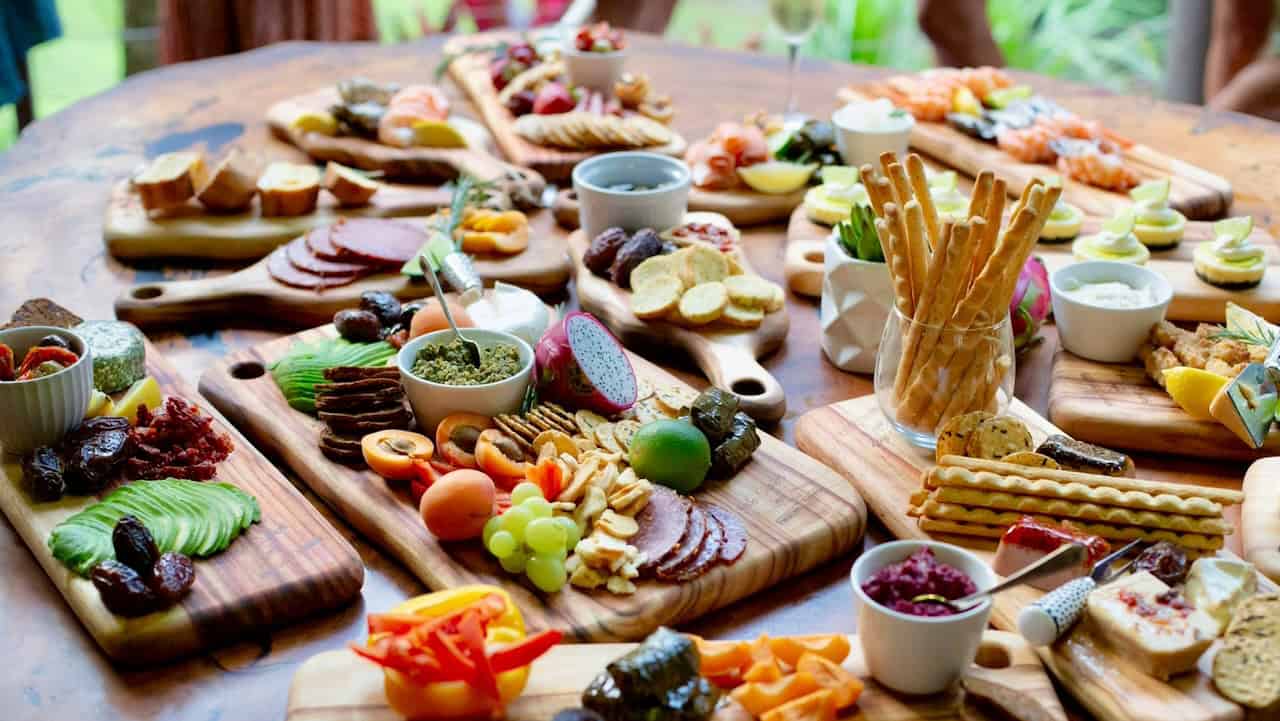
Food at a retirement party matters less than the way it is served, because the serving format is what sets the energy of the room before a single dish does. Two hosts can serve the same cheese, the same sliders, the same warm dip, and throw two completely different parties. One keeps fifty people drifting and talking for three hours, while the other has a line out the kitchen and guests eating in silence.
The difference is never the recipe. It is how the food is presented to the room.
A serving format is the shape your food takes once it leaves the kitchen, and that shape governs where people stand, how often they move, and whether the host is in the room or trapped behind a serving spoon. Get it right and the menu is the easy part.
At a Glance
- The serving format, grazing table, buffet, or plated meal, decides how the party moves. Choose the format first and the menu follows.
- A grazing table is the least work and keeps a crowd mingling; a buffet feeds the biggest room cheaply; a plated meal suits a small, seated dinner.
- Weight the menu toward make-ahead dishes that survive a morning in the fridge.
- Plan roughly 6 to 8 bites per person for a two-hour spread, 10 to 12 if no full meal follows.
- Save your dishes, quantities, and shopping list together so the plan stays in one place.
What Each Format Actually Is
There are three formats a retirement party ever uses, and each one trades effort, cost, and crowd-fit in a predictable way. That is the answer in one paragraph. The rest is how each one actually moves a crowd.
The three formats are not three menus. They are three relationships between the food and the floor.
A grazing table stays put and stays cold. You assemble boards of cheese, cured meats, fruit, nuts, and dips ahead of time, set them out once, and they hold themselves for the night.
Nobody serves. Nobody queues. The food is a fixed point the room orbits.
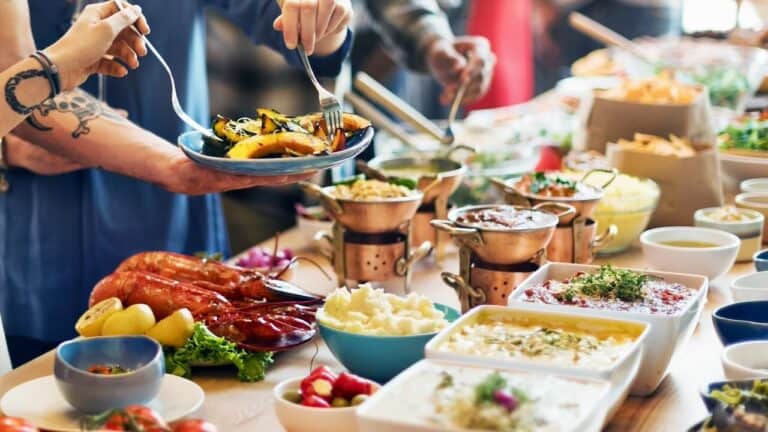
A buffet moves the crowd past the food. Guests pick up a plate at one end, walk a line of large-format dishes, and sit or stand to eat. It is built for volume, because a few big-batch dishes feed far more people than the same effort spent plating.
A plated meal moves the food to the crowd. Guests stay seated, courses arrive, and the host or a helper is on their feet the whole time. It reads as formal because the service itself is part of the occasion.
| Format | Effort | Cost | Best for |
|---|---|---|---|
| Grazing table | Lowest: assemble and chill, no live cooking | Mid: cheese and cured meats add up | A relaxed crowd that mingles for two hours |
| Buffet | Medium: cook in batches, hold warm | Lowest per head in bulk | Feeding 30 to 50 guests without a caterer |
| Plated meal | Highest: kitchen-bound all night | Highest: portions and service | A small, formal dinner of 20 or fewer |
For most home hosts the real choice is grazing or buffet, because both keep you in the room with your guests. A plated meal earns its place only at a small seated dinner where the service is meant to be felt. The two formats below are the ones a retirement party actually runs on.
How Each Format Moves a Crowd
This is the part that decides your night, so it is worth understanding the mechanism rather than memorizing a rule.
A grazing table works because it removes every choke point. There is no queue, because there is no single serving moment. There is no host bottleneck, because nothing is cooked to order.
Guests refill in the gaps between conversations, which is exactly the loose, drifting rhythm a send-off wants. The catch is sightlines: one long table jammed against a wall pulls the whole crowd into a single knot. Spread the boards across two or three surfaces and the room spreads with them.
Because everything sits out for hours, the menu has to survive sitting out, which is why a grazing table is built from things that hold at room temperature. A make-ahead whipped feta dip is happy on the board all night, and individual grazing boards are a tidy single-serve twist when you want less crowding at one spot.
A buffet works on the opposite principle. It deliberately creates one queue and then makes that queue flow in a single direction so it never tangles.
The mechanism is sequence: the order of dishes along the line controls both the speed of the line and your food cost. Cheap, bulky items go first because they fill the plate before guests reach the expensive ones. The refresh cadence is what keeps it alive, because a buffet looks abundant until the first tray empties and then it looks picked-over in an instant.
Picture a real one. Forty guests, a buffet against the long wall, the line running left to right.
- Start the line with stacked plates.
- Place cheaper, bulkier items like salad and bread first.
- Put pricier dishes, like sliders and the grazing board, near the end.
- Keep hot food above 140 degrees and cold food on ice.
- Set cutlery and napkins at the very end of the line.
At forty guests that single line clears in under fifteen minutes if the salad-and-bread opener does its job of filling plates early. The expensive sliders at the far end get one or two per person instead of five, which is the whole reason the order matters.
Plan two waves of refill so the table never goes bare between them, and the room reads as generous from the first hour to the last. The trick is large-format, low-cost mains plus that flowing line: slow-cooker dishes, a taco or pasta bar, hearty dips, and big salads all hold while guests serve themselves.
To feed fifty cheaply, buy in bulk, build around a couple of crowd dishes, and consider a potluck element so cost and effort are shared. A budget-friendly make-ahead party meatball is a good anchor that impresses without overspending.
Food safety is the one non-negotiable that holds across both formats. The guidance on keeping a buffet safe covers the holding temperatures that keep the spread good for the whole party. A self-serve batch sangria set away from the food line keeps you out of the bartender role too.
For handheld options that prep fast and travel well, our easy appetizer ideas guide is full of buffet-ready dishes, and our party food platters guide shows how to build a grazing board that looks generous on any budget.
|
Share The Cost Of Feeding Everyone |
What Survives the Morning
Whichever format you land on, the dishes that earn a place are the ones you can finish before the first guest arrives, because a format only flows if the host is not still cooking when the party starts.
That is the real point of a make-ahead spread. It frees you to host instead of cook.
Build the table around dishes that hold overnight and need only reheating or a final assembly at serving time.
- Dips and spreads: warm or cold, made a day ahead and reheated or chilled.
- Sliders and meatballs: assembled ahead, warmed in a slow cooker on the day.
- Stuffed mushrooms and deviled eggs: classic handhelds that hold in the fridge.
- Salads and grain bowls: dressed at the last minute so they stay crisp.
A warm crowd dip anchors the table cheaply and reheats in minutes, and our easy cold appetizers guide is full of dishes you can assemble and chill the night before with zero stove time.
Plan the prep order around your oven and fridge space, because a menu that needs three trays baking at once falls apart in a home kitchen. Balance warm dishes against what your space can actually handle, a principle our make-ahead appetizers guide is built around.
Save room for one personal dish: the retiree’s favorite, a recipe from a place they plan to retire to, or a nod to their next chapter. Even one meaningful plate turns a good spread into a tribute.
How Much Food Per Person
Scale the menu off a per-guest number so you neither run short nor drown in leftovers. The reliable rule is 6 to 8 bites per person for a two-hour grazing event, and 10 to 12 if no full meal follows.
Spread those bites across categories rather than piling on one. Variety reads as abundance even when the total quantity is modest, and round up when guests skew hungry or the party runs long.
- Dips: about a quarter cup per person across two or three options.
- Sliders or handhelds: 2 to 3 per guest.
- Grazing board: 3 to 4 ounces of cheese and meat per person.
For appetizer math that scales cleanly to any headcount, our appetizers for a crowd guide breaks it down by guest count, and a little background on the history of the cocktail can inspire a single batched signature drink that pours itself.
What This Means for Your Room and Your Budget
Catering is one decision inside the larger send-off sequence, and it is the decision that feels biggest but resolves fastest once the format is settled. Read your space and your headcount first.
A confirmed count above forty in a home points to a buffet; a smaller, mingling group points to a grazing table; the menu and the cost both fall out of that one read, the same way the rest of the planning falls into place across the full retirement party plan. The format you pick should also match the look of the room, so the food and the decorations tell one story rather than two.
Get the format and the quantities right and the food does the rest. It feeds the crowd, frees the host, and quietly says this celebration was worth the effort. A dish tied to what gives the retiree’s later years meaning is the detail guests remember long after the plates are cleared.
Frequently Asked Questions
What kind of food do you serve at a retirement party?
Lean toward crowd-friendly, easy-to-eat dishes. A grazing table of dips and finger foods, a buffet of sliders and salads, or a small plated meal all work well. Mix hot and cold items, include a couple of make-ahead options, and add one dish that nods to the retiree’s favorites.
How do you set up a buffet for a retirement party?
Start the line with plates, place cheaper or bulkier items like salad and bread first, and put pricier dishes near the end. Keep hot food above 140 degrees and cold food on ice, and set cutlery and napkins at the end so guests are not juggling them down the line.
What food can you make ahead for a retirement party?
Many crowd favorites hold well in advance. Dips, sliders, stuffed mushrooms, deviled eggs, and salads can be assembled the day before and finished or reheated at serving time. Prepping ahead frees you to host instead of cook, which is the main advantage of a make-ahead spread.
How to feed 50 guests cheaply?
Build the menu around a few large-batch, low-cost dishes. A taco or pasta bar, slow-cooker mains, hearty dips, and big salads stretch further than individually plated food. Buy in bulk, lean on make-ahead recipes, and consider a potluck element so the cost and effort are shared.
What are good party finger foods?
Reliable picks include sliders, stuffed mushrooms, deviled eggs, meatballs, and warm dips with bread or crackers. Choose items guests can eat standing with one hand, balance a few hot dishes with cold ones, and prep what you can ahead so you are not stuck in the kitchen during the party.
Is there food at a retirement party?
Yes, and adding a few personal menu items makes the celebration feel intentional. Work in the retiree’s favorite cuisine, a dish from a place they plan to retire to, or a recipe tied to their long-tenured city. Even one meaningful dish lifts an otherwise standard spread.
Continue Reading:
More On Retirement Party Planning
- Retirement Party Ideas: Venue, Catering, Toasts
- Retirement Party Decorations for a Warm Welcome
- Retirement Party Themes Worth Planning Around Now
- Retirement Party Game Ideas to Keep Guests Happy
- Teacher Retirement Party Ideas for a Big Send-Off
More from The Gourmet Host
- Gala Theme Ideas for At-Home Charity-Style Parties
- Wet Bar vs Dry Bar: Which Setup Fits Your Home?
- 50 Clean Funny Would You Rather Questions for Adults
- Funny Conversation Starters That Break the Ice Fast
- Easy Oven Dinners: Hands-Off Meals for Busy Weeknights
- 25 Housewarming Party Food and Drinks for a Crowd
Explore TGH Categories
- Set the Scene
- Drinks and Bar
- Plan the Meal
- Engage with Guests
- Games and Toasts
- Tools and Techniques
- Why We Gather