Bar Tools Every Home Host Needs for Better Drinks
 15 min read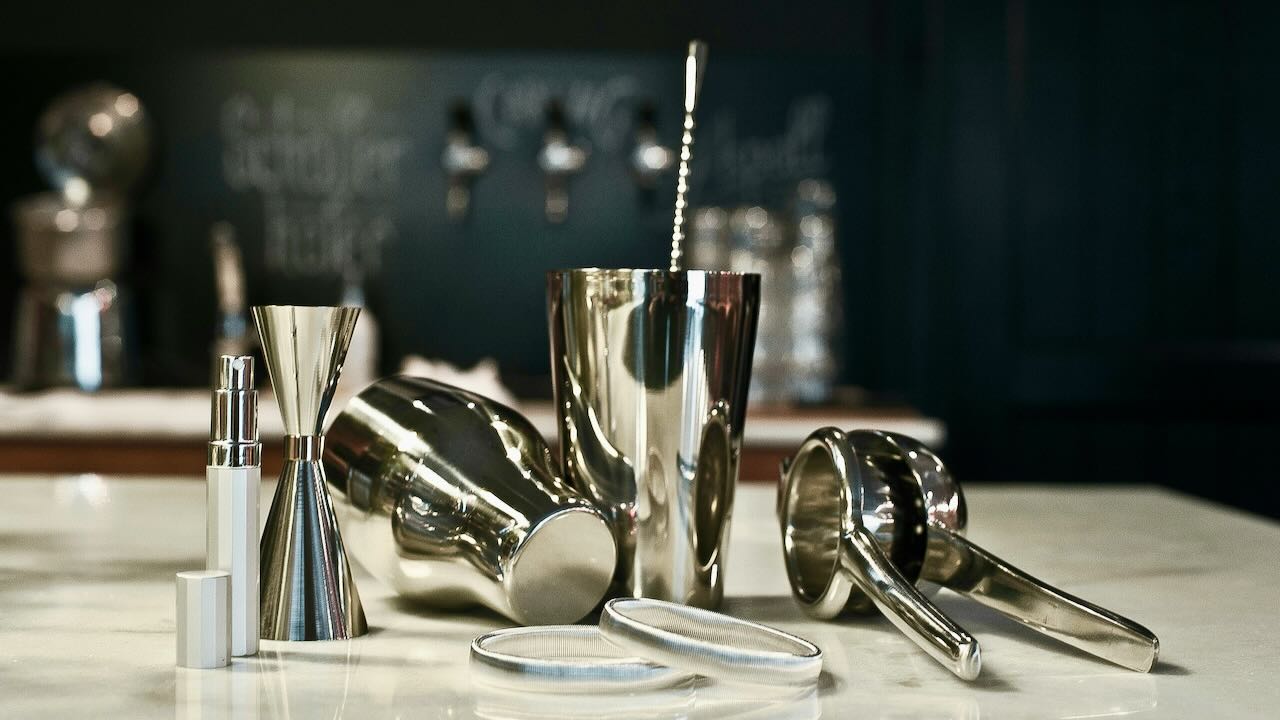
A cocktail shaker that leaks, a jigger you can’t read in dim light, and a strainer that lets seeds through — these are the tools that turn a confident host into someone apologizing mid-pour. The right bar tools don’t just make drinks faster. They make every cocktail consistent, which means your third round tastes as balanced as your first.
Many articles list dozens of items ranked by price, with no sense of which ones actually change the drink in your glass. Here we strip the list to what matters for a home host making four to eight drinks at a time, organized by the job each tool does: shaking, measuring, icing, garnishing, and serving. You’ll learn exactly which tools earn permanent counter space and which ones can wait until your hosting habit outgrows the starter set.
At a Glance
- A cocktail shaker and a Hawthorne strainer handle roughly 80% of the drinks a home host will make.
- A dual-sided jigger (1 oz / 2 oz) prevents over-pouring and keeps cocktails balanced across multiple rounds.
- Large-format ice cubes melt slower and keep spirits-forward drinks cold without diluting them too quickly.
- A sharp paring knife and a Y-peeler cover every garnish from citrus twists to cucumber ribbons.
- Glassware matters less than most guides suggest — three versatile shapes serve nearly every cocktail category.
- Upgrading makes sense only after you’ve hosted enough to notice which tool slows you down.
What Are Bar Tools?
Bar tools are the handheld instruments a host uses to measure, mix, shake, strain, and serve drinks — the physical connection between a recipe and a finished cocktail. For home hosts who entertain small groups regularly, the right set means you can build a round of four drinks in under three minutes without guessing at ratios or fishing ice chips from someone’s glass. Unlike professional barware designed for speed at commercial volume, the best home bar tools prioritize precision and quiet confidence behind a counter you share with your guests.
Shakers, Strainers, and Measuring Tools That Shape Every Drink
Every cocktail follows the same basic physics: ingredients get combined, chilled, and diluted to a target balance. The tools in this section control that process and getting them right means fewer variables between what the recipe promises and what your guest actually tastes.
If you’re building welcome drinks that set the tone for your evening, these are the tools you’ll reach for first.
- Boston shaker — Two-piece design (a metal tin and a mixing glass or second tin) that seals with a firm tap and opens with a confident side strike. Home hosts prefer it over the cobbler because the wider opening makes it easier to load ice and fruit without jamming, and bartenders at A Bar Aboverecommend it as the most versatile option for any skill level.
- Cobbler shaker — Three-piece shaker with a built-in strainer cap that eliminates the need for a separate strainer on simple drinks. It works best for citrus-forward cocktails where you want a quick, clean pour — though the small cap opening can clog with muddled herbs if you push beyond basic recipes.
- Hawthorne strainer — The spring-coiled strainer that fits snugly over a Boston shaker tin, catching ice and pulp while letting liquid flow evenly. New Deal Bottle Shop’s essentials guide lists it as the single strainer every home bar needs, and in our experience, it handles 90% of straining jobs without help.
- Fine mesh strainer — A small tea-strainer-sized tool you hold over the glass for double-straining shaken drinks, catching the tiny ice shards and citrus fibers that a Hawthorne misses. The difference shows up most in spirit-forward drinks served up, where even a sliver of ice changes the texture within 30 seconds.
- Dual-sided jigger — A stainless steel hourglass measure (typically 1 oz and 2 oz) that turns free-pouring guesswork into repeatable cocktails. Viski’s barware collection features stepped interiors with half-ounce markings, which lets you measure three volumes with one tool.
- Bar spoon — A long-handled, twisted-stem spoon used for stirring spirit-forward drinks like Manhattans and martinis without cracking the ice. The twist along the shaft channels liquid in a smooth rotation — you’re not stirring so much as guiding the drink around the ice in a steady circle.
- Mixing glass — A heavy, wide-mouthed glass vessel that holds ice and spirits while you stir, providing a stable base that won’t tip when loaded with eight ounces of liquid and a full cup of ice. Crew Supply Co. stocks weighted options designed specifically for home bartenders who want the feel of a professional setup without the commercial price tag.
When your guests watch you shake a drink with a steady rhythm and pour it clean through a strainer, that quiet competence sets the tone for the whole evening — even if the recipe came from your phone 30 seconds earlier.
|
Keep Every Cocktail Recipe Close |
Ice, Cutting, and Garnishing Tools Most Hosts Overlook
Shakers and jiggers get all the attention, but the tools that handle ice and garnishes quietly determine whether a drink looks and tastes intentional or thrown together. A cocktail served over cracked, cloudy ice with a ragged lime wedge sends a different signal than the same recipe poured over a clear, slow-melting cube with a clean citrus wheel — the same attention to detail behind food presentation techniques applies directly to what’s in the glass. These tools close that gap.
- Silicone large-cube molds — Two-inch square molds that produce ice cubes designed to melt slowly in an Old Fashioned or a whiskey pour. Dramson’s home bar essentials guide recommends keeping at least two trays in rotation so you always have a set ready — freezing takes roughly four hours for a fully clear result.
- Lewis bag and mallet — A canvas bag and wooden mallet combination for crushing ice by hand, giving you rough, uneven chips that chill juleps and tiki drinks faster than machine-crushed alternatives. The texture difference matters: hand-crushed ice creates air pockets that nestle against the glass walls, keeping the drink cold from every angle.
- Ice bucket with tongs — A double-walled stainless steel bucket that keeps ice from melting into a pool during a two-hour gathering. Death & Company Market’s bartender essentials collection includes tongs specifically designed for gripping large-format cubes without slipping — a small detail that prevents the clumsy splash guests always notice.
- Sharp paring knife — The one garnish tool that outperforms every dedicated gadget, handling citrus wheels, herb chiffonade, and fruit wedges with a single 3.5-inch blade. Susan’s Kitchen equipment essentials guide ranks it as the most versatile cutting tool for any home bar, and we’ve found it handles 95% of garnish prep without needing a second knife.
- Y-peeler — A wide, sharp vegetable peeler that creates long, even citrus twists with a single pass, giving you the aromatic oil strip that finishes a Martini or a Negroni. Pull the peeler toward you across the fruit’s surface at a consistent depth — too shallow and you lose oil; too deep and you pick up bitter pith.
- Channel knife — A narrow-bladed tool that cuts thin spiral twists from citrus, producing the decorative garnish you see draped over coupe glasses in cocktail bars. It takes practice to maintain even pressure, but three or four attempts usually produce a usable twist. Urban Bar USA stocks professional-grade options that stay sharp across hundreds of twists.
- Bottle opener and wine key — Two bottle openers often treated as an afterthought until a guest hands you a craft beer or a wine bottle and you’re digging through drawers. A waiter’s corkscrew with a built-in bottle opener covers both jobs in a tool small enough to keep in your bar station’s top drawer.
Building a garnish station before guests arrive — a row of citrus wheels on a cutting board, a small bowl of expressed twists, fresh herbs trimmed and damp in a dish towel — turns your bar into something that looks prepared rather than improvised.
The same principle applies to non-alcoholic drinks, where a well-placed garnish signals that the alcohol-free option received just as much thought.
Which Glasses Actually Matter for a Home Bar?
Glassware guides love to recommend a dozen shapes — coupes, Nick and Noras, hurricane glasses, tulips, snifters — as though a host needs a different vessel for every drink category. The reality for home hosting is simpler: three glass types cover nearly every cocktail, wine, and beer you’ll serve, and adding a fourth covers the rest.
The goal is matching the right glassware to the drink’s temperature and serving style, not building a collection that fills a cabinet. And when you’re pairing drinks with dinner party appetizers, the glass shape helps guests distinguish cocktails from water or sparkling drinks at a glance.
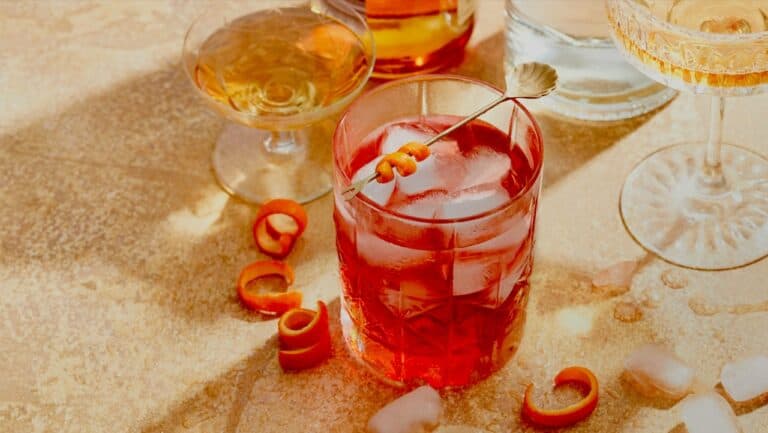
- Rocks glass (Old Fashioned glass) — A short, wide-mouthed glass that holds 8–12 ounces, built for spirit-forward drinks served over ice: Old Fashioneds, Negronis, whiskey pours, and short rum drinks. The wide opening concentrates aromas right at the nose while giving ice room to settle without crowding. Whiskey tumblers follow the same profile and work interchangeably.
- Coupe glass — A stemmed, shallow-bowled glass that replaced the classic V-shaped martini glass in most cocktail bars because it spills less and warms the drink more slowly. It handles every drink served “up” — Daiquiris, Manhattans, Gimlets, Sidecars — and doubles as a champagne glass in a pinch.
- Highball glass — A tall, straight-sided glass (10–14 ounces) for long drinks built with a spirit and a mixer: Gin and Tonic, Mojito, Dark and Stormy, Paloma. The tall shape stacks ice vertically, which keeps the drink cold through the full pour without flooding the top inch with diluted mixer.
- Wine glasses — A set of medium-bowled, all-purpose wine glasses handles both red and white without the fussiness of separate Bordeaux and Burgundy shapes. Sur La Table’s bar collectionstocks versatile stemware designed for exactly this kind of home hosting flexibility — one shape, a simple glass of wine served well.
- Martini glasses — Worth owning if your hosting style leans toward classic cocktails, but a coupe covers the same job with less risk of spilling. If you already have coupes, skip these until your drink menu specifically demands them.
- Champagne flutes — Tall, narrow glasses that preserve bubbles in sparkling wine and champagne cocktails like French 75s. They serve one purpose well but can’t substitute for anything else, so they’re worth adding once your core three shapes are covered.
- Shot glasses — Functional as both a serving vessel and a quick measuring tool (a standard shot glass holds 1.5 ounces — handy ounce measures when your jigger is in the sink). They’re inexpensive enough to keep a set of four in reserve even if you rarely serve shots.
Start with rocks, coupes, and highballs — four to six of each — and you’ll handle any cocktail menu you build for the next year of hosting. Browse Plan the Meal for more guides on matching your drink and food setup.
|
Hosting Tip: Upgrade the Tool That Slows You Down |
When to Upgrade Beyond Your Starter Set
The temptation after a few successful gatherings is to buy more tools — a Japanese-style jigger, a crystal mixing glass, a smoke gun. But the tools worth upgrading aren’t the flashiest ones. They’re the ones you’ve already used enough to notice a specific limitation.
A good test: think about the last three times you made drinks for guests. Did the ice melt too fast? That’s a case for better molds, not a new shaker. Did you struggle to get consistent ounce measures on half-ounce pours? A stepped jigger with etched interior lines solves that. Did garnishes look ragged?
A sharper paring knife or a microplane zester handles it. The upgrade should answer a problem you’ve actually experienced, not one a product listing invented for you.
Here are the best tools worth adding once your hosting habit is established:
- Japanese-style jigger — Taller and narrower than a traditional jigger, with interior lines at ¼ oz, ½ oz, ¾ oz, 1 oz, and 2 oz. Bar Products stocks a range of professional bar tools including jiggers that give you precise control over complex recipes with multiple small-measure ingredients.
- Weighted mixing glass — A heavier, wider glass with a pour spout, designed to sit steady on a counter while you stir a Manhattan for 30 full rotations. The weight difference between a starter glass and a professional one is subtle but noticeable during extended stirring.
- Muddler — A blunt-ended wooden or stainless steel tool for pressing herbs and fruit in the bottom of a shaker or glass. You don’t need one until you’re regularly making Mojitos, Old Fashioneds with muddled fruit, or Caipirinhas — and a bar spoon handle can pinch-hit until then.
- Pour spouts — Tapered metal spouts that fit into liquor bottles for controlled, consistent pours. Bar Supplies carries free-flow and measured options — free-flow for speed, measured for accuracy when you’re making multiple rounds and don’t want to jigger every pour.
- Citrus press — A hinged, lever-style juicer that extracts juice from half a lime or lemon in one squeeze, with no seeds and no mess. Worth the counter space the moment you’re regularly making more than four citrus cocktails per gathering.
In our years of hosting, we’ve found that the urge to upgrade hits around the fourth or fifth gathering — right when your confidence outpaces your current toolkit. Resist the bundle deals and buy one tool at a time. You’ll learn faster what each addition actually changes in your workflow, and your guests will taste the difference in the drink, not the price tag.
The same intentional approach works when plating food for a gathering — one upgrade at a time, guided by what you’ve actually noticed needs fixing. Explore more ideas in Tools & Techniques.
Frequently Asked Questions
What are the 5 essential bar tools?
A cocktail shaker, a Hawthorne strainer, a dual-sided jigger, a bar spoon, and a mixing glass cover the core functions every home host needs. These five tools let you shake, stir, strain, and measure accurately, which handles the vast majority of cocktail recipes without requiring specialized equipment for each drink category.
What bar tools do professional bartenders use?
Professional bartenders rely on the same core bartender tools (shakers, strainers, jiggers, and stainless steel bar spoons) but often in heavier, more durable versions designed for hundreds of drinks per shift. They also use speed pourers, muddlers, and specialized tools like absinthe spoons or swizzle sticks depending on their menu’s focus and the volume they serve nightly.
What is the difference between a Boston shaker and a cobbler shaker?
A Boston shaker is a two-piece set (tin on tin or tin on glass) that requires a separate strainer, while a cobbler shaker has three pieces including a built-in strainer cap. Boston shakers seal tighter, chill faster, and open more reliably with practice, making them the preferred choice for hosts who make drinks regularly.
Do I need a jigger for making cocktails?
A jigger keeps your drinks balanced and consistent across multiple rounds, which matters more than most hosts realize until their third or fourth cocktail comes out noticeably different from the first. Free-pouring works for simple highballs, but any drink recipe with three or more measured ingredients benefits from the precision a dual-sided jigger provides.
What type of ice is best for cocktails?
Large-format ice cubes (two-inch squares or spheres) work best for spirit-forward drinks served on the rocks because they melt slowly and dilute less. For shaken drinks, standard one-inch cubes from a regular tray provide the right surface area to chill and dilute during a 10 to 15 second shake without over-watering the cocktail.
How do you strain a cocktail without a strainer?
Hold the Boston shaker lid slightly ajar and pour through the narrow gap, letting the offset edge catch ice and large pulp pieces. For a cleaner result, a small fine-mesh kitchen sieve works as a substitute. Hold it over the glass and pour slowly, catching any ice shards or herb fragments the gap method would miss.
Continue Reading:
More On Home Bar Setup & Design
- Home Bar Essentials: Every Bottle and Tool You Need to Start
- How to Set Up a Home Bar for Hosting That Actually Works
- Outdoor Bar Ideas on a Budget: Build a Backyard Bar for Less
- Wet Bar vs Dry Bar: Which Setup Fits Your Home?
More from The Gourmet Host
- Fun Wine Tasting Games to Play at Your Next Party
- The Ultimate Dinner Party Planning Checklist (Time-Stamped)
- Brunch Setup Ideas: Creative Table Setting Decor for Home
- Feast for the Ears: The Perfect Soundtrack to Enhance Your Dinner Party
- How to Throw a Surprise Birthday Party That Actually Works
Explore TGH Categories
- Set the Scene
- Drinks and Bar
- Plan the Meal
- Engage with Guests
- Games and Toasts
- Tools and Techniques
- Why We Gather