Food Presentation Techniques: Easy Plating Tips for Cooks
 22 min read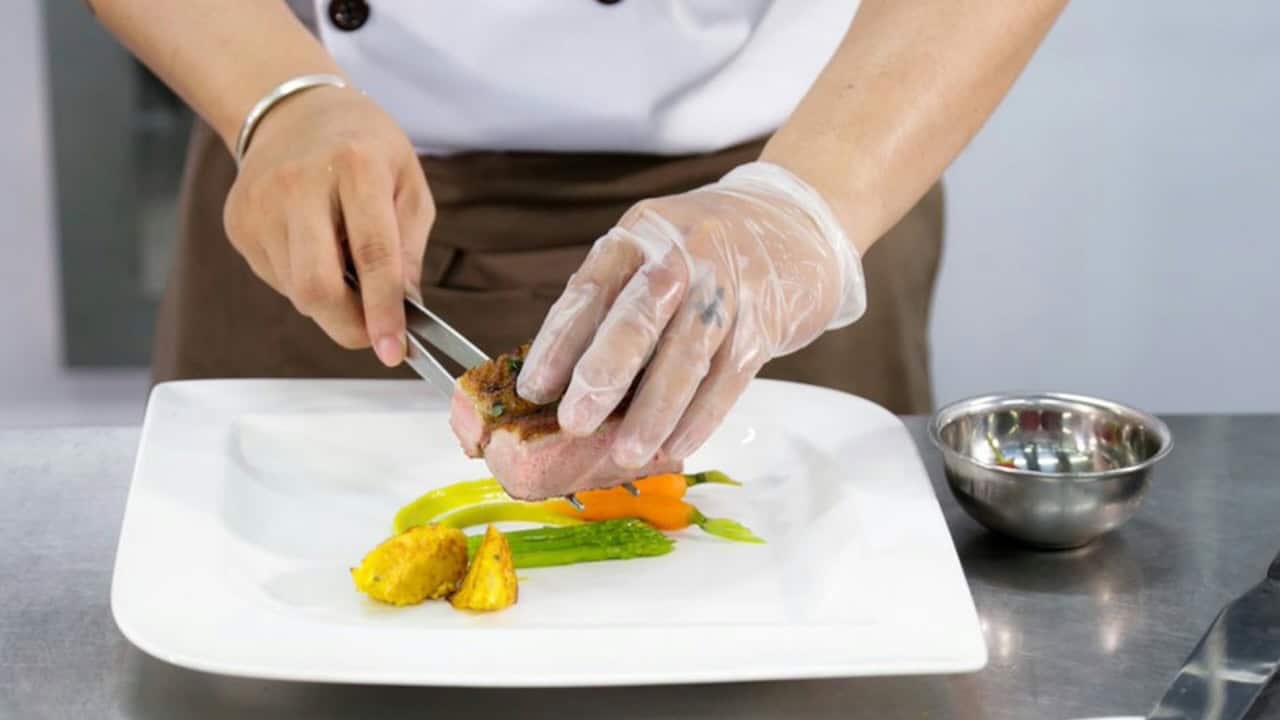
A restaurant kitchen has squeeze bottles lined up like paint tubes, ring molds in three sizes, and a chef who spent years learning to wield them. Your kitchen has a spatula with a wobbly handle and guests arriving in forty-five minutes.
That gap sounds wide—but it is mostly an illusion. The food presentation techniques that actually make a lasting impression at dinner parties rely on ideas, not equipment: how you use negative space, where you place a focal point, and which colors you put side by side.
This guide breaks down the plating process into everyday steps so your next finished plate looks intentional, inviting, and entirely yours—no culinary arts degree required.
We’ve distilled the various food plating techniques that matter most when real guests sit down at a real table.
At a Glance
- The rule of thirds creates a natural focal point without measuring anything.
- White plates and smaller plates give you the most forgiving canvas for plating at home.
- Color, height, and negative space do more for visual appeal than any special tool.
- Edible flowers and fresh herbs add an artistic touch in seconds—no pastry skills needed.
- A squeeze bottle is the one professional tool worth buying for sauce work and accent dots.
What Are Food Presentation Techniques?
Food presentation techniques are the methods a cook uses to arrange, garnish, and style food on a plate so it appeals to the eye before it reaches the taste buds. Unlike restaurant plating that prioritizes speed and consistency across dozens of covers, home-focused culinary presentation is about the right balance of beauty and warmth on a table where everyone knows your name.
Classic and Modern Plating Styles Every Home Host Should Know
Understanding different plating styles gives you a visual vocabulary to draw from each time you cook for guests. You do not need to master all of them—picking one or two that match your cooking style is the easiest way to build consistency.
Classic plating follows a familiar formula: protein at six o’clock, starch at ten, and vegetables at two, arranged on a dinner plate with clean sight lines.
It works because guests instinctively know where to look. According to WebstaurantStore’s food presentation guide, this layout remains the standard in fine dining restaurants precisely because the brain reads it as balanced.
- Classic plating: The main ingredient holds center stage with starch and vegetable in supporting positions. Best for roasts, grilled proteins, and any dish look that benefits from symmetry.
- Free-form plating: Components scatter organically across the plate, giving a natural, modern feel. Works well with grain bowls, composed salads, and dishes featuring bright colors.
- Landscape plating: Food is arranged in a horizontal sweep. This style of plating suits long rectangular plates and showcases different ingredients in a single visual sweep.
Free-form plating and modern plating techniques give you room to play. A scattering of roasted beets on a dark plate with a swipe of yogurt is free form plating at its most approachable.
Le Cordon Bleu Malaysia outlines eight popular food plating techniques aspiring chefs can practice, including stacking and fanning—all transferable to a home kitchen.
Once you recognize these various plating techniques, choosing one for tonight’s dinner becomes a creative decision rather than a guessing game.
The culinary world offers dozens of different techniques, but even the most popular food plating techniques come down to these core ideas—master them and you take every plate to the next level.
|
Keep the Menu Plan Together 📨 Get Weekly Hosting Inspiration — Join thousands of hosts. |
How the Rule of Thirds and Negative Space Transform a Plate
The rule of thirds is the single most useful composition principle you can borrow from photography. Imagine your plate divided into a three-by-three grid. Place your main component at one of the intersections—off center—and the eye travels naturally across the plate presentation.
As Culinary Arts Switzerland explains, the effect feels intentional even when it takes just seconds.
Negative space—the empty space you deliberately leave uncovered—does as much work as the food itself. A well-plated dish breathes. But when you crowd every component of the dish to the rim, nothing stands out. When you pull back and let a third of the plate rest clean, your main item commands attention.
As a general rule, a sense of balance between filled and open space is what separates a rushed plate from a composed one.
Home cooks who learn just the rule of thirds and negative space see an immediate jump in how polished their plates look. It is the great way to make a huge difference without buying a single new tool.
With composition covered, the next question is which plate to put it on—because the canvas matters almost as much as the paint.
Choosing the Right Plate for Every Dish
The right plate is not the most expensive one in the cabinet—it is the one that makes your food look its best. Plate size controls perception: smaller plates make portion sizes look generous, while large plates demand careful placement to avoid looking sparse.
White plates remain the go-to canvas for a reason. As Escoffier Online notes in their food presentation principles guide, a plain white plate creates high contrast against nearly any food color, letting your use of color do the talking. That said, dark plates create drama for lighter dishes—think pale risotto on matte black.
- Round plates: The classic. Circular plates work for nearly every cuisine and plating style. They are forgiving for beginners because the shape naturally draws the eye inward.
- Rectangular and square plates: Best for landscape plating or dishes with long visual lines. Sushi, composed appetizers, and dessert bars shine on flat rectangular surfaces.
- Bowls and deep plates: Ideal for dishes with sauces, grains, or layered components. The depth adds dimension and keeps food items contained while still looking composed.
Planning what to serve on which plate is easier when your full menu lives in one place. Inside The Gourmet Host app, you can organize each course alongside timing notes—so you know whether that risotto needs a wide bowl or a flat plate before the night begins.
The plate sets the stage, but color is what fills it with life.
|
Hosting Tip: Serve a Crispy Element at Exactly the Last Moment |
Using Color and Contrast to Boost Visual Appeal
Color is the fastest shortcut to a well-presented dish. The human eye reads contrasting colors as appetizing—think red tomato against green basil, golden seared crust beside a white puree.
According to Dufour Gourmet’s art of food presentation guide, the color palette on your plate can signal freshness, richness, or brightness before guests take a single bite.
You do not need a color wheel taped to the fridge. A few great food presentation habits handle it:
- Complementary colors: Opposites on the color wheel—orange salmon on a bed of deep green kale, purple cabbage slaw beside a golden fried cutlet. These combinations create visual pop.
- Bright accents: A sprinkle of spices like paprika over hummus, edible flowers tucked beside a dessert, or a drizzle of green herb oil across a soup. Bright colors draw the eye to a specific spot.
- Monochrome caution: Beige chicken, beige potatoes, beige bread. If your plate reads as one color, add a quick pop—a handful of microgreens, a ribbon of carrot, a scatter of pomegranate seeds.
A cook’s eye for color is as important as their palate. In our experience hosting, a single complementary color addition—even something as small as a lemon wedge—can take a dish look from home-cooked to host-worthy.
Color plays an important role in how food bloggers and home hosts alike build edible garnishes that photograph as well as they taste. Even smaller portions feel generous when they pop against a contrasting plate, and arranging components in different sizes—a large protein beside a small herb cluster—adds visual rhythm. Color gets the plate noticed. Height and texture keep the eye moving.
Building Height and Layering with Simple Plating Tools
Height turns a flat plate into a work of art. Stacking elements—even loosely—creates shadow and dimension that makes any food arrangement feel considered.
A mound of mashed potatoes with a leaning lamb chop, a salad built upward in a bowl rather than pressed flat—these small moves make a significant role in the overall impression.
The Lightspeed HQ plating guide notes that height naturally creates a sense of abundance without adding more food.
And as Toast’s plating techniques breakdown explains, the squeeze bottle is the one professional tool worth having in a home kitchen—it lets you draw clean sauce lines, dot accent patterns, and write in coulis with control that a spoon cannot match.
Beyond the squeeze bottle, Cuisine Noir’s food plating ideas for home cooks recommends keeping offset spatulas and fine-tip tweezers accessible—both cost under ten dollars and let you move small portions with precision.
Height and tools play significant roles in the plating process, but so does every preparation technique you choose before the plate is even warm. With structure built and tools in hand, the final question is how to know your plating instincts are ready for the dinner table.
|
Share Every Prep Task Clearly |
Plating with Purpose for Your Next Dinner Party
Every technique in this guide shares one premise: food preparation and presentation are not separate tasks. The moment you choose a color palette for your plate, decide on a style of plating, and pick the right plate, you are designing an experience—not just cooking a meal.
At dinner parties, your guests notice the effort in how food is presented. A memorable dining experience does not require a fine dining establishment or a culinary school certificate. It requires intention.
One new technique per meal—a better sauce swipe, a bolder contrast, an off-center focal point—compounds over time until you plate instinctively.
If your table setting needs the same attention, our guide on How to Set a Dinner Table Like a Pro (Without the Stress) pairs perfectly with these plating skills.
For the full hosting blueprint from invitations to cleanup, start with our step-by-step dinner party hosting guide, and for the unwritten rules that keep a gathering graceful, browse our dinner party hosting etiquette essentials.
As The Chopping Block’s guide to plating tips for home cooks puts it, the best place to practice is your own kitchen with friends on the way over.
And for the aspiring chef inside every host, Denby Pottery’s cooking tips and food presentation ideas offers a hands-on walkthrough of sauce-as-paint techniques that turn the plating process into a genuinely creative act.
Free-Form Plating for Home Cooks Who Want Room to Play
Once classic plating feels familiar, free form plating is the natural next move for a home cook who wants the plate to feel a little less measured and a lot more alive. Components scatter with intent rather than slot into fixed positions, which makes it forgiving for dishes that resist symmetry.
Think roasted carrots tumbling across labneh, charred broccolini fanning off a smear of romesco, or a grain bowl where every spoonful lands in a slightly different place. The arrangement reads as relaxed and confident, which is exactly the mood most home tables want.
- Start with a base layer: a swipe of puree, a pool of yogurt, or a bed of greens that anchors the rest.
- Place the focal item slightly off-center: protein, dumplings, or roasted vegetable cluster, leaning rather than centered.
- Scatter accents in odd numbers: three crispy shallots, five pomegranate seeds, seven tiny herb leaves. Odd numbers read as natural to the eye.
Where the quiet structure actually lives
According to Serious Eats, the most natural-looking restaurant plates rely on a quiet underlying structure: a sauce base, a focal protein, and accents radiating outward. Free-form plating uses the same logic without making it visible to the guest.
Free form plating works especially well for dishes built from many small ingredients, like a Moroccan-spiced lamb plate or a composed salad. Our easy food garnishing techniques guide pairs neatly here, because garnish placement is where free form plating either lands or falls apart. If you cook proteins frequently, our main course meat dishes for entertaining guide gives you three full menus you can practice free form plating against without inventing new recipes.
Once you trust the looser arrangement, the question becomes which tools help you execute it cleanly.
The Home Cook’s Plating Toolkit: Five Tools Worth the Drawer Space
The squeeze bottle gets most of the credit, but a few other inexpensive food presentation tools quietly raise the ceiling on what your plates can do. None of them require a culinary degree to use, and most cost less than a single dinner-party entrée.
Why small tools punch above their price
Bon Appétit has long argued that the right small tools quietly remove friction from cooking, and plating is where that friction shows up most visibly at the table. The five below earn their drawer space by speeding up the assembly moment when six guests are already seated and the food is losing heat.
- Squeeze bottles (two of them): one for sauces, one for thinner accents like herb oil. Keeping them dedicated saves rinsing between courses.
- Small offset spatula: the most useful four dollars you will spend. It lifts delicate items, smears purees in a single confident sweep, and lets you reposition food without crushing it.
- Fine-tip tweezers: place microgreens, single herb leaves, or edible flowers with the precision a fork can never match. Cooking tweezers cost under ten dollars and live in the same drawer as your spatulas.
- Set of three ring molds: optional but transformative for stacked composed dishes, layered desserts, and disciplined grain piles. Stainless steel rings nest together for storage.
- Clean kitchen towel beside the stove: the unsung hero of plating. Wiping the rim of every plate before it leaves the kitchen is the single fastest way to look like you cared.
Match the toolkit to the guest count
The right plating setup changes with the number of plates leaving your kitchen. A relaxed dinner for four gives you room for individual sauce work. Ten guests call for fewer finishing moves and a layout you can repeat without letting the first plates wait.
| Guest count | Plating approach | Make-ahead window | Useful equipment | Budget choice |
|---|---|---|---|---|
| 2 to 4 | Plate each dish individually with a sauce swipe and one placed garnish. | Set out plates and portion garnishes 20 minutes before serving. | Spoon, towel, and optional offset spatula. | Use tools already in the kitchen. |
| 5 to 6 | Repeat one simple composition across every plate. | Prepare sauce and garnish bowls up to 2 hours ahead. | Squeeze bottle, towel, and sheet pan for staging plates. | Buy one squeeze bottle if clean sauce work matters to the dish. |
| 7 to 8 | Work in pairs and limit the finish to one sauce shape and one garnish. | Portion the main component and sides before guests sit down. | Two spoons or bottles, towel, and tray. | Skip ring molds unless the menu already needs them. |
| 9 to 10 | Use wide bowls or a family-style platter when individual detail would slow service. | Build chilled components before the hot food is ready. | Shallow bowls, serving platters, spoons, and towel. | Choose presentation pieces you already own. |
For a six-person dinner, start with the second row. Two hours before serving, make the sauce, transfer it to a squeeze bottle, and portion the garnish into a small bowl. Set six plates near the pass with a clean towel beside them. When the main course is ready, draw the same short sauce line neatly on every plate. Add the main component, place the side against it for height, and carefully finish with one garnish. Wipe each rim, then carry the plates out in two trips of three.
This plan keeps the visual idea consistent while giving the hot food a short route to the table. If the menu has several loose components, switch to shallow bowls and let the bowl contain the composition for you.
None of these tools replace the fundamentals of color, height, and negative space. They just make execution faster and cleaner, which matters most when six guests are waiting and the kitchen is warm. For the broader kitchen setup behind a confident plating moment, our guide on kitchen cooking tools every host needs covers the prep-side equipment that gets food to the plate in good shape, and our companion piece on how to plate food like a pro walks through the assembly order step by step.
Tools in hand, the next leap is borrowing the small disciplines that working chefs repeat on every service.
Chef Plating Techniques You Can Borrow at Home
Restaurant kitchens repeat a handful of plating habits across every service, and most translate cleanly to a home kitchen with no special training. These are not tricks reserved for fine dining; they are disciplines that protect a plate from looking thrown together when the pressure rises.
Habits that happen before the food hits the plate
The most useful ones, drawn from how working chefs talk about their craft in NYT Cooking and the James Beard Foundation, share one trait: they happen before the food reaches the plate, not after.
- Warm the plate: a cool plate dulls a hot dish within a minute. Stack plates on top of the oven while the meal finishes, or run them under hot tap water and dry them.
- Plate the largest item first: the protein or main vegetable. Everything else arranges itself around the visual anchor, which is faster than building outward without a reference.
- Build sauce as a layer, not a topping: a swipe or pool under the protein looks intentional and keeps crispy textures crispy. Pouring sauce over a seared item is the fastest way to lose the crust you just built.
- Garnish at the pass, not at the stove: herbs and microgreens wilt the moment they hit heat. Add them last, on the cooler side of the plate, ideally in the room where the plate will be served.
- Step back and look: the single move chefs do that home cooks skip. A two-second visual check before the plate leaves the kitchen catches drips, sparse spots, and accidental symmetry that flatten the composition.
Why restraint reads as warmth at a home table
Borrowing these habits does not turn a home meal into a restaurant meal, which is the point. The warmth of a dinner table belongs to the host, not the kitchen behind it, and the plating disciplines simply make sure the food honors that warmth. If you are planning the broader meal around these plating habits, our guide on the dinner party menu walks through course pacing so plating never collides with timing.
Even when the habits are dialed in, certain ingredients still refuse to behave on a plate, and those deserve a closer look.
Plating Odd-Shaped Components Without Losing Composure
Most plating advice assumes a tidy round protein, a starch, and a vegetable. Real cooking rarely behaves that way. Whole roasted fish, long pasta shapes, bone-in lamb shanks, branchy roasted cauliflower, and slumping braises all defy the classic six-ten-two arrangement, and forcing them into it makes the plate look worse, not better.
Let the shape lead the composition
The trick is to let the shape lead the composition. Long items want diagonal placement across the plate. Round items want a slight tilt off-axis.
Tangled items like pasta or shredded braises want height and a single clean garnish on top rather than a scatter across the surface.
The James Beard Foundation has noted that the most expressive restaurant plates are often the ones built around an ingredient that refuses symmetry. Home cooks can apply the same instinct without overthinking it.
Shape-by-shape playbook
- Long shapes (whole fish, pasta nests, asparagus spears): place diagonally from upper-left to lower-right on a rectangular or large round plate. The diagonal creates motion and uses the full canvas.
- Bone-in cuts (lamb shanks, short ribs, frenched racks): lean the bone upward and stage the meat to one side, leaving negative space for sauce or grains to anchor the eye.
- Branchy roasted vegetables (cauliflower, broccolini, romanesco): mound rather than lay flat, and let one branch tilt up from the cluster to break the silhouette.
- Slumping braises and stews: serve in a wide shallow bowl with a single bold garnish (gremolata, chili oil dot, herb cluster) centered on top. Bowls reframe the slump as a composition rather than a mess.
- Tangled pastas and noodles: twirl into a single mound with tongs or a carving fork, then top with the sauce and one finishing element (cheese, herb, crispy garnish). Avoid spreading the strands across the plate.
Once you stop fighting the shape, the food usually reveals where it wants to sit. That reveal is half the pleasure of plating something unusual for a table full of guests. Our guide on how to season food so every dish tastes like you meant it pairs naturally here, because flavor and presentation arrive together at the table.
So where, exactly, does the main course belong once the shape stops dictating the answer?
Does the Main Course Really Belong at the Center of the Plate?
The short answer is no, not literally. The main course should take visual center stage, which is a different thing than sitting at the geometric center of the plate. A protein placed dead-center on a round plate often looks static and oddly small, surrounded by uniform negative space on every side.
Restaurant plating treats the main ingredient as the focal point, not the centroid. Place it at a rule-of-thirds intersection, lean it against a starch or sauce base, and let the supporting elements push the eye toward it. According to NYT Cooking, the most photographed plates almost never center the protein; the off-axis placement gives the food room to interact with sauce, garnish, and negative space.
- Center the visual weight, not the geometry: the protein should be the heaviest, brightest, or most textured element on the plate. Position becomes secondary once the eye knows where to land.
- Use supporting elements as visual arrows: a sauce swipe, a row of vegetables, or a line of garnish should all point toward the main ingredient, telling guests what to look at first.
- Scale the supporting elements down: if the starch and vegetable are the same size as the protein, the plate reads as a tie. Smaller portions of supporting elements let the main course breathe and dominate.
- Use the plate’s natural focal points: the lower-left and upper-right intersections of a rule-of-thirds grid are the strongest spots on a round plate. The main course belongs at one of them.
Center stage is a visual idea, not a coordinate
Reframing center stage as a visual idea rather than a geographic one lets home cooks plate confidently across any dish shape or course. Our companion guide on how to plate food like a pro covers the assembly order from base layer to final garnish.
Three habits keep the focal-point mindset working at the stove.
- Pick the focal point first: name the hero ingredient so every other choice serves it.
- Build outward: place the focal item, then let sauces and sides radiate from it.
- Wipe and check: a clean rim and a two-second look keep the composition intact.
With the focal point settled, every other plating decision in this guide gets easier at the stove.
Frequently Asked Questions
What are the 5 basic elements of plating?
The five basic elements are color, texture, shape or form, arrangement (including the rule of thirds and negative space), and garnish. Together, they guide the eye across the plate and create visual appeal before the first bite. A well-plated dish balances all five rather than leaning on just one.
What are the basic food presentation techniques?
Basic food presentation techniques include classic plating, free-form plating, and landscape arrangement. Each uses focal point placement, negative space, and contrasting colors to make food look intentional. Home hosts can start with the rule of thirds and a clean white plate for the most immediate improvement.
How do you make food look appealing on a plate?
Start with a plate that contrasts your food’s color, then build height by leaning or stacking components. Leave at least a third of the plate as negative space, use odd numbers for garnishes, and add a single bright accent like edible flowers or a drizzle of herb oil. These small moves create visual impact without extra cooking.
How many plating styles are there for home cooks?
Home cooks typically choose from three to five core plating styles: classic, free-form, landscape, stacking, and sauce-focused. Each style applies the same fundamentals, focal point placement, negative space, and contrasting colors, in a different arrangement. Start with classic plating for confidence, then move to free-form as your instincts sharpen.
Do you need special tools to plate food at home?
No. A spoon, a clean towel for wiping rims, and a steady hand cover the basics. The one worth buying is a squeeze bottle for sauces and accent dots, since it gives control a spoon cannot match for a few dollars. Ring molds and offset spatulas help structured plating but stay optional for home hosts.
What is the easiest plating technique for beginners?
The rule of thirds is the fastest technique to learn. Place your main ingredient at one of the off-center grid intersections, leave a third of the plate as negative space, and add a single garnish of contrasting color. This three-step approach works on any plate shape and requires no special equipment: just a shift in where you position the food.
Continue Reading:
More On Food Presentation Techniques
- Brunch Setup Ideas: Creative Table Setting Decor for Home
- Easy Food Garnishing Techniques for Stunning Art
- Family-Style Dinner Wedding Guide: Best Meal Ideas
- Grazing Table Ideas: How to Create a Stunning Setup
- How to Plate Food Like A Pro: Easy Plating Tips
More from The Gourmet Host
- Complete Dinner: Plan a Full Meal Start to Finish
- Gala Theme Ideas for At-Home Charity-Style Parties
- Wet Bar vs Dry Bar: Which Setup Fits Your Home?
- 50 Clean Funny Would You Rather Questions for Adults
- Funny Conversation Starters That Break the Ice Fast
Explore TGH Categories
- Set the Scene
- Drinks and Bar
- Plan the Meal
- Engage with Guests
- Games and Toasts
- Tools and Techniques
- Why We Gather