6 Toast Glasses for Wedding Toasts and Receptions
 11 min read
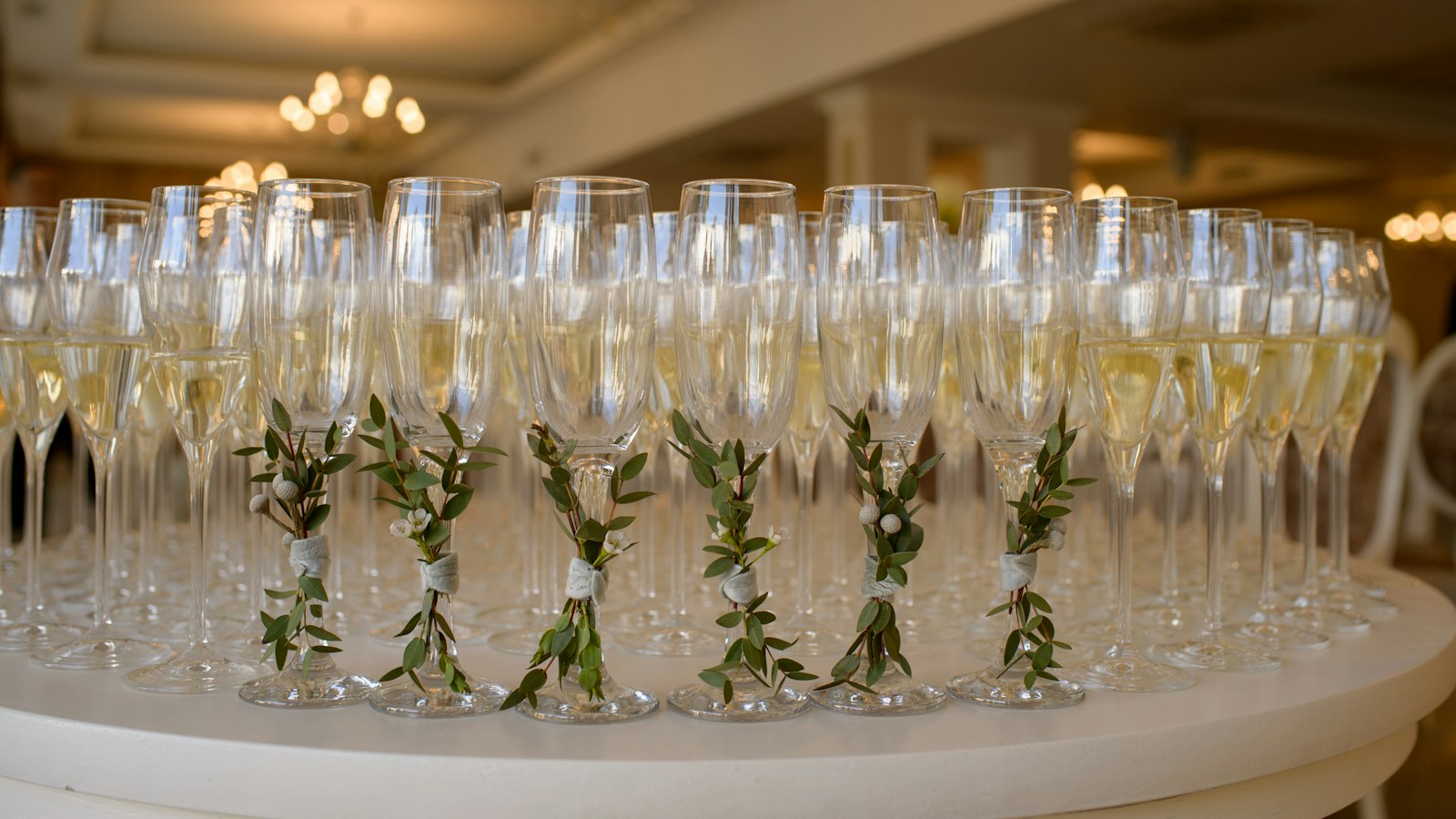
Versatility and durability matter more than rigid tradition when outfitting a beverage station for hundred-guest celebrations.
Picture the toast as a service decision: the drink, the glass, and when it will be poured. Choose glassware your venue can supply, clean and carry comfortably, then agree on the pour with the catering team.
A delicate stem can suit a seated dinner, while a stemless design may be convenient for mingling. Neither shape nor the word crystal establishes durability on its own. Check the actual product and rental terms before choosing.
Compare six glass shapes below, then use the service checklist to decide what to rent and how much to pour.
At a Glance
- Tulip shapes concentrate carbonation and aromas better than standard wide bowls.
- A 750-milliliter bottle contains six 125-milliliter portions before allowing for service loss.
- Agree on spare glasses with the venue or rental company based on service and washing arrangements.
- A champagne tower needs matching coupes and a stable surface, with the setup agreed by the venue.
- Non-alcoholic cider utilizes the exact same stemware as alcoholic options for a cohesive table.
What Defines the Right Beverage Vessel?
Organizing the bar service for a reception requires outfitting the room with vessels that look beautiful in photographs while surviving a long night of mingling and dancing. You need stemware that balances the visual weight of a formal table setting with the practical demands of bulk pouring, tray passing, and inevitable guest clumsiness. The breakdown that follows compares six distinct glass profiles and dismantles expensive rental mandates. Reviewing these facts guarantees you select the perfect toast glasses wedding planners actually trust.
The Myth That You Must Buy Matching Crystal Flutes
Glass and crystal both come in many designs and thicknesses. Choose by the actual product rather than treating the material name as a durability rating.
Wine Folly’s glass-shape comparison explains the tasting trade-offs between flutes, tulips, coupes and wine glasses. For a reception, also check whether the glasses fit your trays, storage and washing arrangements.
- Inspect a sample: Check the rim, foot and stem of the model you plan to rent.
- Read the contract: Ask how breakage, missing glasses and washing are charged.
- Match the service: Choose a glass your team can carry and refill comfortably.
Compare the shape next, then confirm the specifications of the actual model.
Comparing Popular Glass Shapes Side by Side
Selecting the correct silhouette determines how long the beverage stays lively. Different shapes manipulate carbonation, direct aromas, and resist tipping at completely different rates.
Before reviewing toast for wedding examples, prioritize your venue’s atmosphere and the specific drink being poured. Sommeliers recommend using a tulip-shaped glass rather than a strictly narrow cylinder to enhance the full aromatic profile of champagne during wedding tastings. The slightly wider middle gives the wine room to breathe, while the tapered rim captures the scent.
Conversely, the strict vertical walls of a traditional flute limit the surface area exposed to air, which preserves effervescence and concentrates aromas directly beneath the nose.
These are shape and service comparisons, not product strength ratings. Capacity, glass thickness and dishwasher suitability vary by model; obtain those specifications from the supplier. Comité Champagne recommends a tall glass with a wider bowl and tapered opening for tasting.
| Glass Style | Core Shape | Service Consideration | Best Used For | Decision Rule |
|---|---|---|---|---|
| Classic Flute | Narrow vertical bowl | Limited room to explore aromas | A familiar sparkling-wine toast | Choose it when the traditional silhouette suits the event. |
| Tulip Glass | Wider middle, tapered rim | Room for aromas with a narrowed opening | Champagne tasting and seated toasts | Choose it when aroma is a priority. |
| Standard Coupe | Shallow, broad bowl | A wide opening lets bubbles and aromas escape readily | Vintage styling and suitable cocktails | Choose it for the presentation, accepting the tasting trade-off. |
| Stemless Flute | Narrow bowl without a stem | Easy to set down; the bowl is held in the hand | Informal mingling | Check its stability on the actual tables and trays. |
| White Wine Glass | Rounded bowl on a stem | Can serve more than one wine during dinner | A menu using existing wine glasses | Check bowl shape and the planned serving size. |
| Trumpet Flute | Flared opening above a narrow base | The opening and capacity vary by model | A particular decorative table setting | Try a sample pour before placing the rental order. |
- Assess the venue: Check the stability of the glass on the tables and trays you will actually use.
- Evaluate the pour: Vintage champagne rewards a wider bowl, while standard sparkling wine shines in a narrow cylinder.
- Factor in the timeline: Extended speeches demand a glass shape that retains carbonation actively for a long period.
Beyond the individual tasting notes, the silhouette you choose decides whether a stacked display is physically possible.
|
Map the Perfect Beverage Sequence |
What a Stable Champagne Tower Requires
A champagne tower is a separate installation, rather than a reason to choose one style for every guest. Discuss it with the venue or caterer before adding it to the service plan.
The Structure Behind the Stack
VinePair’s illustrated tower method uses identical coupes on a sturdy surface. Each upper glass is centered over the space made by the touching glasses beneath it. The method does not specify a locking interior base or zero-millimeter stem tolerance.
- Use matching coupes approved for the planned display by the venue or supplier.
- Set the display on a level, sturdy surface with a way to catch spills.
- Agree who will assemble, pour and clear the tower, and keep guests away during setup.
For a small home gathering, individual pours avoid the setup and clearance needed for a tower.
Real Reasons Narrow Flutes Are Actually Hard to Wash
A narrow bowl can be awkward to reach, but cleaning requirements belong to the specific glass. Do not assume all crystal needs the same treatment or that every dishwasher is unsuitable.
RIEDEL’s care instructions distinguish dishwasher-safe models from glasses requiring hand washing. They also call for a thorough rinse and careful handling while polishing. Follow the rental company’s instructions for its stock.
- Check the label: Use the maker’s method for that glass model.
- Rinse thoroughly: Remove detergent residue before serving.
- Handle gently: Avoid twisting the bowl against the stem while drying.
Check the glasses before service so the team can replace a dirty or damaged one.
|
Hosting Tip: Check Glasses Before Filling |
Skipping Separate Glasses for Non-Alcoholic Beverages
Pouring mocktails into the exact same stemware as the alcoholic option keeps the table looking cohesive and prevents non-drinking guests from feeling singled out. A unified glassware aesthetic requires far less rental sorting.
A common planning mistake is renting distinct tumblers or goblets for guests skipping the sparkling wine.
This strategy clutters the trays during service and immediately broadcasts who is not partaking. Serving citrus-flavored sparkling water in champagne flutes provides non-drinking guests an inclusive alternative during the reception wedding toast. The carbonation behaves beautifully in the tall glass, catching the light and mimicking the festive texture of a traditional pour.
Sparkling water, pink lemonade or apple cider can offer a non-alcoholic choice. Label the drinks clearly and let guests choose, using your digital invitation replies to help plan quantities.
- Serve pink lemonade or sparkling apple cider to mimic the visual weight of the standard wine options.
- Drop a single raspberry or lemon twist into every single pour to completely unify the table presentation.
- Set the non-alcoholic options on the exact same passing tray so guests can select one without having to ask.
Unifying the presentation for every guest naturally leads to the arithmetic of ordering the correct total inventory.
Purchasing the Right Quantities to Cover Breakage
Start with a clean glass for each person taking part in the toast, then agree on spares with the caterer or rental company. The amount depends on whether glasses will be reused, washed or replaced between drinks.
Consider the toast within the wider wedding speech order. Glasses already being used at the bar may not all be available for a synchronized pour.
- Confirm the baseline: Count everyone included in the toast, including guests choosing non-alcoholic drinks.
- Ask about turnaround: Establish whether washing and reissuing glasses is practical during the event.
- Agree the spare stock: Record the quantity and any breakage or missing-item charges with the supplier.
Once the glass count and the service plan agree, choose the serving size.
|
Track Rental Expenses Together |
What Is the Standard Pour Volume for a Ceremonial Toast?
Choose the pour with your caterer rather than filling every glass to a fixed fraction. Glass capacity varies, and a small ceremonial serving may be sufficient when dinner wine is also being served.
Calculate From the Planned Measure
For a worked example, a 750-milliliter bottle divided into 125-milliliter portions gives six servings before service loss. If your agreed measure is different, divide the bottle volume by that measure and allow for the way the drinks will be poured.
Use wedding quotations for toasts, cards and vows to finish the words while the catering team confirms the drink service.
- Mark the agreed fill line on a sample glass for the serving team.
- Leave room for foaming and for guests to lift the glass comfortably.
- Round the purchasing estimate up to whole bottles, allowing for the agreed service plan.
Chill the bottles before the toast so pouring does not interrupt the speeches.
Chilling the Bottles Before They Meet the Glass
Comité Champagne recommends serving Champagne at 8 to 10 degrees Celsius. Chill before the planned toast and check the bottle temperature rather than relying on a fixed two-hour rule for every starting temperature.
Follow the venue’s service plan, including where bottles will be kept and who will pour. A shared-platter wedding menu may need a different pause for speeches from a plated meal.
- Chill ahead: Use the venue’s refrigerator or ice-and-water setup before service.
- Check readiness: Confirm the bottles are at the intended temperature before the glasses are filled.
- Pour at the agreed time: Coordinate with the speaker so drinks are ready when guests raise them.
A clear handoff between the serving team and the speaker helps the toast fit the meal.
Frequently Asked Questions
What temperature should champagne be when served in a flute?
Comité Champagne recommends serving Champagne at 8 to 10 degrees Celsius. The glass shape does not change that recommendation. Chill the bottles ahead of service and check their temperature; the time needed depends on their starting temperature and the cooling method, rather than a universal two-hour rule.
Can you serve sparkling cider in the same style of glassware?
Sparkling cider serves beautifully in the exact same tulip or flute used for champagne. Pouring non-alcoholic options into identical stemware keeps your table design cohesive and ensures every guest feels included during the celebration. The tall shape also preserves the cider’s carbonation just as effectively.
How many spare glasses should a host order for a large party?
Agree the spare-glass quantity with your venue or rental company after confirming the service plan. Account for glasses already in use, washing turnaround and how replacements will reach the room. Record any breakage charges, and avoid treating one fixed percentage as the right allowance for every celebration.
Why do sommeliers recommend tulip shapes over narrow bowls?
Sommeliers recommend tulip shapes because the wider middle bowl gives the wine space to breathe and develop its full aromatic profile. The slightly tapered rim then captures those complex scents right beneath the nose, offering a richer tasting experience than a strictly straight and narrow cylinder.
Is hand-washing required for crystal event stemware?
Follow the maker’s care instructions for the actual stemware. Some crystal glasses are dishwasher safe, while others require hand washing. Use the recommended cleaning method, rinse thoroughly and handle the bowl and stem carefully while drying. The rental company can confirm how it expects its glasses to be returned.
Do wide coupe glasses lose their carbonation faster than flutes?
Wide coupe glasses lose their carbonation significantly faster than narrow flutes because the broad surface area exposes more liquid to the air. That massive exposure dissipates the bubbles quickly. You should reserve coupes for mixed drinks or sweeter sparkling wines that do not rely on aggressive fizz.
Continue Reading:
More On Wedding quotes:
- 35 Wedding Quotes for a Wedding Toast Card or Vow
- 30 Funny Birthday Wishes for Best Friend Milestones
- 25 Short Funny Anniversary Wishes for Couple Toasts
- 40 Short Funny Birthday Wishes for Best Friend Texts
- Father of the Groom Speech at Rehearsal Dinner Guide
More from The Gourmet Host:
- Order of Wedding Toasts: Traditional Speech Guide
- 7 Digital Invitations for Wedding Events Made Easy
- Who Makes Toasts at a Wedding: The Reception Guide
- 35 Wedding Quotes for a Wedding Toast Card or Vow
- Family-Style Wedding Menus with Shared Platters
Explore TGH Categories:
- Set the Scene
- Drinks and Bar
- Plan the Meal
- Engage with Guests
- Games and Toasts
- Tools and Techniques
- Why We Gather