Tablescape Ideas for the Thanksgiving Dinner Host
 15 min read
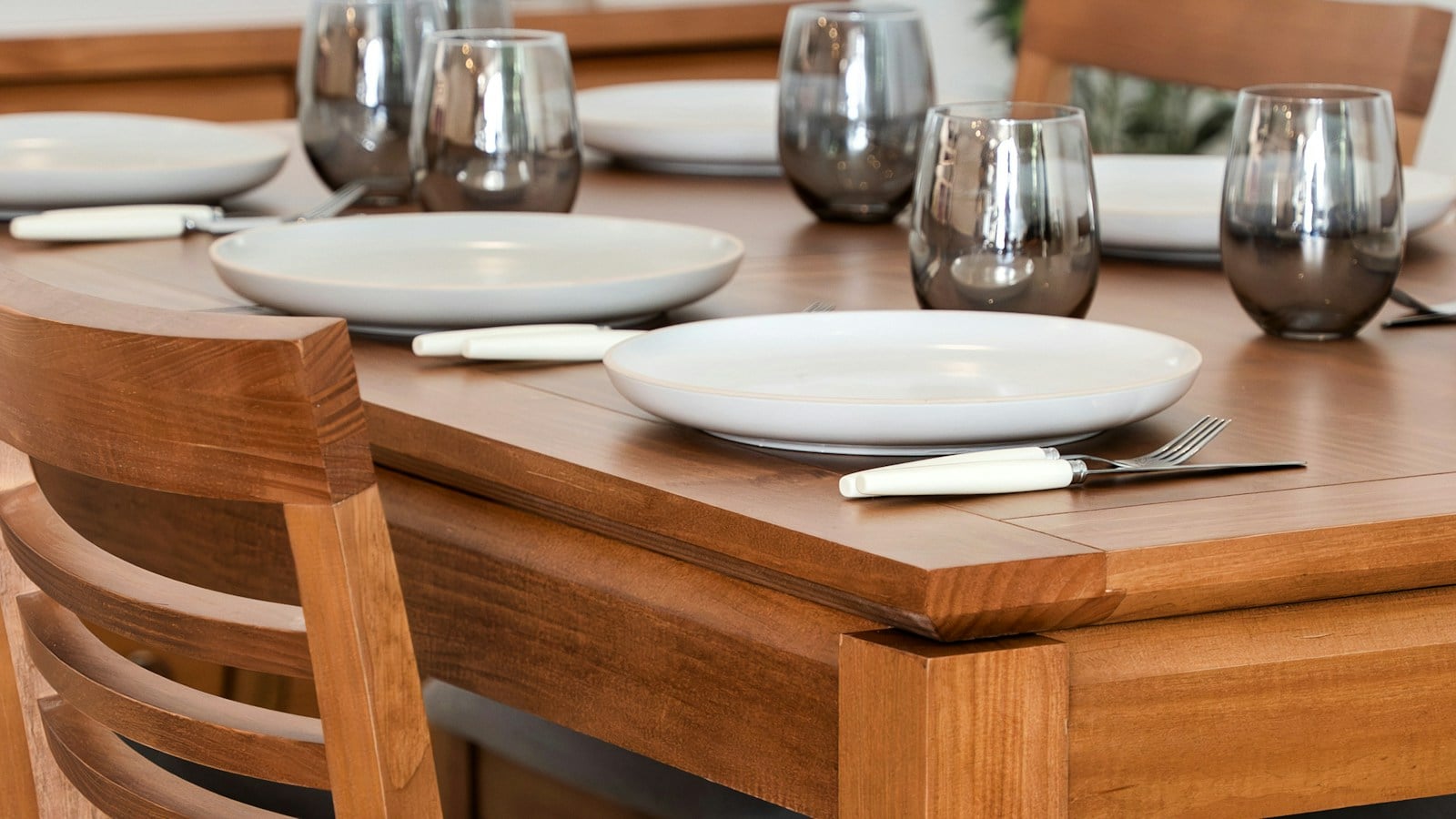
Functional holiday table design relies on low-profile textures and clear sightlines rather than rigid etiquette rules or towering floral arrangements.
You spend three hours polishing silver you never use, wrestling a massive floral arrangement that blocks every sightline across the dining room. Guests arrive, sit down, and spend the entire first course leaning awkwardly around a forty-dollar mound of eucalyptus just to hear each other speak. The food gets cold while everyone navigates the obstacle course you built between the salt shaker and their wine glasses.
A successful tablescape for Thanksgiving is not an exercise in towering floral design or rigid placement rules. It is a functional grid that balances breathing room for serving platters with low-profile textures that keep the focus on the people eating.
The best table setting handles spills effortlessly, costs less than the wine being poured, and leaves enough physical space for guests to actually pass the potatoes.
At a Glance
- A standard 20-pound roasted turkey requires a central footprint of at least 18 by 13 inches on the dining surface.
- Thanksgiving family-style service demands a minimum clearance of 6 inches between the floral arrangements and the carved meat platters.
- Taper candle bases sit exactly 14 inches apart to safely accommodate passing large bowls of side dishes.
- A 14-inch wide table runner leaves enough exposed table space for standard 10-inch dinner plates along the perimeter.
- Two separate gravy boats placed 36 inches apart prevent guest traffic jams at opposite ends of a rectangular setup.
What Is a Functional Tablescape Definition?
Your dining room layout has to handle hot serving dishes, endless wine bottle rotations, and the elbows of eight hungry relatives all at once. A functional tablescape definition centers on how decorative elements interact with the actual mechanics of a shared meal, prioritizing space and sightlines over strict symmetry. What follows is a cost-evaluated bank of ten distinct seasonal setups designed to withstand the chaos of a long dinner service while looking intentional from the first pour to the final slice of pie.
A rigid approach demands perfection while a functional design handles reality. A practical Thanksgiving setup anticipates spills and provides room for the turkey platter, shifting your priority from strict symmetry to actual guest comfort.
| Layout Strategy | Plate Spacing | Centerpiece Style | Platter Clearance |
|---|---|---|---|
| Formal Design | Fixed at 24 inches | Towering florals | Minimal room |
| Functional Table | Adjusted for guests | Low-profile items | 14-inch channel |
| Hybrid Approach | Scaled to the table | Segmented anchors | Staggered zones |
Visual Focus: Build Decorations Around the Seasonal Palette
The correct approach to Thanksgiving styling relies on coordinating your table with the deep hues of November. You build the decor by pulling rich amber, muted sage, and deep burgundy from your menu directly into your centerpiece and linens to create a unified visual experience.
Traditional advice often suggests a holiday table requires matching crystal and uniform floral arrangements. That rigid framework ignores the opportunity to reflect the late autumn harvest. A Thanksgiving palette thrives on the natural tones found in roasted squash, toasted pecans, and tart cranberry sauce.
When you align your table elements with these specific harvest colors, the dining room feels cohesive. A collection of brass candlesticks mixed with rust-colored napkins catches the light beautifully. By matching these tactile details to the deep browns and golds of the meal, your guests enjoy a warm sensory environment throughout the evening.
You can read more about balancing these visual elements in How to Set a Table for Any Dinner Party Occasion.
Mix Heights to Guide the Eye
Start by arranging your tallest decorative pieces on the bare table hours before guests arrive. This establishes the visual anchors for your chosen palette.
Consider a standard rectangular table set for eight people. You first place three slender taper candles in deep ochre at varying intervals to draw the eye upward without blocking conversation across the table. Next you scatter smaller votives or low floral buds in contrasting sage green between the main pieces.
This physical rehearsal takes ten minutes. It immediately reveals where the lighting feels sparse, helping you adjust the color balance long before the dinner hour begins.
- Place small clusters of dark red pomegranates or figs directly on the runner to introduce natural color variations.
- Weave loose sprigs of eucalyptus or olive branches between your candlesticks to soften the hard edges while adding muted green tones.
- Group votive candles in odd numbers to create small pools of warm light that highlight the rich amber and gold accents in your dining space.
Textiles serve as the next logical layer once these colorful focal points stand in place.
|
Coordinate Your Menu Planning Early |
Foundation Elements: Anchor Table Layouts With Layered Linens
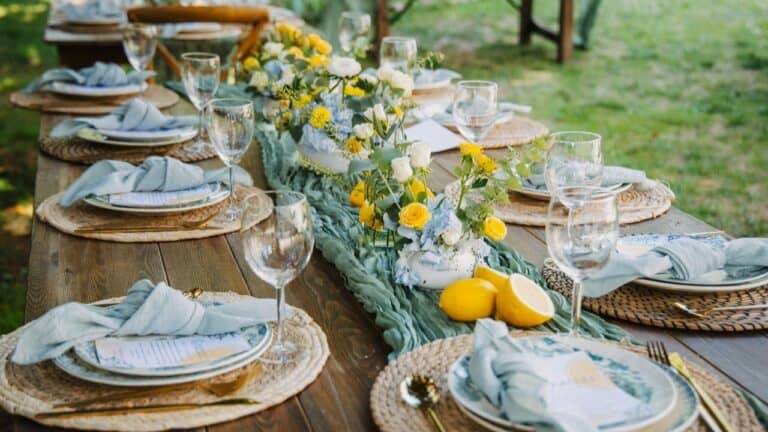
Textiles dictate the room’s energy before a single plate arrives. Lightweight fabrics build a soft, resilient base for a decorative tablescape without demanding a massive floral budget.
According to Sense of Spencer, styling an artistic tablescape relies on mixing layered linens rather than using a single uniform set.
This approach hides table seams and creates a textured canvas for everything that follows.
Applying this double-runner method works best on a standard 72-inch dining table. You cut two strips of heavy cotton fabric measuring 90 inches long. Draping them across the width leaves a nine-inch drop on either side.
These intersecting fabrics create natural boundaries for four place settings. The bare wood remaining in the corners becomes the designated zone for water pitchers.
Detailed textile foundation techniques also feature prominently in Spring Decor Table Ideas That Feel Fresh and Easy. Heavy cotton blends handle the moisture from iced tea pitchers better than bare wood ever could.
- Lay two wide: natural-fiber linen runners horizontally across a rectangular table instead of one lengthwise for about $25. This creates defined quadrants for a meal, saving money on a full tablecloth while establishing clear anchor points.
- Place a raw jute runner down the center spine and top it with a narrow gingham fabric for $35. This high-contrast textile pairing provides a heavy base that absorbs condensation from chilled wine bottles during afternoon gatherings.
Raw materials provide a heavier counterpoint to these soft fabrics when layering in wooden accents.
Rustic Textures: Build Warmth Using Wood and Burlap for Fall Gatherings
Raw materials shift the mood toward comfort as temperatures drop. A rustic elegant setup thrives on unpolished surfaces and earth tones that feel sturdy under heavy stoneware.
Review Fall Table Centerpiece Ideas for Cozy Gatherings for specific rustic fall centerpiece materials.
Sourcing these rough textures locally keeps your seasonal budget completely under control. A standard hardware store sells untreated burlap rolls for less than ten dollars. You cut a six-foot strip and intentionally fray the edges by pulling the outer strings loose.
This frayed runner lays perfectly flat beneath your hot dishes. It provides a highly absorbent surface for any accidental gravy spills.
- Birch wood trivets: Run a frayed-edge burlap strip down the table center and stagger three thick slices of raw birch wood across it for an $18 arrangement. Each round acts as a natural, heat-safe trivet for side dishes.
- Amber apothecary bottles: Fill five varied sizes of thrifted amber apothecary bottles with dried wheat stalks for a $22 setup. Cluster them tightly in the center of a bare wood table to cast warm, golden shadows.
That same rugged approach extends beautifully into the ceramics you choose to serve on.
Artistic Pairings: Embrace Non-Matching Dishware for Visual Interest
Uniform china sets look severe and cost a fortune to replace when one piece breaks. Blending different plates builds character and removes the anxiety of matching everything perfectly.
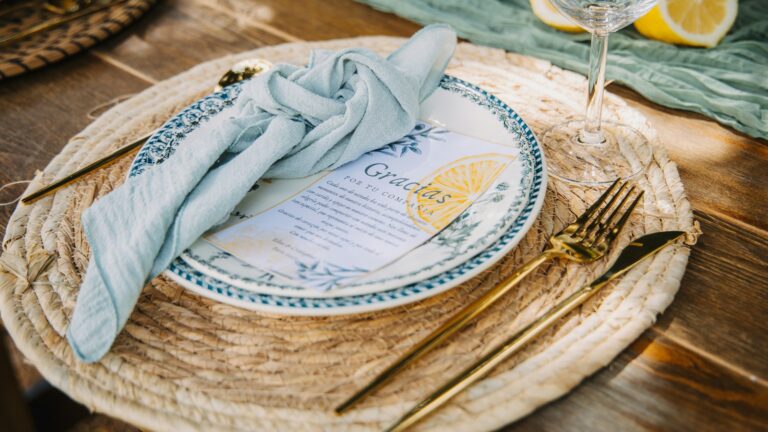
Designers consistently mix non-matching dishware collections across their tablescape ideas to create visual depth without buying a rigid twelve-piece set.
You just pick one unifying element, like a shared color family or a consistent plate size, to tie the eclectic pieces together.
Building an eclectic collection requires a strategic approach at the local thrift store. You search exclusively for dinner plates measuring ten inches across to maintain a consistent stacking profile. Ignoring the patterns allows you to focus purely on the structural weight of the ceramics.
A heavy ironstone plate paired with delicate transferware creates an immediate tactile surprise. The varied rim heights add visual intrigue to the setting before the food even arrives.
Finding heavy stoneware at vintage shops keeps your budget under fifty dollars while delivering a totally unique spread. The variation in glaze and weight gives guests an immediate conversation starter.
- Collect mismatched ten-inch dinner plates that share only a cobalt blue and white color palette, like a $45 thrifted transferware mix. Setting varied antique patterns against stark white linen napkins creates a curated visual that feels intentionally relaxed.
- Alternate place settings between matte charcoal stoneware and high-gloss white ceramic plates for a $60 modern pairing. This tactile contrast updates the dining experience, especially alongside simple stemless glassware and dark cloth napkins folded sharply underneath the bowls.
Fresh food elements can mirror this collected aesthetic with intense bursts of color.
Autumn Centerpieces: Styling Gourds and Pomegranates
Autumn harvest produce provides dense, architectural texture for a dining table without the fragility of floral arrangements. Grouping firm gourds and split pomegranates creates a striking, low-profile visual anchor that withstands room-temperature heat and keeps sightlines clear during a lively dinner.
To build a seasonal setup, arrange small winged gourds inside a wooden bowl set atop a bare table. A dinner party format might feature a dark ceramic basin filled with halved pomegranates as a central focal point paired with matching cloth napkins. These robust items transition easily back to the kitchen the next morning.
An autumn layout requires tight clustering to appear deliberate rather than accidental. Pile a dozen miniature white gourds into a wide tray to form a dense mound of neutral tones. Tucking a few dried leaves around the base softens the hard edges against the wood.
This arrangement functions as a heavy visual anchor sitting well below eye level. It costs around fifteen dollars and avoids the wilting issues of delicate seasonal greenery.
For more on seasonal centerpiece creation, consult Table Setting Ideas: 7 Creative Looks for Any Dinner.
- Scatter loose gourds: Arrange miniature green and white gourds down the center of a bare wooden table, weaving them between low water glasses. This low-profile run keeps sightlines completely unobstructed.
- Feature split pomegranates: Fill two wide, shallow wooden bowls with whole and halved pomegranates. The deep crimson seeds provide dense texture that transitions smoothly to a dark autumn setting.
- Mix in artichokes: Nestle firm green artichokes alongside the fruit for a sharp color contrast. The heavy leaves add a sturdy architectural element that lasts for hours.
Darker seasonal tones naturally demand a shift toward moodier lighting as the evening progresses.
|
Hosting Tip: Vary Plate Textures, Keep Utensils Uniform |
Winter Elegance: Set a Mood With Burgundy Tapers and Fresh Rosemary
Moody lighting and rich greens define striking decorative table settings. A dark color palette grounds the room and stands up to the heavy, rich foods served during cold weather.
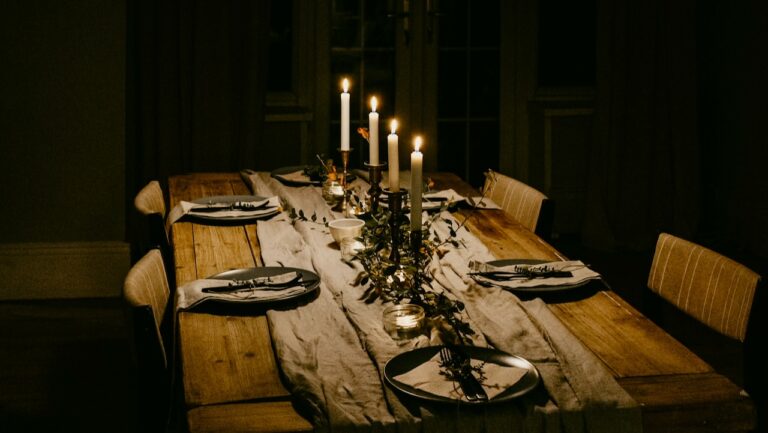
A rustic design built around burgundy features repeated tall taper candles and fresh rosemary sprigs laid directly at place settings.
This approach to decorative table setting ideas costs a fraction of massive floral centerpieces while delivering immediate natural fragrance.
Using deep reds and forest greens stops the dining room from feeling stark. Thick wax candles also burn slower, lasting through a four-hour gathering without needing replacement.
Controlling the flame height is necessary for safety during a long dinner service. You place every candle in a weighted brass base to prevent tipping. Maintain the recommended clearance from napkins and greenery around every flame.
| Decorative Element | Unit Cost | Quantity Needed | Placement Rule |
|---|---|---|---|
| Burgundy Tapers | $3.00 | Nine candles | Grouped in center |
| Brass Holders | $4.00 | Nine units | Staggered heights |
| Fresh Rosemary | $0.50 | Eight sprigs | Across the napkins |
- Group nine tall, 12-inch burgundy taper candles in mismatched brass holders tightly in the center of a dark tablecloth. Lighting them all creates a concentrated pool of warm light that acts as the primary focal point.
- Cut thick sprigs of fresh rosemary and tie a small paper name tag to each using black baker’s twine. Resting one sprig horizontally across every stark white dinner napkin brings an instant aromatic pine note.
If you choose to incorporate live stems alongside these greens, you must protect your wooden accents from moisture.
Floral Mechanics: Protect Your Wooden Accents With Nested Glass Bowls
Live flowers leak, drop pollen, and ruin expensive finishes if handled poorly. Proper mechanical styling keeps the moisture contained so the wood beneath stays pristine.
Creating a live flower bowl centerpiece involves nesting a waterproof glass bowl inside a wooden bowl to prevent moisture damage. This hidden barrier lets you use heirloom wooden pieces as dramatic vessels without risking permanent water rings.
A six-inch glass cylinder perfectly fits inside an eight-inch decorative wooden salad bowl. The one-inch gap around the perimeter hides the glass completely from seated guests. This double-wall barrier protects heirloom wood from condensation and stray water droplets.
You fill the hidden glass insert halfway with clean water. The heavy wooden exterior provides a massive base weight that prevents the arrangement from sliding.
Water Control Steps
You secure the arrangement by building a structural grid over the glass before pouring a single drop of water.
- Measure the gap and leave a one-inch clearance between the 6-inch glass insert and the 8-inch wooden rim.
- Run clear floral tape across the glass opening to form a grid that holds heavy stems upright.
- Keep the water level a full inch below the glass rim to stop sloshing when guests inevitably bump the table.
These contained vessels must also respect the vertical space between the people sitting around them.
Practical Spacing: Keep Your Centerpieces Clear of Guest Sightlines
Prioritize low-profile centerpieces to preserve guest cross-table sightlines.
Height Restrictions for Dining
Adhering to strict height limits keeps the room feeling open and connected.
- Solid mounds: Keep solid floral mounds under 12 inches tall.
- Taper candles: Use thin taper candles instead of thick pillars to preserve visual gaps.
- Tall pieces: Shift tall elements to the buffet credenza entirely.
This spatial awareness matters even more when taking the party outside, where nature adds its own complications.
Outdoor Adaptations: Scale Down Your Decor for Casual Patio Dining
Wind and uneven surfaces destroy tall, delicate setups. Moving a meal outside means trading fragile glass for heavy, low-center-of-gravity pieces that stay put.
Review Outdoor Table Setting Ideas: Garden, Backyard & Patio for patio table weatherproofing strategies.
Weighted corners and shatterproof elements replace delicate crystal when you move the party to the backyard.
A standard patio table requires aggressive wind mitigation to survive an afternoon gathering. You utilize heavy cast-iron trivets to anchor the loose corners of your linen runner. Stacking dense stoneware plates directly onto the cloth prevents sudden gusts from clearing your table.
Leaving delicate stemware inside the house is a necessary defensive strategy. Thick glass tumblers provide a low center of gravity that easily withstands a clumsy elbow or strong breeze.
A sudden 15-mph gust will scatter thin paper napkins across the lawn. You secure the layout by grounding everything with dense, practical objects.
If you are serving early in the day, consider the lighter textiles mentioned in Brunch Table Setting Ideas for Any Style or Season.
- Lower the lighting: Swap tall tapers for heavy glass hurricane lanterns.
- Pin the napkins: Use thick linen napkins pinned under heavy stoneware plates to fight the breeze.
- Secure the fabrics: Replace loose runner fabrics with fitted table clips.
Understanding these mechanical constraints explains why so many dining rooms feel cramped during the holidays.
|
Track Guest Counts With Precision |
Why Do Hosts Overcomplicate Their Holiday Table Centerpieces?
Magazine spreads do not have to accommodate three hot gravy boats and an elbow-bumping crowd. When you strip away the pressure to build a towering masterpiece, you get a layout that actually works.
A functional Thanksgiving tablescape setup inspires meaningful conversation precisely because it stays out of the way. Scale back the physical footprint by adjusting your design elements:
- Keep the focus on low-profile textures.
- Ensure all serving platters fit comfortably within the 14-inch center channel.
- Use raw materials across the table surface to add warmth.
Testing your sightlines guarantees that your guests spend the evening connecting with each other, rather than peering around an expensive pile of decorative branches.
Frequently Asked Questions
How do you anchor a long rectangular tablescape?
You anchor a long rectangle by laying a continuous fabric runner down the spine and placing three equally spaced, low-profile focal points along it. This prevents the ends of the table from feeling empty while leaving distinct gaps for serving platters between each visual anchor.
What is the standard budget for a holiday table setting?
A stunning holiday table setup typically costs between $25 and $60 when utilizing fresh produce, thrifted amber glass, and raw burlap. You avoid the massive florist markups by sourcing loose seasonal citrus or cutting wild pine branches directly from your own yard.
When should a host assemble the centerpiece before guests arrive?
Assemble the non-perishable base elements like runners, wood trivets, and candle holders the night before the dinner. You drop in the fresh florals, citrus, or live greenery two hours before arrival to ensure nothing wilts in the dry dining room heat.
Can real candles be used safely in a dense floral arrangement?
Keep lit candles at least 12 inches from anything that can burn, including dried wheat, paper tags and petals. You use heavy glass hurricane sleeves over pillar candles to contain the open flame completely if the arrangement sits tightly packed in the center.
Should charger plates remain on the table during the main course?
Charger plates leave the table immediately before the hot main course arrives. They serve purely as a decorative base for the soup or salad courses and take up too much valuable horizontal space once family-style meat platters begin circulating among the guests.
Why do some designers prefer mismatched vintage dinnerware?
Mismatched ceramic plates provide immediate visual depth and tactile contrast for a fraction of the cost of a new fine china set. This eclectic approach removes the anxiety of breaking a matching piece while bringing a relaxed, intentional character to the room.
Continue Reading:
More On Tablescape:
- Placemat With Place Setting at a Table for Guests
- 15 Christmas Tablescape Decor for Dining Tables
- 10 Place Setting Card Template Ideas for Your Event
- 7 Dining Table Centerpiece Ideas for Everyday Decor
- Best Floral Centerpiece for Dining Table Room Decor
More from The Gourmet Host:
- How to Set a Table for Any Dinner Party Occasion
- Spring Decor Table Ideas That Feel Fresh and Easy
- Fall Table Centerpiece Ideas for Cozy Gatherings
- Table Setting Ideas: 7 Creative Looks for Any Dinner
- Outdoor Table Setting Ideas: Garden, Backyard & Patio
- Brunch Table Setting Ideas for Any Style or Season
Explore TGH Categories:
- Set the Scene
- Drinks and Bar
- Plan the Meal
- Engage with Guests
- Games and Toasts
- Tools and Techniques
- Why We Gather