7 Dining Table Centerpiece Ideas for Everyday Decor
 13 min read
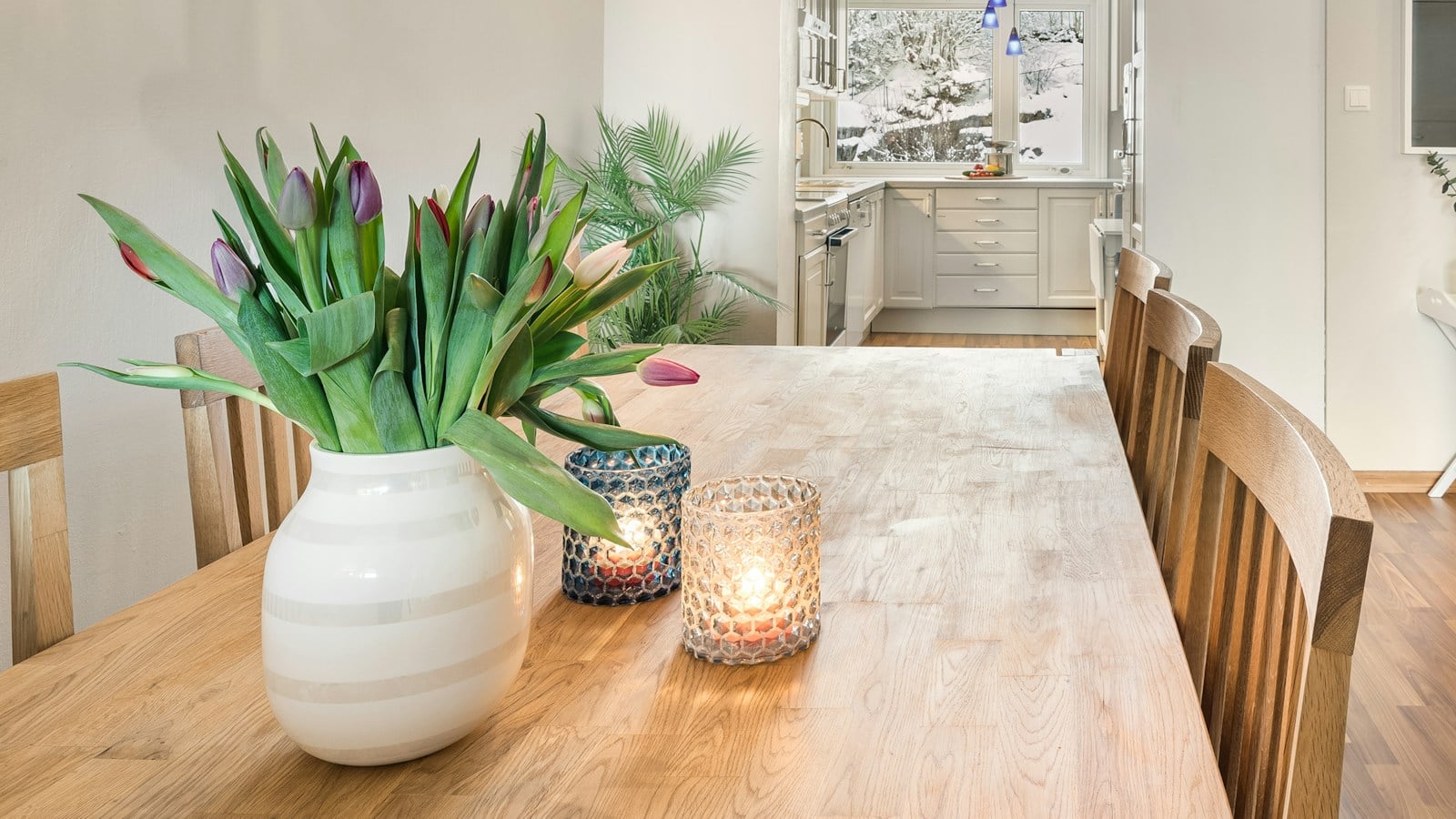
Practical daily table styling relies on low-profile, durable objects that preserve sightlines rather than sprawling floral installations.
Three towering botanical vases look flawless until your partner asks, “Can we move these so I can see the kids?” You are setting the plates for a standard Tuesday evening meal, and a sprawling floral arrangement immediately becomes a physical barricade across the middle of your home. Half an hour of careful pruning goes to waste, the water is meticulously changed, and the entire aesthetic impact is dismantled before anyone takes a bite.
Daily table styling is not a high-stakes florist project. It is a spatial management task with a beauty layer on top, balancing scale, visual weight, and quick clearing when large serving platters demand the surface area. The most inviting everyday dining room table decor features arrangements that stay firmly below seated eye level, keeping sightlines clear and requiring little maintenance on a busy weeknight.
What follows delivers seven practical dining table centerpiece ideas for everyday decor, grouped by element, so you can build a finished space that effortlessly supports your family meals.
At a Glance
- Everyday styling swaps perishable fresh flowers for durable potted houseplants or structural branches.
- A central bowl of single-variety seasonal fruit provides functional kitchen storage and visual warmth.
- Decorative vessels occupying exactly one-third of the surface length prevent cramped place settings.
- Sculptural objects grouped in odd numbers establish a distinct focal point without watering routines.
- Keeping total arrangement height strictly under twelve inches preserves clear communication across the table.
What Defines Everyday Dining Table Decor?
You are looking for a way to keep your eating space looking intentional and finished without committing to expensive weekly florist trips or moving massive displays every time you set down a dinner plate. Everyday styling solves this by relying on structural elements, living plants, and durable materials that withstand heavy daily traffic while leaving ample room for casual place settings. This guide breaks down specific, low-maintenance setups that deliver immediate visual warmth to your room while respecting clear sightlines for seated guests.
Ditching the Oversized Floral Arrangement for Sustainable Daily Decor
The most practical centerpiece decor for dining table setups abandons high-maintenance fresh stems, often detailed in a Floral Centerpiece for Dining Table: The Full Design Guide, in favor of dried botanicals and permanent structural branches. This shift immediately eliminates the weekly task of trimming wet stems and swapping out cloudy water. Your dining room retains a natural, organic focal point without demanding constant attention.
Many hosts ask a florist which fresh blooms last longest in tap water. That question completely ignores the reality that even the hardiest grocery store carnations eventually drop petals, turn slimy, and require disposal.
Long-lasting decor relies on materials that keep their appearance from day one to day fourteen. Interior designers at OakenKnot establish that an everyday table centerpiece should be under 12 inches tall and span approximately one-third of the total table length. Sticking to those rigid dimensions with dried materials gives you a finished surface that never wilts, a principle that also applies beautifully to Graduation Party Centerpiece Ideas: DIY and Easy.
- Texture focus: Dried curly willow branches provide high visual contrast against smooth walls.
- Waterless maintenance: Preserved stems never require murky water changes or flower food.
- Permanent structure: Hardened stalks maintain their exact physical height indefinitely.
- A heavy ceramic jug holding four dried curly willow branches cut to ten inches tall, providing organic texture without any watering requirements.
That hands-off approach transitions naturally into living greens with different care needs.
|
Plan the Entire Evening |
Anchoring the Space With Long-Lasting Potted Houseplants and Ferns
A low-profile living plant serves as a distinctive dining table centerpiece for continuous greenery. Soil-based plants bring a vibrant, lived-in energy to the room and only require light moisture every week or two. You get the lush visual benefit of nature without the rapid decay of a cut bouquet.
Designers at Classic Casual Home point out that potted house plants like ferns or orchids provide long-lasting living centerpieces for everyday dining tables without requiring weekly cut-flower replacements. A healthy plant anchors the room while offering a beautiful, modern centerpiece that matches the circular geometry of the furniture.
When you bring a pot indoors, placing a discreet plastic liner underneath prevents water rings from ruining your wood finish.
- Choose shallow terracotta or ceramic planter dishes.
- Keep the soil line well below the rim to prevent accidental dirt spills.
- Add a protective plastic drip tray underneath the primary base.
- A single Boston fern planted in a shallow, wide terracotta dish that spans no more than eight inches across.
- Three miniature succulent pots lined up sequentially down the center of a narrow rectangular table.
Another natural element offers even more flexibility while serving a secondary purpose in the kitchen.
Showcasing Seasonal Fruit in Textured Ceramic Bowls for Immediate Warmth
Piling fresh produce into a beautiful vessel creates a dynamic, highly practical dining table decor centerpiece that constantly evolves. Your household sees a welcoming burst of natural color, and your kitchen gains valuable countertop storage space.
DecorFixers recommends placing a single variety of seasonal fruit in a textured ceramic bowl or styling three small potted plants along long tables for functional decor. Choosing one fruit type instead of a mixed blend makes the bright, monochromatic mound read as an intentional architectural choice rather than an unorganized snack pile.
You can easily swap the contents as the weather shifts. A summer Unique Dining in Toronto: A Secret Supper Club Find event might feature fresh peaches, while a winter meal leans heavily on dark red pomegranates. Such an effortless dining table everyday decor strategy completely removes the pressure of buying non-edible decorations.
- Monochromatic impact: Sticking to one bright fruit color catches the eye immediately.
- Functional storage: The dining surface effectively doubles as kitchen overflow space.
- Seasonal rotation: Vibrant summer lemons naturally give way to moody winter pomegranates.
- A deep olive-wood bowl mounded with bright yellow lemons, swapped seasonally for apples or pomegranates as the weather shifts.
If perishables do not fit your lifestyle, permanent hard goods offer an excellent alternative.
Grouping Odd-Numbered Sculptural Objects Using the Rule of Three
Structuring odd-numbered decorative items provides a foolproof method for adding architectural interest to your dining table decor for everyday use. Groupings of three force the eye to move around the display rather than resting on a static, symmetrical pairing.
The technique relies heavily on contrasting physical properties. World Market notes that applying the rule of three for centerpiece styling involves grouping objects in odd-numbered clusters with three varying heights and textures. A brass candleholder next to a smooth ceramic jug and a jagged piece of coral builds immediate tension.
Sowa Collective provides a complementary three-part centerpiece formula combining a base tray with one tall piece and one low accent while keeping total height manageable. This specific 1920s Murder Mystery Dinner Party Menu and Décor style layout ensures visual balance without needing a massive central anchor.
- Anchor the grouping with one heavy, opaque ceramic vessel.
- Add a slender, tall vertical element like an unlit taper candle.
- Finish with a low, highly textured piece that sits horizontally.
- A round brass tray holding one thick pillar candle, a short stack of two linen-bound books, and a miniature geometric vase.
That clustering works brilliantly on a circular surface, but extended dining setups require a different approach.
|
Hosting Tip: Select Unscented Varieties for Dining Spaces |
Balancing Long Tables By Distributing Multiple Small Accent Pieces
A vast rectangular surface requires visual weight distributed across its length rather than concentrated in one massive central tower. Spreading multiple low elements ensures that guests seated at the far ends still experience an intentional, finished everyday dining table decor environment. It also prevents the middle diners from feeling crowded by a single huge object.
Spacing matters just as much as the objects themselves. A widely cited everyday rule dictates that a kitchen table centerpiece should remain under 12 inches tall and occupy only the middle third of the surface. Extending past that middle sector severely limits where you can place bread baskets and water pitchers.
Studio Matrx specifies keeping everyday centerpieces under 30 centimeters in height to preserve line-of-sight conversation, which proves essential during engaging family meals and standard Mexican Dining Etiquette Every Host Should Know. To maintain comfortable plate clearance on round surfaces, Coton Colors advises that a centerpiece diameter should measure roughly one-third of the total diameter of the dining furniture.
- Even distribution: Long tables benefit from repeating identical low elements.
- Strict boundaries: Items must stay entirely within the middle third of the table length.
- Plate clearance: Ample empty perimeter space guarantees comfortable elbow room.
- Three matching matte black candlesticks spaced exactly fourteen inches apart down the center line of an eight-foot table.
Binding these scattered pieces together visually comes down to strict palette control.
Applying the Proportional Color Rule to Base Trays and Accent Vessels
Grounding loose objects on a distinct base layer defines the modern everyday dining table decor footprint and keeps small items from looking like clutter. Implementing a strict color ratio ensures the base and its contents visually belong together.
The 60-30-10 rule for dining table centerpiece styling allocates 60 percent of the visual area to a main dominant color, 30 percent to a secondary hue, and 10 percent to an accent piece. A large neutral oak tray provides the sixty percent foundation. A soft blue ceramic vase handles the thirty percent secondary block, while a tiny brass wick trimmer acts as the vibrant ten percent highlight.
This structured palette gives your Tablescape: The Full Table Setting And Decor Guide approach a highly designed feel. The tray itself also acts as a carrying vehicle, letting you lift the entire arrangement away with one hand when you need the space for a massive roasting pan.
- Select a dominant neutral color for the foundation tray.
- Assign a secondary color to the largest vertical object.
- Pick a highly contrasting metallic shade for the smallest piece.
- A circular woven rattan tray serving as the neutral sixty-percent base, holding a thirty-percent sage green planter and a ten-percent copper candle snuffer.
With the components chosen, keeping the physical dimensions in check is what ultimately protects your guest experience.
How Tall and Bulky Decor Sabotages Sightlines During Family Meals
Arrangements that hover between twelve and twenty-four inches above the surface sit directly in the eyeline of seated diners. This placement forces people to lean awkwardly sideways just to participate in a shared conversation. Tall dining room table centerpiece decor actively blocks the interpersonal connection that hosts work so hard to facilitate.
These height guidelines are a starting point for checking sightlines. Event professionals understand that elements positioned between 12 and 24 inches from the tabletop sit right at seated eye level and block guest conversation. Flowyline Design similarly highlights the clear line-of-sight rule, stating that centerpieces should stay under 12 inches or exceed 24 inches to prevent visual obstruction.
For comprehensive floral styling guidelines that safely navigate these vertical limits, Elegant Floral Arrangements for Your Dining Table provides the exact height clearance rules you need.
- Sit directly in a dining chair before finalizing the setup.
- Look across the surface to confirm the opposite seat remains fully visible.
- Remove any stems that brush against the hanging light fixture.
Core Parameters for Daily Styling
Adhering to these strict physical boundaries ensures your dining table centerpiece decor supports rather than interrupts the room.
| Design Parameter | Ideal Measurement | Why This Succeeds Daily |
|---|---|---|
| Maximum Vertical Height | Under 12 inches | Keeps seated eye contact completely unobstructed. |
| Table Length Proportion | One-third of surface | Leaves vast perimeter space for plates and serving dishes. |
| Visual Color Dominance | 60 percent neutral base | Prevents a busy arrangement from overwhelming a quiet room. |
| Stem to Leaf Ratio | 1 greenery stem per 2 to 3 blooms | Builds a structured base that holds form as delicate petals age. |
Those exact measurements dictate what stays on the table when company finally arrives.
|
Coordinate the Dinner Menu |
Cultivating an Inviting Atmosphere Without Demanding Weekly Maintenance
The most successful dining table centerpiece ideas for home environments combine structural permanence with seasonal flexibility. The resulting space looks considered and welcoming on a Tuesday morning, yet easily adapts to support a bustling weekend gathering. You achieve lasting warmth by relying on potted greenery, fresh fruit bowls, and intentionally colored trays rather than fragile cut blooms.
Transitioning these solid foundations for a major event only requires a few small additions. A minimalist brass candle arrangement scales up effortlessly into beautiful Thanksgiving dining table decor simply by weaving miniature pumpkins between the metal bases. If you want to explore taller, event-specific installations, Centrepiece Ideas for Every Dining Room Table offers an excellent cross-reference for special occasions.
- Daily foundation: Potted greenery serves as the durable Tuesday morning baseline.
- Weekend upgrades: A few added taper candles instantly transition the look for a dinner party.
- Holiday transitions: Neutral base trays easily accept seasonal ornaments or pinecones.
Swap your towering glass vases for a shallow terracotta fern today, and your family will immediately reclaim the conversational space they need.
Frequently Asked Questions
How often should a homeowner change out fresh grocery blooms?
A homeowner should discard fresh grocery blooms the moment the water turns cloudy or petals begin dropping, typically every five to seven days. Sticking to this strict timeline prevents unpleasant odors from developing near where people eat. For actual everyday dining table decor, swapping flowers for permanent plants removes this chore entirely.
What type of wooden bowl works best for holding fresh fruit?
A wide, shallow olive-wood or acacia bowl works best for displaying fresh fruit on a dining surface. These dense hardwoods resist absorbing natural fruit juices and sit low enough to preserve conversational sightlines. You want a vessel that naturally highlights a vibrant, monochromatic mound of citrus or apples.
When is a woven runner appropriate for a bare kitchen island?
A woven runner belongs on a bare kitchen island whenever you need to soften the harsh glare of a vast stone countertop. The textured fabric provides a defined, sixty-percent neutral baseline that visually anchors smaller accent pieces. This simple addition prevents a lone ceramic vase from looking entirely disconnected from the room.
Can a single large succulent serve as a standalone focal point?
Yes, a single large succulent acts as a stunning standalone focal point when planted in an appropriately sized, highly textured dish. The plant requires immense natural light but asks for very little water, making it a low-maintenance centerpiece for a suitable dining space.
Should tall taper candles remain unlit during daylight hours?
Tall taper candles can remain unlit during the day if you want the color and shape without burning wax. Unlit colored tapers still provide excellent vertical structure and secondary color accents to a modern everyday dining table decor arrangement without generating unnecessary heat.
Why do interior stylists recommend an odd number of objects?
Interior stylists group objects in odd numbers because asymmetrical clusters force the human eye to actively travel across the arrangement. A pairing of three distinct items, varying in height, texture, and shape, creates natural visual tension and architectural interest that a perfectly symmetrical, two-item display simply cannot match.
Continue Reading:
More On Tablescape:
- Tablescape Ideas for the Thanksgiving Dinner Host
- Placemat With Place Setting at a Table for Guests
- 15 Christmas Tablescape Decor for Dining Tables
- 10 Place Setting Card Template Ideas for Your Event
- Best Floral Centerpiece for Dining Table Room Decor
More from The Gourmet Host:
- Floral Centerpiece for Dining Table: The Full Design Guide
- Graduation Party Centerpiece Ideas: DIY and Easy
- Unique Dining in Toronto: A Secret Supper Club Find
- 1920s Murder Mystery Dinner Party Menu and Décor
- Mexican Dining Etiquette Every Host Should Know
- Tablescape: The Full Table Setting And Decor Guide
- Elegant Floral Arrangements for Your Dining Table
- Centrepiece Ideas for Every Dining Room Table
Explore TGH Categories:
- Set the Scene
- Drinks and Bar
- Plan the Meal
- Engage with Guests
- Games and Toasts
- Tools and Techniques
- Why We Gather