How to Flambé at Home: A Host’s Guide to Safe Flames
 13 min read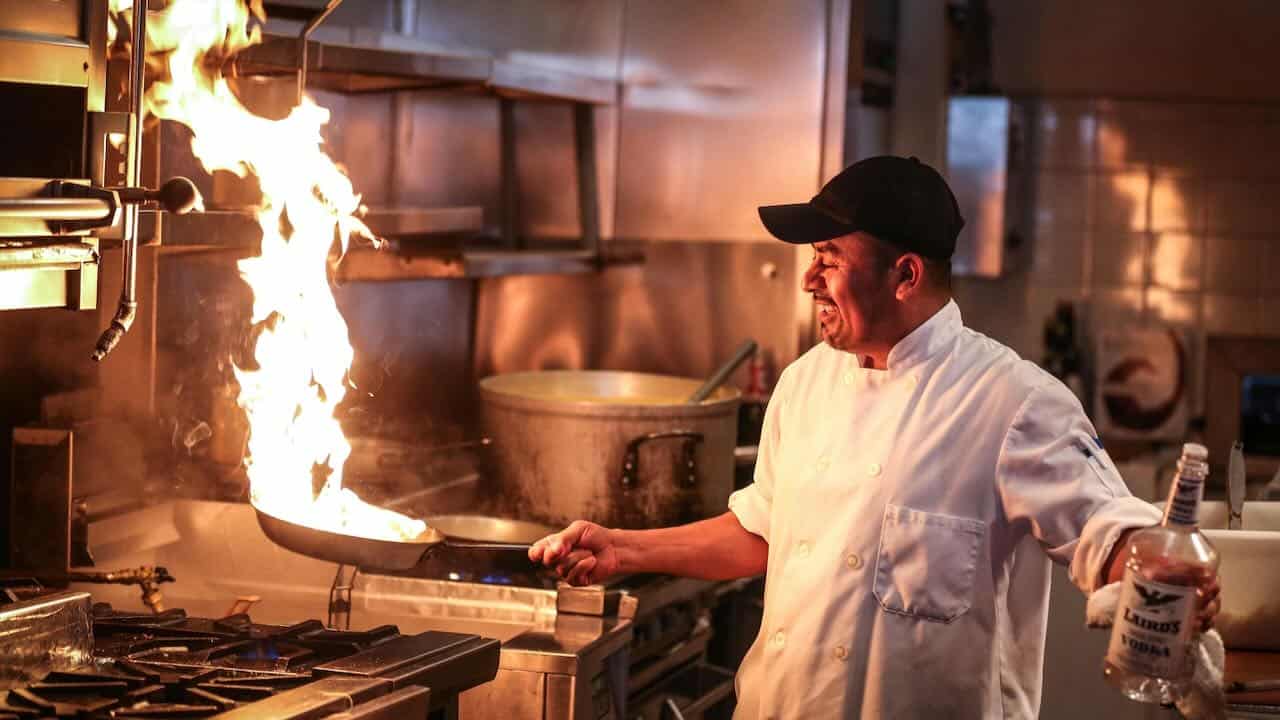
The lights are low, conversation is humming, and you tilt a warm skillet of pear halves toward a long match. A curtain of blue flames rises above the fruit — and every guest at the table falls silent for three perfect seconds.
Most hosts never attempt this because flambé feels like restaurant theatre reserved for a professional chef. Safety warnings pile up, instructions conflict, and the technique stays locked inside a fancy restaurant kitchen.
This guide changes that. You’ll learn exactly how to flambé at home — the right pan, the right alcohol, and a step-by-step sequence that keeps the drama on the plate and the fire extinguisher in the drawer.
At a Glance
- Flambé burns off raw alcohol and leaves a subtle, caramelised layer of flavour.
- Use an 80-proof liquor such as brandy, rum, or Grand Marnier for the safest dramatic effect.
- A stainless steel sauté pan with high sides is the right pan — never use nonstick coatings.
- Warm the spirit in a measuring cup before adding it to the hot pan — cold liquor won’t ignite reliably.
- Keep a lid and fire extinguisher within reach and tilt the pan away from your body to light.
What Is Flambé?
Flambé is a cooking technique in which a high-proof spirit is added to a hot pan and intentionally ignited, producing a brief burst of open flames. For hosts, it transforms a simple dessert or savory course into a tableside moment that draws every eye in the room. Unlike a standard reduction, flambé rapidly combusts the raw alcohol while layering the dish with a subtle aroma and caramelised sweetness no other method replicates.
Which Spirits Work Best for Flambé?
The right alcohol determines whether your flames impress or fizzle. Spirits between 40–60% ABV — roughly any 80-proof liquor — sit in the sweet spot: strong enough to ignite, mild enough to control. Table wines won’t light; anything higher turns unpredictable.
- Brandy or cognac: Classic for crêpes suzette. Subtle fruity notes pair with stone fruit and citrus freshness.
- Dark rum: Brings brown sugar warmth to bananas Foster.
- Grand Marnier: An interesting twist with subtle herbal notes — a great addition when you want orange juice and liqueur in one pour.
The flavor of the liquor stays after the flames die, so choose one you’d sip on its own. As Food52’s guide to flambé notes, cheap spirits leave a harsh flavor no flame removes.
With your spirit chosen, the next question is what to pour it into.
|
Keep the Cooking Plan Together |
Setting Up Your Pan and Workspace Safely
A stainless steel sauté pan or large skillet with deep sides and a long handle is ideal. High sides contain the stream of alcohol; the long handle keeps your wrist clear of the edge of the pan. Avoid nonstick coatings — extreme heat damages the surface.
- Clear the area: Remove anything flammable. Run the range hood on high or disable the smoke alarm.
- Gather tools: A long match, a measuring cup for the spirit, and a tight-fitting lid.
- Secure hair and sleeves: The simplest safety step and the one most often forgotten.
What’s Cooking America’s flambé walkthrough and Tasting Table’s expert flambé tips both stress measuring spirit into a cup rather than pouring from the bottle.
With your workspace set, you’re ready for the technique itself.
Which Flambé Setup Fits Your Stove?
Your ignition method depends on whether your cooktop provides an open flame. With gas, the burner can light the vapour at the far rim. With electric or induction, use a long match or grill lighter at the rim instead. For either setup at home, measure the spirit before heating the pan, move the pan off the heat before pouring, and keep the lid within reach.
| Situation | Do | Avoid |
|---|---|---|
| Gas cooktop | Pull the pan off the burner before adding the measured spirit. Return the pan to the burner, angle the handle away from your body, and tilt the far rim toward the flame while keeping your face and chest back. | Do not pour from the bottle or add alcohol while the pan sits over a lit burner. Both put the bottle and your hand too close to the flame. |
| Electric or induction cooktop | Lift the pan clear of the heat before adding the spirit. Set it down securely, then touch a long match or grill lighter to the far rim so the flame travels away from you. | Do not lean across the pan or carry it toward the table while the flame is visible. Keep the performance at the cleared cooking area beside the stove. |
| Nonstick pan | Transfer the food and sauce to a stainless steel sauté pan with high sides and a long handle. Cast iron also works if you can lift and tilt it comfortably. | Do not flambé in nonstick cookware. The high heat can damage the coating, and a short handle leaves less room between your wrist and the flame. |
| Before ignition | Place the tight-fitting lid beside the stove. Pour the measured spirit only after removing the pan from the heat, then light it promptly with a long match or grill lighter. | Do not pour from the bottle, hold the bottle near the cooktop, or leave the spirit sitting in the hot pan while you search for the ignition tool. |
| The flame lasts past forty-five seconds | Turn off the burner and slide the tight-fitting lid over the pan to cut off oxygen. Keep the pan where it is until the flame is fully out. | Do not add alcohol while the flame is active. Keep the measured spirit and its bottle away from the cooktop until the lid has smothered the flame. |
Set out the pan, measuring cup, ignition tool, and lid before anyone comes near the stove. Ask guests to stay outside arm’s reach until the flame has died. If the setup changes, stop and reset the tools before you pour the spirit.
|
Hosting Tip: Clear the Flame Zone First |
How Do You Flambé Step by Step?
The cooking process is simpler than it looks once you break it into stages. In our experience hosting, the entire sequence takes under ninety seconds from pour to flame-out — and the dramatic effect lasts much longer in your guests’ memory.
- Heat your pan: Bring it to high heat with a small amount of butter until shimmering.
- Cook your base: Sauté pieces of fruit or protein until coloured. For crêpes suzette, warm crêpes in orange juice and butter.
- Remove from heat source: Pull the pan off the burner so the spirit doesn’t ignite on contact.
- Add the spirit: Pour warm spirit from your measuring cup in a steady stream. Swirl once.
- Ignite: Return the pan and tilt the far edge of the pan toward the flame, or hold a long match at the rim. Blue flames roll across the surface.
- Let it burn: Allow flames to die naturally — fifteen to thirty seconds. The alcohol flavor mellows into a layer of flavour nothing else replicates.
As The Intrepid Gourmet’s detailed walkthrough explains, the flame extinguishes once the vapour is spent. If flames persist past forty-five seconds, slide the lid over to cut oxygen.
Browse the complete cooking techniques list for more methods, or plan a full flambé course in the The Gourmet Host app.
Common Flambé Mistakes That Kill the Moment
Even experienced cooks trip over the same errors. Renowned chef Jacques Pépin has noted the most common mistake is using too little alcohol — a timid pour produces a timid flame. Knowing these pitfalls in advance keeps your bit of a show from becoming a disappointment.
- Pouring from the bottle: The flame can travel up the stream of alcohol and into the bottle. Always use a measured pour from a separate cup.
- Using cold liquor: A cold spirit delays ignition and weakens the dramatic effect. Warm it to around 130°F first.
- Overcrowding the pan: Too much food lowers the temperature and absorbs the spirit before ignition. Work in smaller batches.
- Igniting over maximum heat: A roaring burner after adding spirit causes sudden flares. Medium-high heat is safer for the ignition step.
The beginner’s flambé guide at Food Republic reinforces what we’ve learned over our years of hosting: rehearse once without guests on a quiet weeknight, and by Saturday you’ll move through the steps without thinking.
Knowing the pitfalls prepares you to choose recipes where flambé truly shines.
The Best Flambé Dishes to Serve at a Gathering
Flambé works across both dessert and savory dishes, but the real question for a host is timing: which course gives your guests the best seat for the show?
Dessert wins almost every time — the table is cleared, lights are low, and everyone is relaxed enough to savour the spectacle.
- Crêpes suzette: The definitive flambé dessert — thin crêpes in orange-butter sauce lit with Grand Marnier. Follow a trusted crêpes suzette method at KitchenAid.
- Cherries jubilee: Dark cherries simmered with brown sugar and kirsch, spooned flaming over ice cream. America’s Test Kitchen’s flambé primer has a reliable version.
- Bananas Foster: Sliced bananas, dark rum, and butter — the pieces of fruit caramelise in under five minutes.
- Steak au poivre: A savory option with peppercorn crust finished in cognac. MasterClass’s flambé recipes walks through the method.
For an unexpected twist, try drops of lime juice and rum over pineapple — the term flambéing fruit tableside always sparks conversation. Find pairing ideas in Party Drinks: Your Guide to Hosting with Great Cocktails.
|
Share Every Prep Task Clearly |
Turning Flambé into a Dinner Party Moment Guests Talk About
The flame lasts thirty seconds. The story it creates lasts the rest of the evening. That distinction is what separates a cooking technique from a hosting technique — and it’s where most flambé guides stop short.
Plan the moment like a scene. Dim the lights before you bring the pan out. As Wikipedia’s history of flambénotes, the french word ‘flamber’ means simply “to flame,” but the term flambéing at the table has carried a sense of occasion since nineteenth-century Parisian dining rooms.
- Time it right: Serve flambé after guests have settled — never as a first course.
- Narrate lightly: “This is Grand Marnier and butter — watch the edge of the pan.”
- Invite participation: Let a guest hold the long match.
We’ve found that a split vanilla pod dropped into the pan before ignition adds a subtle aroma guests notice the instant the flame catches — an even better aroma than the spirit alone.
Frequently Asked Questions
Is flambé safe to do at home?
Yes. Use a measured pour of warm spirit, keep a lid nearby, work on a clear surface, and never pour from the bottle. The flames are brief and self-extinguishing once the alcohol vapour burns off. A fire extinguisher within reach adds peace of mind.
What alcohol is best for flambé?
Any high-proof spirit between 40 to 60% ABV. Brandy, dark rum, Grand Marnier, and bourbon are the most popular choices. Match the spirit to your dish: brandy for fruit, rum for tropical, bourbon for savory dishes. Avoid table wines or anything below 80 proof.
Does flambé burn off all the alcohol?
No. Flambé burns off roughly 75 to 80% of the alcohol, leaving a small residual amount behind. How long you let the flames burn affects exactly how much survives. The result is a mellow, rounded flavor rather than the sharp bite of raw spirit, so mention it to guests who avoid alcohol entirely.
What pans can you use to flambé?
A stainless steel sauté pan with high sides and a long handle is ideal, since the sides contain the spirit and the handle keeps your wrist clear of the flame. Cast iron works too. Avoid nonstick coatings, since extreme heat breaks down the coating. Choose a pan wide enough to hold the food in a single layer.
How do you flambé step by step?
Warm the spirit separately, pull the pan off the heat, pour the spirit in, then return the pan and tilt it toward the flame or use a long lighter. Stand back as it catches. Let it burn out on its own rather than smothering it, which takes roughly thirty seconds.
Which dishes are worth flambéing for guests?
Bananas Foster, cherries jubilee, steak Diane, and crepes Suzette all earn the theatre because the flame actually changes the sauce. Skip it on anything where the spirit is incidental. If the dish tastes the same without the fire, you are risking a kitchen accident for nothing.
Continue Reading:
More On Cooking Techniques
- 4 Advanced Methods & Techniques For Creative Home Cooking
- Cold Smoking vs Hot Smoking: Which Technique Is Right for You?
- Different Methods & Techniques For Cooking Like a Chef
- How to Make Homemade Pasta: A Hands-On Hosting Skill
- How to Sous Vide: The Stress-Free Technique Every Host Needs
- The Best Hot Sauce Making Kits for a DIY Dinner Party Activity
- The Complete Cooking Techniques List for Confident Home Hosts
More from The Gourmet Host
- Icebreaker Questions for Kids That Get Everyone Talking
- Main Course Ideas That Wow Dinner Party Guests
- White Wine Food Pairings: A Host’s Guide to the Perfect Match
- Graduation Party Centrepiece Ideas to Celebrate
- 6 White Wine Substitutes for Cooking Beyond Vinegar
Explore TGH Categories
- Set the Scene
- Drinks and Bar
- Plan the Meal
- Engage with Guests
- Games and Toasts
- Tools and Techniques
- Why We Gather