Korean Dining Etiquette: A Complete Host’s Guide
 12 min read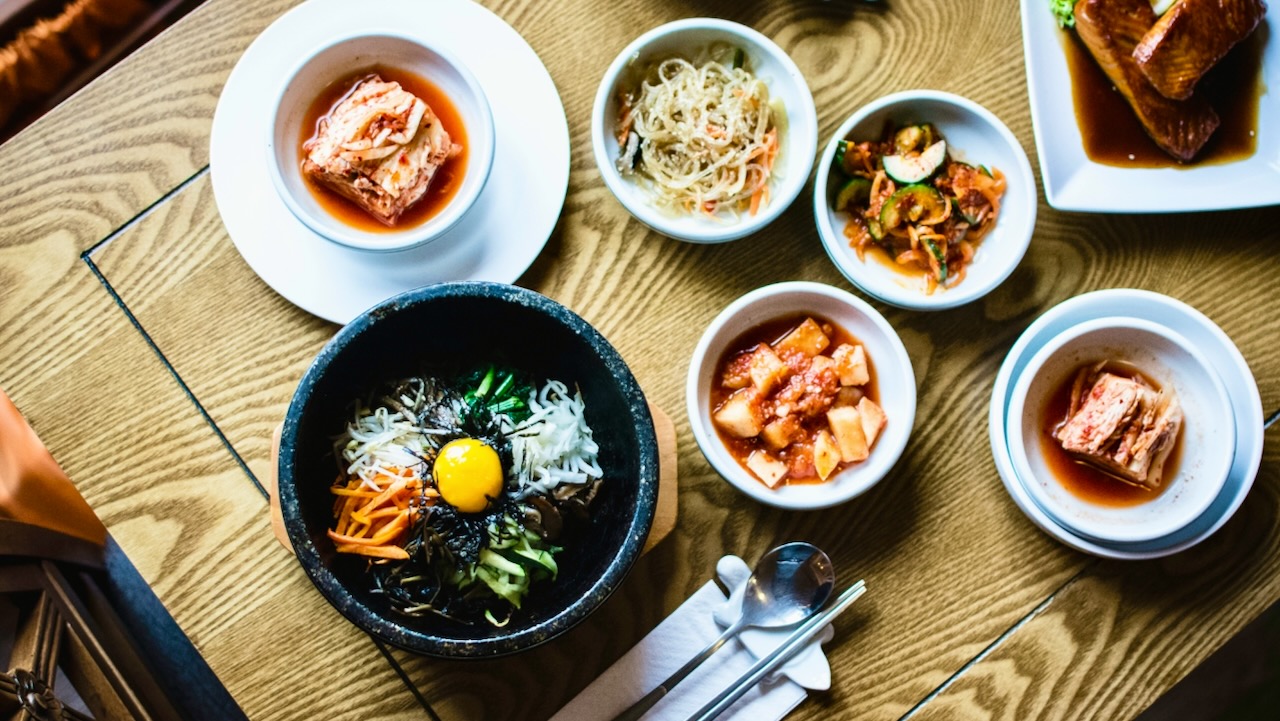
Set out the same bowls of rice, the same grilled meat, the same row of small dishes down the middle, and a Korean table still runs in a particular order. The eldest lifts a spoon first. Someone pours for someone else, with two hands. Only then does the meal really begin.
Cook the food in a Western serve-yourself rhythm and the table feels subtly off to guests who grew up with the sequence. The dishes are right; the order is wrong. That gap is what quietly tells a guest whether their customs were honored or just approximated.
Run it in the Korean order instead, and the whole evening settles into place. This guide walks the sequence a host controls: who starts, how you pour, how banchan sits in the center, and where the spoon goes.
At a Glance
- Korean dining etiquette is age-aware: the eldest or most senior guest begins eating first, and the table follows their pace.
- Drinks are poured for others, never for yourself, and you pour with two hands as a sign of respect toward elders.
- Banchan, the small side dishes, are shared from the center of the table, while rice and soup stay personal to each guest.
- A spoon handles rice and soup and chopsticks take the side dishes, and the two are generally not held at the same time.
- The host’s job is to keep glasses and banchan topped up, offer before taking, and set the order so guests do not have to guess.
- Lifting the rice bowl off the table or standing chopsticks upright in rice are the missteps to head off before they happen.
What Is Korean Dining Etiquette?
Korean dining etiquette is the set of table customs that order a Korean meal around age, sharing, and respect, telling guests who eats first, how drinks are poured, which dishes are communal, and how the spoon and chopsticks are used. For a host, it matters because the cuisine you are serving carries a sequence with it: the eldest begins, you pour for others with two hands, banchan stays communal in the center, and rice and soup sit personal at each place. Honor that sequence and a good Korean dinner reads as a genuinely welcoming one.
Hosting a Korean Dinner: What Changes at Your Table
A Korean meal is built to be shared and run by age, which reorders the two things a host controls most: how you serve and how you pour. The food may already be familiar. The sequence around it is what shifts.
Three changes do most of the work at your table. Get these right and the rest of the evening follows naturally from them.
- Order of eating: the senior guest starts, and everyone paces to the table rather than diving in.
- Pouring: drinks are poured for others with two hands, and no one fills their own glass.
- Layout: banchan sits communal in the center while rice and soup stay personal to each seat.
A clear overview of the basic rules of Korean dining etiquette shows how these pieces fit together. The first one a host sets, before a single dish is touched, is who gets to begin.
Wait for the Eldest (Age and the Order of Eating)
Korean tables run on age. The eldest or most senior person present begins the meal, and everyone else waits for that cue before lifting a spoon. As the host, your job is to make that moment easy rather than awkward.
Invite your most senior guest to start, then pace yourself to them through the meal. Finishing dramatically ahead of the table, or starting before the elder, both read as rushing.
- Signal the start: a warm “please, go ahead” to your senior guest lets the table begin together.
- Pace to the elder: match their speed loosely so no one is left eating alone at either end.
- Seat with age in mind: the senior guest takes the place of honor, typically facing the entrance or at the head.
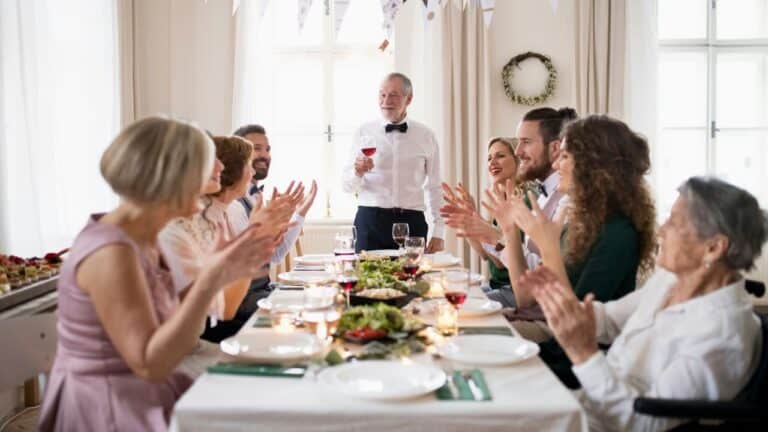
A Korean writer’s guide to dining etiquette and the order of the meal lays out how seniority shapes the table. Once the eldest has begun, the next custom guests will watch is how the drinks get poured.
|
Seat Your Senior Guests With Care |
The Two-Hand Pour and Drinking Customs
Korean drinking etiquette is one of the clearest signals of respect at the table, and it is easy to get right once you know the moves. One rule does a lot of the work: you do not pour your own drink.
Instead, guests watch one another’s glasses and pour for each other. Toward an elder, the two-hand pour does the work: hold the bottle with your right hand and support your forearm or the bottle with your left.
- Two-hand pour: use both hands when serving an elder or senior guest, and receive a pour the same way.
- Never your own: leave your glass for someone else to fill, and watch the table so no glass sits empty.
- Turn to drink: a younger guest may turn slightly away from an elder for the first sip, a small courtesy worth knowing.
A primer on Korean drinking culture and the two-hand pour covers the soju and beer customs in full, and TGH’s roundup of welcome drinks by country helps you set an opening pour that fits the meal. With the pouring sorted, the center of the table is where a host’s setup really shows: the banchan.
Banchan and the Shared Center of the Table
Banchan are the small side dishes, kimchi, seasoned vegetables, pickles, that line the middle of a Korean table for everyone to share. They are not appetizers to clear away; they stay out for the whole meal and get refilled freely.
The split a host needs to hold is simple. Banchan is communal in the center; rice and soup are personal at each place.
- Lay several banchan down the center within everyone’s reach, in small dishes rather than one big platter.
- Give each guest their own bowl of rice and their own soup, set to the correct side of the place.
- Refill generously: topping up the banchan as it empties is a core courtesy, so prepare more than looks necessary.
Maangchi’s overview of banchan basics and how the side dishes work is a useful planning reference, and a guide to the most iconic banchan dishes helps you build a balanced spread. With the center set, the utensils at each place follow their own rule.
|
Hosting Tip: Prepare Extra Banchan |
Spoon and Chopsticks, and How They Divide the Work
Korean place settings include both a spoon and chopsticks, and they divide the work in a way that may be new if you have not set a Korean table before. The spoon is not a backup; it has its own job, and so do the chopsticks.
Run the pairing in this order and it feels natural by the second course.
- Use the spoon for rice and soup, lifting them to your mouth rather than lifting the bowl.
- Use chopsticks for the banchan and grilled or stir-fried sides from the center.
- Hold one at a time: set the spoon down to use chopsticks, rather than gripping both together.
This is also where a Korean table parts ways with a Japanese one, where the rice bowl is lifted to eat; the Japanese table etiquette host quickstart covers that contrast, and the spoon-and-chopstick rule explained walks the Korean version step by step. Set both utensils correctly and your serving job becomes mostly about keeping the table topped up.
Serving and Refilling for Others
Much of Korean dining etiquette comes down to attention to the people around you rather than to yourself. You offer before you take, and you keep an eye on what others might need.
For a host, that instinct is already familiar; the Korean table just makes it the main event. Watching glasses and side dishes is the work.
- Serve elders and guests from a shared dish, or invite them to take, before serving yourself.
- Refill a guest’s glass before it empties, using two hands toward a senior guest.
- Replenish the banchan as the side dishes run low rather than waiting to be asked.
A working host’s view of Korean table manners and how the meal flows ties the serving rhythm together. The same attentiveness shows in TGH’s broader guide to place-setting rules for hosts, which holds up at any table, and its self-serve systems for hosting a crowd help when the table grows past a handful of guests. What reads as rude at a Korean dinner is usually this rhythm broken.
|
Build A Spread That Serves Itself |
What Reads as Rude (and What to Do Instead)
Missteps at a Korean table tend to be small and easy to head off if you know them in advance. None of them is about being clumsy; they are about the customs running underneath the meal.
As the host, naming the fix for each one quietly, or just modeling it, keeps every guest comfortable.
- Lifting the rice bowl: Korean rice bowls stay on the table; use the spoon rather than raising the bowl the way you might at a Japanese meal.
- Chopsticks upright in rice: standing them in a bowl echoes a funeral rite, so rest them on a holder or across the bowl’s edge instead.
- Pouring your own drink: fill others’ glasses and let them fill yours, rather than topping up your own.
A pre-meal rundown of Korean eating etiquette and the rules before you sit down is worth a skim before you host, and TGH’s set of table-manner cues that set the tone covers the universal courtesies underneath any cuisine. With the missteps handled, a host can set the whole table up in a few deliberate moves.
A Host’s Quick-Start Checklist
You do not need to memorize every custom to host a respectful Korean table. Five moves, set up before guests arrive, carry the meal.
- Seat by age: give your most senior guest the place of honor and invite them to begin the meal.
- Set the center: lay several banchan down the middle, with personal bowls of rice and soup at each place.
- Lay both utensils: a spoon for rice and soup and chopsticks for the sides, with a rest at each setting.
- Pour for others: serve drinks with two hands and keep glasses topped up, never filling your own.
- Stock extra banchan: prep more of the easy side dishes so you can refill without leaving the table.
Korean dining etiquette rewards a host who runs the sequence rather than just the recipe. A friendly start-here guide to cooking Korean at home and a roundup of Korean vegetable side dishes for the banchan spread give you the menu to match the manners. Set the order, pour for your guests, and the table will feel like the welcome you cooked it to be.
Frequently Asked Questions
What is the dining etiquette in South Korea?
Korean dining etiquette is age-aware and communal. The eldest at the table begins eating first, drinks are poured for others with two hands, side dishes called banchan are shared from the center, and a spoon handles rice and soup while chopsticks take the sides.
Why do you pour drinks with two hands in Korea?
Pouring with two hands, or supporting your pouring arm with the other hand, signals respect, especially toward elders and seniors. As a host, pour for your guests this way, let them pour for you, and avoid filling your own glass at the table.
What is banchan and how is it served?
Banchan are the small shared side dishes, like kimchi and seasoned vegetables, set in the center of a Korean table for everyone. Lay out several alongside personal bowls of rice and soup, and refill them generously throughout the meal as guests eat.
Should I wait for elders to start eating?
Yes. At a Korean table, the eldest or most senior person begins the meal first and others follow. As a host, invite your most senior guest to start, pace yourself to them, and avoid finishing dramatically ahead of the table.
How do you use a spoon and chopsticks at a Korean meal?
In Korean dining, the spoon handles rice and soup while chopsticks take side dishes, and the two are generally not held at the same time. Set both at each place, and avoid lifting the rice bowl off the table the way you might at a Japanese meal.
Is it rude to refill your own glass at a Korean dinner?
Filling your own glass is generally avoided. Instead, guests keep an eye on one another’s drinks and refill for each other, using two hands toward elders. As a host, watch the table and top up guests before they have to ask.
Continue Reading:
More On Dining Etiquette
- Dining Etiquette Around the World: A Host’s Guide
- Chinese Dining Etiquette: The Host’s Table Guide
- Indian Dining Etiquette: A Complete Host’s Guide
- Mexican Dining Etiquette: The Host’s Table Guide
- Italian Dining Etiquette: The Host’s Table Guide
More from The Gourmet Host
- 21 Dress Up Party Themes for Adults Worth the Effort
- Cocktails and Snacks: How to Pair Drinks and Bites Like a Pro
- Kitchen Knife Guide (3 Knives Every Home Host Needs)
- Family-Style Dinner Wedding Guide: Best Meal Ideas
- Dinner Party Conversation Questions That Keep the Table Talking
Explore TGH Categories
- Set the Scene
- Drinks and Bar
- Plan the Meal
- Engage with Guests
- Games and Toasts
- Tools and Techniques
- Why We Gather