12 S’mores Bar Ideas for a Sweet DIY Dessert Station
 13 min read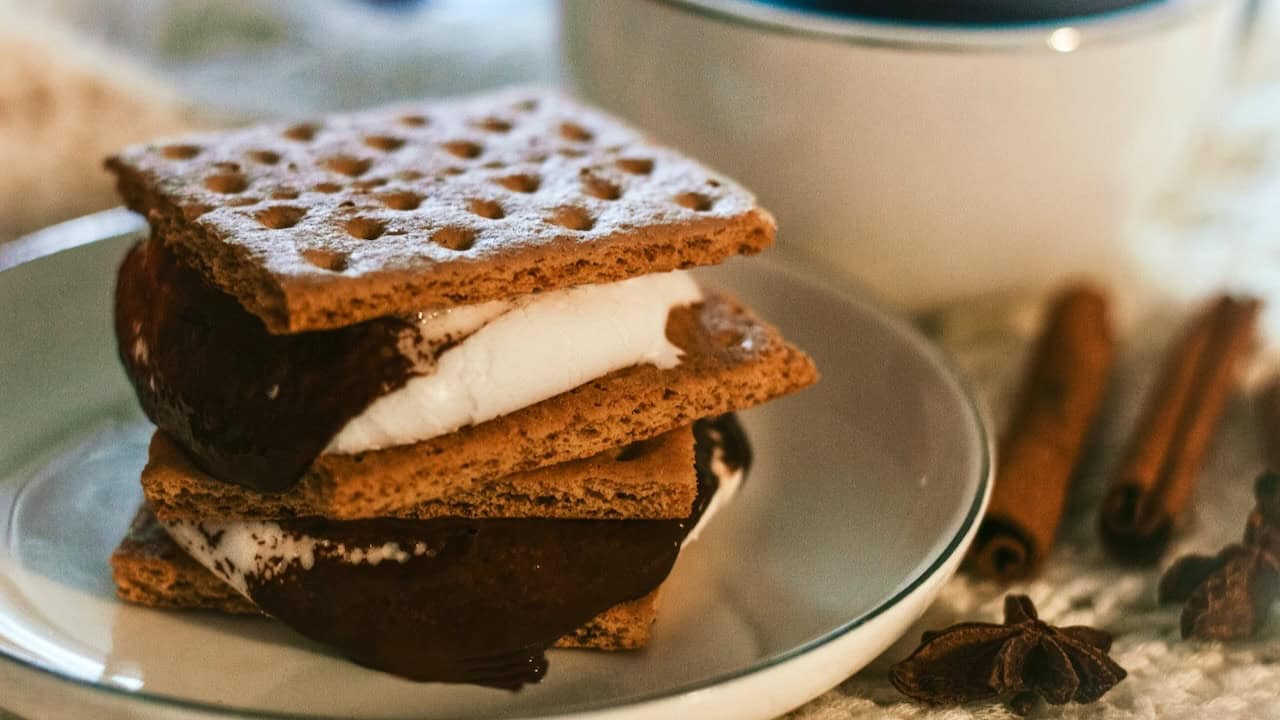
Can you run a s’mores bar in an apartment with no fire pit and a smoke alarm three feet from the kitchen?
Yes, and the answer reshapes the whole station. A s’mores bar is really two stations wearing the same name: a live toasting bar where guests char their own marshmallows over a small flame, and a no-bake, make-ahead version built on golden grahams that sets in the fridge and needs no fire at all. The heat question decides which one you build, how you lay out the table, and how much of each component to buy.
What follows covers both routes side by side: the swap menu of crackers, chocolates, and marshmallows that lets twelve guests build different combinations, the safe-toasting setup for indoors and out, the make-ahead golden graham bars for a crowd, the per-guest quantities, and the labels that keep gluten-free and vegan guests in the game. Pick a lane and the rest of the table falls into place.
At a Glance
- A s’mores bar runs two ways: a live toasting station with an open flame, or a no-bake make-ahead version for hosts who cannot toast indoors.
- Twelve build-your-own ideas cover three cracker bases, four chocolate swaps, marshmallow variations, and crunchy add-ons guests assemble themselves.
- Plan two to three s’mores per guest, which means a standard bag of marshmallows and three chocolate bars for a dozen people.
- Indoor toasting works with a tabletop butane burner, a gel-fuel toaster, or a kitchen torch the host runs, all on a heat-safe tray.
- Tiered trays, clear labels, and a build-order layout keep gluten-free, dairy-free, and vegan guests building right alongside everyone else.
What Is a S’mores Bar?
A s’mores bar is a build-your-own dessert station where guests assemble their own s’mores from a spread of crackers, chocolates, marshmallows, and add-ons, rather than receiving one fixed version off a tray. For a host, the real planning question is heat: whether the marshmallow toasts live at the table over a flame, or whether the whole thing becomes a make-ahead, no-bake spread that skips fire entirely. Unlike a single s’mores recipe, a s’mores bar is a setup-and-options system, scaled to a guest count and a venue, where the layout, the swap menu, and the toasting method all flex to the room you are hosting in.
Two Ways to Run a S’mores Bar
Every s’mores bar starts with one decision: live flame or no flame. A live toasting station puts a small heat source on the table and lets guests char marshmallows to their own preference, from barely golden to fully blackened. A no-flame version leans on a tray of make-ahead bars, so the s’mores flavor arrives with zero fire and zero supervision.
The venue usually picks for you. A backyard with a fire pit or a covered patio carries a live toasting bar easily.
A small apartment, a venue with a strict smoke policy, or a party heavy on young kids points toward the make-ahead route. Crazy for Crust’s baked s’mores bars show how completely the no-flame version delivers the same toasted-marshmallow payoff without anyone holding a skewer over an open flame.
- Live toasting station: best outdoors or in a well-ventilated space. Interactive, smells incredible, runs slower because each guest toasts in turn.
- No-bake make-ahead bars: best for tight indoor spaces, big head counts, and young crowds. Set the night before, cut the day of, no station to supervise.
- Hybrid: a small toasting station for the adults who want the ritual, plus a tray of make-ahead bars so the line never stalls.
Once the heat question is settled, the components are the same either way, so the swap menu is where the station earns its variety.
|
Design Your S’mores Bar Menu |
The Build-Your-Own Component Menu
Variety is what separates a s’mores bar from a plate of s’mores. Offering a few options in each category lets twelve guests build twelve different combinations from the same table. Group the components in three families: the cracker base, the chocolate, and the marshmallow, then add a shelf of mix-ins for the adventurous.
Glorious Treats’s s’mores bars spread is a useful visual reference for how a small number of components reads as abundance once it is plated across tiered trays. Sally’s Baking Addiction’s s’mores cookie bars are a strong make-ahead anchor to slot beside the live components for guests who want a no-skewer option. Here are twelve ideas to stock, organized by where they sit in the build.
Three Cracker Bases Beyond the Standard Graham
- Classic graham crackers. The baseline, and still the most requested. Snap each sheet into squares ahead of time so the build is fast.
- Shortbread or chocolate chip cookies. A softer, richer base that turns a s’more into a near-cookie sandwich, and a crowd favorite with kids.
- Stroopwafels or gluten-free grahams. Stroopwafels add a caramel layer; gluten-free crackers keep the whole table inclusive without a separate setup.
Four Chocolate Swaps
- Milk and dark chocolate squares. Offer both, since the split between sweet and bittersweet preferences is close to even at any party.
- Peanut butter cups. They melt into the warm marshmallow and read as a built-in candy layer, and the most-grabbed swap on most bars.
- Caramel or Nutella. A spoonable layer for guests who want gooey over snappy; set it in a small bowl with its own spreader.
- Flavored bars and spreads: sea-salt dark, mint, or hazelnut bars give the table a grown-up corner. Iambaker’s s’mores bars recipe shows how chocolate choice shifts the whole flavor.
Marshmallows and the Mix-In Shelf
- Standard campfire marshmallows. Jumbo size toasts evenly and holds a square of chocolate without sliding off.
- Flavored or filled marshmallows. Vanilla-bean, toasted-coconut, or caramel-swirl marshmallows give repeat builders a reason to come back.
- Vegan marshmallows. Gelatin-free versions toast a touch faster, so keep them on their own end of the bar with a quick label.
- Sliced strawberries and banana. Fresh fruit cuts the sweetness and gives the bar a fresher, lighter build for summer parties.
- Crushed pretzels and sprinkles, the crunch-and-color shelf. A small handful of crushed pretzels adds salt; sprinkles make it a kids’ favorite.
- Sea salt and cinnamon sugar. Two finishing shakers that take a basic s’more somewhere new for almost no cost.
With the menu stocked, the next decision is how guests actually apply heat, which is where the setup gets specific.
Setting Up a Safe Toasting Station
If you are going live, the heat source is the part of the station that needs real thought. The goal is a flame small enough to toast a single marshmallow, contained enough to sit on a table, and stable enough that a guest reaching across will not knock it over. Set the whole arrangement on a heat-safe tray or a slab of stone, never directly on a tablecloth.
Long roasting skewers matter more than people expect. Give each guest a dedicated skewer in a marked cup so nobody reaches over the flame twice, and keep a bowl of water nearby for cooling hot ends. Pinch of Yum’s golden grahams s’mores bars is worth bookmarking as the instant fallback if the flame plan falls through and you need a no-heat option fast.
- Outdoor live flame: a tabletop fire bowl, a small charcoal chimney, or the edge of a fire pit, with skewers at least 30 inches long.
- Indoor butane or gel fuel: a tabletop s’mores maker or a sterno-style burner rated for indoor use, on a metal tray, with a window cracked.
- Host-only torch: a kitchen torch the host runs, toasting marshmallows two or three at a time so guests never handle the flame.
When an open flame simply is not safe, the answer is not to skip s’mores. It is to switch the entire station to the make-ahead route.
|
Hosting Tip: Cut No-Bake Bars While Chilled |
Make-Ahead No-Bake S’mores Bars for a Crowd
The no-flame route hinges on one workhorse recipe: no-bake s’mores bars built on golden grahams, marshmallow, and chocolate, pressed into a pan and chilled until firm. They carry the campfire flavor with none of the supervision, which makes them the safest option for indoor parties and the easiest to scale for a crowd. Cut them the day of serving for clean edges.
Two recipes anchor this route. Broma Bakery’s golden graham s’mores bars lean into that cereal-and-marshmallow texture, while Brown Eyed Baker’s classic s’mores bars run closer to a graham-crust cookie bar.
For a version with a fudgy center, Handle the Heat’s s’mores fudge bars add a dense chocolate layer that holds up at room temperature for hours on a buffet. For a chewier bite, Scientifically Sweet’s chewy s’mores bars walk through the texture science, and Pastry Chef Online’s s’mores bars go deep on the technique for clean, sliceable layers.
- Build ahead: assemble the night before, chill overnight, and cut into squares an hour before guests arrive so the edges stay sharp.
- Storage: stored airtight, no-bake s’mores bars hold their texture for two to three days, so a big batch never goes to waste.
- Placement: set them on a tiered tray beside the live station, or run them solo as the entire dessert when fire is off the table.
A make-ahead tray also doubles as your overflow, so the live line never backs up. Either way, the amount you prep comes down to per-guest math.
How Many S’mores Should I Plan Per Guest?
Plan two to three s’mores per guest, which works out to two to three marshmallows, two to three chocolate squares, and about one and a half graham crackers each. Round up on marshmallows specifically, because they char, drop, and get re-toasted more than any other component. For a dozen guests, a standard bag of marshmallows and three chocolate bars is a safe starting point.
The math shifts with the format. A live toasting station tends to run slightly higher, since the ritual encourages a second and third build, while a tray of make-ahead bars portions cleanly and predictably.
For a lighter dessert-table role, where the s’mores bar shares the table with other sweets, two per guest is plenty. TGH’s roundup of quick and easy desserts for any gathering pairs well here when the s’mores bar is one station among several.
- Marshmallows: two to three per guest, rounded up. One standard bag covers about a dozen people with a small buffer.
- Chocolate: two to three squares per guest. Three full bars cover twelve, split across milk, dark, and one wildcard flavor.
- Crackers or cookies: about one and a half grahams each, so a box and a half per dozen, plus a backup base for variety.
Quantities sorted, the last job is making the table read clearly so every guest, including the ones with restrictions, can build with confidence.
|
Label Every Swap for Every Guest |
Presentation, Labels, and Dietary Swaps
Presentation on a s’mores bar is mostly about height and order. Group the components on tiered trays and risers so guests can see every option from across the table, and lay them out in build order: crackers first, then chocolate, then marshmallows, with the heat source or the finished bars at the end. A station guests can read at a glance keeps the line moving.
Labels do the inclusion work. Small folded cards marking the gluten-free crackers, the vegan marshmallows, and the dairy-free chocolate let guests with restrictions build without asking.
Keep those swapped components on their own end of the bar to avoid cross-contact. TGH’s dairy-free dessert recipes guests will love is a good source for the chocolate and spread swaps that keep the whole table building together.
- Use cake stands and risers to vary height so nothing gets lost at the back of the table.
- Label gluten-free, dairy-free, and vegan components with small cards, and group them on one end of the bar.
- Set napkins, skewers, and a small trash bowl at the start of the line so the table stays tidy through the party.
A s’mores bar is also a built-in activity, not only a dessert, which is why it lands so well at seasonal gatherings. It earns a spot at a Halloween party for kids and adults, anchors the indoor end of winter party activities from wonderland nights to solstice suppers, and gives a back-to-school party an easy interactive centerpiece. Build the menu around the room you have, settle the flame question first, and the sweetest station of the night runs itself.
Frequently Asked Questions
How do you set up a s’mores bar?
Lay out the components in build order: graham crackers or cookies first, then chocolate options, then marshmallows, with the heat source at the end. Provide long roasting skewers, a heat-safe surface, and napkins. Group the toppings on tiered trays so guests can see every option and assemble at their own pace.
What do you put on a s’mores bar?
A s’mores bar covers graham crackers, milk and dark chocolate, peanut butter cups, caramel, sliced strawberries, marshmallows, and flavored cookies like shortbread. Add sprinkles, crushed pretzels, and Nutella for variety. Offer two or three cracker bases so guests can mix classic and creative combinations.
How many marshmallows and chocolate per person for a s’mores bar?
Plan two to three s’mores per guest, which means two to three marshmallows, two to three chocolate squares, and one and a half graham crackers each. Round up on marshmallows, since they char and get dropped. For a dozen guests, a standard bag of marshmallows and three chocolate bars is a safe start.
How do you make a s’mores bar indoors without a fire?
Use a tabletop butane s’mores maker, a sterno-style gel burner, or a chafing-fuel toaster made for indoor use, all on a heat-safe tray. For zero flame, set out a tray of make-ahead no-bake s’mores bars or use a kitchen torch yourself to toast marshmallows for guests.
Can you make s’mores bars ahead of time?
Yes, no-bake s’mores bars made with golden grahams, marshmallow, and chocolate hold well for two to three days in an airtight container. Cut them the day of serving for clean edges. This make-ahead route is ideal when an open flame is not safe, giving guests the s’mores flavor with no setup.
What can I use instead of graham crackers for a s’mores bar?
Swap graham crackers for shortbread cookies, chocolate chip cookies, stroopwafels, or gluten-free graham-style crackers to suit different diets. Cinnamon grahams and digestive biscuits also work well. Offering two or three bases lets guests build their own combination and keeps the station friendly for allergies.
Continue Reading:
More On Food Bars and Stations
- 21 Taco Bar Food Ideas to Feed an Easy Big Crowd
- 15 Nacho Bar Ideas to Build a Crowd-Pleasing Spread
- 18 Dessert Bar Ideas for a Build-Your-Own Table
- 14 Pasta Bar Ideas for a Fun Build-Your-Own Dinner
- 16 Mashed Potato Bar Toppings and Easy Setup Ideas
More from The Gourmet Host
- Types of Onions Every Smart Home Cook Should Know
- How to Create the Perfect Wine Pairing Menu for Any Dinner Party
- Essentials Series: Ingredients for a Well-Stocked Kitchen
- Party Outfit Themes That Match Every Dress Code Vibe
- Best Brunch Cocktails Beyond the Mimosa
Explore TGH Categories
- Set the Scene
- Drinks and Bar
- Plan the Meal
- Engage with Guests
- Games and Toasts
- Tools and Techniques
- Why We Gather