Middle Eastern Dinner Party Menu for a Full Table
 13 min read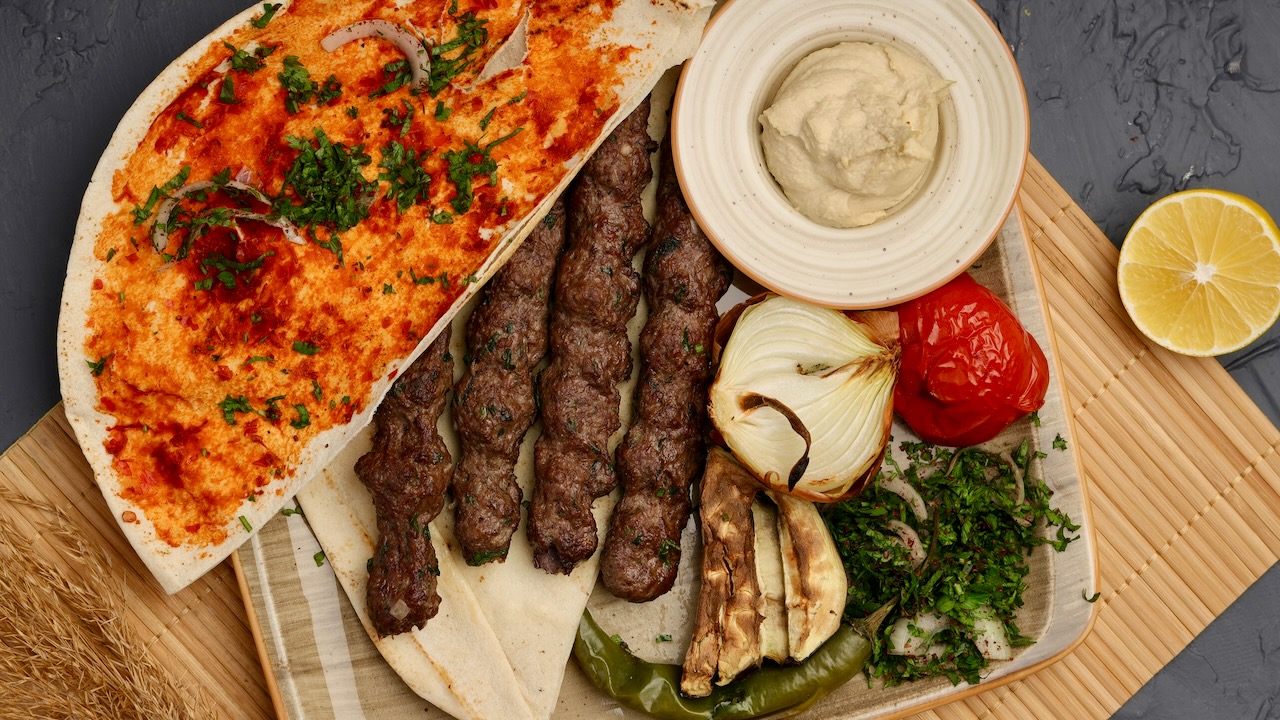
Hosting a Middle Eastern dinner is less about a single hero dish and more about a table that fills up in layers. The hummus and warm flatbread go down first, the tabbouleh and pickles crowd in beside them, and the kofta or spiced roast arrives to a table that already looks generous. Nobody waits on one plate to land.
That layered, shared format is the leverage point for a calm host. Build the menu as a feast (a mezze opener, one warm main, two grain-and-lentil sides, plenty of flatbread, and a sweet) and most of it can sit ready before the doorbell rings. What follows maps the full Middle Eastern dinner party menu course by course, with the vegetarian swaps and a make-ahead timeline that keeps you out of the kitchen once guests arrive.
At a Glance
- A Middle Eastern dinner party menu builds in layers: a mezze opener with dips and flatbread, one warm main, two grain or lentil sides, a bright chopped salad, and a make-ahead sweet.
- Plan the table as a feast meant for sharing, not a plated three-course meal. Mezze and sides do most of the work, so a single main is enough for eight.
- Pick one showpiece main that holds warm: lamb or beef kofta, a spiced roast, or chicken shawarma. Mujadara or a vegetable tagine covers vegetarian guests.
- Make dips, tabbouleh, and the sweet one to two days ahead. Marinate the main the night before, then roast or grill it close to serving and warm the flatbread last.
- For eight guests, plan three or four mezze, one main, two sides, a stack of flatbread, and one dessert. Make extra dip and bread, since both disappear fast.
What Is on a Middle Eastern Dinner Party Menu
A Middle Eastern dinner party menu is a layered, shared feast that opens with mezze (hummus, baba ganoush, tabbouleh, and warm flatbread), centers on one warm main such as kofta or a spiced roast, and surrounds it with rice, a lentil dish, and roasted vegetables. For a host feeding a mixed table, the format matters more than any single recipe: dishes arrive together and sit out family-style, so guests graze and serve themselves rather than waiting on courses. Unlike a plated dinner that lives or dies on the main, this menu spreads the load across many make-ahead dishes, which is exactly what lets you host a full table without spending the evening at the stove.
How a Middle Eastern Feast Menu Is Structured
Structure the menu in five layers and the whole evening gets easier to plan. Each layer plays a clear role, and most of them can be ready before guests arrive. The point of a Middle Eastern feast is abundance through variety, so you are assembling a table rather than timing a single course.
- The mezze opener: three or four dips and small plates with flatbread, set out before anyone sits down.
- The warm main: one showpiece (kofta, spiced roast, or shawarma) plus a vegetarian centerpiece if the table is mixed.
- The grain and lentil sides: a rice dish and mujadara, the two anchors that make the plate filling.
- The fresh layer: a chopped salad like tabbouleh or fattoush, pickles, and a yogurt or tahini sauce.
- The sweet: one make-ahead dessert such as baklava or semolina cake that needs no last-minute work.
RecipeTin Eats’ walkthrough of an Arabian feast you can make ahead sequences a similar table for a crowd, and the BBC’s library of Middle Eastern feast collections shows how the layers vary by region. With the architecture set, the first layer to build is the mezze opener that greets your guests.
|
Keep Every Mezze Recipe in One Place |
The Mezze Opener: Hummus, Baba Ganoush, Tabbouleh, Flatbread
Lead with mezze and the table looks full the moment guests sit down. The opener does double duty: it feeds people while the main finishes, and it sets the generous, communal tone that defines the meal. Aim for a contrast of textures across creamy dips, a bright chopped salad, and warm bread to scoop everything.
Hummus and baba ganoush are the two dips that anchor almost every spread. Both are smooth, both go down with a slick of olive oil and a dusting of sumac or paprika, and both can be made two days ahead. Budget Bytes’ recipe for baba ganoush hits the smoky eggplant note without a grill, which keeps the oven free for the main.
- Two creamy dips, hummus and baba ganoush, each topped with olive oil and a pinch of sumac, paprika, or za’atar.
- One chopped salad, tabbouleh, heavy on parsley and mint and cut fine so it scoops onto bread cleanly.
- Warm flatbread or pita, torn into wedges, brushed with oil, and warmed just before serving so it stays soft.
- Olives, pickled turnips, and a small bowl of toasted nuts for crunch.
FeelGoodFoodie’s recipe for authentic Lebanese tabbouleh keeps the herb-to-grain ratio high, which is what makes the salad taste fresh against the richer dips. A finishing sauce ties the opener to the main, and the TGH guide to 5-minute tahini sauce covers a drizzle that works on both. Once the mezze is set out, attention turns to the one warm dish the evening is built around.
The Main: Kofta, Spiced Roast, or a Vegetarian Centerpiece
Choose one warm main that holds while you plate everything else, and the evening stays unhurried. The best Middle Eastern mains rest well, which means you can pull them from the oven or grill, tent them with foil, and finish the table without rushing. A single generous main is enough when mezze and sides fill the rest of the spread.
The Meat Showpiece
Lamb or beef kofta is the most forgiving choice: shape the spiced mince into logs a day ahead, then grill or broil them in minutes once guests arrive. A spiced roast (shoulder of lamb or a tray of chicken thighs in a yogurt-and-spice marinade) holds warm for half an hour without drying out. Bon Appetit’s collection of more Middle Eastern cuisine ideas runs through shawarma and roast options if you want a different lead.
The Vegetarian Centerpiece
For a mixed table, give vegetarian guests a real main rather than a plate of sides. Crisp baked falafel is the crowd favorite, and Cookie and Kate’s recipe for crispy baked falafel skips the deep fry so it scales to a tray for the oven. Stuffed vegetables hold beautifully too; My Greek Dish’s gemista, stuffed tomatoes and peppers bakes ahead and serves at room temperature, which makes it a calm centerpiece for the vegetarian end of the table.
- Kofta: shape ahead, cook in minutes, serves with a yogurt or tahini sauce.
- Spiced roast: lamb shoulder or yogurt-marinated chicken thighs that hold warm and rest well.
- Vegetarian main: baked falafel, a vegetable tagine, or stuffed vegetables that bake ahead.
With the main settled, the sides are what turn it into a full table that everyone can build a plate from.
|
Hosting Tip: Rest the Rice Before Fluffing |
The Sides: Rice, Mujadara, and Roasted Vegetables
Two anchoring sides do the heavy lifting on a Middle Eastern table: a rice dish and a lentil dish. Between them they make the plate filling enough that a single main stretches across eight guests. Add a tray of roasted vegetables and the table reads abundant without a second protein.
A spiced or jeweled rice is the backbone. Vermicelli rice, a herbed pilaf, or a saffron rice studded with toasted almonds and currants all work, and most can be made an hour ahead and held covered. HungryPaprikas’ roundup of Middle Eastern rice dishes for the table covers several that scale cleanly for a crowd.
- Rice: a vermicelli or herbed pilaf, made an hour ahead and held warm, topped with toasted nuts before serving.
- Mujadara: lentils and rice with deeply caramelized onions, the vegetarian-friendly side that reheats well and tastes better the next day.
- Roasted vegetables: cauliflower, carrots, or eggplant tossed with cumin and olive oil, roasted on one tray while the main rests.
Mujadara is the quiet workhorse of the menu. It is naturally vegetarian, it reheats without losing texture, and a big pot covers both the side role and a vegetarian main for guests who skip the meat.
When you are scaling the table for a bigger group, the TGH blueprints for easy meal ideas for 10 people show how the rice-and-lentil base multiplies without extra oven time. The sides handled, the menu needs a sweet finish and a timeline to pull it all together.
Sweets and the Make-Ahead Timeline
End with one make-ahead sweet and a timeline that front-loads the work, and the night runs calm from the first knock to the last plate. Middle Eastern desserts are built for hosting: baklava, semolina cake (basbousa), or a bowl of thick yogurt with honey and pistachios all hold for a day or more, so dessert is done long before guests arrive.
The timeline is the real tool. Spread the work across three windows and almost nothing lands on the day-of besides the main and the bread.
- Two days ahead, make the dips (hummus, baba ganoush), bake the sweet, and toast any nuts, since flavors deepen overnight.
- One day ahead, cook the mujadara, chop the tabbouleh vegetables, mix the kofta spice, and make the yogurt or tahini sauce.
- The night before, marinate the main and set out serving platters so you know everything fits.
- Same day, assemble the tabbouleh, cook the rice an hour out, roast or grill the main, and warm the flatbread last.
Falafel is the one dish worth frying close to serving, since it is best warm and crisp; the TGH-recommended how to make falafel technique guide covers a batter you can mix ahead and fry in one go. Feasting at Home’s library of Middle Eastern recipes for entertaining is a useful pool for filling any gaps in the timeline. With the schedule in hand, the last question is how the whole table scales when the guest count climbs.
|
Scale the Full Table Before Shopping |
Scaling the Table for a Crowd
Scaling a Middle Eastern feast is easier than scaling a plated dinner, because the format already leans on shared, make-ahead dishes. The rule is to multiply the mezze and sides generously while keeping the main count low. More dips and more rice feed a bigger room; a second roast rarely needs to.
For eight guests, plan three or four mezze, one main, two sides, a tall stack of flatbread, and one sweet. Step up to twelve or sixteen and the smart move is to add a second mezze and a second vegetable tray rather than a second meat dish. Make extra dip and bread either way, since both vanish first.
- Eight guests: three or four mezze, one main, rice plus mujadara, one salad, one sweet.
- Twelve to sixteen: add a second mezze and a second vegetable tray; keep a single main and a vegetarian centerpiece.
- Always: double the dip and the flatbread, the two things guests reach for again and again.
When the table grows past a dozen, oven space becomes the real constraint. The TGH guide to easy meals for 20 people covers how to stagger trays so the rice, the roast, and the vegetables do not fight for the same rack. A spiced roast also rewards a confident hand at the table, and the TGH walkthrough on how to carve a roast for guests turns the main into a small piece of theater.
To round the evening, the TGH drinks by country guide suggests what pours well beside a spiced, herb-forward table. Built this way, a Middle Eastern dinner party menu lets you host a full, generous table and still sit down with your guests.
Frequently Asked Questions
What is on a Middle Eastern dinner party menu?
A Middle Eastern dinner party menu is a layered mezze feast: hummus, baba ganoush, tabbouleh, and warm flatbread open the table, followed by one main such as kofta or a spiced roast. Rice, a lentil dish, and roasted vegetables round out the sides, with baklava or another make-ahead sweet closing the meal.
What main course works for a Middle Eastern dinner?
Lamb or beef kofta, a spiced roast, or chicken shawarma all work as a Middle Eastern main, and mujadara or a vegetable tagine makes a satisfying vegetarian centerpiece. Choose something that holds warm so you can plate the mezze and sides without rushing the main.
How do I make a Middle Eastern menu vegetarian?
Center the table on mezze, falafel, mujadara (lentils and rice), and roasted vegetables, then add tabbouleh and a bright salad. Hummus, baba ganoush, and flatbread fill the table, so guests rarely miss the meat. A vegetable tagine or stuffed vegetables can serve as the warm main.
Can I prepare a Middle Eastern dinner ahead of time?
Yes. Dips, tabbouleh, marinades, and most sweets can be made one to two days ahead, and mujadara reheats well. Marinate the main the night before, then roast or grill it close to serving. Warm the flatbread last so it stays soft, and the timeline stays manageable.
What do you serve with a Middle Eastern meal?
Serve warm flatbread or pita, a rice dish, and at least one lentil or grain side alongside the main. Pickles, olives, and a yogurt or tahini sauce add brightness and tang. A chopped salad like tabbouleh or fattoush keeps the heavier dishes feeling balanced.
How much food do I need for a Middle Eastern feast?
For a feast for eight, plan three or four mezze, one main, two sides, plenty of flatbread, and one sweet. Mezze and sides do the heavy lifting, so a single main is usually enough. Aim for variety over quantity, and make extra dip and bread since both disappear fast.
Continue Reading:
More On Mediterranean Hosting
- 9 Mediterranean Dinner Party Menu Ideas for Hosts
- How to Build a Mediterranean Mezze Platter at Home
- 12 Easy Greek Appetizers to Serve at Your Party
- 8 Mediterranean Salads to Make for a Crowd at Home
- 10 Mediterranean Vegetarian Dinner Ideas for Guests
More from The Gourmet Host
- The Complete Cooking Techniques List for Confident Home Hosts
- Best Appetizers for a Crowd That Scale to Any Guest Count
- Minute to Win It Games for Adults (25 Funny Picks)
- Instead of Cocktail Hour, Try These Wine and Snacks Combos
- Birthday Party Decorations for Adults: Themes That Work
Explore TGH Categories
- Set the Scene
- Drinks and Bar
- Plan the Meal
- Engage with Guests
- Games and Toasts
- Tools and Techniques
- Why We Gather