
12 Easy Greek Appetizers to Serve at Your Party
 14 min read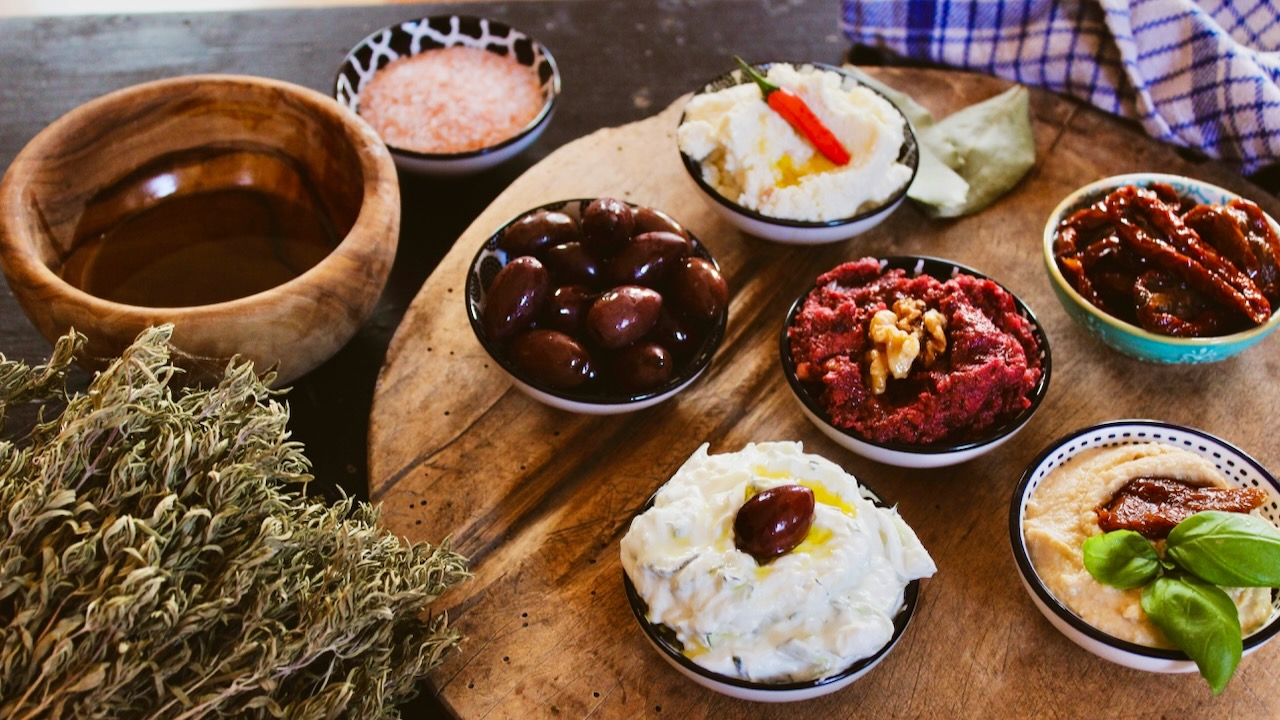
Which Greek appetizers can you actually plate while guests are already pouring wine, and which ones have to come off the pan that second? That single question decides whether your kitchen stays calm or turns into a relay race. Saganaki has to hit the table sizzling, so it is a make-it-last job; spanakopita, dolmades, and the dips all sit happily for an hour, so they are make-it-first jobs.
Sort your spread that way and the night runs itself. Ahead is the full roster: twelve Greek appetizers split into hot bites, cold bites, and dips, each with a make-ahead window, plus how many pieces to plan per guest and how to put them out as passed or stationed bites.
At a Glance
- A Greek appetizer spread works best as a hot-cold-dip split: one or two hot bites off the pan, several cold items that hold, and two or three dips that anchor the table.
- The twelve covered here are saganaki, spanakopita, keftedes, tyropita, and kolokithokeftedes (hot); dolmades, marinated feta, Greek olives, and fava (cold); plus tzatziki, taramasalata, and tirokafteri (dips).
- Most Greek appetizers are make-ahead: dips and dolmades hold one to two days, spanakopita freezes unbaked, and only saganaki demands a last-minute fry.
- Plan six to eight pieces per guest when appetizers are the meal, three to four when a dinner follows.
- Traditional Greek appetizers are called meze (mezedes), small plates built for slow grazing with ouzo or wine rather than a single seated course.
- A Greek appetizer spread is easy to host for vegetarians: skip the meatballs and seafood and the cheese, greens, and dips still fill the table.
What Are Greek Appetizers?
Greek appetizers are the small shared plates, called meze, that open a Greek meal: fried cheese, savory pies, stuffed grape leaves, fritters, and a row of dips eaten with warm pita and raw vegetables. For a host, the useful distinction is not which dish is most authentic but when each one needs to be made, because a Greek table mixes bites that must be served hot off the pan with bites that improve sitting in the fridge overnight. Sequenced that way, traditional Greek appetizers become a spread one cook can put out without leaving guests, rather than a dozen separate recipes competing for the stove.
How to Plan a Greek Appetizer Spread
Start by sorting every dish into three columns: hot, cold, and dip. The cold bites and dips get made first and wait in the fridge; the one or two hot bites get cooked last while guests settle in. That split is the whole plan, and it turns a long recipe list into a short cooking list for the hour before people arrive.
A balanced Greek appetizers platter usually pulls from all three columns:
- One or two hot bites: Saganaki, spanakopita, or keftedes. These carry the table and signal a real spread, not just a bowl of olives.
- Three or four cold bites: Dolmades, marinated feta, olives, fava. All hold for hours and need zero attention once plated.
- Two or three dips: Tzatziki plus one or two others, served with warm pita and cucumber strips for scooping.
For a Greek-authority roster to draw from, The Greek Foodie’s roundup of light Greek appetizers and mezedes runs through the seasonal options, and Souvlaki for the Soul keeps a host-friendly Greek appetizers guide organized the same hot-cold way. If you are building the full opening course, our broader take on easy starters your guests will love shows how the same three-column logic applies to any cuisine. Settle the columns first, then the cooking falls into place. The hot bites come first.
The Hot Bites: Saganaki, Spanakopita, and Fried Favorites
Hot Greek appetizers are the ones guests remember, and most of them tolerate more make-ahead prep than their reputation suggests. Of these five, only saganaki truly needs to be cooked at the last second. The pies can be assembled or even frozen ahead and baked off as guests arrive, and the fritters reheat in a hot oven without losing their crunch.
- Saganaki: Pan-fried kefalograviera or halloumi, seared until the crust bubbles and browns. Serve it the moment it leaves the pan with a squeeze of lemon, because the texture fades within minutes.
- Spanakopita: Spinach and feta layered in crisp phyllo, cut into triangles or squares. Assemble and freeze unbaked, then bake straight from frozen so it hits the table golden.
- Keftedes: Herb-and-mint Greek meatballs, pan-fried small enough to spear. Shape them a day ahead, fry just before guests arrive, and hold warm in a low oven for up to thirty minutes.
- Tyropita: The cheese-pie cousin of spanakopita, made with feta and a softer cheese. Roll into little cigars or triangles ahead, then bake to order in one tray.
- Kolokithokeftedes: Crisp zucchini and feta fritters, fried in small rounds. Make the batter ahead, fry early, and reheat at 400 degrees for five minutes to bring the edges back.
Mark Beahm at My Greek Dish keeps the definitive recipe for saganaki, pan-seared Greek cheese, and Dimitra’s Dishes walks through spanakopita, Greek spinach pie, including the freeze-ahead step that makes it a host’s favorite. Plate the hot bites last, and let the cold items carry the table while you fry. The cold bites are next.
|
Keep Your Greek Recipes Organized |
The Cold Bites: Dolmades, Marinated Feta, and Olives
Cold Greek appetizers are where a host wins back time. Every one of these can be made hours or days ahead and set out straight from the fridge, which means the entire cold column is done before the first guest knocks. They also lean vegetarian, so a mixed table stays covered without a separate menu.
- 6. Dolmades: Grape leaves stuffed with herbed rice, served cool with a wedge of lemon. They hold up to two days and only deepen in flavor, making them the ideal first thing to prep.
- 7. Marinated feta: Cubed feta steeped in olive oil, oregano, lemon zest, and chili flakes for a few hours. Spear with toothpicks or spoon onto bread; it needs only a bowl and a few minutes.
- 8. Greek olives: A mix of kalamata and green olives, warmed briefly with orange peel and thyme if you want them dressed. Set out in small bowls with a dish for the pits.
- 9. Fava: A silky yellow split-pea puree topped with red onion and a thread of olive oil, eaten cool on bread. Make it a day ahead; it thickens nicely as it chills.
For more named cold bites to round out the column, Aleka’s Get-Together collects a deep list of more Greek appetizer ideas a host can mix and match. If you want a fresh, no-cook accompaniment, a Greek island salad from Olive Tomato sits comfortably alongside the cold plates. With the cold column plated, the dips do the work of tying everything together.
The Dips That Anchor a Greek Table
Dips are the glue of a Greek appetizer spread. Two or three bowls give guests something to return to between bites, and they pair with the same warm pita and cucumber strips you already have out. Because S1 covers the mezze board build in full, this section keeps the dips to a short anchoring set rather than re-explaining hummus.
- Tzatziki: Thick strained yogurt with grated cucumber, garlic, and dill. The cooling counterpoint to every fried bite, and the one dip no Greek table skips.
- Taramasalata: A creamy, pale-pink fish-roe spread whipped with bread and lemon. Salty and rich; a little goes a long way next to plain bread.
- Tirokafteri: A spicy whipped feta with roasted red pepper and a kick of chili. The bold, savory dip that wakes up the cold plates around it.
Mia Kouppa’s collection of traditional Greek dips and spreads has the full method for each of these, including the trick to keeping taramasalata from splitting. For a wider bench of no-fuss bowls to set beside them, our easy appetizer ideas for any gathering covers crowd-friendly dips that travel well past the Greek table.
Serve the dips in shallow bowls so guests can reach the bottom without a mess, and keep the bread coming. Once the food is set, the next question is always about quantity.
|
Hosting Tip: Temper Feta and Dips Before Serving |
Make-Ahead and Reheat Notes for a Calm Party
Easy Greek appetizers earn the word easy because so much of the work shifts to the days before. Map each dish to a window and the day-of cooking shrinks to a single short list. The dips and dolmades go first, the pies get assembled and frozen, and saganaki is the only thing left to handle when guests arrive.
A working make-ahead timeline:
- Two days ahead: Make the dips (tzatziki, taramasalata, tirokafteri) and the fava. Roll the dolmades. All hold covered in the fridge and improve overnight.
- One day ahead: Assemble the spanakopita and tyropita and freeze them unbaked. Shape the keftedes and refrigerate. Cube and start the marinated feta.
- The morning of: Warm and dress the olives, slice cucumbers and pita, and pull the plated cold bites together so the fridge holds finished platters.
- As guests arrive: Bake the pies from frozen, fry the keftedes and fritters, and sear the saganaki at the very last moment. Reheat anything fried at 400 degrees for five minutes.
Scrummy Lane’s set of easy Greek appetizers leans hard on this make-ahead logic, and our own guide to make-ahead appetizers maps the same prep-ahead thinking across any cuisine. With the timeline set, the only open question is how much of each to make.
How Many Greek Appetizers per Guest?
How many Greek appetizers per guest depends on one thing: is this the meal, or a prelude to dinner? When the appetizers are the event, plan six to eight pieces per guest across four to six different items. When a sit-down dinner follows, three to four pieces each is plenty and keeps appetites intact.
A quick way to scale a Greek appetizers platter for a party of eight:
- Appetizers as the meal: about 56 to 64 total pieces, so roughly 12 to 14 of each item across five items, plus two or three full bowls of dip.
- Appetizers before dinner: about 28 to 32 total pieces, so 6 to 8 of each across four items, with one or two dips.
- Bread and dip never run short: plan two pieces of pita per guest and a generous bowl of each dip, because both vanish faster than you expect.
Lana’s Cooking shows how a single a big Greek appetizer board can stretch across a crowd when you build volume into the cold column. For warm-weather parties, our easy summer appetizers round-up uses the same per-guest math for outdoor grazing.
The hot bites are where to economize: one tray of saganaki goes further than a third hot dish nobody finishes. Get the count right and the last decision is simply how to put it all out.
|
Settle Your Headcount Before You Shop |
Plating Greek Appetizers as Passed or Stationed Bites
How you put the food out shapes how the party flows. Passed bites keep guests circulating and the host moving; a stationed spread frees you from the kitchen entirely and lets people graze at their own pace. Most Greek appetizer parties land on a mix: a station for the cold bites and dips, with the hot bites passed warm as they come off the pan.
Stationed versus passed: when each one wins
Two ways to set the table, and when each one wins:
- Stationed: Cluster the cold bites, dips, bread, and olives on one table or board so guests serve themselves. Best for larger groups and for the host who wants to stay out of the kitchen.
- Passed: Carry the hot bites, saganaki, keftedes, fritters, around on a small tray straight from the pan. Best for the dishes that are only at their peak for a few minutes.
Small plating habits that read as generous
A few plating habits make either approach look generous instead of sparse:
- Use small bowls for the dips so they read as abundant rather than half-empty.
- Stack the warm pita in a cloth-lined basket to hold the heat, and give the olives their own dish with a spot for the pits.
- Tuck lemon wedges beside the saganaki and keftedes so guests dress their own bites.
If you want to plate some Greek bites as single, two-bite servings on spoons or small skewers, the techniques in our guide to canapés and single-bite builds carry straight over to keftedes and marinated feta. One bright, no-cook side also keeps a heavy appetizer table from feeling one-note: a loaded Greek chopped salad from Half Baked Harvest sits well at the stationed end of the spread.
Plated this way, a dozen Greek appetizers stop being a dozen recipes and become one welcoming table. The cold column does the heavy lifting, the dips invite people to linger, and the hot bites arrive like small gifts throughout the night. That rhythm, calm host, grazing guests, a table that refills itself, is the whole point of serving meze the Greek way.
Frequently Asked Questions
What are the most popular Greek appetizers?
The most popular Greek appetizers include saganaki (pan-fried cheese), spanakopita (spinach and feta pie), dolmades (stuffed grape leaves), keftedes (meatballs), and dips like tzatziki and taramasalata. A good party spread mixes one or two hot bites with cold items and at least one dip.
What Greek appetizers can I make ahead?
Dolmades, dips, marinated feta, and spanakopita all hold well made ahead. Assemble spanakopita and freeze it unbaked, then bake from frozen the day of. Make dips one to two days ahead so they firm up, and fry saganaki fresh since it is best served hot off the pan.
How many Greek appetizers should I serve?
For a party where appetizers are the focus, plan six to eight pieces per guest across four to six different items. If dinner follows, three to four pieces each is plenty. Offering a mix of hot bites, cold bites, and dips keeps the table varied without doubling your cooking.
What is a traditional Greek appetizer called?
Traditional Greek appetizers are called meze (or mezedes in the plural). Meze are small plates meant for sharing, often served with ouzo or wine, and include dips, fried cheese, stuffed vegetables, and small savory pies. The style encourages slow grazing rather than a single seated course.
What dips go with Greek appetizers?
Tzatziki, a yogurt and cucumber dip, is the classic, alongside taramasalata, a creamy fish-roe dip, and a feta-based spread like tirokafteri. Serve them with warm pita and raw vegetables. Two or three dips give guests variety without crowding the table with too many bowls.
Are Greek appetizers vegetarian?
Many are. Spanakopita, dolmades, saganaki, marinated feta, and most Greek dips are vegetarian, which makes a Greek appetizer spread easy to host for mixed eaters. Skip the meatballs and seafood, and your table still feels full and varied with cheese, greens, and bread-friendly dips.
Continue Reading:
More On Mediterranean Hosting
- 9 Mediterranean Dinner Party Menu Ideas for Hosts
- How to Build a Mediterranean Mezze Platter at Home
- 8 Mediterranean Salads to Make for a Crowd at Home
- Middle Eastern Dinner Party Menu for a Full Table
- 10 Mediterranean Vegetarian Dinner Ideas for Guests
More from The Gourmet Host
- Best Appetizers for a Crowd That Scale to Any Guest Count
- Birthday Party Decorations for Adults: Themes That Work
- Instead of Cocktail Hour, Try These Wine and Snacks Combos
- Types of Salt and Which Dishes Each One Belongs On
- Birthday Party Ideas for Adults That Feel Worth the Effort
Explore TGH Categories
- Set the Scene
- Drinks and Bar
- Plan the Meal
- Engage with Guests
- Games and Toasts
- Tools and Techniques
- Why We Gather