Charcuterie Board Ingredients: 15 Host Essentials
 16 min read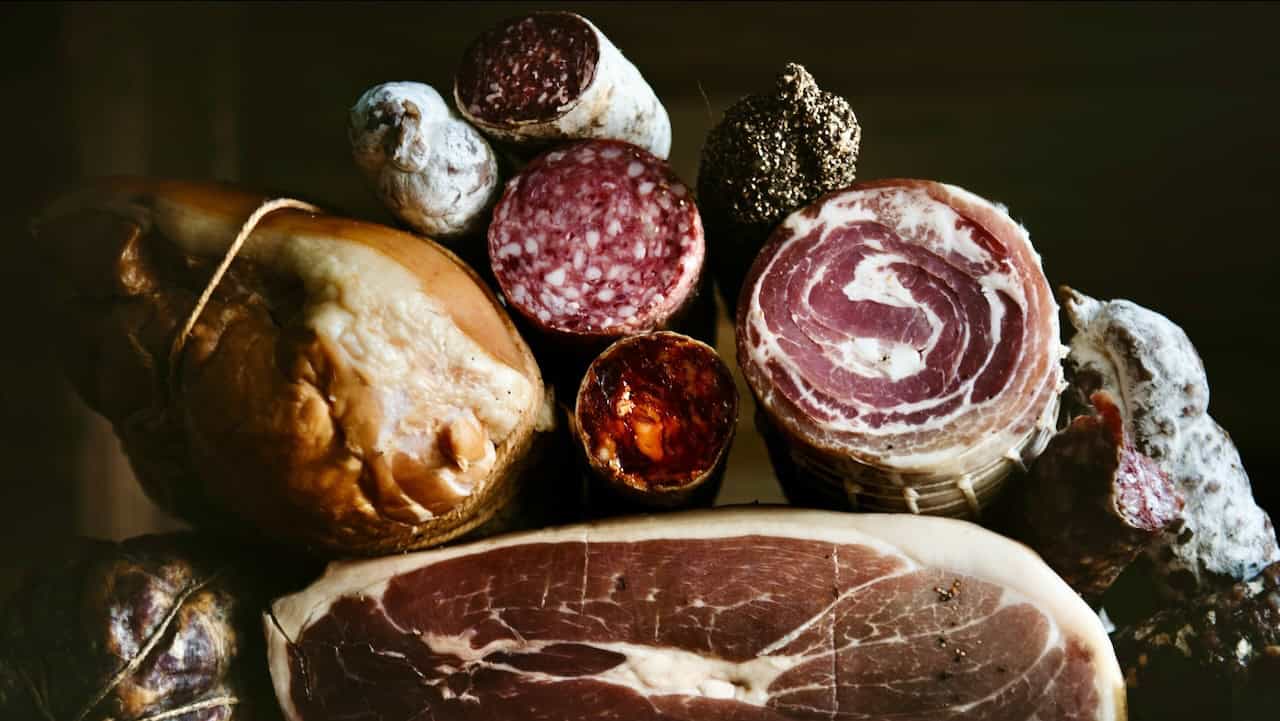
Twelve items, not twenty-two. A host wheeling a Whole Foods cart past the deli counter and the cheese case has every reason to grab one more wedge, one more salami, one more jar of mustard. The cart fills, the receipt climbs, and the board ends up cluttered. The four-bucket model cuts that shopping list almost in half: three to four cheeses, three cured meats, three accompaniments, and three to five add-ons. Twelve to fifteen items in total.
Charcuterie board ingredients work best when every item belongs to one of four buckets and the host knows the ounce count per guest before walking into the store.
By the end of this article you have the bucket-by-bucket shopping list, the per-guest math for an appetizer board and a meal board, and the dietary swaps that keep vegetarian, gluten-free, and dairy-free guests served from the same spread.
At a Glance
- Every charcuterie board ingredient belongs to one of four buckets: cheese, cured meats, briny-sweet-spreadable accompaniments, and crackers or bread.
- Twelve to fifteen items covers a board for four to eight guests. More than fifteen confuses the eye and stretches the budget without adding flavor variety.
- Cheese math: two ounces per guest for an appetizer board, four ounces for a meal board. Same ratio for cured meat.
- Pre-sliced supermarket cheese, deli ham, pre-cut fruit cups, and party-mix nuts substitute shelf-life for flavor. Skip them.
- Dietary swaps work bucket by bucket: pickled vegetables replace cured meat, gluten-free crackers replace baguette, plant-based cheeses replace dairy.
What Are Charcuterie Board Ingredients?
Charcuterie board ingredients are the set of cheeses, cured meats, accompaniments, and crackers a host arranges on a serving surface for guests to graze through during a cocktail hour, an evening party, or a relaxed dinner. The shopping list for a four-to-eight-guest board lands at twelve to fifteen items grouped into four buckets: three to four cheeses across textures, three cured meats across cuts, three sweet or briny accompaniments, and one or two bread or cracker types. Quantities scale linearly with guest count at two ounces of cheese and two ounces of meat per guest for an appetizer spread.
The Four-Bucket Model: Cheese, Cured Meat, Briny, Sweet, Crunchy
Charcuterie board ingredients organize most cleanly into four buckets. Every item belongs to one of them, and the buckets cover the flavor and texture variety a guest expects across a single bite. Nothing gets added without checking which bucket it fills.
- Bucket 1, Cheese: three to four wedges across soft, semi-firm, firm, and blue textures. The anchor of the board both visually and on the palate.
- Bucket 2, Cured Meats: three slices across one delicate, one spiced, and one fatty or whole-muscle cut. The protein layer between cheeses.
- Bucket 3, Briny and Sweet: two or three accompaniments split between salty-acidic (cornichons, olives) and sweet-spreadable (fig jam, honey, mostarda).
- Bucket 4, Crackers and Carbs: two cracker shapes plus a sliced baguette. These live in a basket alongside the board, not stacked on top.
The 7-must-have-ingredients survey from Bon Vivant covers the same flavor logic from a tasting-menu angle. The spread between bold cheese, cured meat, fresh fruit, and tangy spread is what reads complete to guests at first glance. The Reluctant Entertainer epic-charcuterie walkthrough documents the same bucket math from a host-side perspective with photographs of the finished spread.
For hosts already comfortable with the appetizer category, our easy appetizer ideas for every party and gathering covers companion bites that work alongside a charcuterie spread without crowding the table. The first bucket carries the most visual weight, so it goes on the board first.
|
Split A Loaded Board Fairly |
Cheese: Three Wedges From Three Textures (Plus a Blue)
Cheese is the first bucket because it carries the most visual weight on the finished board. The working count is three to four wedges across textures so the palate moves from soft to firm without overlap.
How Sweet Eats’s best-cheese-board cheese roundup documents the four-texture framework: one soft, one semi-firm, one firm, and one blue. The buying notes in the Wisconsin Cheese guide to charcuterie pairings. The four-texture spread is the safest starter set for any board.
The four textures, with shopping suggestions
- Soft cheese options include a brie or camembert wheel, plus an option like burrata or fresh chevre for variety, set in the center as a visual anchor.
- Semi-firm cheese covers Manchego, gouda, or a young Comté: these slice cleanly into batons and are the easiest cheese for guests to grab without a knife.
- Firm cheese means aged cheddar, Parmigiano-Reggiano, or Pecorino. Break Parmigiano into chunks with the back of a spoon rather than slicing it cleanly.
- Blue cheese starts with Gorgonzola dolce for a milder palate or Stilton for a stronger one, paired with honey or fig jam to balance the funk.
Why pre-sliced supermarket cheese loses every time
Pre-sliced supermarket cheese pays for shelf-life with flavor. The plastic wrap traps moisture and the cuts dry out at the edges. The President brie charcuterie pairing notes walk through the difference between a fresh-cut brie wedge and a pre-portioned one. Buy whole wedges from the cheese counter, ask for cheese paper rather than plastic, and unwrap one hour before guests arrive. The next bucket pairs with cheese the way salt pairs with citrus.
Cured Meats: One Delicate, One Spiced, One Fatty
Cured meats are the second bucket. The rule of thumb is three slices across three styles: one delicate (prosciutto), one spiced (salami or soppressata), and one fatty or whole-muscle (capicola, coppa, or pate). The trio covers the protein layer across the board.
Cooking with Cocktail Rings’s best-charcuterie-meats roundup walks through the same trio, and the 3 Pigs primer on best cured meats for charcuterie boards adds butcher-shop options like bresaola and mortadella. For hosts running an Italian themed evening, Italian dinner party appetizers and antipasto picks covers cured meat in the wider antipasto context.
How to fold each meat on the board
- Prosciutto: fold each slice loosely into a small ribbon or rose. The delicate texture tears, so handle by the fat edge. Lay three to four ribbons together rather than spreading flat slices across the board.
- Salami or soppressata: fan the slices in a quarter-circle from a center point, overlapping each piece by half. The fanned shape reads more finished than a stack.
- Capicola or coppa: lay the slices flat in pairs, with the marbled fat edge visible. Whole-muscle cuts read substantial, so two stacks of three slices each work better than spreading every slice.
Two ounces of cured meat per guest is the appetizer-board ratio, doubling to four ounces if the board is the meal. Soppressata, capicola, prosciutto, and salami are the four words to put on the shopping list. Pate or ‘nduja swaps for capicola when the table likes funk. The third bucket is where the board’s accompaniments come together.
|
Hosting Tip: Temper Cheese Before Guests Arrive |
Briny, Sweet, and Spreadable: The Accompaniment Set
Accompaniments are the third bucket: the layer that separates a basic spread from a finished board. The working count is two to three jars: one briny (cornichons or castelvetrano olives), one sweet (fig jam or hot honey), and one spreadable (whole-grain mustard or mostarda). They go into small bowls at uneven heights, never directly on the wood.
The three accompaniments to start with
- Cornichons or castelvetrano olives serve as the briny anchor. Cornichons read traditional, castelvetranos read more contemporary. Either cuts the fat of cured meat and aged cheese in the same bite.
- Fig jam or hot honey serves as the sweet anchor. Fig jam pairs with blue cheese in particular, and hot honey lifts firm cheeses like Manchego and aged cheddar.
- Whole-grain mustard or mostarda serves as the spreadable anchor. Mustard reads more savory; mostarda (Italian candied-fruit mustard) reads more festive and pairs with both cheese and cured meat.
The pickle-board variation, when the board needs a vegetarian anchor
The Reluctant Entertainer pickle-board reference covers a variation for a vegetarian-leaning board: replace one or two cured meats with pickled okra, pickled green beans, pickled cauliflower, and marinated artichokes. The briny bucket expands, the cured-meat bucket shrinks, and the board still reads complete.
Wet items go in bowls because they bleed into the wood and into the cheese within thirty minutes. Small ramekins of two to three ounces each are the right scale. Three bowls placed in a triangle across the board give the accompaniment layer visual rhythm without crowding the cheese or meat layers.
Crackers, Breads, and Dippers: The Vehicles
Crackers and bread are the fourth bucket and the only ingredient set that does not go on the board itself. The vehicles live in a basket or on a separate plate alongside, because crackers piled on top of the cheese get crushed under the weight of meat slices and absorb moisture from the cheese within fifteen minutes.
Two cracker shapes plus a sliced baguette
- Round water crackers: the neutral base. Mild flavor, sturdy texture, and the shape that holds soft cheese cleanly across an evening.
- Long breadsticks or seeded crackers: the textural counterpoint. Sesame, rosemary, or fennel-seed crackers add aroma; breadsticks lean against the rim and add height variation.
- Sliced baguette: the carb anchor. Slice on a forty-five-degree angle in half-inch slices, brush with olive oil, and toast at 400 degrees Fahrenheit for six minutes until the edges crisp without drying the middle.
Why crackers and bread sit beside, not on, the board
Pre-sliced crackers in a sealed sleeve hold flavor longer than crackers sitting on the board for an hour. A basket lined with a linen napkin holds the crackers at the right height and refills mid-evening without rearranging the spread. Gluten-free crackers sit in a separate bowl with a handwritten label so guests can serve themselves. The add-on bucket is where the board picks up color and height.
|
Keep Dietary Notes On The Event |
Add-Ons: Nuts, Fresh Fruit, Dried Fruit, Herbs
Add-ons fill the negative space after cheese, cured meat, and accompaniment bowls are placed. The working list is four categories: nuts, fresh fruit, dried fruit, and fresh herbs. Three to five items total is enough. More and the board reads cluttered.
The four add-on categories
- Marcona almonds, the Spanish fried-and-salted variety, read more finished than raw almonds or party-mix blends. Two small handfuls scattered in the gaps.
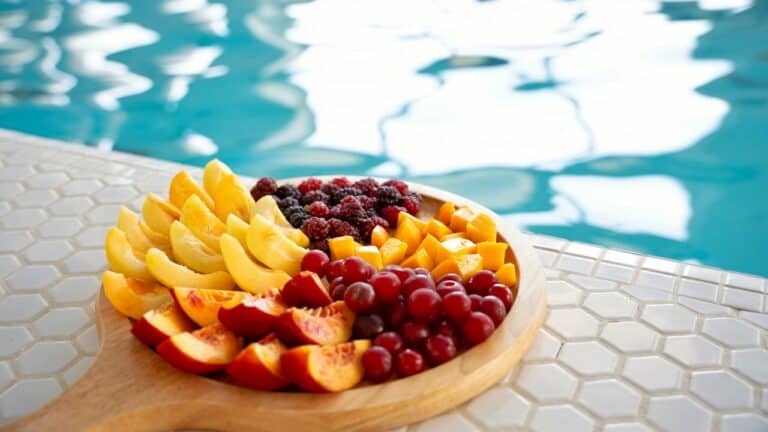
- Grapes work in small clusters of five to seven, strawberries halved with the green tops left on, and fig quarters when figs are in season (August through October).
- Dried apricots, dried figs, or Medjool dates pitted and halved add chewy texture that contrasts with cheese and creates a sweet-savory note.
- Rosemary sprigs along the edges, thyme tucked under a cheese wedge, and sage leaves laid flat are the visual finish that lifts the spread out of grocery-store territory.
What to skip in the add-on bucket
Skip pre-cut fruit cups (the surface oxidizes within thirty minutes), party-mix nuts (the seasoning blend overwhelms the cheese), and edible glitter unless the board is themed. Add-ons should look like the host walked past the produce aisle, not the party-supply aisle. The ounce math comes next.
How Much of Each Ingredient Per Guest
Quantity is where most home boards undershoot or overshoot. The working numbers: two ounces of cheese and two ounces of cured meat per guest for an appetizer board, four ounces of each for a meal board. Accompaniments scale at a half-cup total per guest. Crackers run six to eight pieces per guest, plus a quarter of a baguette.
The ounce math, board by board
- Appetizer board for 4 guests: 8 oz cheese (split across 3 wedges), 8 oz cured meat (split across 3 styles), 2 cups total accompaniments across 3 bowls, 24 to 32 crackers, half a baguette. Twelve to thirteen ingredient items total.
- Appetizer board for 8 guests: 16 oz cheese, 16 oz cured meat, 4 cups accompaniments, 48 to 64 crackers, one whole baguette. Same twelve to fifteen ingredient items, scaled up in volume.
- Meal board for 4 guests: 16 oz cheese, 16 oz cured meat, 3 cups accompaniments, plus a side salad or roasted vegetables. The board is the main course, so double the protein and cheese.
- Meal board for 8 guests: 32 oz cheese, 32 oz cured meat, 6 cups accompaniments, plus a hearty bread basket and a salad. This is the level where two boards can be more practical than one oversized platter.
Gelson’s host tips on charcuterie ratios confirms the two-ounce baseline and adds an adjustment for evening events past three hours: add an extra ounce of cheese per guest. The TGH best appetizers for a crowd guide covers the scaling logic for any spread that needs to flex from four to twelve guests on short notice.
Ingredients to Skip (and Why They Read Cheap)
Some charcuterie board ingredients show up on shopping lists because they are convenient, not because they read well on a board. The working principle: every item should justify its place with flavor or visual contribution. The four most common skip-it items each substitute shelf-life for flavor.
The four ingredients that drag the board down
- Pre-sliced supermarket cheese in plastic wrap dries out at the edges within thirty minutes on the board, and the flavor pales next to a freshly cut wedge from the cheese counter.
- Deli ham or turkey belongs on a sandwich. The texture is too wet for a board, the flavor is too mild next to cured meat, and the slices fold flat in a way that reads sad rather than rustic.
- Pre-cut fruit cups oxidize fast, release juice on the board, and the pieces sit in their own moisture. Whole fruit (grapes in clusters, halved strawberries with the tops on) reads finished and stays fresh.
- Party-mix nuts have a seasoning blend that overwhelms the cheese, artificial colors that read low-end, and a cost per ounce higher than marcona almonds at most grocery stores.
Each substitution can be fixed for under five dollars: the cheese counter cuts wedges to order, and a small bag of marcona almonds runs four to six dollars at most grocery stores. For hosts thinking about the broader appetizer category, the TGH dinner party appetizers easy starters guide covers the trade-offs between bought and homemade in adjacent categories. The final bucket-by-bucket move is the dietary swap.
Dietary Swaps: Vegetarian, Gluten-Free, Dairy-Free
Dietary swaps work cleanest when the host treats them bucket by bucket. Replace the bucket, keep the framework. A vegetarian guest at the table means the cured-meat bucket gets swapped for pickled vegetables, marinated artichokes, and roasted red peppers. A gluten-free guest means a separate bowl of gluten-free crackers and a small bowl of almond-flour cracker rounds. A dairy-free guest means plant-based cheese alternatives sit in the cheese bucket alongside the dairy options.
Vegetarian: pickled vegetables replace cured meat
Drop the three cured meats and add pickled okra, marinated artichoke hearts, roasted red peppers, and a small wheel of baked brie wrapped in puff pastry. The briny bucket expands to fill the protein space; the cheese bucket carries more of the visual weight.
Gluten-free: separate cracker bowl, not a separate board
- Almond-flour crackers: Simple Mills and Hu Kitchen hold cheese without crumbling and read as a deliberate choice rather than a workaround.
- Rice crackers: round or oblong shapes work for soft cheeses and accompaniments. Set the gluten-free cracker bowl with a small handwritten label so the guest does not have to ask.
- Vegetable dippers: endive leaves, sliced cucumber rounds, and mini bell peppers work as a gluten-free vehicle without buying special crackers at all.
Dairy-free: plant-based cheese earns its place
Plant-based cheese has improved. Brands like Miyoko’s Creamery (cashew rounds), Treeline (almond cheese), and Violife (blocks) hold their shape on a board and pair with the same accompaniments as dairy cheese. The TGH dietary restrictions explained guide covers vegetarian, vegan, gluten-free, dairy-free, kosher, and halal in the same hosting-logic framework.
Twelve to fifteen items, four buckets, two ounces of cheese and meat per guest for an appetizer board. The framework holds across vegetarian, gluten-free, and dairy-free swaps because each swap replaces a bucket, not the whole board.
Frequently Asked Questions
What are the basic ingredients of a charcuterie board?
A standard charcuterie board includes three to four cheeses, three cured meats, two to three accompaniments like jam or olives, nuts, fresh fruit, and crackers or baguette. Soft cheese, semi-firm cheese, firm cheese, prosciutto, salami, fig jam, marcona almonds, and grapes form the safe starter list.
What is the 3-3-3-3 rule for charcuterie boards?
The 3-3-3-3 rule means three cheeses, three cured meats, three accompaniments (jam, olives, mustard), and three add-ons (nuts, fresh fruit, dried fruit). The framework keeps the board balanced and the shopping list short without sacrificing variety across cheese textures, meat styles, and accompaniment flavors.
What should not go on a charcuterie board?
Skip pre-sliced supermarket cheese, deli ham, pre-cut fruit cups, and party-mix nuts. Avoid wet items placed directly on the board: olives, jam, and mustard go in small bowls instead. Crackers should sit in a basket alongside the board, not stacked on top where they get crushed and soft.
How many ingredients should be on a charcuterie board?
Twelve to fifteen ingredients covers a board for four to eight guests without overcrowding. The four-bucket model breaks down to three to four cheeses, three meats, three accompaniments, and three to five add-ons. More than fifteen confuses the eye and stretches the budget without adding flavor variety.
Do you need olives on a charcuterie board?
Olives are not required, but a briny element belongs in the spread. Cornichons, pickled peppers, or marinated artichokes work the same way: cutting through the fat of cured meat and aged cheese in the same bite. Castelvetrano olives are the most universally liked starter pick.
Can you make a charcuterie board the night before?
Most ingredients can be cut and stored the night before, but the final assembly should happen no more than two hours before serving. Cheese, meat, jam bowls, and dry items can be prepped 24 hours ahead. Fresh fruit, herbs, and sliced baguette go on in the final 15 minutes.
Continue Reading:
More On Charcuterie Boards
- How to Build a Charcuterie Board (Host’s Step-by-Step)
- Charcuterie Board Platter Setup (Host’s Playbook)
- Breakfast Charcuterie Board (Brunch Hosting Guide)
More from The Gourmet Host
- 3 Easy Ambience Tips For The Perfect Dinner Party Mood
- 14 Pasta Bar Ideas for a Fun Build-Your-Own Dinner
- The Best Conversation Starters for Teens That Connect
- Easy Party Cocktails That Let You Actually Enjoy the Party
- How to Plan a Five-Course French Dinner Party Menu
Explore TGH Categories
- Set the Scene
- Drinks and Bar
- Plan the Meal
- Engage with Guests
- Games and Toasts
- Tools and Techniques
- Why We Gather