Welcome Drinks by Country (10 Ideas That Set the Tone)
 15 min read
Two Aperol Spritz coupes are on the counter, ice in, orange slice in, prosecco poured to the rim, soda topped at the end. The first guest has not yet hung up her coat. That is the welcome drink already decided, already in motion: the host has handed off the most-asked question of the first ten minutes (“what should I drink?”) before it is asked once.
What follows is a welcome-drink playbook organized by country, not by season or theme. Ten welcome drink ideas anchored to specific cuisines (Italian, French, Mexican, Spanish, Japanese, Indian, Brazilian, Moroccan, Greek), each pour matched to the dinner that follows. For every country, an alcoholic anchor and a non-alcoholic welcome drink, so the host pours one of each from the same culture and never asks a guest to choose between a real drink and a real welcome.
At a Glance
- What a welcome drink actually does in the first ten minutes of a dinner party, and why country-anchored beats theme-anchored.
- Italian welcome drink: Aperol Spritz or chilled Crodino, the bittersweet aperitivo opener.
- French welcome drink: Kir Royale or sirop a l’eau, cassis-led or cordial-led depending on the menu.
- Mexican welcome drink: Paloma or agua de jamaica, citrus-forward and refreshing.
- Spanish, Japanese, Indian, Brazilian, Moroccan, and Greek welcome pours: one alcoholic anchor and one non-alcoholic match per country.
- How to pick the right welcome drink for the cuisine of your dinner, not a default cocktail.
What Is a Welcome Drink, and Why Does It Set the Tone?
A welcome drink is the first beverage poured for guests as they arrive, before seating and before the first course, and its job is to signal which evening they have just stepped into. The country-anchored version takes that signal one step further: an Italian Aperol Spritz, a Mexican Paloma, or an Indian Mango Lassi tells the guest in three seconds which cuisine the host has planned and which palate to bring to the table. Unlike a generic welcome cocktail chosen by season or color, a country-anchored welcome drink for guests does the work of theming the meal before the food appears.
What a Welcome Drink Actually Does (and Why It Matters)
The welcome drink owns the first ten to twenty-five minutes of the evening, between the first knock at the door and everyone sitting down. In that window, every guest looks for a place to put their hands and a sign the host is in control. A glass already poured solves both at once. The dinner party welcome drink is the host’s opening sentence.
The Four Jobs the Welcome Drink Does in the First Ten Minutes
- Removes the first decision. Guests do not have to choose. The host has already poured.
- Signals the cuisine. A Spritz reads Italian dinner. A Paloma reads Mexican. A lassi reads Indian. The drink themes the meal before the first dish lands.
- Paces the room. Pre-poured drinks bring guests into one space together rather than scattering them between coat rack and bar.
- Includes the non-drinker. Two welcome drinks (one alcoholic, one non-alcoholic) in matching glasses makes the non-drinker a guest, not a request.
TGH’s broader guide to welcome drinks for any gathering covers the format without a country anchor. The version below is the country-anchored playbook: a welcome drink recipe for each cuisine with the non-alcoholic match included. Imbibe Magazine’s guide to batched welcome punches is the right reference for groups over twelve, but for smaller gatherings the per-glass pour is faster than batching. A small home bar setup for hosting covers the basic kit either way.
Italy: Aperol Spritz or Crodino on Arrival
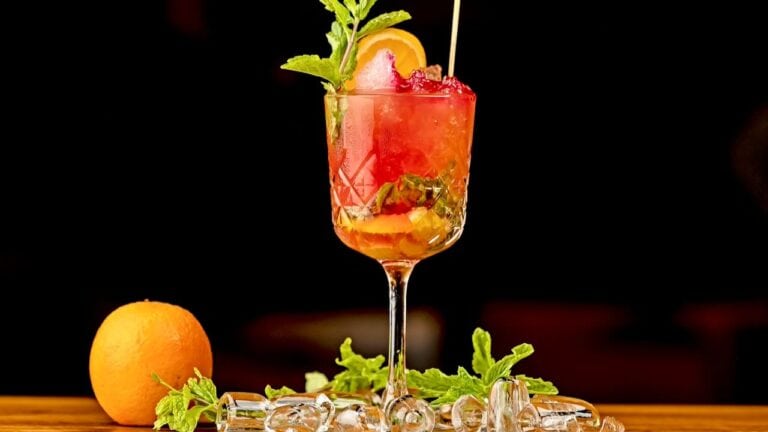
Italy turned the welcome drink into a national tradition: aperitivo, the 6 p.m. window of bitter, sparkling, low-alcohol pours that opens any evening. The Italian welcome drink for guests is the Aperol Spritz: three parts prosecco, two parts Aperol, one splash of soda, ice, orange slice. Build time per glass: under 30 seconds.
The two-pour Italian welcome menu:
- Aperol Spritz (alcoholic). Prosecco, Aperol, soda, ice, orange. Reference build on Aperol’s own page.
- Crodino (non-alcoholic). Same orange-bittersweet flavor, zero ABV, poured straight from a single-serve bottle over ice with an orange slice. Pour time: 10 seconds.
The reference build for the spritz is on Aperol’s own Aperol Spritz page. For hosts who confuse Aperol and Campari, Cuisine at Home’s explainer of the two aperitifs covers the bitterness difference (Campari is twice as bitter and reads medicinal at the start of an evening). For broader low-effort welcome-cocktail patterns, see TGH’s easy party cocktails for hosts who want to enjoy the party. The spritz is the whole Italian move.
France: Kir Royale or Sirop a l’Eau
France treats the welcome drink as a moment of restraint: one small glass of something light, never anything that fills the stomach before the meal. The classic French welcome drink for party arrivals is the Kir Royale: a teaspoon of creme de cassis in the bottom of a champagne flute, topped with chilled cremant or champagne. Six seconds of pour, instantly recognized.
The two-pour French welcome menu:
- Kir Royale (alcoholic). Creme de cassis (1 teaspoon) + chilled cremant or champagne (5 oz). Garnish optional. Flute is the only correct glass.
- Sirop a l’eau (non-alcoholic). One inch of fruit syrup (cassis, grenadine, mint, or violet) topped with cold still or sparkling water. The French house pour for non-drinkers and children.
Sirop a l’eau is the welcome drink non alcoholic option a non-drinker actually wants. It looks intentional rather than improvised: a colored syrup hits the bottom of the glass first, then the water on top creates a soft gradient. Pair the Kir Royale with the syrup pour and the table reads as French even before the appetizer arrives.
|
Set A Two Pour Welcome Menu |
Mexico: Paloma or Agua de Jamaica
Mexico’s welcome drink is citrus-forward, not heavy. The Mexican welcome drink at the country’s own tables is more often a Paloma than a Margarita: tequila, lime, grapefruit soda, ice, optional salt rim. Paired with chilled agua de jamaica for non-drinkers, the welcome pour reads as Mexican dinner without anyone naming the cuisine.
The two-pour Mexican welcome menu:
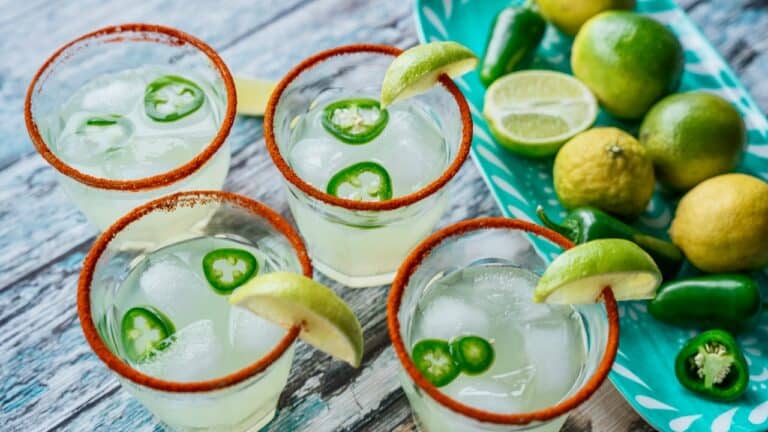
- Paloma (alcoholic). Blanco tequila (1.5 oz), fresh lime (0.5 oz), grapefruit soda (4 oz), pinch of salt, ice. Use Squirt or Jarritos toronja.
- Agua de Jamaica (non-alcoholic). Dried hibiscus steeped in hot water for 20 minutes, sugar to taste, cooled, served over ice with a lime wheel. Deep crimson color reads as intentional, not juice.
Diffords Guide publishes the canonical Paloma recipe (the version actual Mexican bars pour), and PUNCH’s deep-dive on the ultimate Paloma build covers the salt-rim variant and the smoked-mezcal swap. On the non-alcoholic side, Hola Jalapeno’s agua de jamaica recipe is the cleanest 20-minute steep on the open web.
Spain: Cava or Tinto de Verano
Spain pours the welcome drink into a wine glass and hands it across the kitchen island. The Spanish welcome cocktail is a 5-oz pour of cold cava (sparkling wine from Penedes), the country’s house pour. For warm evenings, the welcome drink ideas shift to tinto de verano, a half-and-half pour of cheap red wine and lemon soda over ice.
The two-pour Spanish welcome menu:
- Cava (alcoholic). Chill bottle to 45 degrees F, pour 5 oz into a flute. Spain’s everyday sparkling, often half the price of champagne.
- Tinto de Verano (alcoholic, lighter alternative). Cheap red wine (3 oz) plus lemon Fanta or Casera (3 oz), ice, lemon wheel. The drink Spanish bars pour at 7 p.m. on a hot Tuesday.
Cava requires zero advance prep beyond a cold bottle. Tinto de verano is the easier-than-sangria red-wine welcome for warm evenings without the citrus-prep load. Both signal Spain without explanation the moment the glass lands.
Japan: Welcome Highball or Yuzu Lemonade
In Japan, ordering a highball is itself the welcome ritual: the after-work first drink, almost always poured before food. The Japanese welcome drink for guests is the highball, Japanese whisky (Suntory Toki, Hibiki Harmony) poured over a single large ice cube and topped with cold soda. Build time: 15 seconds. Tall glass, two ingredients, one citrus zest.
The two-pour Japanese welcome menu:
- Japanese Highball (alcoholic). Japanese whisky (1.5 oz), cold soda water (4 oz), large ice cube, lemon zest. Soda first onto the ice, whisky second, never stir.
- Yuzu Lemonade (non-alcoholic). Yuzu juice or yuzu syrup (1 oz), cold soda water (5 oz), ice, candied yuzu peel. Bright citrus, light bitterness, sits alongside the highball without competing.
Drinks World’s Japanese Highball recipe and method covers the pour order that actually matters (soda first, whisky second). Just One Cookbook’s Japanese yuzu cocktail (yuzu chuhai) recipe is the version a Japanese host would actually pour at home, light enough to drink three of without it ever feeling like dessert.
|
Hosting Tip: Pour Both Drinks Before Guests Arrive |
India: Mango Lassi or Nimbu Pani
India’s welcome drink is dairy-led or citrus-led, almost never spirit-led. Indian dinner traditions treat the welcome pour as a cooling, palate-priming move before the spice arrives. The Indian welcome drink at a home dinner is most often Mango Lassi or Nimbu Pani (Indian lemonade with black salt and cumin). Both build in under three minutes and signal the menu’s spice level before the food does.
The two-pour Indian welcome menu:
- Mango Lassi (non-alcoholic, dairy). Ripe Alphonso mango pulp (1 cup), full-fat yogurt (1 cup), milk (0.5 cup), sugar (1 tbsp), pinch of cardamom, ice. Blend 30 seconds.
- Nimbu Pani (non-alcoholic, citrus). Fresh lime juice (1 oz), cold water (5 oz), sugar (1 tsp), pinch each of black salt and roasted cumin, ice, mint. The savory-sour Indian lemonade.
The Wanderlust Kitchen’s step-by-step mango lassi method is the version most home hosts execute on the first try without overthinking ratios. For a mixed-alcohol table, a small pour of chilled Kingfisher beer alongside the lassi gives drinkers an option without breaking the cuisine.
Brazil: Caipirinha or Coconut Water with Lime
Brazil’s welcome drink is the Caipirinha, the simplest national cocktail anywhere in the world: cachaça, sugar, one cut lime, muddled in the glass, topped with crushed ice. Three ingredients, 60-second build, one specialty bottle. Pair it with chilled coconut water and a lime wedge for non-drinkers and the welcome reads Brazilian beach-house dinner, no matter the city.
The two-pour Brazilian welcome menu:
- Caipirinha (alcoholic). One cut lime (8 wedges), white sugar (2 tsp), muddled in a rocks glass, cachaça (2 oz), crushed ice on top, brief stir. Adjust sugar to lime tartness.
- Coconut Water with Lime (non-alcoholic). Cold coconut water (6 oz), squeeze of lime, pinch of sea salt, ice. Light, salty-sweet, mirrors the caipirinha’s lime register without the spirit.
Cachaça is the only specialty bottle the host needs, and one bottle covers an entire evening of caipirinhas for ten guests. The coconut water pour costs less than two dollars per guest and uses no specialty equipment. Both welcome drink for party arrivals carry tropical signals without needing a tiki menu or paper umbrella as scaffolding.
Morocco: Mint Tea Welcome Ceremony
Morocco’s welcome drink is mint tea, and the tea itself doubles as theater. The traditional Moroccan welcome pour is hot atay bil naana: green tea (gunpowder, brewed strong), fresh spearmint by the handful, sugar by the brick, poured from a long-spouted teapot held high above the small glass so the tea aerates in the air. The pour-from-a-height is the gesture: it is itself the welcome.
The two-pour Moroccan welcome menu:
- Mint Tea (non-alcoholic, hot). Gunpowder green tea (2 tsp), fresh spearmint (handful), sugar (3-4 tsp per pot), boiling water. Brew 5 minutes, pour from height into small clear glasses.
- Orange Blossom Cooler (non-alcoholic, chilled). Cold water (5 oz), orange blossom water (3-4 drops), squeeze of lemon, 1 tsp honey, ice, mint sprig. The summer alternative when mint tea is too hot for the room.
The pour from height is not decoration; it cools the tea slightly on the way down and creates a foam that signals the tea was properly brewed. For non-drinkers at any country-themed dinner, the Moroccan welcome ceremony also doubles as the most photogenic welcome drink ideas in the whole list, no spirit required.
|
Save Your Best Welcome Pours |
Greece: Ouzo Splash or Lemonade with Honey
Greece’s welcome drink is poured taverna-style: a small glass of ouzo with one ice cube and a splash of cold water (the water turns the clear ouzo cloudy white, the iconic louche), or, for non-drinkers, lemonade made with Greek thyme honey. Build time per pour: 30 seconds.
The two-pour Greek welcome menu:
- Ouzo Splash (alcoholic). Chilled ouzo (1 oz) in a small tumbler, one large ice cube, splash of cold water (2 oz). Wait three seconds for the louche to develop.
- Lemonade with Greek Thyme Honey (non-alcoholic). Fresh lemon juice (1 oz), cold water (5 oz), Greek thyme honey (1 tbsp dissolved in warm water first), ice. Honey gives the lemonade a herbal-floral backbone no sugar matches.
Ouzo is among the cheapest welcome pours on this list: one bottle covers an evening of welcome rounds for ten guests for under fifteen dollars. The honey-lemonade reads as Greek instantly when served in a small clear tumbler with a mint leaf, no name card needed.
How to Pick the Right Welcome Drink for Your Menu
The welcome drink rule is one sentence: match it to the cuisine of the dinner, not to a default cocktail. If the menu is Italian, pour Italian. If the menu is Mexican, pour Mexican. The signature welcome drink does the cuisine-signaling work the food has not yet had a chance to do, and the matching non-alcoholic option keeps every guest at the same table.
Three rules of thumb for picking the welcome cocktail (or NA pour):
- Pour two, not five. One alcoholic, one non-alcoholic. Both tied to the cuisine. Three or more multiplies the host’s work without improving the guest experience.
- Choose by build time. Aperol Spritz, Paloma, Kir Royale, Highball, Caipirinha, and lassi all build in under 60 seconds per glass. Leave the constructed cocktails for after dinner.
- Pre-pour under eight; batch over eight. Below eight guests, line glasses up on the counter. Over eight, batch in a pitcher so the host is not pouring through the first conversation.
For larger gatherings (over twelve), TGH’s best batch cocktails for effortless entertaining covers which welcome cocktail recipes hold up after 90 minutes in a pitcher. For weddings, The Knot’s signature cocktail finder is a useful starting point for the welcome drink wedding choice (sparkling wine still leads, with Aperol Spritz second). For brunch, TGH’s brunch hosting guide covers the mimosa-Bellini-Bloody Mary rotation.
Frequently Asked Questions
What is a welcome drink at a dinner party?
A welcome drink is the first drink served as guests arrive, before seating and before food. It signals the meal has started, gives guests something to do with their hands, and sets the cuisine’s tone (Italian aperitivo, Indian lassi, Mexican Paloma) within the first ninety seconds of the evening.
What is the most popular welcome drink for a wedding?
Sparkling wine remains the most-served wedding welcome drink: prosecco, cava, or champagne. Aperol Spritz has become the next-most-common choice over the last five years thanks to its low ABV and visual color. Both work because they pour fast at scale, which is what wedding service requires.
Can a welcome drink be non-alcoholic?
Yes, and it should pour alongside the alcoholic option. The two strongest non alcoholic welcome drink choices are Italian Crodino (poured straight from the bottle over ice with an orange slice) and Indian Mango Lassi (blended ahead and served chilled). Both look like an intentional menu choice, not a substitute.
How many welcome drinks should I serve at one party?
Two: one alcoholic, one non-alcoholic, both tied to the cuisine of the meal. Three or more multiplies the host’s work without adding to guest experience. The goal of the welcome drink is decision-free hospitality, not bar variety, which the dinner pour-options can cover.
What is a good welcome drink for an Indian dinner party?
Mango Lassi if the menu skews warm-weather, Masala Chai if the menu skews fall or winter. For a mixed-alcohol table, a chilled Kingfisher beer poured into a small glass alongside lassi works as the dual welcome. Avoid Western cocktails at an Indian welcome, where dairy and spice anchor the pre-dinner palate.
When should I serve the welcome drink versus the dinner drink?
The welcome drink covers the arrival window (typically 10 to 25 minutes between first guest and seating). The dinner drink starts when guests sit down. Hosts often pour the welcome drink in a smaller glass than the dinner drink to signal the transition: a coupe for the welcome, a wine glass for the dinner.
Continue Reading:
More On International Drinks
- Drinks by Country (Host’s Guide to 12 Cuisines)
- Mexican Drinks Menu: 4 Pours That Run the Night
- Italian Drinks: Aperol, Spritz, and Crodino (Host)
- Japanese Drinks: Sake, Highball, Yuzu, Calpis (Plan)
- Indian Drinks: The Four-Pour Menu for Your Dinner
- Classic Aperitifs for Dinner Parties (15 Best Picks)
- Three-Bottle Home Bar Essentials: Global Starter
More from The Gourmet Host
- 60 Fun Trivia Questions to Test Every Dinner Guest
- How to Host a Dinner Party: Step-by-Step Guide
- 12 S’mores Bar Ideas for a Sweet DIY Dessert Station
- 18 Dessert Bar Ideas for a Build-Your-Own Table
- Elegant Infusions: Explore Coffee Culture Around the World
Explore TGH Categories
- Set the Scene
- Drinks and Bar
- Plan the Meal
- Engage with Guests
- Games and Toasts
- Tools and Techniques
- Why We Gather