Recipes to Feed a Crowd of 50: Big-Batch Menu Plan
 14 min read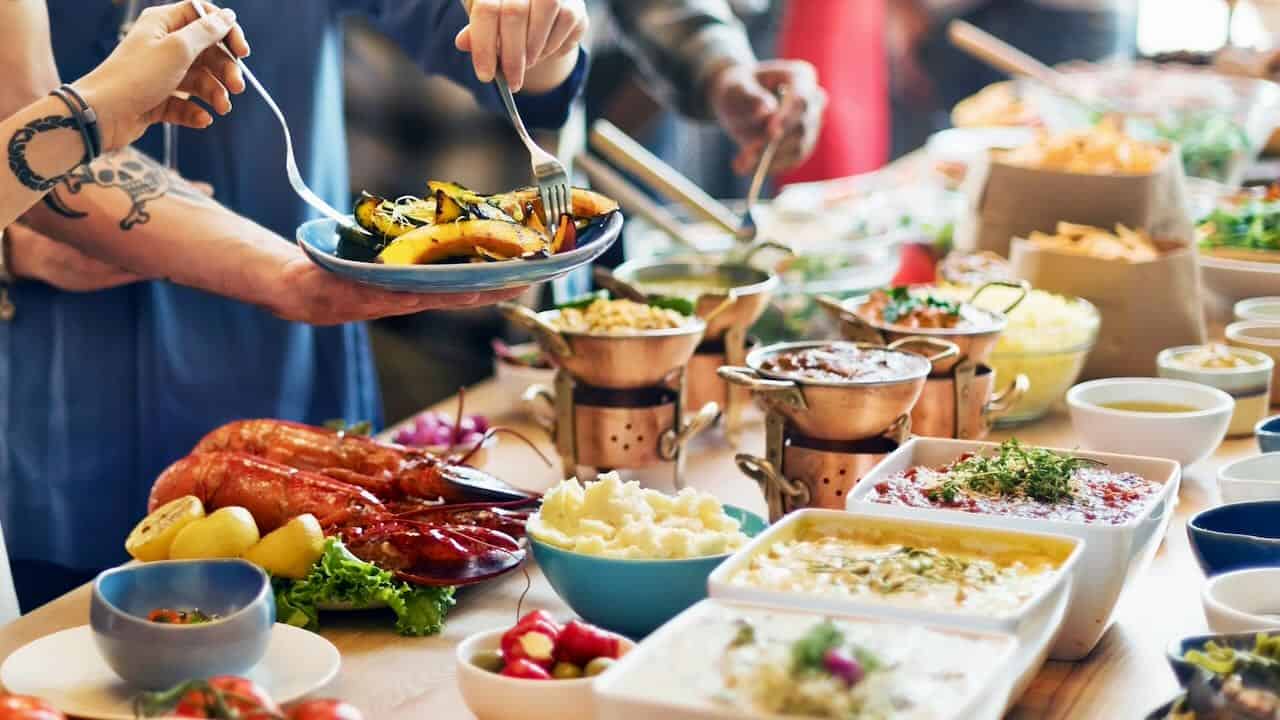
Feed fifty guests from one home kitchen using a handful of big-batch recipes, exact per-person quantities, and a three-day plan that turns cooking for a crowd into arithmetic.
Cooking for fifty is easier than cooking for fifteen, once you stop trying to be clever. At fifteen you plate every serving, time six components, and hover over the stove. At fifty you pick three dishes that scale, make giant batches, and let a buffet do the serving.
The one real danger at this size is running short. Run out of food halfway through a party of fifty and there is no quiet fix, because you cannot stretch one pan of lasagna into two while forty-nine people wait and one goes hungry.
The way through is fewer dishes made bigger, cooked off numbers you trust. This guide hands you the big-batch recipes that scale to fifty, the exact per-person quantities, and a three-day plan that turns the whole job into arithmetic instead of a gamble.
At a glance:
- Plan about fifty pounds of food total, or one pound per person across mains, sides, and salad.
- Figure roughly six ounces of cooked protein per guest, which works out to about nineteen pounds raw and boneless.
- Build the menu on two or three scalable mains rather than one giant showpiece dish.
- Spread the cooking across three days and reheat the morning of the event.
- Budget about five to eight dollars per head for a hearty buffet with sides, bread, and one dessert.
Recipes to Feed 50: The Short Answer
Recipes to feed a crowd of 50 are dishes engineered to cook in large batches, hold on warm settings, and reheat without drying, so a handful of them feed fifty people from a single home kitchen. Baked pasta, chili, pulled pork, curry, and rice-based casseroles all qualify, because they need no plating, scale in roasting pans and stockpots, and split cleanly across three days of make-ahead work. That is the answer in one paragraph, and the rest of this guide is the mechanism behind it.
Bigger Batches Beat Clever Cooking
The counterintuitive part of feeding fifty is that volume forces simplicity, and simplicity is what makes the day manageable. You are not cooking a harder version of dinner for eight. You are cooking a different, blunter kind of meal.
Pick two or three dishes that scale, make them in giant batches, and let guests serve themselves. There is no plating, no timing across six components, no delicate service.
The buffet is what removes the hardest variable. When guests plate their own food, you no longer have to land fifty servings hot at the same minute, which is the part that sinks most first-time attempts.
The Three Parts That Make Volume Work
The mechanism has three moving parts, and each one solves a problem that only shows up at scale:
- Scale linearly: a pot of chili at fifty servings behaves like a pot at ten, just bigger, while a seared steak does not scale at all.
- Hold with equipment: roasting pans, stockpots, and slow cookers keep food safe and warm for hours, so nothing has to leave the oven at the exact serving minute.
- Spread the labor: push the work across three days so no single afternoon has to break the kitchen.
Simplicity also protects you when something goes wrong. With three big dishes instead of a dozen small ones, a single late pan is a minor delay rather than a collapse, and you always have enough on the table to keep guests fed while it catches up.
Here is the worked example. For fifty guests you want three gallons of chili, two roasting pans of baked pasta, and a slow cooker of pulled pork, plus rice, beans, a big salad, and bread.
That covers the one-pound-per-person total with room to spare, and every dish on the list holds or reheats. The same make ahead oven dishes for hosting logic scales any gathering, just pushed to volume.
|
Build One Grocery List for Fifty |
Run the Numbers Before You Shop
Numbers are where feeding fifty is won or lost, so start here and round every line up. Under-buying the one dish everyone wanted is the failure you are designing out.
Here are the per-guest rules from this section scaled to two common crowd sizes so you can shop straight from the right column.
| Item | Per guest | For 25 | For 50 |
|---|---|---|---|
| Total food | 1 lb | 25 lb | 50 lb |
| Cooked protein | 6 oz | about 9.5 lb raw | about 19 lb raw |
| Cooked starch | 4 to 5 oz | about 7.5 lb | about 15 lb |
| Cooked side veg | 4 oz | about 6 lb | about 12.5 lb |
| Salad greens | 1.5 oz | about 2.5 lb | about 4.5 lb |
| Bread rolls | 1.5 rolls | 38 rolls | 75 rolls |
| Ice | 1 lb | 25 lb | 50 lb |
Per-guest figures are the article’s stated amounts. The For 50 column uses the article’s stated totals; For 25 halves them. Protein totals are raw boneless, per the article’s 19 lb figure for fifty.
These are the per-person amounts that scale straight to fifty:
- Total food: about fifty pounds, or one pound per person across mains, sides, and salad.
- Cooked protein: six ounces per guest, which is roughly nineteen pounds raw and boneless.
- Pulled pork: buy about thirty pounds raw, since it loses close to a third of its weight cooking.
- Starch: four to five ounces cooked per guest, near fifteen pounds of rice, potatoes, or pasta.
- Vegetables and salad: four ounces of a cooked side and an ounce and a half of greens per guest.
- Bread and ice: plan seventy-five rolls and fifty pounds of ice for a three-hour event.
Rounding up beats precise math at this size. A few extra pounds of rice or an extra pan of pasta costs a couple of dollars, while coming up short costs you the one thing you cannot fix mid-party, so the cheap insurance is always to buy the larger number.
Add a ten percent buffer on the mains so late arrivals and big eaters never leave you short. Buffer the proteins first, since those are the items guests notice running out.
These are the same figures the easy meals ideas for a group planners work from, only scaled to fifty.
Scaling a Family Recipe Breaks in Three Places
The dangerous confusable is treating feed fifty as make my family recipe times ten. It is not the same job, and the gap between them is where dinners fall apart.
A recipe multiplied by ten breaks in three predictable ways:
- Seasoning does not scale linearly, so ten times the salt overwhelms the pot; season to taste at volume, not by the multiplied number.
- Cooking vessels cap out, so one nine-by-thirteen pan becomes six that will not fit a single oven, forcing you to bake in slow waves.
- Timing shifts, because a triple batch of chili takes far longer to come up to temperature than one small pot.
The vessel trap is the one that catches careful cooks. A single home oven holds two, maybe three roasting pans, so six multiplied pans mean baking in shifts, and the first batch is cold before the last one is done. Choosing dishes that fit your real oven capacity is half the battle.
Big-batch recipes are written to avoid all three traps, which is why the best make ahead freezer recipes to feed a crowd start from a crowd count instead of a family portion multiplied up.
For the same reason, the best easiest meals for stress-free hosting at this scale are the ones designed to hold, not the ones that peak the moment they leave the oven.
|
Hosting Tip: Scale the Salt Last |
Spread the Cook Across Three Days
Fifty servings will not come together in one afternoon, and trying is how kitchens fall behind. Break the work into a backward plan from serving time.
- Three days out: cook the sauces, chili, and braises, since these deepen in flavor and reheat cleanly, and freeze anything that keeps.
- Two days out: assemble the casseroles and baked pastas unbaked, chop what holds, and buy the perishables.
- One day out: make the salads with dressing held separate, prep toppings, and set up the drink and ice station.
- Morning of: reheat and bake in staggered batches so nothing waits, and pull cold dishes thirty minutes before serving.
A written checklist keeps the rhythm honest, and our ultimate dinner party planning checklist adapts straight to this scale.
Cooking the braises three days ahead is not a compromise, it is the better version. Chili, ragu, and pulled pork all deepen in flavor after a night in the fridge, and reheating them gently is far more forgiving than trying to cook them fresh while the oven is busy with pasta.
Confirm your warm-holding gear works before the first dish goes in. A slow cooker that runs cold or an oven that holds unevenly turns a staggered plan back into a scramble.
Pour and Serve Safely at Volume
Drinks scale on their own formula, and safety becomes non-negotiable once food sits on a buffet for hours. Both are easy once you work from counts instead of guesses.
Here is what volume changes about the drink station and the serving line:
- Drinks: about two per guest the first hour and one per hour after, so a three-hour event needs near two hundred servings, or eight gallons of punch or water.
- Non-alcoholic: offer at least two options and keep backups chilled so the table never runs dry.
- Hot holding: keep hot dishes above 140F and cold dishes below 40F, and never leave either out longer than two hours.
- Refills: bring food out in small, frequent batches from the kitchen, since a long line means each dish sits longer than it would for eight.
Set the drink station away from the food so two lines never tangle into one. A guest refilling a glass should not block the guest reaching for a second helping, and a few feet of separation keeps both moving on a night this size.
For pours that add a little polish without more work, our take on wine and snacks combos scales easily for a crowd, and our white wine food pairings guide helps you pick one bottle that plays with a buffet.
A few ways to describe wine at the station give the pours a little polish without slowing anyone down.
|
Split the Crowd Grocery Costs |
Put Fifty on the Table Without the Gamble
You do not need fifty recipes to feed fifty people. You need three or four that scale, exact quantities you trust, and three days to spread the work.
Everything above collapses into a simple order of operations. Get the menu and the numbers right first, and the cooking itself becomes the easy part, because you are only reheating dishes you already trust.
Turn the mechanism into your next move in order:
- Pick your mains from the big-batch list, favoring dishes that hold over dishes that peak.
- Shop the scaled numbers above, rounding up and buffering the proteins first.
- Run the three-day timeline backward from serving time and confirm your warm-holding gear.
Fifty is also the scale where the details around the food start to matter, since a party this size is an event. Good invitations set the tone, which is the case our piece on why you should use custom dinner party invitations makes.
When you want lighter, hands-passed options alongside the mains, the party food recipe round up collections, the easy make-ahead appetizers, a bank of party food ideas, these easy finger food recipes for a crowd, a set of make-ahead appetizers, and the best appetizers for any crowd all give you starters that hold while the mains reheat.
Wrap-Up: Feed Fifty as Arithmetic
Feed fifty with three or four big-batch recipes that hold, exact per-person quantities, and a three-day timeline. Do not multiply a family recipe and hope.
Hold the plan to a short working set on the day:
- Two or three scalable mains, not one giant showpiece.
- One rounded-up shopping list, proteins buffered first.
- A backward timeline from serving time, with the heavy cooking done days ahead.
Choose dishes built to scale, work off numbers instead of nerves, and cooking for a crowd of fifty becomes math you can trust rather than a gamble on the day.
Frequently Asked Questions
How much food do you need to feed 50 people?
Plan about fifty pounds of food total, or one pound per person split across mains, sides, and salad. For mains, figure roughly six ounces of cooked protein each, so about nineteen pounds raw. Round every ingredient up and add a ten percent buffer so you never run short mid-service.
What main dishes scale well to 50 servings?
Baked pasta, chili, pulled pork, curry, and rice-based casseroles scale cleanly to fifty. They cook in large batches, hold on warm settings, and reheat without drying. Two big roasting pans of lasagna or three gallons of chili each feed about fifty. Pick dishes that do not need plating.
How many pounds of meat for 50 people?
Plan about nineteen pounds of raw boneless meat for fifty, based on six ounces cooked per person. Bone-in cuts need more, closer to twenty-five pounds. For pulled pork, buy thirty pounds raw, since it loses weight cooking. Buy a little extra so late arrivals and big eaters are covered.
How far ahead can you cook for 50?
Cook sauces, chili, and braises up to three days ahead and refrigerate, or freeze up to a month out. Assemble casseroles two days early. Bake or reheat the morning of the event in batches. For fifty guests, spreading the work across three days keeps one kitchen from falling behind.
How do you calculate drinks for 50 guests?
Plan about two drinks per person for the first hour and one per hour after, so a three-hour event needs roughly two hundred servings. That is about eight gallons of punch or water, plus ice at one pound per guest. Offer two nonalcoholic options and keep backups chilled and ready.
What is the cheapest way to feed 50 people?
Build around one bulk protein stretched with rice, beans, or pasta, and buy from a warehouse club. A taco bar, pasta bake, or chili spread feeds fifty for the least per head. Expect roughly five to eight dollars per person for a hearty buffet with sides, bread, and one dessert.
Continue Reading:
More On Food for a Crowd
- Food for a Crowd: Easy Menus to Feed a Big Group
- 9 Breakfast Foods for a Crowd: Make-Ahead Ideas
- 8 Camp Foods for a Crowd: Easy Meals to Feed Campers
- 10 Halloween Dinner Ideas to Feed a Hungry Crowd
- 9 Easy Mexican Potluck Ideas to Feed a Big Crowd
More from The Gourmet Host
- The Ultimate Dinner Party Planning Checklist (Time-Stamped)
- Instead of Cocktail Hour, Try These Wine and Snacks Combos
- White Wine Food Pairings: A Host’s Guide to the Perfect Match
- Different Ways to Describe Wine at Your Next Dinner Party
- Why You Should Use Custom Dinner Party Invitations
Explore TGH Categories
- Set the Scene
- Drinks and Bar
- Plan the Meal
- Engage with Guests
- Games and Toasts
- Tools and Techniques
- Why We Gather