12 Vegetable Side Dishes Worth a Second Helping
 15 min read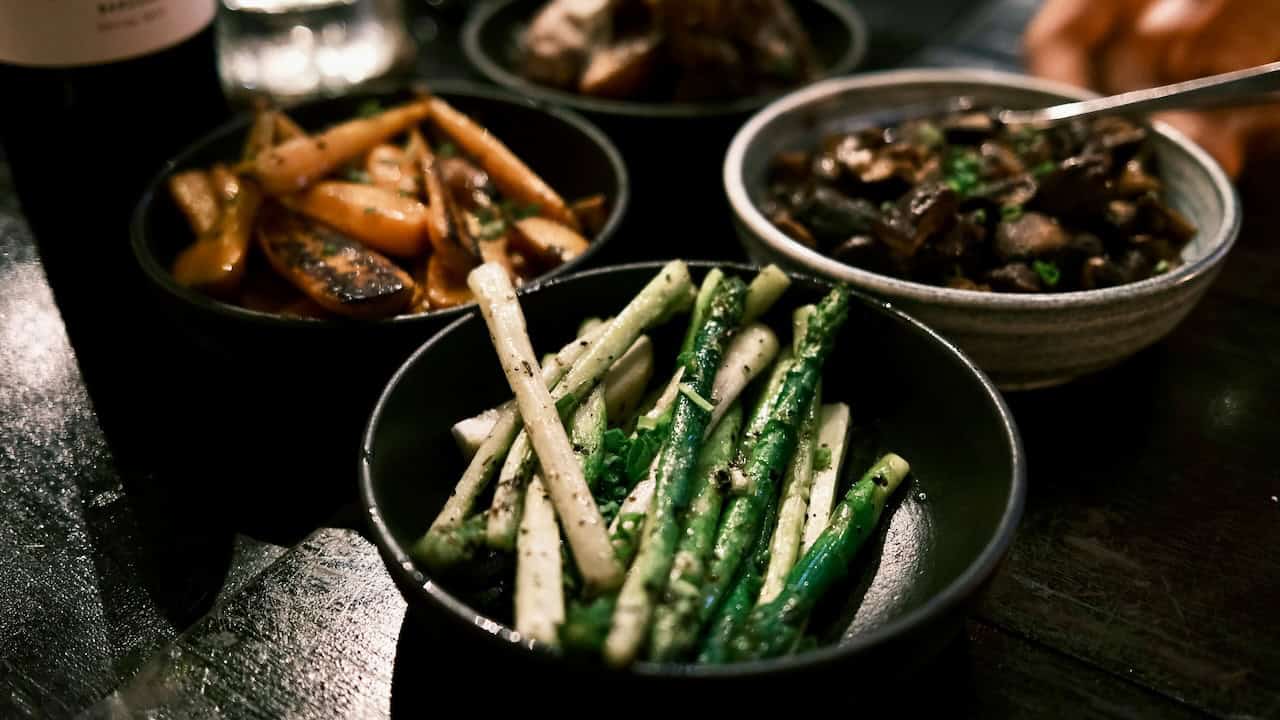
Vegetable side dishes get judged by what a table actually notices, and the three that land on the plate decide more of the evening than the main does.
Three sides carry a dinner party, and choosing them is where the evening quietly wins or loses. The main gets carved once and portioned by somebody else.
The bowl of roasted carrots stays in reach for the whole meal, and reaching again is the only vote a guest gets to cast at the table. That is why the dish people ask about on the way out is so often the one the menu was not built around.
At a Glance
- Three sides is the working number for a table of four to eight, and four sides for a table of eight to twelve.
- Build across cooking methods rather than across vegetables: one roast, one glaze or gratin, one raw and dressed.
- Roasted vegetable side dishes return deep flavor for very little supervision, which is why three of the twelve picks are roasts.
- Hasselback potatoes are the crown pick: they scale by the pan, hold heat, and look like more work than they were.
- Nine of the twelve picks hold a full day ahead; the two raw picks and the charred broccolini want the day itself.
- Family-style on one platter reads as abundance in a way that the same food split into individual portions does not.
What Is a Vegetable Side Dish?
Vegetable side dishes are named, plated components of a meal built on a vegetable rather than on a starch or a protein, and each one earns its own serving spoon at the table. That definition draws a line worth keeping: a side gets chosen, portioned, and reheated on its own schedule, while an accompaniment such as a sauce, a pickle, or a relish rides along with something else. Sorting sides by how they behave in a host’s kitchen and on a host’s table works better than sorting them by which vegetable is in season.
Sides Get the Seconds, So Choose Them Like the Main
One person carves the main once, into portions decided in the kitchen. A side sits in a bowl within arm’s reach for the length of the meal, and reaching for more of it is the only choice a guest makes without having to ask. Second helpings are a side-dish event, which is the practical reason to choose sides with the care usually reserved for the main.
A table notices color first, then texture, then temperature. Cauliflower roasted to mahogany at the tips reads from across the room; the same cauliflower cooked correctly and left pale does not. Nice vegetable side dishes are easy enough to cook; the ones guests return to earn it on that same order of notice.
Ranking vegetable side dishes ideas by hosting performance means scoring each dish on four things:
- Visual weight, or whether the dish registers before anyone has tasted it.
- Scale, or whether doubling it costs one more sheet pan or three more hours.
- Hold, or how the dish behaves after twenty minutes sitting on a table.
- Prep window, or how far ahead it can be finished without losing its texture.
A side that scores well on all four is one a host can cook for twelve without watching the clock.
Four Cooking Methods Set the Tone of the Plate
Three sides that share a cooking method will flatten the plate, whatever the vegetables happen to be. Method is what creates contrast, because it decides sweetness, texture, and how much water is left in the food. No single recipe for vegetable side dishes fixes a flat plate; the method mix does.
- Roasting drives the browning and caramelization that give a vegetable a savory, nutty edge, and it needs the least attention of the four.
- Glazing reduces a sweet liquid onto the vegetable so it finishes shiny and concentrated, which is the sweet note a salty main asks for.
- Baking under cream or cheese gives depth and softness, the register that carries a cold-weather table through a long meal.
- Raw and dressed brings acid and crunch, and it is the only method here that resets the palate between richer bites.
Run at least three of the four across a menu and the plate has tonal contrast built in before a single recipe gets chosen. Grouping vegetable recipes for side dishes by that decision rather than by season is what keeps the plate from flattening. Easy vegetable side dishes are mostly a question of which method fits the time you actually have.
|
Keep the Side-Dish Shopping List Straight |
Roasted Vegetable Side Dishes: 3 Picks That Reliably Land
Roasting is where great vegetable side dishes get made with the least supervision, and it earns three of the twelve slots for that reason alone. One sheet pan in a 425-degree oven, one turn halfway, and the browning does much of the seasoning work. These three roast vegetable side dishes scale from six guests to sixteen on the same timing.
- Balsamic brussels sprouts: Halved, laid cut side down, and roasted until the outer leaves char, then finished with a reduction that clings rather than pools. Cookie and Kate’s roasted brussels sprouts with balsamic sets them flat side down so they turn crisp outside and tender inside.
- Cauliflower steaks with tahini: Thick center-cut slabs hold their shape and give you a knife-and-fork side that carries like a main. Food52’s roasted cauliflower steaks pair them with tahini and date syrup for a sweet-savory finish.
- Cumin carrots with yogurt: Whole or halved carrots roasted with cumin until the edges shrivel and sweeten, then served with a cool yogurt sauce. Fork in the Kitchen’s cumin-roasted carrots is the base worth memorizing.
All three come out of the oven within five minutes of each other at one temperature, which is why the roast pan is where a three-side plate usually starts.
Glazed and Raw: 4 Picks for the Sweet and Bright Notes
Two notes do the balancing on a plate of vegetable side dishes: a sweet one that answers a salty main, and a bright one that cuts through both.
The Sweet Note
- Maple-glazed carrots: Carrots simmered in a little water, then cooked down with butter and sugar until the liquid turns to glaze. Budget Bytes’ glazed carrots is that dish at its simplest, and it suggests maple syrup in place of the brown sugar.
- Balsamic-glazed beets: Roasted beets tossed in a balsamic reduction keep their color and pick up a savory edge. Minimalist Baker’s roasted beet and cherry salad dresses them in a balsamic vinaigrette, the same flavor turn in a lighter form.
The Bright Note
- Shaved fennel and citrus: Fennel sliced paper-thin with segmented orange and good olive oil, which is a fennel orange salad working as a side rather than a starter. It is the fastest dish of the twelve.
- Asparagus ribbons with parmesan: Raw asparagus peeled lengthwise into ribbons, dressed with lemon, and finished with shaved parmesan in the last ten minutes. Nothing else on the plate reads fresher.
Serve one sweet and one bright alongside a roast and the plate is balanced without needing a fourth dish. An antipasto board runs on the same logic, and Italian dinner party appetizers counts fennel salad among its vegetarian antipasto picks.
|
Hosting Tip: Stagger the Oven |
Comfort and Green: 4 Picks for the Rest of the Table
Two more registers finish the set. One is the soft, rich side a cold-weather menu asks for, and the other is a green that reads as a dish rather than an obligation.
Cold-Weather Comfort
- Cauliflower gratin: Blanched florets under cream and gruyere, assembled a day ahead and baked the afternoon of. It is a pick that improves for sitting overnight before it ever sees the oven.
- Parsnip mash with brown butter: Parsnips carry a sweetness potatoes do not, and browned butter gives them a nutty finish. Fed and Fit’s parsnip mash with brown butter is the version to start from.
Greens That Read as a Dish
- Charred broccolini with chili crisp: High heat until the florets blacken at the tips, then chili crisp for heat and crunch. Roasted broccolini with brown butter chili crisp needs twenty minutes at 425F and adds panko for extra crunch.
- Green beans almondine: Blanched beans finished in butter with toasted almonds and lemon. Blanch a day early, shock in ice water, and the finish takes five minutes at the stove.
Both comfort sides reward being made a day early. Green vegetable side dishes fail when they arrive steamed and unseasoned, so each of the two greens carries fat, acid, and something crunchy.
A fall dinner party menu built on squash, sweet potatoes, and root vegetables leans on the same comfort register, with one sharp green keeping the table from going soft.
The Crown Pick of the Twelve Is a Potato
Hasselback potatoes are the crown pick of the twelve, and the case for them rests on mechanics rather than novelty. Fanned slices give a single potato both a crisp edge and a creamy center, so one dish covers two textures. Hasselback potatoes are sliced thin but not all the way through, then fanned, and they scale by the pan for a crowd.
Simple vegetable side dishes usually give up visual weight to stay simple. This one does not: a tray of fanned potatoes with herb oil pooled in the grooves reads as a centerpiece from the doorway, without a garnish doing the work.
Why it holds up under real hosting conditions:
- Slice each potato resting in a wooden spoon so the knife stops short of the base.
- Add the herb oil into the grooves after the first roast, not before, so the herbs do not scorch.
- One tray feeds eight and two trays feed sixteen on identical timing.
- It holds heat well, because a dense potato gives its heat up slowly.
A potato earns the top spot on mechanics rather than nostalgia. Give it a wide platter rather than a bowl, the way a party food platter presents anything meant to be taken from.
|
Split the Cost of a Shared Table |
How Do You Plate a Side So It Reads Like the Main?
Family-style on one wide platter, almost every time. Volume is what signals abundance, and the same quantity of food split into eight small portions reads as rationing instead of generosity. The exception is the gratin, which travels better in the dish it baked in.
Plating is the last quarter of the work, and it is where the picks turn into an actual table.
- Choose a matte platter: Glossy white bounces light and flattens texture, while a matte or lightly glazed surface lets the browning on a roast show. Dark vegetables want a pale platter and pale vegetables want a dark one.
- Garnish from inside the dish: Toasted hazelnuts on the sprouts, mint on the carrots, lemon zest on the asparagus. A garnish that is not already an ingredient reads as decoration.
- Leave the platter some room: Food pushed to the rim looks crowded and cools faster. Two-thirds full is the ratio that both photographs and serves well.
The trap is plating all three sides in the same shape of vessel, which erases the contrast the methods were chosen to create.
For a raw spread specifically, a crudite platter built from fresh vegetables, a creamy dip, something salty, and something sweet shows the same balance held together on one board.
How to plate food like a pro covers the technical moves, and food presentation techniques goes further on color and height. Both matter more for a side than for a main, because a side is the dish guests serve themselves.
Make-Ahead Windows for All Twelve Picks
Prep windows are what turn a three-side plate from ambitious into routine, and a recipe rarely states its make-ahead window.
| Pick | Method | Make-ahead window |
|---|---|---|
| Balsamic brussels sprouts | Roast | Full day; reheat ten minutes in a hot oven |
| Cauliflower steaks with tahini | Roast | Full day; keep the tahini separate until service |
| Cumin carrots with yogurt | Roast | Full day; the yogurt goes on at the table |
| Maple-glazed carrots | Glaze | Full day; re-gloss over low heat |
| Balsamic-glazed beets | Glaze | Two days; beets improve on the second |
| Shaved fennel and citrus | Raw | Slice two hours ahead, dress at the table |
| Asparagus ribbons with parmesan | Raw | Assemble in the last ten minutes |
| Cauliflower gratin | Bake | Assemble a full day ahead, bake the day of |
| Parsnip mash with brown butter | Bake | Full day; loosen with cream on reheat |
| Charred broccolini with chili crisp | Green | Same day; roast in the last twenty minutes |
| Green beans almondine | Green | Blanch a full day ahead, finish in five minutes |
| Hasselback potatoes with herb oil | Crown pick | Par-roast a full day ahead, crisp before serving |
Nine of the twelve finish a full day ahead and only need heat. Two are raw and want the last ten minutes, and one wants to be charred the same day. Staggering that way is what keeps vegetable side dishes easy on the day itself.
The hosting move is a two-and-one split:
- Two picks finished the day before, so the oven is free when guests arrive.
- One pick that comes together in the last fifteen minutes, so something reaches the table visibly fresh.
- Avoid three make-ahead sides at once, because the whole plate then tastes reheated.
The labor moves off the day itself, one dish stays behind to finish while the room fills, and nothing on the plate announces how far ahead it was made.
Frequently Asked Questions
What are the best vegetable side dishes for a dinner party?
Pick one from each of three cooking methods so the textures do not repeat. The twelve picks here cover roasting, glazing, raw and dressed, and comfort baking, which is enough range for any main. Hasselback potatoes are the crown pick because they scale, hold heat, and prep a full day ahead.
How many vegetable side dishes should I serve at a dinner party?
Three sides for tables of four to eight, and four sides for tables of eight to twelve. Fewer than three reads as undercatered, and more than four crowds both the plate and the oven. The standard split is two hot sides plus one raw or dressed side, with at least one made ahead.
Can vegetable side dishes be made ahead of time?
Yes, nine of the twelve picks here hold a full day. Roasted vegetables reheat in a hot oven, glazed sides re-gloss on the stove, and a gratin can be assembled the night before and baked the day of. Only the raw, dressed sides need last-minute assembly.
What vegetable sides go with everything?
Hasselback potatoes, cumin-roasted carrots, and a shaved fennel salad. That trio works with meat, fish, or a vegetarian main because the textures cover the map without competing: a crisp starch, a sweet roast, and a bright raw dish. Swap the carrots for beets in winter and the logic still holds.
What’s the difference between a side dish and an accompaniment?
A side dish is a plated, named component of the meal that gets its own serving spoon and its own place on the table. An accompaniment is a condiment or garnish supporting another dish, such as a sauce, a pickle, or a relish. Sides earn a line on the menu.
How do I plate vegetable sides so they look like the main event?
Serve family-style on one wide matte platter rather than portioning onto individual plates, because volume is what signals abundance. Garnish with something already in the dish, such as toasted hazelnuts on the sprouts or mint on the carrots. Leave the platter two-thirds full so nothing crowds the rim.
Continue Reading:
More On Vegetarian Dinner Party
- Vegetarian Dinner Party Menu That Wins Over Skeptics
- Vegetarian Thanksgiving Menu, 5 Sides and 2 Mains
- Vegan Dinner Party Menu Built Around Five Swaps
More from The Gourmet Host
- How to Plate Food Like A Pro: Easy Plating Tips
- Food Presentation Techniques: Easy Plating Tips for Cooks
- Fall Dinner Party Menu: Harvest Recipes, Cocktails, and Décor
- Party Food Platters: Build Boards for Any Gathering
- Italian Dinner Party Appetizers: Easy Antipasto Picks
Explore TGH Categories
- Set the Scene
- Drinks and Bar
- Plan the Meal
- Engage with Guests
- Games and Toasts
- Tools and Techniques
- Why We Gather