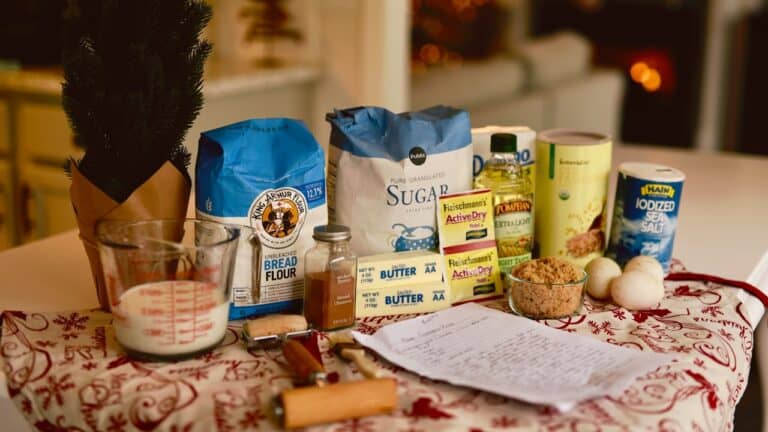
Milk Substitutions for Baking, With Exact Ratios
 14 min read
Nondairy milk, a pantry can, or plain water and butter can stand in for milk in nearly any batter, at the right ratio.
Because milk in a batter is mostly water carrying a little protein, sugar, and fat, running out of it rarely ruins the bake. The fix is knowing which of those jobs the recipe leans on hardest: half a cup of evaporated milk stirred into half a cup of water replaces a full cup of milk in a cake or muffin batter, no store run required. Cookies barely notice the swap. A custard notices everything.
Unsweetened soy, oat, or almond milk pours in cup for cup, evaporated and powdered milk come from the pantry, buttermilk or yogurt needs a small leavening adjustment, and water with butter covers an empty fridge. Cakes and muffins forgive nearly any of them. Yeast bread and custard are pickier about which one goes in.
At a Glance
- Unsweetened soy, oat, almond, coconut beverage, or rice milk swaps in cup for cup, though the thinner ones bake less rich.
- Evaporated milk stands in for regular milk once it is diluted with an equal amount of water; sweetened condensed milk is a different product and cannot substitute.
- Powdered milk works mixed with water first or added dry with the flour while water covers the liquid; the exact ratio depends on the brand.
- Buttermilk or thinned yogurt replaces milk cup for cup, and a little extra baking soda with less baking powder keeps the rise on track.
- Water plus a spoonful of melted butter is the last-resort swap for quick breads and boxed mixes, at some cost to browning and richness.
- The safest pick depends on the bake: cakes, muffins, and cookies forgive almost any substitute, while yeast bread and custard are less forgiving.
Definition
An empty milk carton mid-recipe rarely means a ruined bake: nearly every common batter tolerates a stand-in, because milk’s job (moisture, a little protein, some milk sugar, and a trace of fat) can be rebuilt from what is already in the kitchen. Unsweetened nondairy milk, diluted evaporated milk, reconstituted powdered milk, buttermilk with a leavening tweak, or plain water and melted butter each cover a different piece of that job. The ratio matters more than the brand in the fridge.
The Short Answer: Ratios for Every Common Swap
Every milk substitute in baking reduces to one of four moves: pour in a nondairy milk cup for cup, dilute a pantry can, mix a powder, or rebuild plain water with a little fat. The ratios match the figures a milk substitutions for baking ratio guide gives for the nondairy, evaporated, powdered, and water-and-butter options.
| Substitute | Ratio (per 1 cup milk) | What Changes |
|---|---|---|
| Unsweetened soy milk | 1 cup soy milk | Closest protein match; browns and structures nearest to dairy milk |
| Unsweetened oat milk | 1 cup oat milk | Neutral, mildly sweet flavor; a dependable all-purpose pick |
| Unsweetened almond milk | 1 cup almond milk | Lower in fat and a little more watery; bakes less rich, and carries a tree nut allergen |
| Unsweetened rice milk | 1 cup rice milk | Thinnest of the nondairy swaps; gives the lightest body |
| Coconut milk (carton beverage or canned) | 1 cup coconut milk | Adds a mild coconut note |
| Evaporated milk | 1/2 cup evaporated milk + 1/2 cup water | Used undiluted, it bakes denser and browns too fast |
| Powdered (dry) milk | Mixed with water at the package ratio, or added dry with the flour | Brands differ enough in concentration that the package ratio is the safer default |
| Buttermilk or thinned yogurt | 1 cup buttermilk or yogurt thinned with a little water | The acid changes how the batter rises; see the leavening note below |
| Water plus melted butter | 1 cup water + 1 1/2 teaspoons melted butter | Last resort; noticeably less browning and richness |
Choose by what the recipe needs rather than by what happens to be open in the fridge. A cake built mostly on eggs, butter, and sugar barely notices which row is used. A custard, a yeast bread crust, or anything that depends on milk’s fat and sugar for color notices immediately.
What Milk Actually Does in a Batter
Milk carries four things into a batter, and each one shows up somewhere different in the finished bake, according to a breakdown of what milk does in a batter. About 87 percent of milk is water, and that water hydrates the flour’s starches and proteins the same way any liquid does. The rest of the job splits three ways.
- Protein (casein and whey): adds a little structure to the crumb.
- Milk sugar (lactose): browns through the Maillard reaction, the same chemistry that browns a seared crust.
- Fat: softens the crumb and adds richness, even in a trace amount.
Swap the milk and usually only one or two of those four jobs need covering, since the egg, butter, and sugar already in the recipe do part of the work. A recipe heavy on egg and butter barely notices a change in the milk. A recipe that leans on milk specifically for browning or richness, like a yeast bread crust or a stovetop custard, notices right away.
|
Keep the Recipe for Next Time |
Nondairy Milks: Soy, Oat, Almond, Coconut, and Rice
Protein and fat, not flavor, are what separate one nondairy milk from another in a batter. One test of the best nondairy milks for baking swapped almond, hemp, soy, and coconut milk one for one into a pumpkin pie and ranked soy first for baking closest to dairy milk, while noting that in cookies, cakes, and muffins the milk choice changes little.
- Soy milk: the closest protein match to dairy milk; holds structure and browns close to the original recipe.
- Oat milk in baking: a neutral taste that suits muffins, bread, and cornbread, so you can use oat milk instead of milk in baking wherever a neutral flavor matters.
- Almond milk: lower in fat and a little more watery, so an almond milk substitute for milk in baking gives up some richness, per a guide to using almond milk in place of dairy that also warns not to expect identical results. Can you use almond milk instead of milk in baking? Yes, cup for cup, with that trade-off.
- Rice milk: the thinnest of the group, with the lightest body.
- Coconut milk beverage: adds a mild coconut note and pours cup for cup like the others.
Coconut Milk Beverage vs. Canned Coconut Milk
Coconut milk comes two ways, as a carton beverage shelved with the other nondairy milks and as the canned kind sold for cooking. The same ratio guide behind the table lists canned coconut milk as a cup-for-cup swap for milk too, so either form follows the table’s 1:1 ratio.
Almond milk carries a tree nut allergen, one of the common dietary restrictions worth checking before it goes into a bake meant for guests with food allergies. Asking guests about dietary restrictions before the bake, rather than after, keeps a nondairy swap from becoming a surprise at the table.
For desserts already built around a dairy free milk substitute for baking, dairy free dessert recipes round out the rest of the spread.
Pantry Dairy: Evaporated and Powdered Milk
Evaporated milk is regular milk with most of its water cooked off, so it needs that water back before it works as a swap. Here is how to substitute evaporated milk for milk without throwing off the recipe’s balance: dilute it with an equal amount of water. A few recipes stretch the water slightly further for a thinner result, but equal parts is the reliable starting ratio.
- 1/2 cup evaporated milk plus 1/2 cup water equals 1 cup of regular milk, per a guide to swapping regular milk for evaporated milk that allows up to half again as much water.
- Undiluted evaporated milk bakes noticeably denser and browns too fast, since its concentrated milk sugar caramelizes ahead of schedule.
- Instant dry milk reconstitutes with water at roughly the ratio printed on the package.
- Baker’s dry milk goes straight into bread dough with the flour, at about 5 to 6 percent of the flour’s weight for a more tender, higher-rising loaf, per a guide to how dry milk works in baking.
Why Sweetened Condensed Milk Is Not a Swap
Sweetened condensed milk looks like evaporated milk on the shelf, but it is a separate product: evaporated milk with sugar cooked into it until it turns syrupy. It cannot replace regular milk in a recipe, diluted or not, because the added sugar throws off both the sweetness and the liquid balance the recipe was written for.
Powdered milk in baking works well either way once the ratio is right, and because brands concentrate their milk solids differently, the package ratio stays the safer default for whichever container happens to be in the pantry.
|
Hosting Tip: let cold dairy swaps sit out briefly. |
Tangy Swaps: Buttermilk, Yogurt, and Sour Cream
Buttermilk, plain yogurt, and sour cream all replace milk cup for cup once they are thinned to a pourable consistency, but each one brings acid the original recipe was not written around. That acid is also part of what makes each one work so well in a batter.
- Buttermilk: thins to a 1:1 swap for milk; its acid is the reason the leavening needs adjusting.
- Yogurt: thin with a splash of water first to match milk’s texture, then swap 1:1, per a piece on baking with yogurt in place of milk.
- Sour cream: using sour cream instead of milk follows the same 1:1 rule, and a guide on using sour cream when whole milk runs out adds an extra teaspoon of baking soda and takes a teaspoon of baking powder out for each cup used in baking.
The acid in all three reacts with baking soda the moment it hits the batter, which is why swapping one in for plain milk changes how the recipe rises. Adding a small amount of extra baking soda and easing back the baking powder gives that acid something to react against, instead of just souring the batter. The finished bake comes out a little more tender, with a faint tang.
That reaction runs the other way too: a recipe written specifically around buttermilk needs its own substitute logic, not this one, since buttermilk itself is the thing being replaced rather than the stand-in for milk. Buttermilk substitutes that bake just as tender covers that swap in full.
Water Plus Butter When the Fridge Is Empty
Water and melted butter are the fallback for the moment nothing else in the kitchen will do. Can I use water instead of milk in baking? Yes: stir about 1 1/2 teaspoons of melted butter into 1 cup of water, and the mixture covers the same volume of liquid the recipe calls for.
- Works well for: quick breads, pancakes, and boxed cake mixes, since they already lean on oil or butter.
- Costs: noticeably less browning, since none of milk’s sugar is left to color the crust, plus a little less richness in the crumb.
- Avoid for: a custard or a yeast bread’s crust, where the pantry and nondairy swaps above are the better choice.
When the fridge holds buttermilk, yogurt, or a nondairy carton, any of those beats water and butter for color and richness.
|
Share the Swap Plan With Your Co-Host |
Choosing the Swap by What You’re Baking
The right substitute depends on how much weight milk is carrying in the specific recipe, not on which swap happens to be open. One side by side review of five nondairy milks rated soy milk highest overall and rice milk lowest on flavor and creaminess.
- Cakes, muffins, and quick breads: any nondairy milk, diluted evaporated milk, or buttermilk and yogurt work, since eggs, butter, and sugar carry the structure.
- Yeast breads: soy or oat milk, or diluted evaporated milk, since milk’s protein and sugar support gluten and crust color.
- Cookies: almost any swap, water plus butter included, because fat and sugar dominate the dough.
- Custards and puddings: diluted evaporated milk or full-fat soy milk, since a thin swap like rice milk risks a loose, watery set.
Three signs point to a swap that was too thin or too concentrated:
- A crust that bakes too pale or flat-tasting means the swap was too thin for a yeast bread or another browning-dependent bake.
- A loose or watery center means a custard or pudding needed more fat than the swap supplied.
- A dense, slightly gummy crumb points to undiluted evaporated milk, or too little liquid overall.
A substitute for milk in muffins or a substitute for milk in cake can be almost any swap; a yeast loaf or a custard is worth the richer end of the list instead.
A baked dessert is rarely the only dairy-free dish on the table when a guest needs one, and easy dairy free dinner recipes rounds out the rest of the menu around it.
Frequently Asked Questions
What can I substitute for 1 cup of milk in baking?
One cup of milk in baking can be replaced with 1 cup of unsweetened soy, oat, or almond milk, or with 1/2 cup evaporated milk plus 1/2 cup water. Powdered milk mixed with water at the package ratio also works. Each swap keeps the batter’s liquid level the same, so the texture stays close to the original recipe.
Can I use water instead of milk in baking?
Water can replace milk in baking cup for cup, though the result tastes less rich and browns less. Milk adds fat, protein, and sugar that tenderize the crumb and deepen color. Stirring about 1 1/2 teaspoons of melted butter into each cup of water restores some of that richness in cakes, muffins, and quick breads.
Which nondairy milk works best for baking?
Soy milk is a strong nondairy choice for baking because its protein content is close to dairy milk, which helps structure and browning. Unsweetened oat milk follows closely for its neutral flavor and body. Almond and rice milk are thinner and lower in protein, so baked goods made with them can turn out paler and more delicate.
Is buttermilk a good substitute for regular milk in a cake?
Buttermilk can replace regular milk in a cake, but its acid changes how the batter rises. Add a little baking soda and cut back the baking powder, since the soda reacts with the buttermilk’s acid and now does part of the lifting. The finished cake comes out more tender, with a slight tang and a finer crumb.
How do you use evaporated milk in place of regular milk?
Evaporated milk replaces regular milk when it is diluted with an equal amount of water, so 1/2 cup evaporated milk plus 1/2 cup water stands in for 1 cup of milk. Used undiluted, it makes batter richer and browner. Sweetened condensed milk is a different product and cannot swap in.
Can powdered milk replace fresh milk in baking?
Powdered milk can replace fresh milk in baking, either mixed with water first or added dry to the flour while the recipe’s liquid goes in as water. Follow the package ratio, since dry milk brands differ in how much powder makes a cup. Baked goods made with powdered milk brown well and keep a soft crumb.
Continue Reading:
More On Ingredient Swaps and Comparisons
- Baking Powder Substitute Ratios That Actually Work
- Baking Soda vs Baking Powder and When to Use Each
- Half and Half vs Heavy Cream, Explained by Milkfat
- What Does Baking Soda Do to Cookies? The Real Science
- Best Baking Powder Substitute for Fluffy Pancakes
More from The Gourmet Host
- 5 Buttermilk Substitutes That Bake Just as Tender
- Dairy-Free Dessert Recipes Every Guest Will Love
- Common Dietary Restrictions: A Host’s Guide to Every Guest
- How to Ask Guests About Dietary Restrictions: Scripts
- Easy Dairy-Free Dinner Recipes the Whole Table Loves
Explore TGH Categories
- Set the Scene
- Drinks and Bar
- Plan the Meal
- Engage with Guests
- Games and Toasts
- Tools and Techniques
- Why We Gather