12 French Dessert Recipes for Easy Entertaining
 12 min read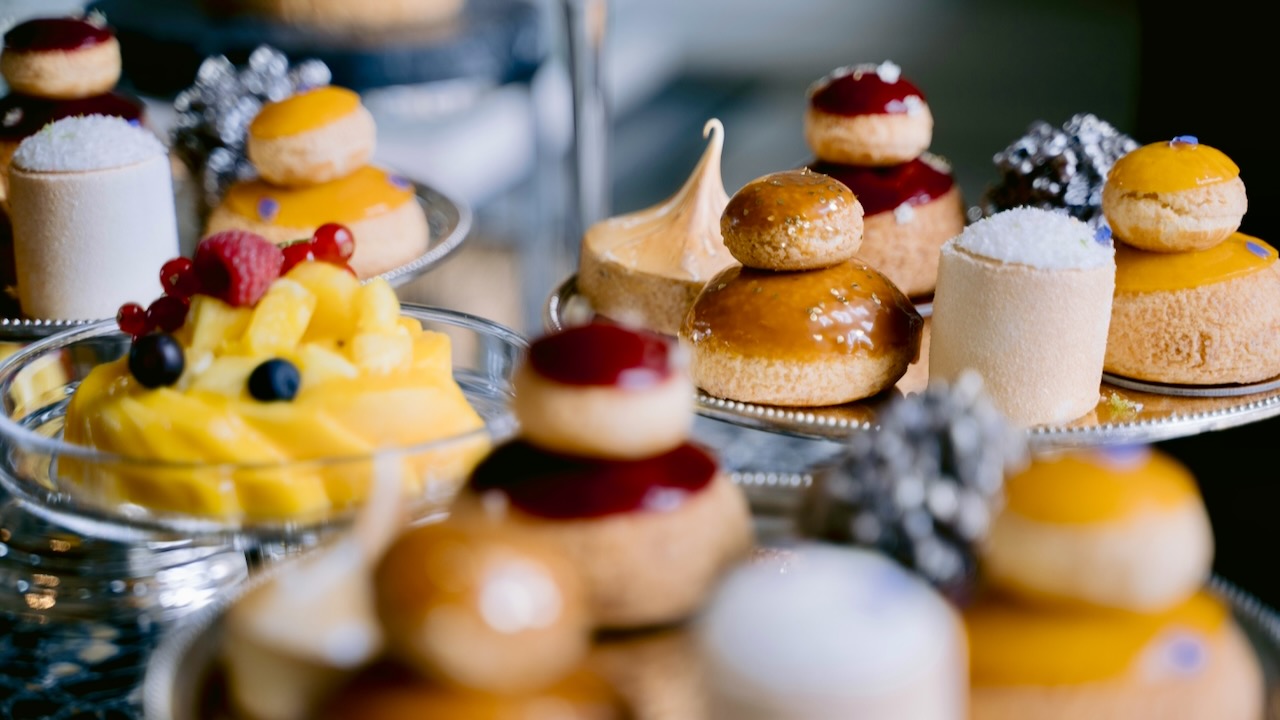
Two days before guests arrive, the smartest move in a French kitchen is to finish dessert first. Custards deepen in the fridge, macaron shells soften into the right chew, and a tarte tatin only needs a gentle warm-up. That early head start is what lets the sweet course feel calm instead of frantic, even when the main course is still resting on the stove. What follows is a host’s working list of 12 French desserts, grouped by how far ahead you can build them and how they plate for a table. You will move from spoon-soft custards through showpiece pastries, small bites for a platter, and lighter fruit finishes, with timing notes on each so the final course carries itself.
At a Glance
- Most French dessert recipes are built to be made ahead, which is exactly why they suit a dinner party.
- Custards like creme brulee and pots de creme set overnight and need only a finishing touch at the table.
- Showpiece pastries such as profiteroles, eclairs, and opera cake reward a little planning with a high-impact reveal.
- Small bites like macarons, madeleines, and financiers let guests graze a sweet platter with coffee.
- Fruit-forward options including tarte tatin, clafoutis, and ile flottante give a lighter close after a rich main.
What Makes a French Dessert Right for Entertaining
French dessert recipes earn their place at a dinner party because the best of them are designed to be finished long before the doorbell rings. The real test for a host is not whether a sweet tastes impressive, but whether it can wait in the fridge, hold its shape on a plate, and need only a quick step at serving time. Unlike a fussy plated restaurant dessert, the dishes here lean on overnight chilling, gentle reheating, and simple garnishes, so the sweet course supports the evening rather than stealing your last hour in the kitchen.
That make-ahead logic also shapes how you choose among them. A custard suits the host who wants zero live cooking; a pastry suits the one who enjoys an hour of assembly the afternoon before. Match the dessert to your nerves, not just your menu.
- A make-ahead window that lets the dessert sit a full day or two without losing texture.
- Plating ease, so it portions cleanly into individual servings or slices without collapsing.
- A small finishing step, like a quick torch pass or a dusting of sugar, as the only live task.
For a wider sense of the range, a broad Delish French dessert roundup shows how many directions the tradition runs, while a set of easy French-inspired desserts keeps the technique within reach for a first attempt. With those guardrails set, the custards are the natural place to begin.
Make-Ahead Custards and Creams
Custards are the host’s safety net: silky, do-ahead, and almost impossible to ruin once you learn the low, slow bake. Three classics carry a French table on their own, and each one finishes in the fridge rather than at the last minute. Set them the night before and the sweet course is essentially done before your guests park the car.
- Creme brulee — the vanilla custard sets two days ahead; torch the sugar to a glassy crack just before serving.
- Pots de creme — rich chocolate cups that chill in their ramekins and plate straight from the fridge.
- Chocolate mousse — whipped airy and spooned into glasses, it holds overnight and needs only a curl of shaved chocolate.
Treat creme brulee as your anchor dessert. A reliable Preppy Kitchen creme brulee walks through the water-bath bake and the resting time, and the same custard logic carries the chocolate version, so a French chocolate pots de creme slots in without new equipment. The torch is the only live step, and a broiler covers for it in a pinch.
If you want a custard course with no torch at all, lean on the mousse and the pots de creme. Both are spoon desserts, both photograph well in clear glasses, and both free your oven for the main. Once the cold desserts are squared away, a showpiece pastry is what turns a good evening into one guests talk about.
|
Keep the Menu Plan Together |
Showpiece Pastries Worth the Effort
Some French desserts justify an afternoon of assembly because the reveal does real work at the table. These three are project bakes, but each one breaks into stages you can build and stash, so the effort lands the day before rather than during dinner.
- Profiteroles are choux puffs baked ahead, filled with cream or ice cream, then stacked and crowned with warm chocolate sauce as guests sit down.
- Eclairs use the same choux dough piped long, filled with pastry cream, and glazed; assemble within a few hours of serving so the shells stay crisp.
- Opera cake layers almond sponge, coffee buttercream, and chocolate ganache into clean rectangles, and it improves after a night set in the fridge.
Choux is the skill these share, and it is far friendlier than its reputation. A clear profiteroles recipe shows how the dough puffs hollow and ready to fill, and a working pastry chef’s perspective in this French desserts guide demystifies the layering that makes opera cake look harder than it is. Bake the shells and the sponge a day early, and assembly becomes a calm twenty minutes.
The opera cake is your make-ahead champion in this group, since it wants the overnight rest to firm up. Profiteroles and eclairs reward a same-day finish, so plan their assembly into your afternoon. When you would rather offer variety than one tall centerpiece, a platter of small bites covers more ground.
|
Hosting Tip: Vary the Dessert Platter Textures |
Small Bites for a Dessert Platter
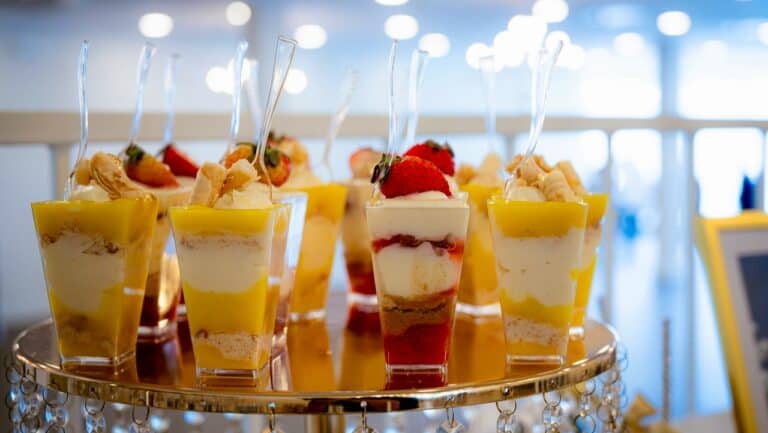
A mignardise-style plate of tiny sweets is the most forgiving way to close a French meal, because every piece is made well ahead and set out cold. Three small bites do the heavy lifting, and together they let guests graze with coffee instead of committing to one rich slice.
- Macarons — the almond shells rest a full day to soften, so they are built to be baked early and refrigerated until the platter goes out.
- Madeleines — shell-shaped sponge cakes that bake in minutes; their flavor holds best if you make the batter a day ahead and bake the morning of.
- Financiers — small brown-butter almond cakes that keep for two days in a tin and need no garnish at all.
Macarons carry the most fear and the most reward. A step-by-step guide to French macarons walks through the meringue and the rest period that gives them their chew, and a wider set of classic French desserts shows how madeleines and financiers round out a platter without competing for attention.
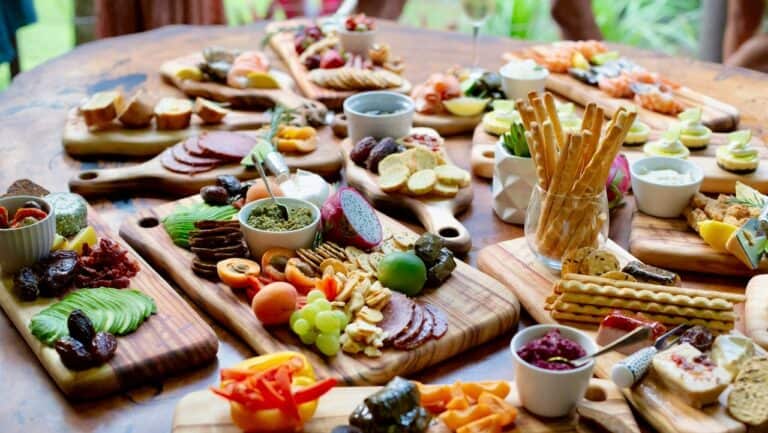
Arrange the platter in odd numbers and let the macarons sit at the center, since they read as the most special. Madeleines and financiers fill in around them and forgive a heavy hand. When the meal has been rich, though, the better finish is something that tastes of fruit and air.
|
Share Every Prep Task Clearly |
Fruit-Forward French Desserts
After a braise or a creamy main, a fruit-led dessert resets the palate and keeps the evening from feeling heavy. These three lean on baked or poached fruit and barely there sweetness, and each one suits a guest who wants a gentle close.
- Tarte tatin is caramelized apples baked under pastry, then flipped; it reheats gently, so bake it the day before and warm it through at serving.
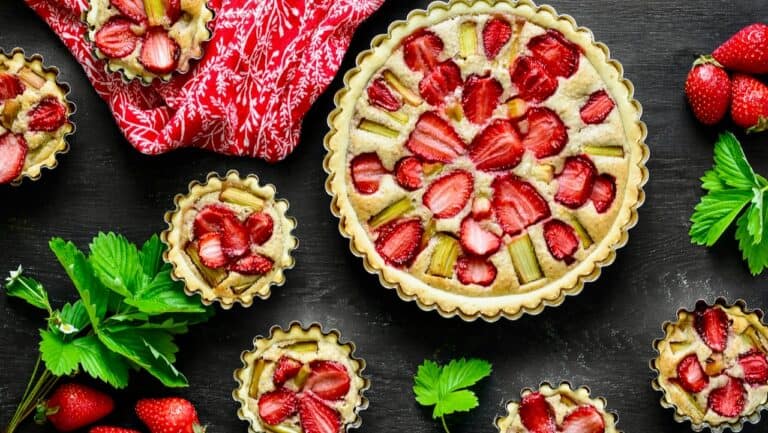
- Clafoutis is a custardy batter poured over cherries or berries and baked into a soft, barely sweet cake that is best served slightly warm.
- Ile flottante is poached meringue floating on creme anglaise, light enough to follow even the richest main course.
These desserts also welcome whatever fruit is best that week. Home-tested ideas in this set of Taste of Home French desserts cover the apple and cherry classics, and a cultural tour through French pastries and desserts explains why a light finish like ile flottante closes a French meal so well.
Tarte tatin is the make-ahead winner here, since a day’s rest sets the caramel and the warm-up takes minutes. Clafoutis wants to be eaten fresh from the oven, so save it for a smaller table where timing is easy. With the desserts chosen, the last decision is how they reach the plate.
Plating and Serving the Sweet Course
How dessert reaches the table decides whether the course feels finished or rushed. A French sweet course is meant to be lingered over with coffee, so the plating should be simple, clean, and ready to send out in one calm pass from the kitchen.
- Portion: serve one plated dessert per guest, or a shared platter of two or three small bites if you want variety with coffee.
- Garnish: wipe plate rims, keep to a single deliberate touch, and let the dessert sit slightly off-center for a relaxed look.
- Temperature: bring custards and small bites to a cool room temperature, but keep the brulee crust crisp by torching it last.
A confident hand with the plate matters more than any flourish, and a few simple techniques in this guide to plating food like a pro translate directly to the sweet course. When the night calls for something simpler, a set of quick, effortless desserts keeps the same calm, do-ahead spirit so dessert lands as a natural close rather than an afterthought.
If the menu skips dairy, a set of dairy-free desserts keeps the same make-ahead spirit, and in warmer months a few summer berry desserts or even a couple of rhubarb desserts fit a clafoutis-style finish beautifully.
Whatever you choose, plate it the moment the main is cleared so the rhythm of the evening holds. A dessert that arrives calm and looks unhurried tells guests the whole meal was in good hands, which is the quiet confidence a French close is built on.
Frequently Asked Questions
What is the most popular French dessert to serve guests?
Creme brulee is the most popular French dessert for guests because it is made entirely ahead and finished with a quick torch at the table. Its custard base holds for two days in the fridge, so the only live step is caramelizing the sugar just before serving.
What are easy French desserts for a dinner party?
Easy French desserts for a dinner party include pots de creme, chocolate mousse, clafoutis, and madeleines. Each one uses pantry staples and can be portioned into individual servings ahead of time. Custards and mousses set in the fridge overnight, which removes nearly all of the day-of pressure.
Which French desserts can I make ahead?
Creme brulee, pots de creme, chocolate mousse, macarons, and tarte tatin all make ahead well. Custards and mousses need overnight chilling, macarons rest a day to soften, and tarte tatin reheats gently. Plan the sweet course first so it is finished before guests arrive.
What is a classic French dessert that is not too sweet?
Ile flottante, a poached meringue floating on creme anglaise, is a classic French dessert that stays light and barely sweet. Clafoutis and a simple cheese-and-fruit close work the same way. These options suit guests who want a gentle finish after a rich main course.
Do I need special equipment for French desserts?
Most French desserts need only basic equipment: ramekins for custards, a hand mixer for mousse, and a madeleine pan if you bake the shells. A kitchen torch helps with creme brulee, though a broiler works in a pinch. Macarons benefit from a piping bag for even shells.
How many desserts should I serve at a French dinner party?
Serve one plated dessert at a French dinner party, or a small platter of two or three bite-size sweets if you prefer variety. A single well-made dessert reads as confident, while a mignardise-style plate of macarons and madeleines lets guests graze with coffee at the end of the meal.
Continue Reading:
More On French Entertaining
- How to Plan a Five-Course French Dinner Party Menu
- 7 Classic French Main Dishes for Confident Hosts
- 15 Crowd-Pleasing Mini Quiche Recipes for Parties
- 18 Classic French Foods Every Confident Host Knows
- How to Build a French Cheese Board Course at Home
More from The Gourmet Host
- Summer Dinner Recipe Ideas for Every Backyard Table
- Fall Table Centrepiece Ideas for Cozy Gatherings
- Mexican Dining Etiquette: The Host’s Table Guide
- Office Potluck Guide: 9 Ways to Coordinate Work Food
- 4 Rhubarb Recipes Worth a Spring Dinner Party Slot
Explore TGH Categories
- Set the Scene
- Drinks and Bar
- Plan the Meal
- Engage with Guests
- Games and Toasts
- Tools and Techniques
- Why We Gather