Dairy-Free Dessert Recipes Every Guest Will Love
 18 min read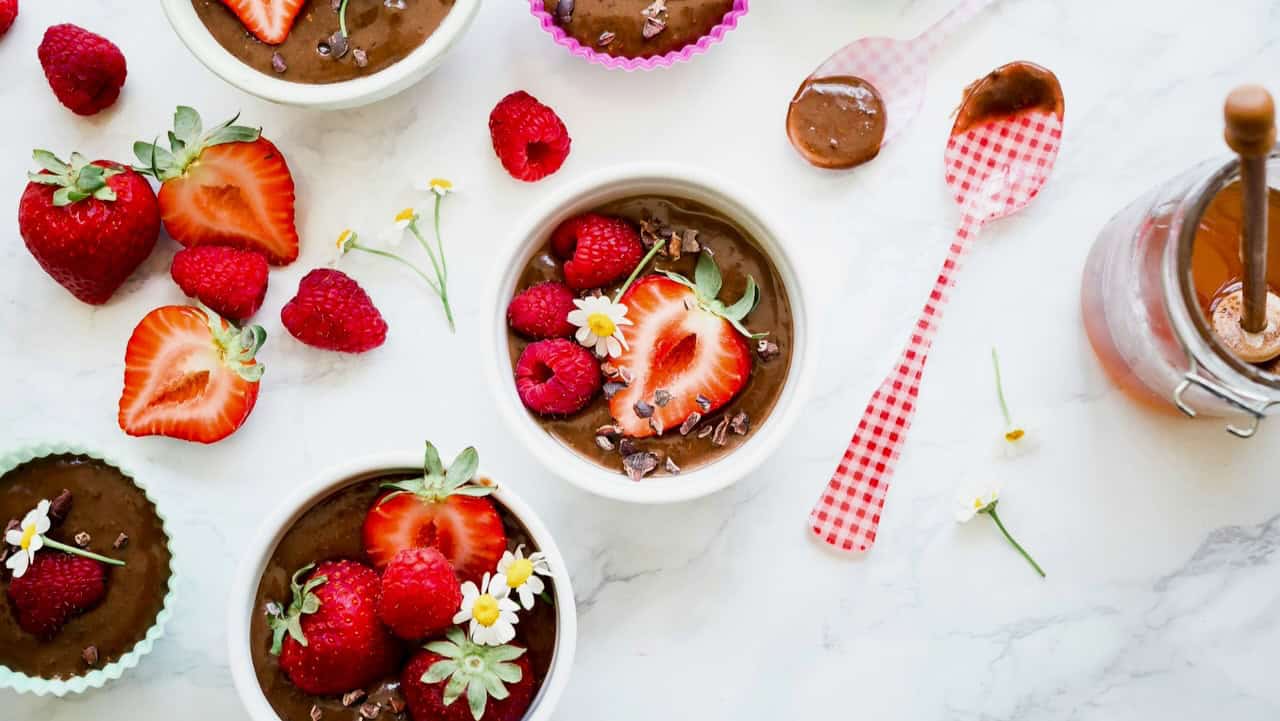
Which dairy-free desserts actually hold their own as the closing course at a dinner party for eight, when one guest avoids milk and the other seven do not? Four formats, reliably: a chocolate dessert built on bittersweet chocolate and a fat that is not butter, a fruit-forward bake using olive or coconut oil, a frozen course of sorbet or coconut-milk ice cream, and a make-ahead set dessert like panna cotta with agar or a chia layered with stewed fruit. Pick from those four and the table eats one plate together, not two.
What that depends on is the pantry, the chocolate label, and a clear plating move that signals intentional dessert rather than allergy workaround.
By the end, you will know exactly which fats and creams replace butter and dairy in each format, which dark chocolate to trust, when to bake versus when to assemble store-bought, and how to plate the course so no guest asks which plate is theirs.
At a Glance
- Four formats — chocolate, fruit-forward, frozen, and make-ahead set — cover every dairy-free dessert occasion without forcing a substitute-tasting recipe on the table.
- Five fats and creams (coconut cream, coconut oil, olive oil, full-fat coconut milk, vegan butter) plus maple syrup and dark brown sugar carry roughly 90% of dairy-free dessert work.
- Bittersweet chocolate at 70% cocoa or higher is usually dairy-free, but the FDA has flagged undeclared milk in chocolate bars — verify the allergen statement, not the cocoa percentage alone.
- Make-ahead set desserts (panna cotta with agar, chia pudding, dark chocolate pudding) plate in five minutes when guests sit down and let the host stay at the table.
- A composed plate of three quality store-bought elements — sorbet, dark chocolate, fresh fruit — reads as the chosen close of the meal and beats a baked dessert built from unfamiliar ingredients on short notice.
What Is a Dairy-Free Dessert at the Dinner Table?
A dairy-free dessert is a closing course that contains no milk, butter, cream, yogurt, whey, casein, or lactose — and reads as the dessert the whole table wanted, not the swapped-out version next to the real one. For a host, the working definition is practical: one plate the guest with a dairy restriction eats from the same platter as everyone else. FoodAllergy.org’s primer on milk allergy vs. lactose intolerance makes clear that for an allergic guest, even trace milk solids matter — so the dinner-party bar is structural avoidance, not casual substitution.
The Dinner-Party Bar for Dairy-Free Desserts (It Is Not the Weeknight Bar)
A weeknight dairy-free dessert just has to satisfy a sweet tooth. A dinner-party dairy-free dessert has to read as the closing course of a hosted evening — composed, photogenic, and confident enough that no one at the table thinks the word “substitute.” That is a higher bar, and it is the one this article is built around.
The dinner-party bar means three things in practice. The dessert plates well on real ceramic, not on a baking sheet. It scales to eight servings without the texture going off in the second portion. And it does not telegraph the dietary restriction on the plate.
Bon Appétit’s edit of dairy-free dessert recipes consistently leans into formats that already meet that bar — olive oil cakes, dark chocolate puddings, sorbets — rather than rebuilding creamy recipes around a swap.
Three quick filters to check any dairy-free dessert idea against the dinner-party bar:
- Visual signal: does the dessert look composed on a plate, or does it look like it came out of a tub? Sorbet in a coupe glass passes; sorbet in the carton does not.
- Texture hold: does the dessert keep its structure for the 12 to 15 minutes between the first served plate and the last? Coconut whip holds; a thin oat-milk mousse weeps.
- Conversation cost: does serving the plate require you to explain three substitutions before guests taste it? If yes, pick a different dessert.
Pass all three filters and the dessert earns the table on its own terms. For broader dinner-party dessert thinking that applies whether or not dairy is on the table, our roundup of quick and easy desserts for any gathering covers the format-first logic in the wider context.
Most of the work then shifts to the pantry — which five fats and creams cover the substitution math across every dessert format.
The Pantry That Carries the Course
Almost every dairy-free dessert worth serving at a dinner party rests on five fats and creams plus three sweeteners. Lock in those eight pantry staples and the format choice — chocolate, fruit, frozen, or set — becomes the only real decision on dessert night. The pantry does the rest.
The five fats and creams
- Full-fat canned coconut milk — swaps one-for-one for heavy cream in puddings, panna cotta, and chocolate ganache. Refrigerate the can overnight to separate the thick coconut cream from the water for whipping.
- Coconut cream — the scooped-from-the-top fraction of refrigerated coconut milk, or a dedicated can. Whips into a passable dessert cream when chilled and sweetened with maple syrup or icing sugar.
- Coconut oil — the workhorse for chocolate bars, brownies, and ganache. Solid at room temperature, melts like butter, neutral when refined. Use virgin coconut oil only when a faint coconut note suits the dessert.
- Olive oil — the cake fat. Olive oil cakes, citrus bakes, and chocolate tortes built on olive oil hold their crumb for three days and pair with both fruit and dark chocolate.
- Vegan butter — an oil-blend stick. Best for pie crusts, shortbread, and any recipe where you would otherwise use cold butter cut into flour. Match the brand’s fat content to the recipe’s butter percentage.
The three sweeteners that earn their place
- Maple syrup — lends depth to chia puddings, oat milk panna cotta, and avocado-chocolate mousse without competing with the dominant flavor.
- Dark brown sugar — the right call for fruit crumbles, oat-coconut toppings, and any dessert where a faint molasses note adds dimension.
- Granulated sugar — the neutral baseline for olive oil cakes, sorbets, and meringue. Keeps the format’s signature flavor forward.
Round out the pantry with one unsweetened plant-based milk — oat milk is the most versatile for baking and coffee service; almond milk is thinner but neutral; soy milk works in stovetop puddings.
King Arthur Baking’s library of vegan dessert recipes maps the substitution logic format by format and is a reliable cross-check when a recipe asks for an ingredient outside this short list.
With those eight pantry staples on hand, the next decision is which dessert format you want the night to close on — and the chocolate course is the easiest place to start, because chocolate hides the dairy-free swap better than any other format on the menu.
|
Save the Desserts Worth Repeating |
Chocolate Desserts That Don’t Need Cream
Chocolate is the dairy-free format with the highest payoff and the lowest risk. The dominant flavor — cocoa, sugar, fat — never depended on dairy in the first place, which is why olive oil chocolate cake, dark chocolate sorbet, avocado-chocolate mousse, and flourless chocolate torte all win blind taste tests against their dairy-built counterparts. The format hides the swap.
Four chocolate desserts worth the dinner-party slot
- Olive oil chocolate cake — a one-bowl bake using olive oil, granulated sugar, cocoa, and a plant-based milk. Smitten Kitchen’s chocolate olive oil cake is the reference build — flourless variant available, dairy-free by construction.
- Dark chocolate sorbet — cocoa, water, sugar, and a square of bittersweet chocolate, churned. Scoops cleanly into a coupe, plates dark and glossy, lasts a week in the freezer.
- Avocado-chocolate mousse — two ripe avocados, ½ cup cocoa, ¼ cup maple syrup, splash of plant milk, blended for 90 seconds. Set in glasses for 30 minutes. Plates like classic mousse.
- Flourless chocolate torte — bittersweet chocolate melted with coconut oil, folded into whipped eggs and sugar. Bakes in a springform pan for 25 minutes; serves eight.
What the chocolate label has to say
Most bittersweet bars at 70% cocoa or higher are dairy-free, but the label is the source of truth, not the cocoa percentage.
The FDA’s bulletin on dairy-free chocolate and milk allergens has flagged undeclared milk in some chocolate products marketed as dark or dairy-free, often from shared equipment. For an allergic guest, a brand with a clean “contains” line and no “may contain milk” advisory is the working standard.
- Read the allergen statement at the bottom of the ingredients panel, not the front-of-pack claim — “dairy-free” on the front does not override “may contain milk” on the back.
- Treat 70% cocoa as a starting filter, not a guarantee — some premium 70%+ bars still add milk fat for mouthfeel.
Pairing the chocolate course to the rest of the menu
Pair any of the four chocolate desserts above with a coconut cream whip (the chilled top of a refrigerated can, sweetened with one tablespoon of maple syrup, whipped 90 seconds) and the plate reads as a finished restaurant course.
Epicurious’s dairy-free dessert collection uses this pairing logic across roughly half its catalog — chocolate plus coconut cream is the workhorse combination dairy-free dessert recipes return to again and again.
Pair the dessert backward to the rest of the menu: a dark, rich chocolate close suits a lighter main, while a fruit-forward close suits a heavier braise. The same course-flow logic applies at the start of the meal in our piece on easy appetizer ideas for every party and gathering. When the menu has already been rich, the fruit-forward course is where the host should default.
Fruit-Forward Desserts: The Strongest Default for a Mixed Table
Fruit is the structural default for a dairy-free dessert because fruit is already dairy-free. Leaning into in-season produce removes the substitution problem entirely — there is nothing to replace, only ripe fruit to feature. For a host serving eight, a fruit-forward dessert is the lowest-effort, highest-return choice on the menu.
Four fruit-forward formats that hold the table
- Olive oil cake with citrus or stone fruit — a single-layer bake topped with sliced blood oranges in winter or roasted apricots in summer. Holds for three days; improves on day two.
- Poached pears in red wine — two pears per four guests, simmered 25 minutes in red wine, sugar, cinnamon, and one strip of orange peel. Plates with one ladle of the reduced poaching liquid.
- Summer berry crumble with oat-coconut topping — berries tossed with sugar and lemon zest, topped with oats, dark brown sugar, coconut oil, and almond flour. Bakes in 35 minutes.
- Lemon-coconut tart — coconut-oil shortcrust with a lemon curd built on coconut milk and cornstarch. Sets overnight; slices clean for eight.
Why fruit-forward beats rebuilt creamy
Rebuilding a creamy dessert without dairy almost always lands at a recognizable substitute — the texture wobbles, the flavor reads as compromise. Fruit does the opposite. A perfectly ripe peach with a spoonful of coconut whip and a drizzle of olive oil is the entire dessert; no one is searching for what is missing.
Food Network’s vegan dessert gallery leans fruit-forward across the majority of its dinner-party-scale entries — fruit gives the host a head start the kitchen does not have to redo.
The seasonal windows where fruit-forward hits hardest
- Stone fruit — June through August. Peaches, apricots, plums, and nectarines at peak ripeness need almost nothing on the plate.
- Figs — September. Fresh figs with coconut whip and a drizzle of olive oil and honey is a 5-minute course.
- Citrus — November through March. Blood oranges, Cara Cara, and Meyer lemons carry olive oil cakes and tarts through the winter months.
- Rhubarb — April and May. Compotes, crumbles, and roasted rhubarb with coconut cream bridge the gap before stone fruit returns.
The same seasonal rhythm carried through the rest of an autumn table is covered in our piece on fall table centrepiece ideas for cozy gatherings. Food52’s eight genius vegan desserts is a sharp short list of the formats most worth keeping in rotation when fruit is at peak.
Fruit is the easiest dairy-free win, but a frozen or set course is the host’s secret weapon when the rest of the menu is hot and timed to land at 8:15 — the dessert is already plated and chilled before guests sit down for the main.
|
Hosting Tip: Chill Coconut Milk the Night Before |
Frozen, Set, and Make-Ahead: The Plate-and-Walk-Away Course
The dessert course that lets a host stay seated for the main is the one already plated, already chilled, and already finished hours before guests arrived. Frozen and set desserts are structurally dairy-free in many of their best forms and they buy the host back the 20 minutes after the main course that would otherwise go to scrambling at the freezer. For a dinner party for eight, this is the slot worth defaulting to most often.
Frozen formats that scale cleanly
- Citrus or dark-fruit sorbet — fruit puree, sugar syrup, lemon juice, churned. Scoops cleanly straight from a chilled freezer.
- Espresso granita — strong espresso, sugar, a splash of vanilla, scraped with a fork every 30 minutes for 2 hours. Plates in a coupe with one shaving of dark chocolate.
- Full-fat coconut milk ice cream — two cans of coconut milk, ½ cup maple syrup, churned. Pairs with stewed fruit, dark chocolate sauce, or a tuile cookie.
Set desserts that plate in five minutes
- Coconut milk panna cotta with agar — agar (not gelatin) is the dairy-free, vegan-friendly setter. Coconut milk, sugar, agar, vanilla; set in ramekins overnight; unmold onto a small pool of berry coulis.
- Dark chocolate pudding — cocoa, cornstarch, sugar, and oat milk, whisked over low heat for 5 minutes. Chills 3 hours. Plates with coconut cream and a flake of sea salt.
- Creamy chia puddings layered with stewed fruit — chia seeds in oat milk with maple syrup, layered with stewed fruit in 6-oz glasses. Sets overnight, plates straight from the fridge.
The make-ahead window is the practical reason these desserts earn a permanent slot. Minimalist Baker’s catalog of 28 vegan desserts tags each recipe by chill time and serving format, which is exactly the metadata a host plotting the night’s timeline needs.
The Kitchn’s piece on essential dairy-free baked goods covers the parallel make-ahead options for hosts who want a slice of cake rather than a glass of pudding.
When the host stays seated for dessert instead of scrambling at the freezer, the table’s energy holds — which is half the reason the make-ahead set course is so valuable.
Pair the saved time with a prompt or two from our list of fun conversation starters for any social gathering and the dessert course becomes the warmest stretch of the evening rather than the cooldown. One question still has to be answered out loud at the dessert table — whether the dark chocolate is truly dairy-free.
Is Dark Chocolate Dairy-Free? (Read the Label, Not the Front of the Bar)
Most dark chocolate at 70% cocoa or higher is dairy-free, but “most” is not a safe word when a guest has a milk allergy. The honest answer is conditional: read the allergen statement on the back of the bar, and treat any “may contain milk” advisory as a no-go for an allergic guest. For a guest on a dairy-free diet without an allergy, the same bar is usually fine.
The hidden-dairy audit a host should run on dessert-night ingredients takes about five minutes at the grocery store:
- Chocolate bars: scan the allergen line. Milk fat, butterfat, lactose, and casein in a 70%+ bar all disqualify it. Cross-equipment advisories matter for severe allergies.
- Chocolate chips: the standard semisweet morsel often contains milk fat. Look for bittersweet or vegan-specific chips and verify on the back panel.
- Cocoa powder: natural and Dutch-process cocoa are both dairy-free by default. Drinking chocolate mixes often are not.
- Sweetened condensed milk substitutes: coconut condensed milk is widely sold; verify the brand is also nut-free if a guest has a tree-nut allergy.
The FDA bulletin on undeclared milk allergens in chocolate products covers this specific gap — labels saying “dairy-free” on the front that fail the back-panel test.
FoodAllergy.org’s milk allergy resource adds the medical context: even trace milk solids can trigger a reaction for someone with a true milk allergy, which makes the back-panel read non-negotiable for an allergic guest at your table.
Once the ingredient audit is clean, the work shifts from the kitchen to the plate — because how the dessert lands at the table decides whether the night closes with confidence or with a quiet apology, and the plating moves below are what make the difference.
|
Track Allergies Before the Night |
Plating the Course So No One Asks Which Plate Is Theirs
Plating is the difference between a dessert that lands as the night’s headline course and one that lands as the dairy-free version of dessert. Three moves earn the plate every time, and none of them require a pastry-chef skill set.
- Use the same plate for everyone — matching ceramic. No “the dairy-free one is in the other glass.” One platter, one plate shape, identical garnishes.
- Add one finishing detail — brûléed sugar on a panna cotta, flaked sea salt on a chocolate pudding, a torn basil leaf on stone fruit, an edible flower on a citrus tart. One detail, not three.
- Plate in the right vessel — a coupe glass for sorbet, a small bowl for chia and pudding, a single plate with a slice and a spoonful of fruit. Glassware does half the work.
The host’s one-line cue at the table
The host’s sentence when the plate lands is part of the plating. “Dessert tonight is a coconut milk panna cotta with poached pears” — descriptive, accurate, no apology. Naming the dessert by what it is, not by what it lacks, sets the frame for how the table reads the plate. Guests follow the host’s tone on the first spoonful, every time.
A confident plate and a confident sentence are the close. The eight guests around the table eat one dessert, talk about the chocolate or the fruit or the texture, and never circle back to who was dairy-free.
From there the evening shifts into after-dinner mode — coffee, a second pour of wine, and the table’s natural conversation. For hosts who want to keep the energy on the table a beat longer, our list of fun party games for adults to play at gatherings covers what tends to land best after a long meal. That is the entire goal of the dessert course — a plate that holds its own as the closing of the meal, on its own terms.
Frequently Asked Questions
What dessert is naturally dairy-free without substitutions?
Sorbet, granita, fruit-based crumbles, olive oil cakes, dark chocolate at 70%+, and most fruit pies built with an oil-based crust are naturally dairy-free. These formats are dairy-free by structure rather than substitution, which is why they read as proper closing courses on a dinner-party table rather than as accommodations for the guest with the restriction.
Can you make dairy-free desserts that taste like the original?
Yes, especially in the chocolate and fruit categories. Olive oil chocolate cake, coconut milk ice cream, and dark chocolate mousse built on coconut cream consistently win blind taste tests because the format’s dominant flavors (cocoa, fruit, sugar, fat) never depended on dairy in the first place to deliver.
What can I use instead of butter in dairy-free desserts?
Coconut oil, olive oil, vegan butter, and unsweetened applesauce all replace butter, with the choice driven by format. Coconut oil suits chocolate desserts and bars, olive oil shines in cakes and tarts, vegan butter handles pie crusts and shortbread, and applesauce works in quick breads and muffins where moisture matters more than fat structure.
What’s the easiest dairy-free dessert to make for a dinner party?
Creamy chia puddings, dark chocolate avocado mousse, and fresh fruit with coconut whip are the lowest-lift dairy-free desserts for a dinner party. All three are make-ahead, use pantry staples, scale to eight servings without scaling stress, and plate in under five minutes when guests sit down for the closing course of the evening.
Is dark chocolate dairy-free?
Most dark chocolate at 70% cocoa or higher is dairy-free, but always check the label. Premium dark chocolates sometimes add milk fat or are produced on shared equipment with milk chocolate. The FDA has flagged undeclared milk in some “dark” and “dairy-free” chocolate products, so reading the back-panel allergen statement matters for guests with milk allergy.
Can I serve store-bought dairy-free dessert at a dinner party?
Yes. Quality store-bought options like sorbet, dark chocolate bars, jarred fruit preserves, and dairy-free biscotti can carry a dessert course when paired with care. A composed plate of three store-bought elements (sorbet, chocolate, fruit) reads as a chosen closing course and often outperforms a baked dessert built from unfamiliar ingredients on short notice for the host.
Continue Reading:
More on Dietary Diversity
- How to Host a Mixed-Diet Dinner Party Confidently
- Easy Dairy-Free Dinner Recipes the Whole Table Loves
- Gluten-Free Dairy-Free Dinner Recipes: A Host’s Guide
- Easy Gluten-Free Dinner Recipes for Family Parties
- Easy Vegan Dinner Recipes for an Omnivore Table
- How to Ask Guests About Dietary Restrictions: Scripts
- One Dinner Party Menu That Works for Every Diet
- Mixed-Diet Dinner Party Day-Of: A Host’s Playbook
More from The Gourmet Host
- 5 Stone Fruit Recipes That Win a Summer Dinner Party
- Tahini Sauce in 5 Minutes That Saves Any Dinner
- Party Drinks: Your Guide to Hosting with Great Cocktails
- Best Wine with Steak: A Host’s Guide to the Perfect Pour
- Bride Wedding Speech: How to Write a Perfect Toast
Explore TGH Categories
- Set the Scene
- Drinks and Bar
- Plan the Meal
- Engage with Guests
- Games and Toasts
- Tools and Techniques
- Why We Gather