Easy Vegan Dinner Recipes for an Omnivore Table
 13 min read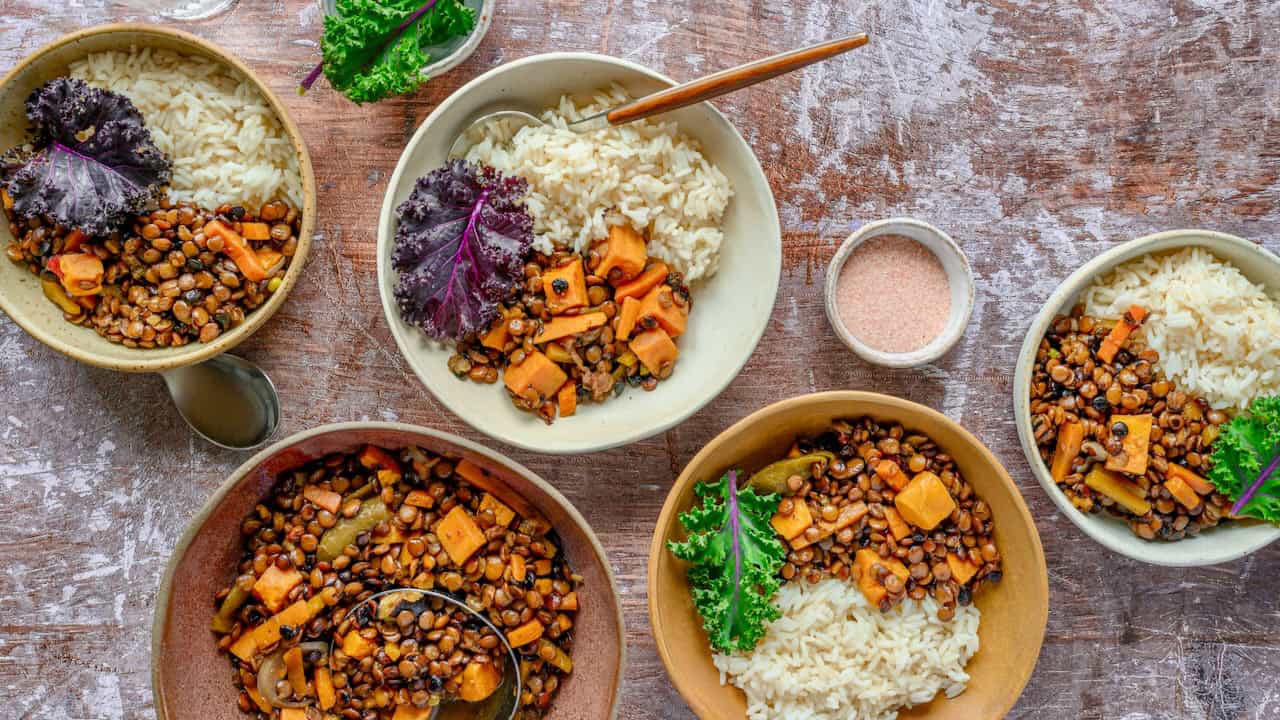
“I’ll eat whatever — don’t make a big deal,” the vegan guest texts back. The host knows what that really means: don’t put me on a different plate, don’t cook me a side dish, don’t make me the project of the evening.
The omnivore host’s default move — build the meal around chicken or beef, then assemble a side-version for the vegan — produces two menus, two timelines, and the visibly different plate the guest just asked you to avoid.
Below: the menu design that solves this without dual cooking, the butter-and-stock defaults that quietly disqualify a dish the host thinks is plant-based, the easy vegan dinner recipes that already feed the whole table, and the etiquette of serving meat at a table with a vegan present.
At a Glance
- Cook one main everyone eats — vegan by design — and treat any animal protein as an optional topper, not a parallel meal.
- Audit the defaults first: butter, cream, chicken stock, honey, fish sauce, anchovy, and Worcestershire hide inside dishes a host assumes are plant-based.
- Coconut milk, olive oil, tahini sauce, and vegetable stock cover the swap math for most weeknight cooking — easy vegan dinners without rewriting the recipe.
- Build the main around chickpeas, lentils, black beans, mushrooms, sweet potatoes, or grains for the plant-based protein density a dinner-party main needs; the same logic carries a guest on a plant-based diet.
- Ask once, at the invitation stage — not at the door — and confirm severity (allergy or preference) and ingredient lines to avoid.
What Are Vegan Dinner Recipes for an Omnivore Table?
Vegan dinner recipes for an omnivore household are dishes built without animal products — no meat, fish, dairy, eggs, or honey — that still read as proper dinner-party food for every guest at the table. The host’s real challenge is not the recipe; it’s the design: cooking one main the vegan guest and the meat eaters share, rather than splitting the kitchen into two parallel meals. Unlike a fully vegan menu written for a vegan audience, a vegan recipe for a mixed table is judged by whether the omnivores ask for it again.
The Real Problem: One Vegan Guest at an Omnivore Table
Start with the situation. A vegan friend or colleague is coming to a house that cooks with butter, browns onions in chicken stock, and finishes pasta with parmesan. Six other seats are filled by guests who eat everything. She has already told you — with that text — she doesn’t want the evening to become about her plate.
- Two-menu costs: doubled prep, split timing, two cleanup tracks, and the social signal that the vegan guest is a separate project.
- One-menu wins: one shopping list, one timeline, one composed course, and the room stops noticing what isn’t on the plate.
- The frame: vegan by design as the dinner’s spine; meat, dairy, or eggs only ever offered as side toppings the omnivores reach for at the table.
Most of the friction in mixed-diet hosting lives in this first decision, not in the cooking. Settle the design and the menu becomes easier to plan than the omnivore version you would have written by reflex.
Ask Before You Plan: The 30-Second Pre-Dinner Conversation
The ask belongs in the invitation, not the doorway. A one-line note inside the RSVP — “anything I should know about how you eat?” — gets the answer back in writing, gives you a planning runway, and signals accommodation was part of the menu, not a scramble. Three to four weeks out is the sweet spot.
- Ask in writing. Text, email, or a line inside the invitation — something the guest can answer privately.
- Ask the same question of everyone at the table. “Checking with everyone on dietary stuff this week” removes the spotlight.
- Confirm two things only: severity (allergy vs. ethical preference) and one or two ingredient lines to avoid.
- Don’t apologize. The ask itself is the courtesy.
- Pin the answer to the rest of the runway — the time-stamped dinner-party checklist is where it lives.
Ask once, ask early, ask cleanly. With the answer in hand, the menu writes itself in the right shape from the start.
|
Gather Diet Notes Up Front |
Design One Menu Everyone Eats (Not Two Plates Side by Side)
Menu design for a mixed table runs on one principle: the base dish is vegan by construction, and any animal protein is a topping the omnivores add at the table. The vegan guest gets the same composed plate as the rest of the room. One main, one timeline, no social math.
A roasted vegetable risotto built with olive oil rather than butter, finished with lemon juice and herbs, is the main. Sliced grilled chicken thigh sits in a small bowl on the table; whoever wants it lifts a piece onto her own plate.
- Anchor mains as base layers — a coconut milk curry over rice, a lentil bolognese, a smoky black beans chili, a peanut sauce noodle bowl, herbed grain bowls with white beans, stuffed sweet potatoes.
- Side toppings to bring out separately — roasted chicken thighs, seared salmon, crumbled feta or parmesan, soft-boiled eggs; the logic three meat menus with a vegetarian option uses, reversed.
- Plant-based protein density matters — chickpeas, lentils, black beans, or tofu — so the dish reads as a full main, not a side.
One pan, one composed dish, every guest fed from the same kitchen output. The design, not the recipe, is the work.
Rethink the Defaults: Where Butter, Cream, and Stock Quietly Hide
The hardest part of cooking vegan dinner recipes for an omnivore household is not the obvious things — it’s the defaults. Butter goes into the pan before you think. Chicken stock is the liquid the rice always cooks in. A teaspoon of fish sauce sits in the curry paste. None of these dishes look like meat dishes.
- Butter — swap with olive oil, avocado oil, or a quality vegan butter.
- Heavy cream and milk — full-fat canned coconut milk or oat milk swaps cleanly in savory sauces and curries.
- Chicken or beef stock — use vegetable stock; some “vegetable” brands sneak chicken powder in for body, so read the ingredient label.
- Parmesan in pesto and dressings — nutritional yeast adds the umami without dairy.
- Eggs, honey, fish sauce, anchovy, Worcestershire, gelatin — each hides in dressings or finishing sauces; check anything you didn’t make from scratch.
Hidden-default audits take five minutes per recipe and save you from the conversation where a guest asks, mid-meal, whether the pasta sauce has fish in it. Catch the line at the cutting board, not the table.
|
Hosting Tip: Plate the Vegan Main First |
Easy Vegan Dinner Recipes That Work for the Whole Table
What does “vegan by design” look like at the recipe level? Dishes you already know, built around plant-based protein, that omnivores order in restaurants without a second thought — easy vegan dinners that fit a mixed-diet dinner party without rewriting cookbooks. Four formats carry most of the work; the bullet list below is the working bank a host pulls from at the planning stage.
- Curries, stews, and braises — coconut milk does the heavy lifting; a Thai-style red curry with chickpeas, sweet potatoes, and bell peppers reads as a complete vegan main with rice.
- Grain bowls and pastas — the canonical mixed-table vegan main and the fastest quick meal on a weeknight; build on farro, brown rice, or quinoa with roasted vegetables, white beans, a tahini sauce, herbs, and pumpkin seeds; for pasta, a tomato-and-olive-oil base with white beans and chili crisp is naturally vegan.
- Sheet-pan and air fryer mains — time-pressured nights answer to the sheet pan and the air fryer; air-fry chickpea-crusted cauliflower with peanut sauce, or stuffed acorn squash with farro and cranberries.
- Showpiece plates — when the dinner calls for a centerpiece, a whole-roasted cauliflower with herbed tahini or a saffron paella with artichokes passes the showpiece test; the bank in crowd-pleasing mains for picky eaters ports straight over.
Each format is an easy vegan meal that holds the table in 35–60 minutes and reads as dinner-party food. The vegan guest eats the composed plate; the omnivores add a topping bowl alongside.
Same Plate, Optional Topping: The Technique That Solves the Problem
The single hosting move that resolves the mixed-diet table is the same-plate, optional-topping technique. The host plates the vegan main for every guest at the kitchen counter. Two or three small bowls of toppings — grilled chicken thigh, crumbled goat cheese, soft-boiled eggs — travel to the table family-style.
- Choose toppings that don’t need to stay hot. A wedge of fish, sliced steak, a halved soft-boiled egg, crumbled cheese — all hold at table temperature for 20 minutes.
- Keep three or fewer topping options on the table. More than that and the dish starts to read as a salad bar, not a dinner-party course.
- Plate the base layer in a wide, generous bowl — abundance matters; a thin portion with toppings beside it reads as a side.
- Toppings travel in small ceramic bowls with serving spoons, not the pan they were cooked in.
- If a wine pairing matters, the topping bowl can include a fish wedge — pair the wine to the seafood when seared salmon is the topper.
The technique buys the host zero conversation about whose plate is which, and a vegan guest who eats with the table instead of next to it. The design does the etiquette work the host would otherwise have to do verbally.
|
Build One Menu Everyone Eats |
Pantry Swaps a Confident Host Can Reach For
A small set of pantry swaps carries 80 percent of the easy vegan recipes a home host writes. Stocked once, they let the kitchen pivot mid-recipe without a grocery run.
- Butter: olive oil for cooking, vegan butter or coconut oil for baking, a tablespoon of tahini for finishing.
- Heavy cream: full-fat coconut milk one-for-one in curries and pan sauces.
- Parmesan: nutritional yeast, two tablespoons per quarter cup, or a drizzle of lemon juice and olive oil.
- Chicken stock: vegetable stock, miso broth, or homemade mushroom stock.
- Honey: maple syrup or agave one-for-one; a touch less liquid if the recipe needs body.
- Eggs: a flax egg (one tablespoon ground flax + three tablespoons water, rested 10 minutes) binds in baking.
- Worcestershire and fish sauce: soy sauce or tamari with a dash of rice vinegar; the umami math in summer mains across lamb, duck, and seafood carries over to plant-forward cooking.
Stock the swaps in advance and the conversation about “can I make this vegan?” becomes a 30-second pantry check, not a recipe rewrite.
Hosting Etiquette When the Rest of the Table Eats Meat
Two questions decide most of the etiquette: should you announce the dinner is vegan, and what do you do if a guest asks why there’s no chicken? Short answers: no, and “it made sense for the menu I built tonight.” Both protect the vegan guest from being made the project of the evening.
Vegan Society guidance for hosts converges on the same point: don’t flag the diet, flag the abundance. A generous main, good bread, a salad with substance, wine, and a closing course that doesn’t apologize — the meal carries itself.
- Don’t announce the menu is vegan. If asked, name it as a menu choice — not an accommodation.
- Don’t apologize for the absence of meat. “Sorry, no chicken tonight” lands as a slight even when it isn’t meant as one.
- Don’t plate-shame the meat eaters. The optional topping is on the table; whoever wants it serves themselves.
- Do reserve a private confirmation. As your vegan guest sits down, a quiet line — “the risotto is vegan, all yours” — closes the loop without involving the rest of the table.
The host who gets the design right ends the night with a vegan guest who felt fed instead of accommodated. That is the entire job.
Frequently Asked Questions
What do you cook when a vegan is coming to dinner?
Build the meal around one hearty plant-based main. A chickpea stew, a roasted vegetable risotto made with olive oil instead of butter, or a lentil bolognese, and let the same dish feed every guest. Add a side of protein like chicken or fish as an optional topping if your omnivores expect meat.
What should a vegan eat at a non-vegan dinner party?
A vegan guest should eat what the host serves: provided the host built the main around plants, vegetables, grains, beans, or legumes, with no butter, cream, eggs, honey, or animal stock. Easy vegan dinners like coconut-milk curries, black-bean tacos, or a vegetable pasta with olive oil and herbs taste great to everyone at the table.
How do I avoid making my vegan guest feel awkward at dinner?
Serve everyone the same plant-based main course rather than handing your vegan guest a visibly different plate. Cook one dish (a curry, a grain bowl, a pasta) that’s vegan by design, then offer optional toppings like cheese, meat, or yogurt on the side. The vegan guest gets the full meal, not a consolation portion.
What are some easy vegan main dishes for a dinner party?
Coconut milk curries, lentil bolognese, black bean chili, mushroom risotto, and sheet pan roasted vegetables all work well as easy vegan mains for a dinner party. Build them with chickpeas or tofu, toss lentils over pasta, roast vegetables in a sheet pan or air fryer with grains, and each dish feeds omnivores and vegans from the same pot.
Should I tell my other guests the dinner is vegan?
No need to announce it. If the food is delicious and the meal looks abundant (a generous main, good bread, a salad, wine) most guests won’t notice the absence of meat or dairy. Let the food speak. If someone asks, mention it casually as a menu choice you made to be inclusive of every guest at the table.
What should I avoid serving a vegan guest?
Avoid butter, cream, milk, eggs, honey, gelatin, fish sauce, anchovy paste, parmesan, and chicken or beef stock when serving a vegan guest. Swap in olive oil or vegan butter, coconut milk or oat milk, a flax egg, maple syrup, and vegetable stock instead, since those substitutions cover most weeknight recipes without changing the dish.
Continue Reading:
More on Hosting a Mixed-Diet Dinner Party
- How to Host a Mixed-Diet Dinner Party Confidently
- Easy Dairy-Free Dinner Recipes the Whole Table Loves
- Gluten-Free Dairy-Free Dinner Recipes: A Host’s Guide
- Easy Gluten-Free Dinner Recipes for Family Parties
- Dairy-Free Dessert Recipes Every Guest Will Love
- How to Ask Guests About Dietary Restrictions: Scripts
- One Dinner Party Menu That Works for Every Diet
- Mixed-Diet Dinner Party Day-Of: A Host’s Playbook
More from The Gourmet Host
- Welcome Drinks by Country (10 Ideas That Set the Tone)
- How to Flambé at Home: A Host’s Guide to Safe Flames
- Short 3 Minute Speeches That Inspire Dinner Guests
- Pantry Staples Every Home Host Should Keep Stocked
- 20 Easy Minute to Win It Games (No-Prep Household)
Explore TGH Categories
- Set the Scene
- Drinks and Bar
- Plan the Meal
- Engage with Guests
- Games and Toasts
- Tools and Techniques
- Why We Gather