Kitchen Organization Hacks That Keep Your Space in Order
 16 min read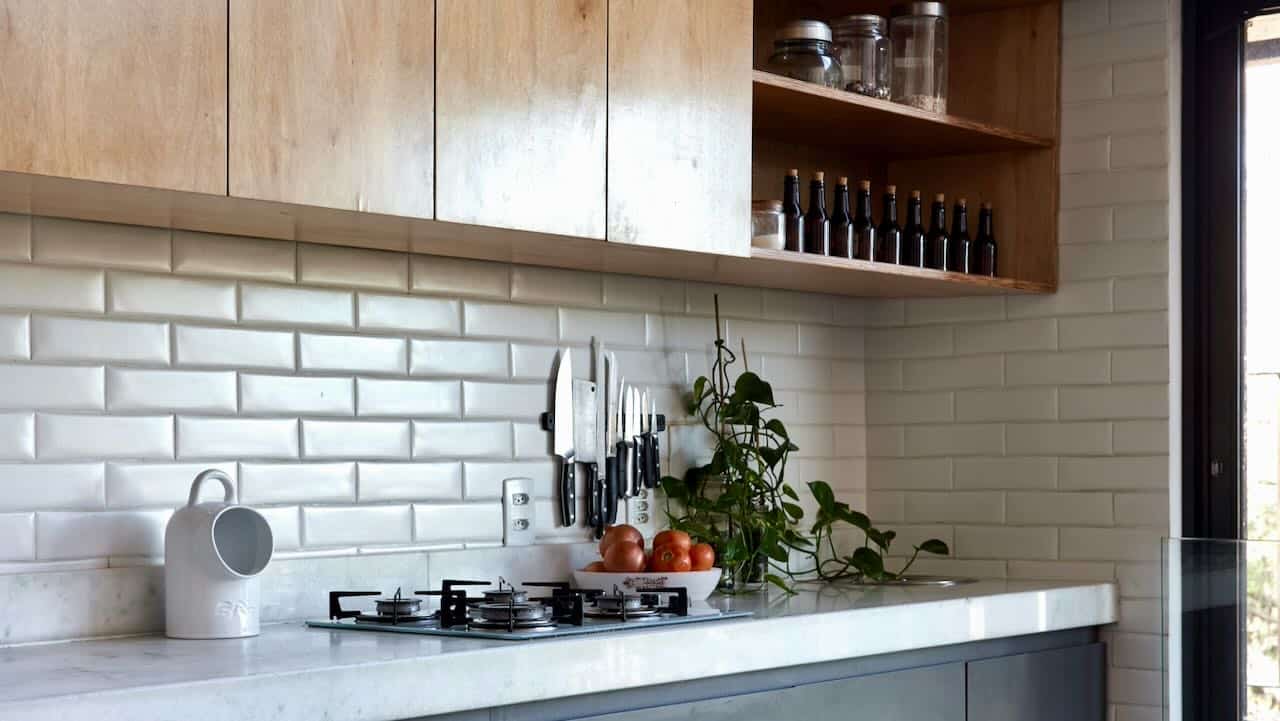
The kitchen you cook in every weekday night and the kitchen you host from on Saturday are the same room — but they demand completely different things from your cabinets, counters, and drawers. A spice jar that’s fine tucked behind the cereal box becomes a problem when you’re searing lamb chops and three guests are watching from the island.
While the “declutter and label” organization tip is a good start, this advice skips the harder question: can you find your good serving platter, your vegetable peeler, and your backup olive oil without opening more than two doors?
Here we build kitchen organization hacks around the way hosts actually move through a kitchen — from prep to plating to cleanup — so your systems hold up on the nights that matter most.
At a Glance
- Zone-based kitchen layouts cut prep time by putting every tool within arm’s reach of where you use it.
- Vertical storage on cabinet doors and walls frees up shelf and counter space for items you use daily.
- Drawer dividers and clear containers turn cluttered junk drawers into systems you can scan in seconds.
- Daily routines of five minutes or less prevent the slow buildup that leads to a full reorganization.
- Pull-out shelves and Lazy Susans make deep cabinets accessible without unstacking everything.
- A hosting-ready kitchen lets you shift between cooking and welcoming guests without a frantic last-minute search.
What Is Kitchen Organization?
Kitchen organization is the practice of assigning every item in your kitchen — utensils, dry goods, serving pieces, cleaning supplies — a specific, accessible home based on how and when you use it. For hosts, this goes beyond tidy shelves: it means setting up systems that let you prep a three-course meal and clear the counters for serving without retracing your steps. Unlike general tidying, kitchen organization hacks focus on workflow — where your hands go, what you reach for most, and how quickly you can reset when the doorbell rings.
Why Kitchen Organization Is a Hosting Skill
Professional kitchens run on a principle called mise en place — everything in its place before the first flame lights. It’s the reason a line cook can plate forty covers in an hour without crossing the kitchen twice. You don’t need a commercial setup to borrow that logic, but you do need to think about your kitchen space the way a chef thinks about a station: every tool, ingredient, and vessel within reach of where it gets used.
Joshua Becker of Becoming Minimalist argues that a clutter-free kitchen starts with asking what deserves to stay, not what needs to go — and that reframe matters for hosts especially.
The principle is documented in Becoming Minimalist’s approach to a clutter-free kitchen — start by questioning what earns its place, not what to discard.
When you’re hosting, the real test isn’t whether your kitchen looks organized at 3 PM. It’s whether you can locate your kitchen tools — the good tongs, the citrus zester, the serving spoons — at 7:15 PM with guests in the next room. We’ve found that hosts who organize around tasks instead of aesthetics recover faster from the mid-party chaos that always comes.
- Mise en place at home: Group your kitchen items by task — a baking station near the oven, a coffee station near the water source, a prep station near the sink. The concept is documented extensively in The Culinary Pro’s breakdown of how professional kitchens stay organized.
- Hosting pressure test: Before your next gathering, run a dry rehearsal. Pull out every dish, tool, and ingredient you’ll need. If anything requires more than one step to access, it’s in the wrong spot.
- The reset benchmark: After dinner, can you return every item to its home in under ten minutes? If not, your system is too complicated.
The difference between a kitchen that’s organized for storage and one that’s organized for hosting is speed. Storage-first thinking fills cabinets neatly. Hosting-first thinking means your kitchen counters stay clear and your hands never stop moving.
|
Keep the Cooking Plan Together |
Zone Your Kitchen Around How You Actually Cook and Host
Most kitchen organization hacks focus on individual storage solutions — a better spice rack, a new set of bins. But the highest-impact change you can make is rethinking your kitchen as a set of zones, each one built around a specific activity. This is the approach that professional organizers recommend, and it’s the reason some small kitchens feel spacious while larger ones feel chaotic.
Family Handyman’s collection of kitchen organizing ideas reinforces this principle: proximity to the task determines where each item belongs.
Start with five zones. Not every kitchen has room for all five to be separate, but even in small spaces, you can cluster items so that each zone has a center of gravity.
- Prep zone (near the sink): Cutting boards, knives, peelers, colanders — all within easy access of the faucet. Your kitchen sink anchors this zone because washing produce is usually the first step.
- Cooking zone (near the stove): Oils, salt, pepper, spatulas, pot lids, oven mitts. Keep a rolling cart beside the range if counter space is tight.
- Baking zone (near a flat counter): Flour, sugar, measuring cups, mixing bowls. If you host brunches, this zone earns its space.
- Serving zone (near the dining area): Platters, serving spoons, trivets, candles. This is the zone most hosts forget — and the one they scramble through most on the night.
- Cleanup zone (near the dishwasher): Dish soap, sponges, garbage bags, towel rack. Keep cleaning supplies under the kitchen sink, not across the room.
Food52’s guide to small kitchen organization emphasizes that even a 60-square-foot kitchen benefits from zone thinking — the zones just overlap more.
In our experience hosting dozens of dinners in kitchens of all sizes, the serving zone is the one that pays off most on party night. When your platters, tongs, and garnish bowls live in the same cabinet — ideally one near the dining room — you stop making that frantic lap around the kitchen looking for the right dish.
If you want a deeper look at how the overall kitchen setup supports a successful evening, our guide to kitchen set-up tips for dinner parties walks through the full process.
A zone-based kitchen isn’t about perfection. It’s about reducing the number of steps between reaching for something and using it.
Storage Systems That Work in Tight Spaces
You don’t need a walk-in pantry or a wall of custom cabinetry to have an organized kitchen. What you need are storage systems that use the storage space you already have — including the space you’re probably ignoring. Vertical space is the most underused asset in a small kitchen, and reclaiming it is one of the fastest kitchen organization hacks you can apply.
- Drawer dividers: Adjustable bamboo or spring-loaded dividers turn a junk drawer into a system. The Kitchn’s review of adjustable drawer dividers found that even inexpensive models hold up well and fit standard kitchen drawers. One divider set can separate your drawer organizer into sections for utensils, measuring spoons, and small kitchen tools.
- Pull-out shelves and Lazy Susans: Deep cabinets become dead storage when you can’t see or reach what’s behind the front row. Pull-out shelves solve this for kitchen cabinets under counters, while Lazy Susans work for corner units and upper cabinets.
- Cabinet doors: The inside of a cabinet door is free vertical storage. Mount hooks for pot lids, a small rack for spice jars, or adhesive bins for garbage bags and cleaning supplies. Tension rods inside a cabinet can hold spray bottles upright or separate cutting boards and cookie sheets vertically.
- Vertical storage on walls: A wall-mounted pot rack frees an entire cabinet. A magnetic knife strip clears counter space and keeps blades accessible. A towel rack on the side of an island or end cabinet holds dish towels without cluttering a drawer.
Consumer Reports’ guide to pantry organization makes a point that applies to all kitchen storage: the goal isn’t to buy more organizers — it’s to see everything you have at a glance. Clear containers for dry goods, stackable storage bins for pantry items, and a label maker for anything that isn’t immediately identifiable by sight all serve that goal.
If your kitchen cabinets are already full, a moveable cart or rolling cart gives you flexible extra storage that you can wheel out of the way when guests arrive. It’s a particularly good home for small appliances you use weekly but don’t want on the counter — a food processor, a stand mixer, a slow cooker.
The test for any storage system is the same: can you find what you need in under five seconds? If yes, it’s working. If not, the system needs to change — not your habits.
|
Hosting Tip: Reset One Zone Each Night |
Do Daily Routines Actually Keep a Kitchen Organized?
Every organization system works on the day you set it up. The question is whether it still works three weeks later, after grocery runs, busy weeknights, and a weekend dinner party. A cluttered kitchen doesn’t happen in one evening — it’s the result of small decisions compounding over days.
The answer, based on what we’ve heard from hundreds of host interviews, is that systems only survive if they’re backed by routines — and the routines need to be short enough that you’ll actually do them.
A five-minute daily routine is all it takes. Not a deep clean. Not a full reorganization. Just five minutes of returning items to their assigned zones, wiping the counter space around your kitchen sink, and checking that nothing has migrated from its home.
- Morning reset (2 minutes): Empty the dish rack or dishwasher. Wipe down the counter. Return anything that drifted overnight — the salt grinder left by the stove, the coffee maker’s cord trailing across the counter.
- Post-cooking sweep (2 minutes): Every pot, pan, and utensil goes back before you sit down. This keeps the cleanup zone from becoming a staging area that expands across the kitchen.
- Weekly audit (10 minutes): Open every cabinet and drawer. Look for items that have shifted zones, duplicate tools you can consolidate, or food storage containers missing lids. Toss expired dry goods.
The USDA estimates that American households waste about 30–40% of the food supply, and poor pantry visibility is one reason — items get pushed to the back, forgotten, and expire. A weekly audit isn’t just about tidiness. It feeds your grocery list and reduces food waste, which matters when you’re meal prepping for a dinner party and don’t want to buy duplicate ingredients.
Get Organized HQ’s list of kitchen organization hacks includes a useful prompt: at the end of each day, identify one item that doesn’t have a clear home. Over a week, you’ll either find homes for seven items or discover that you own seven things you don’t need.
The planning checklist in our dinner party planning guide builds this kind of pre-event audit right into the hosting timeline.
Daily routines aren’t glamorous, but they’re the reason some kitchens stay organized for months while others collapse in days.
Simple Systems for Counters, Drawers, and Cabinet Doors
The tools that make the biggest difference in kitchen organizing aren’t expensive — they’re specific. A generic “organizer” that doesn’t fit your drawer is worse than no organizer at all. Here’s what actually works, matched to the areas where clutter builds fastest.
Counters: The rule is simple — if you don’t use it every day, it doesn’t belong on the counter. Your coffee station stays. Your toaster can stay if you use it daily. But that appliance garage or a closed cabinet is a better home for the blender, the air fryer, and anything else you reach for only a few times a week. One clear container of cooking utensils near the stove and one cutting board propped against the backsplash is enough.
Apartment Therapy’s guide to kitchen counter organization drives this point home: the less you keep on the surface area, the more functional and inviting the space feels. If you’re looking for appliances that genuinely earn their counter space, our list of small kitchen appliances every home cook needs separates the essentials from the dust collectors.
Drawers: A drawer organizer in your primary utensil drawer is non-negotiable. Beyond that, use drawer dividers to create a dedicated section for food storage container lids (separate from the containers themselves — stack containers, line up lids). Group similar items together — all measuring tools in one slot, all serving utensils in another.
Your junk drawer deserves the same treatment: small compartments or plastic bins for batteries, tape, pens, takeout menus. A drawer insert for knives replaces bulky knife blocks and frees counter space.
- Kitchen utensils drawer: Dividers separating cooking tools from serving tools from baking tools.
- Wrap and bag drawer: Tension rods laid horizontally across the drawer hold rolls of foil, parchment, and plastic wrap upright instead of sliding around.
- Spice drawer: If you have a deep drawer near the stove, lay spice jars on their sides with labels facing up. You’ll see every jar without rummaging.
Cabinet doors: Mount a slim wire rack on the inside of the cabinet door under your sink for cleaning supplies. Use adhesive hooks on pantry doors for measuring cups. These cabinet door hacks are the definition of using efficient space — they cost almost nothing and reclaim storage you didn’t know you had.
For cookbook storage, a narrow shelf above the counter or a wall-mounted rack keeps your go-to references visible without eating into prep space — and doubles as kitchen decor that actually serves a purpose.
Your dinner party planning gets easier when you know exactly where every item is. Our step-by-step hosting guide walks through the full timeline, including the kitchen prep that sets the evening up for success.
The pattern across all of these systems: less on the surface, more behind doors, and nothing stacked so high you can’t see what’s behind it.
|
Share Every Prep Task Clearly |
The Setup That Lets You Host Without Rummaging Through Drawers
Every kitchen organization hack in this guide points toward the same outcome: a kitchen where you can shift from everyday cooking to hosting mode without a scramble. That shift is what separates an organized kitchen from a hosting-ready one. The ingredients are the same systems — zones, daily routines, vertical storage, clear containers — but the test changes.
Instead of “can I find this for Tuesday dinner?” the question becomes “can I find this, plus the appetizer platter, plus the dessert forks, plus the extra napkins, while the risotto needs stirring?”
The hosting-ready setup adds three specific layers to general organization:
- A designated guest-facing zone: One cabinet or shelf dedicated to serving pieces — platters, tongs, candle holders, cloth napkins. This cabinet stays untouched during daily cooking so everything is clean and ready when you need it.
- A pre-party clear path: Know in advance which small appliances get stowed and which counter surfaces become serving stations. In our Dinner Party Planning 101 guide, we recommend a 30-minute “hosting flip” where you clear, wipe, and stage your counters before guests arrive.
- A backup supply station: Extra garbage bags, paper towels, dish soap, and a clean set of dish towels in a rolling cart or upper cabinet near the kitchen sink. When something spills (it will), you want the fix within three steps.
The hosts who make it look effortless aren’t working from a naturally tidy kitchen. They’re working from a system — one that anticipates the exact moments when everything gets a little chaotic and puts the right tools within arm’s reach. That system doesn’t require a renovation or a shopping spree. It requires deciding, once, where everything belongs — and then building the five-minute daily routine that keeps it there.
Frequently Asked Questions
How do I organize my kitchen with too much stuff?
Start by pulling everything out of one cabinet or drawer at a time. Group items by function (cooking, baking, serving, storage) and identify duplicates or tools you haven’t touched in six months. Donate or discard those, then assign each remaining item to a zone based on where you use it. Tackle one area per day.
What is the first thing to do when organizing a kitchen?
Empty your most-used drawer or cabinet completely. Wipe it clean, then return only the items you reach for at least once a week. Everything else gets relocated to a less accessible spot or removed from the kitchen entirely. This single step reveals how much dead inventory you’re working around every day.
How do professional organizers set up a kitchen?
Professional organizers typically begin with a zone assessment, mapping each kitchen activity (prep, cooking, baking, serving, cleanup) to a physical area. They prioritize vertical storage, clear containers for visibility, and drawer dividers for high-traffic drawers. Most emphasize the “one-touch rule”: every item should be reachable without moving something else first.
What are the best storage solutions for a small kitchen?
Vertical storage delivers the biggest gains in a small kitchen. Wall-mounted racks for pots, magnetic knife strips, over-the-door organizers on cabinet doors, and tension rods for dividing cabinet shelves all reclaim space without requiring new furniture. Pull-out shelves and lazy susans make deep cabinets functional again in tight spaces.
How often should you reorganize your kitchen?
A full reorganization once or twice a year is enough if you maintain daily routines. A five-minute nightly reset, returning items to their zones and wiping counters, prevents the slow drift that triggers a full overhaul. A ten-minute weekly audit of one drawer or cabinet keeps the system honest between deep resets.
What should not be stored on kitchen counters?
Anything you use less than daily should move off the counter. Common offenders include bread makers, stand mixers used only on weekends, decorative items that collect grease, and mail or paperwork that migrated from another room. Keep only your coffee station, a utensil crock, and a cutting board on the surface if counter space is limited.
Continue Reading:
More On Kitchen Organization Hacks
- Cleaning Hacks for Kitchen That Save Time and Effort
- Kitchen Counter Organization Ideas for Easy Hosting
- Kitchen Organization Pantry Ideas for Easy Storage
More from The Gourmet Host
- Dinner Party Themes for Every Style: Casual, Cultural, Seasonal, and Creative Ideas
- 10 Potluck Ideas for a Crowd That Make Hosting Effortless
- Easy Food Garnishing Techniques for Stunning Art
- Types of Miso and How to Use White vs Red Paste
- Brunch Table Setting Ideas for Every Style
Explore TGH Categories
- Set the Scene
- Drinks and Bar
- Plan the Meal
- Engage with Guests
- Games and Toasts
- Tools and Techniques
- Why We Gather