How to Host a Dinner Party: Step-by-Step Guide
 16 min read
I think we can agree that gathering your favorite people around the dinner table is one of life’s greatest joys. But actually hosting? That’s where things can get messy.
The grocery lists! The last-minute scrambling for wine glasses! The dirty dishes staring you down at midnight!
Like you, we used to stress about every detail. Then we started bringing some serious systems thinking into our dinner parties.
Dinner parties can be broken down into 8 phases:
- The visioning phase
- The menu design
- The space design & ambience
- The prep schedule
- The day of (cooking & set-up)
- The actual hosting
- The closing & cleanup
- The post-party check-in
To help you organize your first dinner party like a pro, we’ve broken down each section into the most important aspects. Also, check out our ultimate dinner party checklist.

Step 1: Visioning and planning your dinner party
1. Start by Defining Your Vision
To start, ask yourself what kind of evening you want to create. What’s the purpose of your gathering? Are you organizing an annual meetup with close family and friends, or is this an evening with a few different social circles coming together for the first time?
Answering this question will help you decide whether it makes sense to host a formal dining room experience or more of a casual kitchen island gathering.
So, consider the number of people that can realistically fit your space (and the number of people you actually have the capacity to host!).
2. Build Your Guest List
We know, you’re probably thinking, “Shouldn’t I just invite the people I want to hang out with?”
Yes. And, we’ve learned that there is an art to the guest list.
It’s important to cultivate a balanced mix of personalities—of extroverted and introverted people, or a mix of analytical and creative thinkers.
This does a few important things for your dinner party:
It keeps the conversation interesting and flowing. Plus, it keeps the party from skewing too far in one direction or the other (too quiet or too rowdy). And most importantly, it encourages connection among groups of people who otherwise may not have interacted in the real world.
3. Set the Date
Once you have a clear idea of who you’re inviting, you can start thinking about a date that works for everybody.
What comes first—guest list or setting the date?
For larger events (i.e., birthday parties or other milestone events) with a lot of people, choose a date first.
For more intimate dinner parties that are more connection-focused, start with the guest list and then decide on a date that works for everyone.
4. Pick a Theme/Concept
Now imagine this group of people you’ve selected all in a room together for the next 3-5 hours. What kind of mood or theme is going to help them step out of their shell or build even deeper connections?
If you’ve got people from work, from your gym, and your high school reunion who have never met each other, consider a cocktail hour to break the ice!
Looking for an excuse to gather a close friend group for a catch-up dinner? Consider adding a fun dinner party theme to switch things up.
Hosting a dinner party with coworkers? Perhaps you set up a collaborative cooking night to get everyone out of “work-mode” and into “social fun mode”.
And if you’re still not sure or not sold on any of these, here are some of our favorite themes from over the years:
Ten dinner party themes for a memorable gathering
- Seasonal themes (autumn dinner party, winter dinner party, etc.)
- Murder mystery dinner party
- Potluck dinner party
- Holiday party
- Wine pairing night
- Game night
- Make-your-own-pizza night
- Cultural food night (Mexican, Middle Eastern, Japanese, etc.)
5. Send Out The Invites
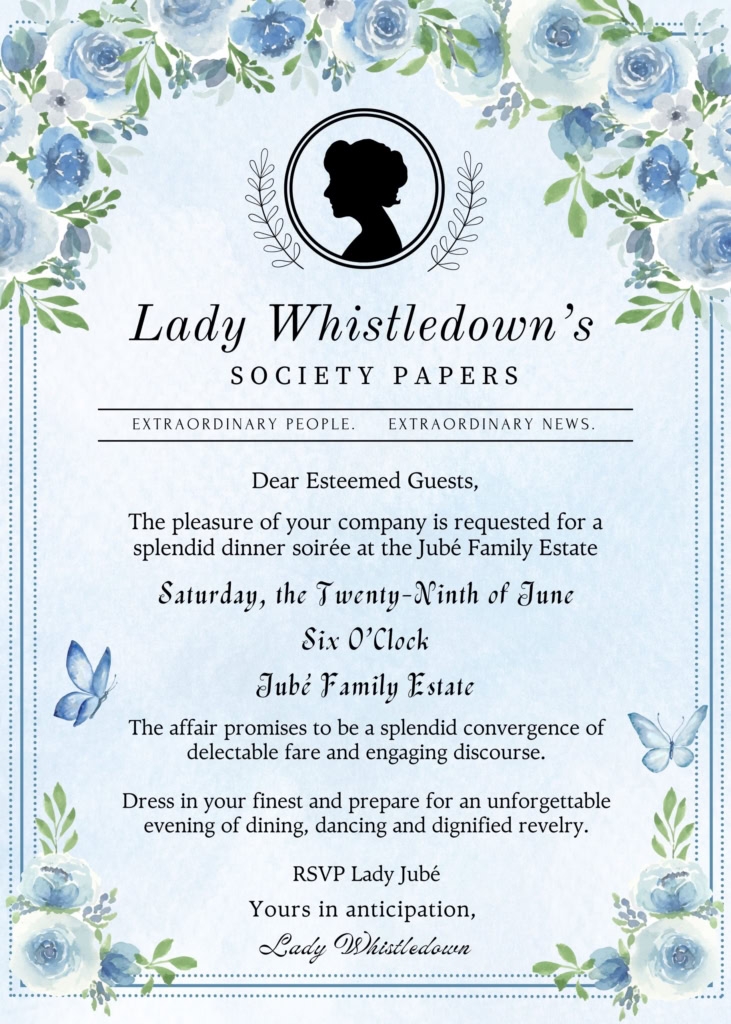
Once you’ve established these foundations, you can design some custom dinner party invitations.
Step 2: Menu design for the perfect dinner spread
When it comes to building a cohesive menu of yummy food, the best piece of advice we can give you is…
1. Start with the main course
Think of your main course as the musical chord that your dinner is set in.
Once you determine that central flavor, it will be much easier to fine-tune the accompanying dishes.
We love to use Food & Wine’s library of make-ahead mains as a starting point.
For instance, if you decide to go with a hearty main dish like duck confit (a personal favorite), you might consider some lighter, more refreshing side dishes and acidic notes to balance the overall palette.
Whereas, if you decided to go with a lighter protein, such as chicken or fish, you could offer some heavier appetizers or side dishes, like potatoes, fritters, etc.
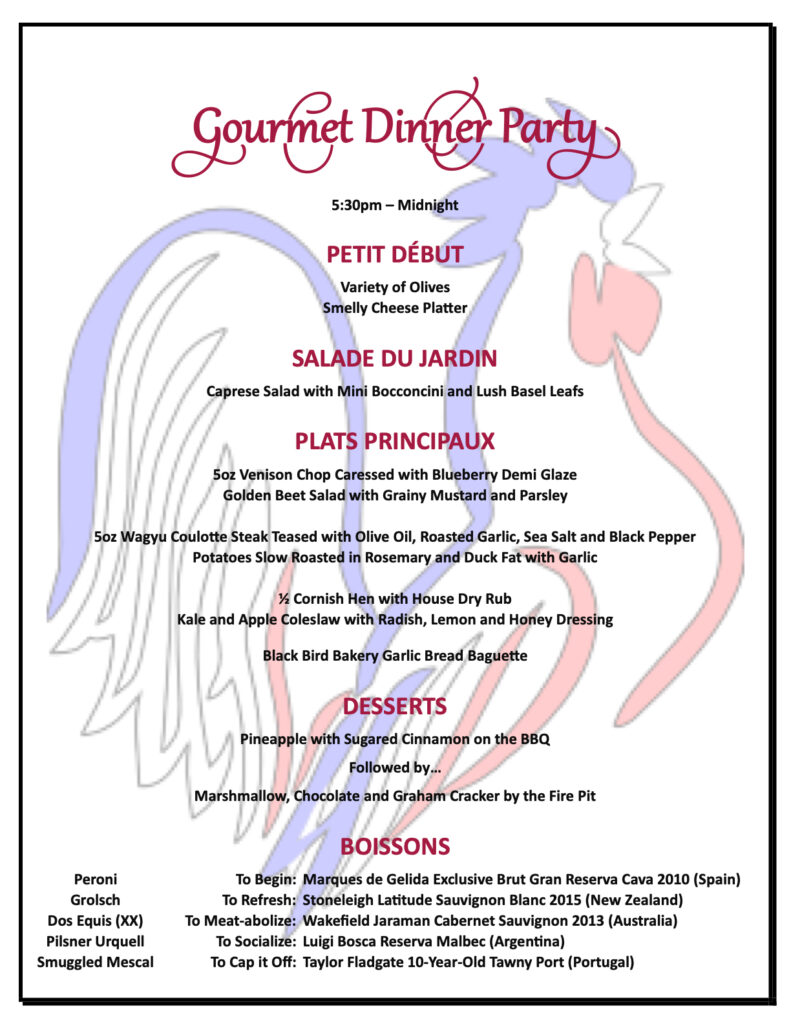
You can also read about our meticulous dinner party menu planning process here.
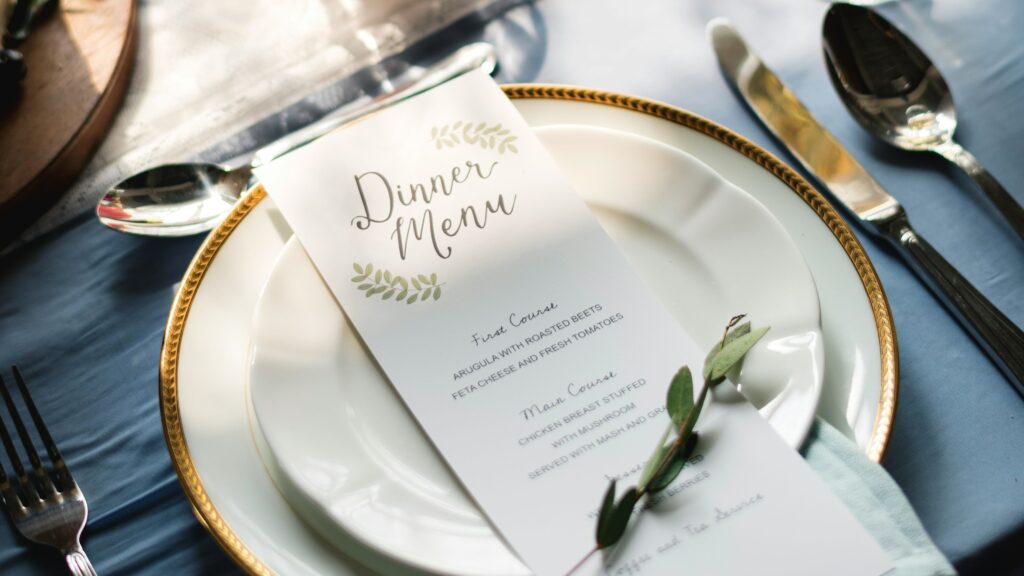
2. Cocktail hour vs. dinner table courses
We loooove a cocktail hour. And because we know our guests are likely arriving with an appetite, we always make sure to plan a small cocktail hour snack, also known as hors d’ourves or amuse-bouche.
This is important for three reasons:
- It provides space for conversation
- It stimulates the appetite for the actual dinner
- It can set the tone for the dinner menu
It’s always nice to keep these on theme with your main dinner menu:
Classic French cuisine? Offer some thin toasted baguette rounds with brie and jam.
Italian menu? Make some mini caprese salad skewers.
Taco night? Create a homemade pico de gallo with guacamole served on corn chips or tostones (double-pan fried plantain chips).
Mediterranean menu? Offer a spread of labneh, banagnaoush, hummus, and muhamarra with fresh veggies or warmed pita rounds.
However, we recommend keeping this light so that your guests are still hungry for the dinner menu you worked so hard to curate!
3. Consider guest preferences & dietary restrictions
Keep your options open!
It took us many years of last-minute menu changes and refinement, but we have finally learned to have “back-up options” for our menu.
We always send our guests the options, along with a form to include their dining needs, before finalizing the menu.
We’ve also learned that guest preferences go beyond just “dietary restrictions”.
Some may love salad, and others may not.
Some may love spice while others can’t tolerate even a little bit of heat.
Some may prefer certain proteins over others.
Some prefer wine over liquor or cocktails, and some may not consume alcohol at all.
Some just don’t like certain food textures!
For an in-depth look at how we collect guest preferences, check out our article on How to plan your dinner party menu.
4. Beverage Planning
Once you’ve got the 4-1-1 on your guest preferences, you can start planning your drink menu.
Aperitifs & Cocktails
If you’re offering a welcome drink or signature cocktail, consider a flavor profile that will complement your menu.
For larger parties, consider cocktails that are easier to pre-batch.
If wine pairing is a focal point of your menu, consider a classic, fuss-free aperitif such as vermouth, Campari, or Lillet with a simple garnish.
Learn more in our guide to choosing the best dinner party drinks.

Wine
When it comes to wine, you’ve got a lot of decisions to make: Red or white? One read and one white for the whole menu?
Or perhaps a curated wine pairing for each course?
In general, white wines are best suited for lighter dishes such as seafood and chicken, while red wines pair well with gamey meats and hearty, fatty sides.
But, as always, there is far too much nuance to fit in this section of this article, which is why we recommend checking out our article featuring a sommelier’s guide to wine for beginners.
Nonalcoholic Options
With the growing popularity of alcohol-free lifestyles, we’ve learned to always keep a non-alcoholic option on the ready for every dinner party.
If we have even one guest who indicates they won’t be consuming alcohol, we’ll put a little extra effort into it, making a non-alcoholic cocktail that pairs well with the dishes on the menu.
And if we know that we’ll have a handful of families with children in attendance, we’ll even make sure to have a special kids drink on the ready.
Step 3: Ambience & Space Design for Intimate Conversations
Now that we have the who (the guests), the what (the menu), we start figuring out the how.
How is this night going to flow? What is the mood, and how do we want our guests to feel throughout every step?
1. Room Flow and Setup
Start by mapping your evening’s movement—where are guests going once they enter your space? Will they enter through the front door or the backyard? Are they heading toward the living room/lounge? To the backyard? Or to huddle around the kitchen island?
In general, we like to start our dinner parties around the kitchen island (in the winter) or the backyard (in the summer) before moving to the dining table.
We find this gives us some space to connect, especially when there are a lot of new faces meeting each other for the first time.
Hosting in small spaces
When we first started hosting, it was out of a small 500-square-foot condo, which meant that cocktail hour would happen standing up, often flowing into our bedroom and balcony.
Don’t be afraid to get creative with the space you have!
This NYT article has some great tips for hosting a dinner party in a small space.
2. The Dinner Table Setup
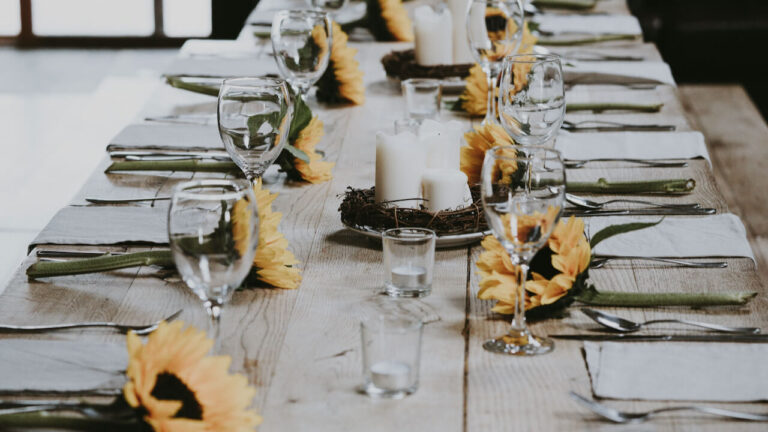
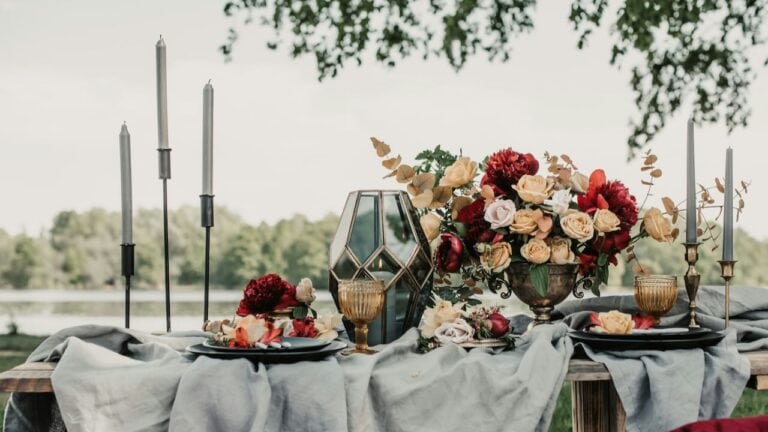
Next, think about how you’d like your table to look.
And no, you don’t need to spend hundreds of dollars at the home goods store. Here are some of the simplest ways to prep your dinner table for a memorable night.
Special touches for your dinner party table:
- Matching set of tableware and glassware
- Cloth napkins
- Wine glasses and cocktail glasses
- Fresh flowers
Seating arrangements
Use place settings to mix familiar friends with new ones to optimize dinner conversations and make your guests feel special.

3. Additional Ambiance Elements
Finally, here are some go-to ambiance suggestions you can experiment with:
- Candles – We can’t state enough how much of a difference dining in candlelight makes! Even just a few make a huge difference.
- Light dimmers – Combined with candles? Chef’s kiss!
- Background music – Yes, there is an art to the perfect dinner party playlist, and you can read about it here.
- Decluttering – If you are a maximalist, consider moving some unnecessary cushions, furniture, or other non-essential accessories to the storage closet. This can create a sense of spaciousness, especially in small spaces!
Read our article on dinner party ambience, which includes beginner and advanced ambience options for home hosts.
Step 4: Eliminate Hosting Stress With a Detailed Prep Schedule
So you’ve got the vision, the menu, the guest list, and the grocery list. How do you actually…pull this thing together?
Allow us to introduce the prep schedule.
Creating your very own dinner party prep schedule will help you break tasks down into phases so that this huge vision remains exciting & manageable every step of the way.
Most importantly, it prevents that dreaded day-of panic.

1. Shopping & Inventory
- First, create a master ingredient list based on your menu
- Then, do a quick inventory of what you have vs what you need to buy—don’t forget things like serving dishes and cocktail napkins.
- Finally, categorize your grocery list by store to make grocery shopping easier.
- Don’t forget non-menu items like candles, napkins, or additional tableware!
2. Create Your Prep Schedule
Go through your menu and highlight elements that can be prepped ahead of time without sacrificing quality
Divide these into day-of prep and day-before prep
Then, create a detailed, time-stamped schedule for the day(s) you will be cooking
Don’t forget to include time for decor, table set-up, and ambiance
3. Delegate To Reduce Stress
If your prep schedule is starting to feel like a lot of work for one person, don’t be afraid to delegate small tasks to guests!
Check out our time-stamped Dinner party checklist for an hour-by-hour breakdown of our dinner party prep schedule, and for some examples of how to assign tasks!
Step 5: Day-Of Cooking & Setup
On the day of your dinner party, the most important thing you can do is to manage your cooking timeline.
Yes, this will take some practice; however, with time, you will develop a more realistic idea of how long certain tasks take.
Here are some simple tips to manage your cooking timeline—an easy way to reduce stress on the day of your party.
1 . Cooking Timeline Tips
- Tackle one task at a time—thinking about all you need to do before guests arrive will only stress you out. Action is the best way forward and through.
- Prep garnishes ahead of time.
- Chop salads and prepare dressings ahead of time so that they are easy to assemble when the time comes.
- Unless they are slow-cooked or braised, prepare main dish meats last, just as guests are arriving.
- Instant pots are a lifesaver for keeping stews, sauces, and soups warm without taking up stove-top space.
For a more detailed look at how we schedule our prep on the day of, check out our dinner party checklist article.
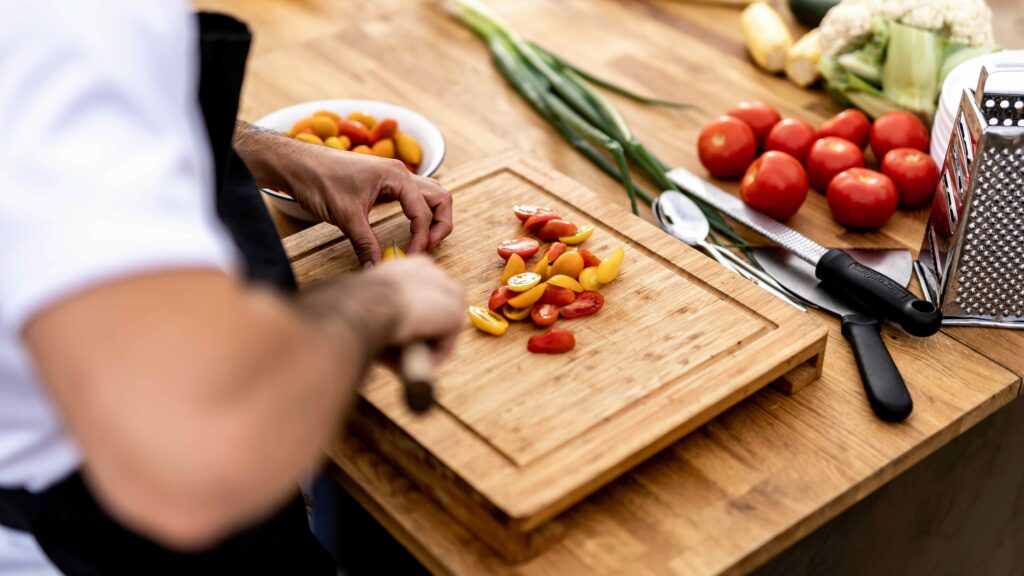
2. Pre-Guest Arrival to Cocktail Hour
About an hour to 30 minutes before guests start arriving, start prepping your last-minute ambiance touches. Light candles, prepare flower arrangements, play music, etc.
This is also a good time to get your table settings ready.
This gives you enough time to calmly greet guests at the door as they arrive.
Once guests are settled in, we’ll make sure they get their welcome drinks in hand so they can start mingling.
If you have anything in the oven or on the stovetop, make sure to set a timer or alarm so that nothing gets overlooked (or overcooked) as you start socializing.
3. Dinner Service Flow & Reading the Room
When it comes to serving dinner, we like to stay flexible.
If we see that guests are hitting it off and conversation is flowing, with drinks still half full, we won’t rush people to the dinner table.
We also like to make our dinner service spacious rather than rushing through courses. However, if you see that everyone has pretty much licked their plates clean, it may be an indication that your guests are hungry and ready for the next course!
Keep Conversation Flowing
Worried about awkward silences? Create a little bank of dinner table topics and questions to pull from whenever conversation comes to a halt.
Step 6: Hosting Tips For Actually Enjoying the Party
As the host, you deserve to enjoy this evening that you spent so much time putting together. But how do you do it while still making sure everything is running smoothly?
1. How to Be Present While Managing Details
If you’ve done your prep and stuck to your schedule, it should be fairly easy to strike a balance between being in the kitchen and engaging with guests.
However, if you find yourself in a pickle, don’t be afraid to ask for help! We’re all human, and after all, the whole point of any dinner party is connection.
If you’re organizing a larger party (10+ people), consider appointing a co-host to help you split costs and logistics—someone you can count on to help with setup, clean-up, etc.
2. Capture Your Dinner Party Wisely
You want to capture this beautiful experience you worked so hard to put together, but you don’t want to get sucked into photographer mode! What to do?
See if you can appoint a creative, camera-savvy guest to do the capturing for you! For big events, consider hiring a professional photographer.
Check out our article on how to capture your dinner party without killing the mood for more tips!
3. Managing Hosting Stress
One of the hardest things about hosting is stressing about all the things that could go wrong!
“What if I cut into the roast and it’s still raw?”
“Is Uncle Pete going to start talking about politics again?”
“What if I spill red wine all over my new tablecloth?”
Our advice is to take everything in stride. Nobody is expecting perfection. Even high-level restaurants have their off days. One hiccup doesn’t mean you’re a bad host.
When in crisis, take a deep breath and find a solution.
Pop the roast back in the oven as you pass around another round of appetizers.
Ask everyone what the best part of their week was to switch gears.
Cover up the wine stain with a cloth napkin and take it to the dry cleaners tomorrow.
After all, hosting is a creative practice. Sometimes, that means being creative about recovering from disaster!
Step 7: Closing & Cleanup
Consider making space for some post-dinner movement, which will give you the time to clear the table and get a head start on dishes.
1. Post-dinner Intermission
Invite guests to move to the living room as you prepare dessert and post-dinner drinks, coffee, tea, etc.
This could be an ideal time for a post-dinner speech, a great way to close off the night and indicate to guests that they are free to leave if needed. If not done already, don’t forget to take a few dinner party photos.

2. Warm Goodbyes
When guests are ready to leave, make sure to walk them to the door.
If there are more leftovers than you can manage, consider sending them home with leftovers or an extra bottle of wine.
3. Immediate Aftermath
Depending on the size of your dinner party, you may need to split your cleanup tasks into parts.
Try to tackle as many of the dishes as possible, filling up a washer load, and rinsing whatever’s left or washing it by hand.
If necessary, leave larger dishes and pots to soak overnight (trust us, your future self with thank you).
Step 8: Post-Party Follow-up
The next day, take some time to reflect on the best parts of your evening, what went well, and what you could improve on for the next time.
Within 1-5 days of your dinner party, send your guests a personalized thank-you card, email, or message.
We’ve found that this is one of the best ways to make our guests feel special (and make them more likely to come to the next one!).
Consider creating a group chat where guests can share photos.
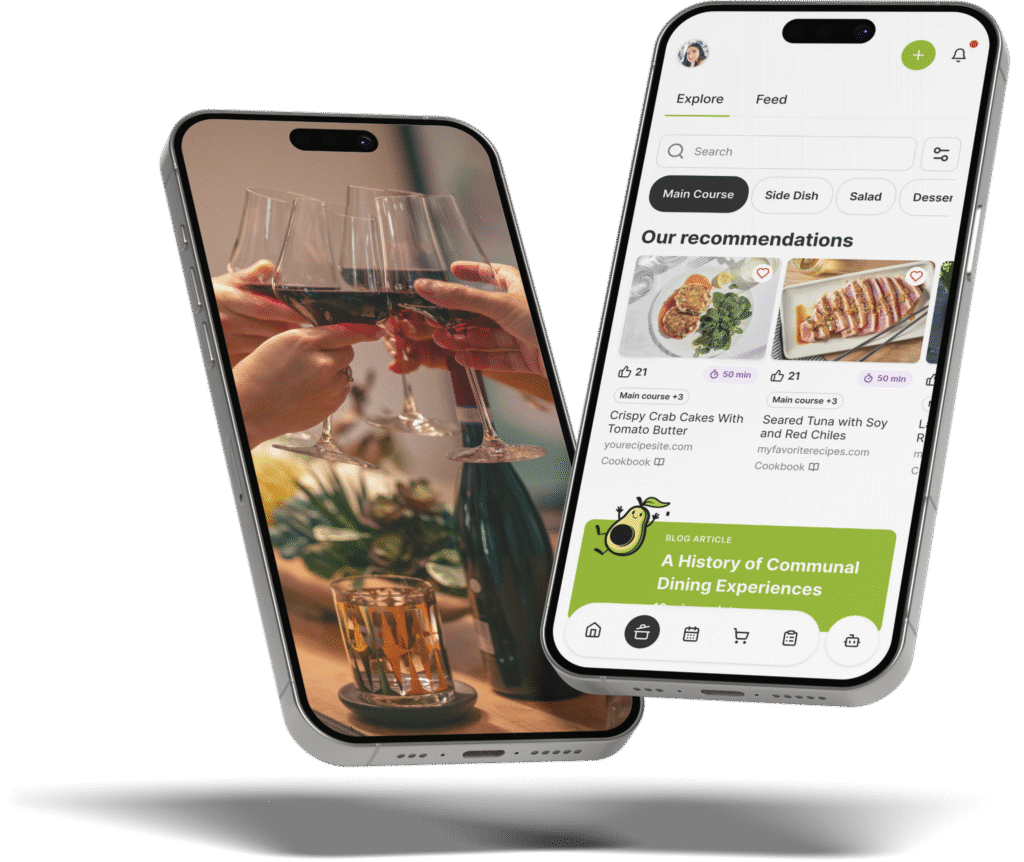
Plan Your Next Dinner Party in One Place — Save recipes, build your menu, send invitations, track RSVPs and dietary needs, and auto-generate a shared grocery list in The Gourmet Host app. Download The Gourmet Host App →

Now That You Know How To Host A Dinner Party…
You can start planning your own!
And remember, even if things don’t go exactly to plan, getting people together is always something worth celebrating.
Plus, you can even customize invites, assign tasks, and split costs with co-hosts.
That’s right—you’ll get personalized guidance and support to get through alllllll the tasks we listed above, and more.
Continue Reading:
More On Dinner Party Hosting Guide
- A Host’s Dilemma: Cooking vs. Catering for Upscale Dinner Parties
- Dinner Party Planning 101: Everything But the Recipe!
- The Host’s Playbook: Guide to Hosting Memorable Dinners for Guests
- How To Throw a Successful Dinner Party: Kitchen Set-up Tips
- The Secret Recipe for a Successful Dinner Party
- The Ultimate Dinner Party Planning Checklist (Time-Stamped)
More from The Gourmet Host
- Winter Theme Party Ideas for Cozy Gatherings
- Groom Wedding Speech: How to Write the Best for Your Big Day
- Romantic Dinner at Home Ideas: How to Plan the Perfect Night In
- Summer Dinner Recipe Ideas for Every Backyard Table
- The Great Entertaining Debate: Home or Out?
Explore TGH Categories