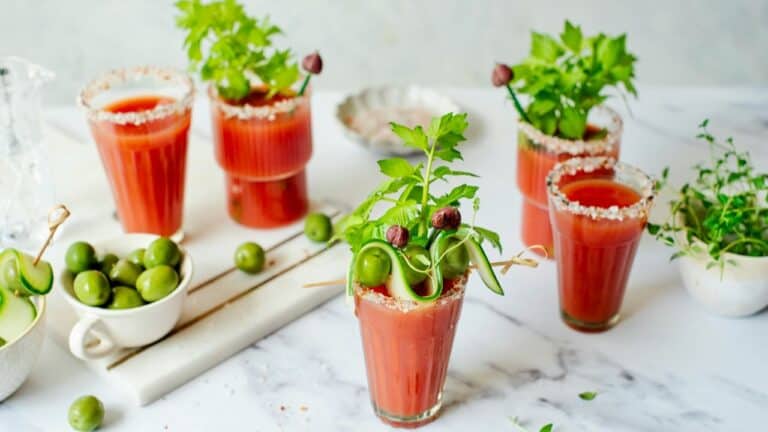
Non-Alcoholic Drinks: The Complete Host’s Guide
 18 min read
Non-alcoholic drinks come together when you set a per-guest ratio, follow one build order, and split the make-ahead work, so you spend the party pouring instead of mixing.
Non-alcoholic drinks work best when you build them like a host, not a bartender: one per-guest ratio, one clear build order, one make-ahead plan. Those three choices shape every mocktail, spritzer, and punch you pour.
Treat the whole night as a timeline of five decisions, and settle each one before a guest is standing in front of you. This guide walks that sequence stage by stage, so a glass of soda and lime holds its own next to wine.
At a glance:
- Build every drink from five parts: base, acid, sweet, dilution, and garnish.
- Scale by the guest, not by the pitcher, so the ratio never drifts.
- Add the fizzy element last, per glass, never to the batch bowl.
- Split the work: juices and syrups the day before, bubbles and garnish at serve time.
- Match the drink to the season and the meal, then dial in the details.
Non-Alcoholic Drinks: The Short Answer
Non-alcoholic drinks are any zero-alcohol beverage you build with a cocktail’s care: a base, an acid, a sweetener, a dilution, and a garnish, balanced so no single part dominates. The fastest route to a good one is a per-guest ratio you can scale, a fixed build order that keeps the fizz alive, and a make-ahead split that lets you pour instead of mix. Set those once and the season, the color, and the garnish become details you can look up.
Zero-Proof Drinks Come Down to a Timeline
That is the whole method in one line. A search for cocktails drinks non alcoholic buries the idea under a hundred recipes, but the host’s version is small enough to hold in your head.
You are not memorizing drinks, you are running an order of decisions. Name the occasion, pick the format, set the ratio, split the make-ahead work, then pour, and each choice narrows the next until nothing is left to figure out.
The evening moves as a curve, not a flat line. The drinks rise and fall with it: light and low-sugar at the door, sharper and food-friendly at dinner, warm and rich once dessert lands.
A checklist treats every glass the same, which is why it stalls. A timeline lets the same five parts read as a welcome drink at seven and a nightcap at eleven, because you shift the acid, the sweetness, and the temperature to match the hour.
The payoff is that you decide once and coast. Make the five calls on paper the day before, and the party itself asks nothing of you beyond pouring.
The Three Moves That Do the Work
- Add acid: fresh lemon, lime, or a splash of vinegar shrub gives the drink the tartness grown-ups reach for twice.
- Add a bubble: soda, tonic, or ginger beer brings lift and a clean finish that still juice never manages.
- Add one bitter or savory note: tonic, grapefruit, non-alcoholic bitters, or a salt rim gives the glass the backbone alcohol used to.
Those three moves cost pennies and separate a finished drink from sweetened juice. Everything else here is about running them at the right moment, for the right number of guests, without chaining yourself to the counter.
Ask What Job the Drink Has to Do
The instinct is to hunt for a recipe. A sharper first question is what job the drink has to do at your table, because that single answer decides format, sweetness, and strength downstream.
A welcome drink needs to be pourable on sight and low in sugar so guests can have two. A toast drink needs bubbles and a pale, celebratory color. A dinner drink needs enough acid to cut through fat the way wine does.
Name the job and the format picks itself, which is why a single best-of list rarely gets you all the way there.
Roundups like Top Non Alcoholic Drinks and Non Alcoholic Drinks hand you ideas by the dozen, but a host still has to sort them by role before any of them are useful.
- Welcome: low-sugar, pourable on sight, easy to drink two of.
- Dinner: high-acid, built to cut through fat and salt.
- Toast: sparkling, pale, and poured in real flutes.
- Dessert: warmer, richer, and spiced to close the night.
Get the job wrong and the mismatch shows. A sweet welcome drink leaves guests thirsty an hour in, and a thin dinner pour disappears against the food, so the job is worth naming out loud before you build.
Once the job is set, the recipe becomes a detail rather than the decision, and you stop scrolling the moment you know what the glass is for.
|
Keep the Drink Plan Together |
Every Good Build Shares the Same Five Parts
Once you see the five-part frame, you stop memorizing recipes and start improvising. Every solid non-alcoholic drink is a version of the same skeleton, and the skeleton is short.
Every zero-proof drink is these five parts, and only two of them wait until serve time.
| Part | Job in the glass | Examples | When to add |
|---|---|---|---|
| Base | Body and flavor | Juice, cold tea, soda base | Make ahead |
| Acid | Brightness | Lemon, lime, vinegar shrub | Make ahead |
| Sweet | Balance | Simple syrup, honey | Make ahead |
| Dilution | Length and fizz | Soda, tonic, ginger beer | At serve, per glass |
| Garnish | Aroma and finish | Herb, citrus, salt rim | At serve |
- Base: the flavor lead, whether juice, tea, a shrub, cold brew, or a distilled non-alcoholic spirit that carries the drink’s identity.
- Acid: fresh citrus or a splash of vinegar shrub, the element people drop first and the one that turns flat juice into something adult.
- Sweet: simple syrup, honey, or the fruit itself, used only to round the edges rather than to lead.
- Dilution: ice, soda water, tonic, or ginger beer, which sets the strength and, when it fizzes, the lift.
- Garnish: a citrus wheel, an herb sprig, or a salted rim that signals care before the first sip.
Diagnose a Weak Drink by What It Lacks
Walk any classic through the frame and it holds. A Shirley Temple is base plus sweet plus dilution plus garnish with no acid, so it tastes like a kid’s drink.
Add fresh lime and a few dashes of non-alcoholic bitters and the same glass turns into something you would hand an adult. The frame does the diagnostic work, so you fix what a drink lacks instead of guessing at a new recipe.
Ratios matter as much as parts. A reliable starting point is two parts base, one part acid, a half part sweet, topped with dilution to taste, then adjusted once you have tasted it cold.
Dilution is the dial most people forget. Add it last and in stages, tasting as you go, because a drink that is one splash of soda short reads as syrupy while one splash too far reads as watery.
Recipe banks like Best Non Alcoholic Cocktails Recipes and Zero Proof Cocktail Recipes are full of builds that quietly follow this skeleton once you know to look for it.
Run the Decisions in the Order a Host Uses
The sequence runs from the moment you know people are coming to the moment they hold a glass. Each stage hands its detail to the next, so you go deep only where it matters.
- Pick the occasion, and let it set temperature, color, and richness before you touch an ingredient.
- Choose the format the job needs: a batched punch for a crowd, a single-serve spritzer for a welcome, a warm pot for dessert, or a sparkling pour for a toast.
- Set the ratio per guest, then scale, so the batch math never surprises you.
- Split the make-ahead work, mixing everything that keeps a day or two before.
- Pour with intention, since presentation is the cheapest upgrade on the list.
Set the Ratio by the Guest, Then Scale
This is the stage that separates a host from a recipe follower. Decide how much each guest drinks, not how big the bowl is.
Plan on roughly two to three drinks per guest across an evening, and about six ounces of liquid per drink. Twelve guests at three drinks each is thirty-six servings, a little over two gallons, and fixing the per-guest number keeps that math steady at any headcount.
Weight the buy toward what the crowd actually drains. Citrus, soda, and ice go fast, while a specialty bottle lasts several parties, so a per-guest count stops you overbuying the wrong things.
Split the Make-Ahead Work Across Two Days
Mix everything that keeps ahead of time: juice bases, syrups, infusions, tea concentrates, and garnishes all hold in sealed jars for a day or two. Leave only the fizzy element and the ice for serve time.
This single habit keeps you out of the kitchen once guests arrive, and it is why batch punches, cold brew, and spiced ciders are a host’s best friends. You pour instead of mix, which is the whole point of planning the night in advance.
Occasion and format are the fast calls, so make them first and move on. A summer porch points at cold, tart, and light, while a winter table points at warm, spiced, and deep, and the format follows from the headcount.
Cover Any Table With a Few Drink Families
Nearly everything you will ever serve falls into a handful of families. Learn one drink from each and you can cover any table without a binder of recipes.
- Spritzers and highballs: base plus acid over a lot of soda, the fastest adult-tasting category to batch.
- Punches: a big-batch mix of juices with one fizzy top and a fruit-studded ice ring, the workhorse for a crowd.
- Mocktails and zero-proof cocktails: the dressed-up single serve, sweet and juice-forward or dry and spirit-led.
- Warm sippers: mulled cider, spiced tea, cocoa, and non-alcoholic eggnog held in a slow cooker for hours.
- Sodas and shrubs: homemade fruit syrup or a sweetened-vinegar shrub cut with soda water, tart and endlessly variable.
Pick the family by the crowd, not the calendar. A standing party wants spritzers and a punch you can leave on the counter, while a seated dinner rewards a single dressed-up serve you hand each guest by name.
Herb-and-juice builds like the ones at Mocktails Making Non Alcoholic Drinks with Juices and Herbs show how far a single base goes, and a restaurant set like Luccaosteria Mocktails shows how far a dressed-up serve can be pushed.
For the soda-and-shrub end, a meal-type collection like Snixykitchen Drinks and a curated set of the Best Mocktail Recipes are worth a bookmark before guests arrive.
Regional traditions arrive pre-balanced by generations of cooks, so when you want a ready-made template our tasting guide to Japanese non-alcoholic drinks is a good doorway.
|
Hosting Tip: Stock Fewer Better Options |
Stock a Short, Deliberate Bar
You do not need a dozen niche bottles. A short, deliberate stock lets you build spritzers, sours, and highballs on demand, which covers most of what a table asks for.
- Bubbles: sparkling water, tonic, ginger beer, and ginger ale for lift and fizz.
- Juices: citrus, cranberry, apple cider, and pineapple as your flavor bases.
- Fresh: lemons, limes, oranges, mint, and rosemary for acid and garnish.
- Sweet and bitter: simple syrup, honey, and non-alcoholic bitters to balance and add backbone.
- A star bottle: a distilled zero-proof spirit for guests who want the dry read of a real cocktail.
- Good ice: clear cubes and at least one fruit-studded ice ring for the punch bowl.
Canned options fill the gaps on no-effort nights, so guides like Best Canned Mocktails and a deep library like All Mocktails are worth saving for when you would rather chill and pour than build from scratch.
Buy the base ingredients to match your per-guest math rather than by the bottle, and you will rarely overstock. A dozen guests run through more citrus, soda, and ice than you expect and less of any specialty bottle than you fear.
Ice deserves its own line on the list. It dilutes, chills, and doubles as a garnish, so freeze more than looks reasonable and set at least one fruit-studded ring the night before.
The tools matter more than the bottles, and a jigger, a peeler, a fine strainer, and a large ice mold do more for your drinks than any single ingredient, as our rundown of bar tools every home host needs lays out.
Match Drinks to the Meal the Way Wine Does
A non-alcoholic drink earns its place when it does the job wine does: reset the palate, cut richness, and carry the mood of the course. Match tart, high-acid drinks to fatty or savory food, and spiced warm drinks to sweet desserts.
Save the deep, dark punches for the toast and the low-sugar spritzers for the long grazing stretch. The pairing runs on contrast and echo: acid against fat, spice alongside spice, so the drink either cleans the palate or extends the plate.
- Roast and gravy: a tart cranberry or grapefruit spritzer to cut the fat.
- Spiced or cinnamon desserts: mulled cider or chai to echo the warmth.
- Long grazing spreads: a low-sugar highball you can refill all night.
- The toast: a pale sparkling pour that reads celebratory across the room.
Temperature is part of the pairing too. A cold, high-acid drink wakes up a heavy plate, while a warm, spiced cup slows the room down for dessert, so lean cold early and warm late.
Acidity is the workhorse of any pairing. It resets the tongue between bites the way a squeeze of lemon lifts a rich dish, so when in doubt reach for the tarter option and let the food supply the weight.
The same instinct that pairs a cranberry spritzer with gravy tells you what to build the meal around, so if you are working backward from an easy main our roundup of easy oven dinners sits naturally beside a batch spritzer you can leave on the counter.
|
Share Every Prep Task Clearly |
Fix the Three Failures That Sink Zero-Proof Drinks
Three failures account for nearly every disappointing zero-proof drink, and each one is easy to head off once you can name it.
- Too sweet: juice and syrup pile on sugar fast, so cut it with acid and dilution until the drink finishes clean.
- No backbone: without alcohol a drink can feel thin, so rebuild structure with tonic, grapefruit, bitters, a salt rim, or brewed tea.
- Flat and warm: carbonation dies within minutes, so chill every mixer and glass and add the fizz per glass at the last second.
Sweetness is the quiet trap because cold blunts it. Taste the base after chilling, since a mix that read balanced warm can turn flat and sugary once iced.
Backbone is the easiest upgrade of the three. A bitter or savory note turns a fruit punch into an adult drink, and it rescues a Shirley Temple or a lemonade in one move.
Fizz is a timing problem, not an ingredient problem. Keep the mixers and glasses cold, hold the soda until the pour, and a sparkling drink stays lively through the first several minutes when it counts.
With those three handled, you have cleared the bar that trips up nearly every home host, and if you want to turn it into a game our guide to fun wine tasting games adapts cleanly to a blind mocktail tasting with no alcohol required.
See What a Well-Run Drink Table Feels Like
You can feel the difference when it works. Guests arrive and a welcome drink is already poured, a low-sugar citrus spritzer in a real glass, garnished and cold.
Nobody has to ask what the non-drinkers can have, because the answer is standing on the counter looking as good as anything with alcohol in it. At dinner, a tart cranberry cooler sits beside the wine and does the same work of cutting through the meal.
For the toast, a pale sparkling pour in flutes reads like champagne across the room, and after dessert a slow cooker of spiced cider or non-alcoholic eggnog holds warm while people linger.
- A garnished welcome drink poured before the first guest knocks.
- A high-acid option at dinner that resets the palate like wine.
- A sparkling pour for the toast in real glassware.
- A warm sipper that holds itself through the slow end of the night.
Notice what the guests never see: the pitcher of citrus base you mixed the night before, the ice ring that froze overnight, the garnishes prepped and covered in the fridge. They read a relaxed host and a considered counter as generosity rather than effort.
None of it reads as work from the guest’s chair. They see full glasses and a host with time to sit down, and that ease is the quiet return on an hour of prep the night before.
That is the quiet trade at the heart of hosting well. The planning is invisible, and the ease it buys is the thing people remember about the night.
Keep One Habit in Your Back Pocket
If you take a single thing from this guide, make it the per-guest ratio plus the make-ahead split. Decide the drink’s job, build it from the five-part skeleton, scale by the guest, and hold back the bubbles until the pour.
- Name the job: settle what the glass is for before you open a recipe.
- Build from five parts: diagnose what a drink is missing instead of guessing.
- Scale by the guest: let the headcount, not the pitcher, set the batch.
- Hold the fizz: mix what keeps a day ahead and add bubbles only at the glass.
Everything else, the season, the color, the garnish, is a detail you can look up in the moment. The host who nails the sequence never runs dry and never gets stuck behind the counter.
That is what lets a room full of non-alcoholic drinks feel like a real party, and if you are weighing whether to build from scratch or save other people’s recipes for a crowd, our comparison of The Gourmet Host versus Recime is a useful read.
Frequently Asked Questions
What is the difference between a mocktail and a zero-proof cocktail?
A mocktail is any sweet, juice-forward drink built to please without alcohol, while a zero-proof cocktail mimics a real one using a distilled non-alcoholic spirit. Both contain no alcohol. The zero-proof version aims for the dry, complex bite of a classic cocktail, so it reads as grown-up rather than fruity.
How do I scale a batch drink recipe for a big group?
Multiply the recipe by your guest count, then hold back the fizzy element until serving. A punch that serves eight becomes a three-gallon bowl for a crowd of twenty-four. Mix the juices and syrups ahead, chill everything hard, and add soda or sparkling water only as each pitcher goes out.
How do I make a mocktail taste balanced, not just sweet?
Balance a mocktail with acid, a little bitterness, and depth so it does not read as flat juice. Add fresh lemon or lime for tartness, a splash of soda for lift, and a bitter note like grapefruit, tonic, or a few dashes of non-alcoholic bitters. Salt rims sharpen flavor too.
What non-alcoholic drinks can I make ahead?
Batch punches, infused waters, cold brew, and spiced ciders hold well when made ahead. Mix everything except the fizzy element, then chill, and add soda or sparkling water right before serving so nothing goes flat. Garnishes like citrus wheels and herbs can be prepped and stored in a sealed container.
What should I stock for a non-alcoholic bar?
Stock sparkling water, tonic, ginger beer, and a few fruit juices as your base, plus fresh citrus, herbs, and simple syrup. Add non-alcoholic bitters, a zero-proof spirit or two, and good ice. That short list lets you build spritzers, sours, and highballs on demand without buying a dozen niche bottles.
What makes a non-alcoholic drink feel grown-up?
Real glassware, deliberate garnishes, a salted or sugared rim, and clear ice make a non-alcoholic drink feel grown-up. Presentation signals care, so skip the plastic cup and juice-box feel. Name the drinks on a small menu and offer a savory or smoky option so the round reads as adult rather than an afterthought.
Continue Reading:
More On Non-Alcoholic Drinks
- 10 Non-Alcoholic Christmas Drinks for Every Guest
- 9 Sparkling Non-Alcoholic Drinks for Any Occasion
- 8 Non-Alcoholic Thanksgiving Drinks for the Table
- 10 Non-Alcoholic Holiday Drinks for Winter Parties
- 9 Mexican Non-Alcoholic Drinks for Your Next Fiesta
More from The Gourmet Host
- Epicurean Evenings: Celebrate Summer with Lamb, Duck, and Seafood Menus
- Scones for Afternoon Tea: A Foolproof 6-Step Recipe
- How To Get Better At Home Cooking In 5 Hours Every Week
- Different Ways to Describe Wine at Your Next Dinner Party
- Retirement Party Ideas: Venue, Catering & Toasts
Explore TGH Categories
- Set the Scene
- Drinks and Bar
- Plan the Meal
- Engage with Guests
- Games and Toasts
- Tools and Techniques
- Why We Gather