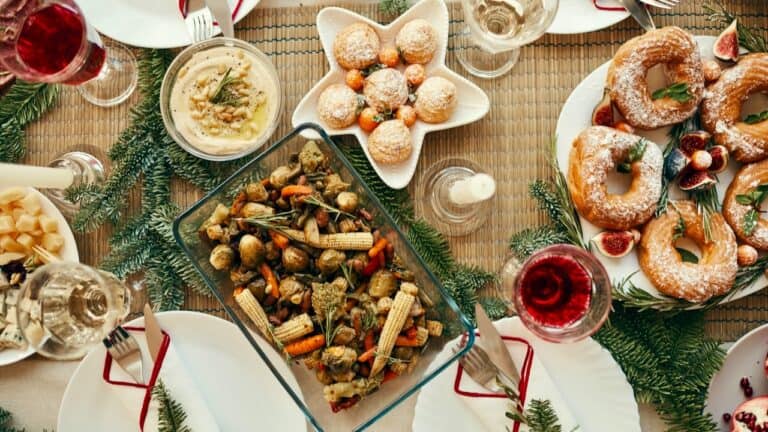
How to Build a French Cheese Board Course at Home
 14 min read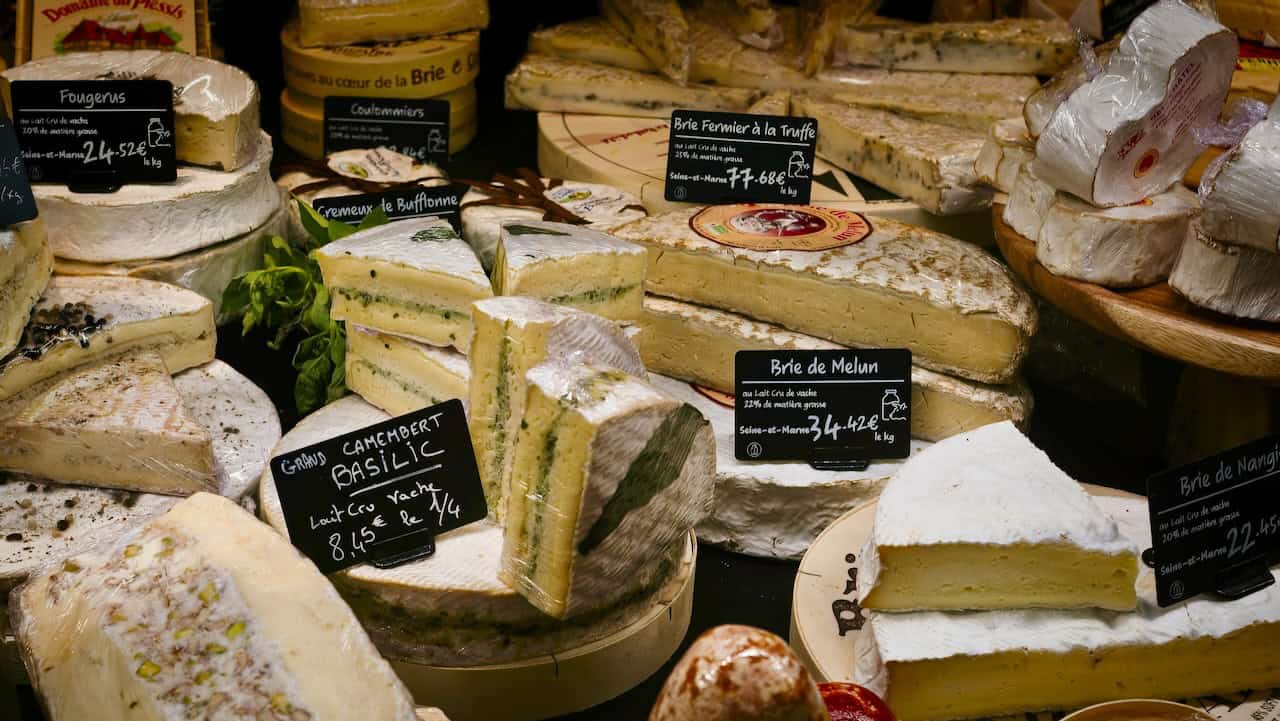
Cheese, in a French meal, is not the thing you put out while everyone waits for dinner. It is dinner, or rather one of its acts: a seated course that lands after the main and before dessert, eaten slowly with the last of the red wine. That single shift in category changes everything about how you build it. A French cheese board course is not a grazing platter you graze past. It is three to five well-chosen wedges, served at room temperature, tasted in order from mildest to strongest.
Treat the cheese as a course and the rest follows: how many wedges to buy, which milks and textures to span, what bread and fruit belong beside them, and where the plate sits in the evening’s rhythm. The walkthrough below covers the count, the cheeses, the serving order, the pairings, and the small details of temperature and cutting that separate a confident French cheese plate from a fridge-cold afterthought.
At a Glance
- The French cheese course is served after the main and before dessert, eaten slowly with the last of the red wine.
- Choose an odd number, three to five cheeses, spanning the texture spectrum: one soft, one semi-firm, one blue, plus a washed-rind or a chevre.
- Serve mildest to strongest. Start with fresh chevre or a soft bloomy cheese, finish with the blue, and arrange the board clockwise by intensity.
- Pair with sliced baguette or a plain country loaf, fresh and dried fruit, walnuts, and a little honey. Keep accompaniments simple.
- Pull the cheeses from the fridge an hour before serving so they reach room temperature, which is when the flavor is fullest.
What Is a French Cheese Course?
A French cheese board, in the dinner-party sense, is a course of three to five cheeses served on its own plate after the main and before dessert, not a charcuterie spread set out for grazing. What makes it French is the structure: an odd number of wedges chosen to span milks and textures, tasted in deliberate order from mildest to strongest, at room temperature, with bread and a glass of wine rather than a crowd of dips and crackers. Built this way, the plateau de fromages becomes a quiet, conversational pause in the meal that any home host can assemble without cooking a thing.
Where the Cheese Course Sits in a French Meal
Cheese arrives after the main course and before dessert in a traditional French meal. The savory part of the evening has wound down, the plates have been cleared, and a fresh board appears with whatever red wine is left in the glass. The course is meant to be lingered over, a slow bridge between the heaviness of the main and the sweetness still to come.
Placement is the first thing that marks this as a course rather than a snack. A grazing board greets guests at the door; a cheese course sits down at the table with them. If you have only ever served cheese as part of a step-by-step charcuterie board or laid it out across a stunning grazing table, the French course is the same ingredients reframed as a seated, sequenced moment in the meal.
This piece on why the French serve cheese before dessert walks through the etiquette and the logic. For a host running the full sequence, the cheese slot is the most forgiving one on the timeline, since it needs no oven and no last-minute plating.
- The canonical position is after the main and before dessert, where the course closes the savory part of the meal.
- Combining cheese with dessert is a common shortcut for a shorter evening, with one or two cheeses served alongside fruit and a sweet.
- A larger plateau de fromages with bread and salad can also stand on its own as a light supper on a quiet night.
Knowing where the course lands tells you how to build it, and the next question every host asks is how much cheese to actually buy.
|
Shop Your Cheese Board As A Kit |
How Many Cheeses and Which Types to Choose
A French cheese board usually holds three to five cheeses, an odd number that reads balanced on the plate and covers the texture spectrum without overwhelming anyone. Three is plenty for a small dinner; five suits a larger table or a host who wants the course to feel like an occasion. The aim is range, not volume, so a little of several cheeses beats a lot of one.
Span the texture spectrum, not just the flavors
The simplest way to choose is to think in textures and milks rather than names. Cover a soft cheese, a semi-firm one, and a blue at minimum, then add a washed-rind or a fresh chevre if you are building toward five. That spread moves a guest’s palate across cow, sheep, and goat milks and from creamy to crumbly in a single sitting.
The main families of French cheese, laid out in this guide to France’s cheese types, map neatly onto those texture slots.
- Soft-bloomy: creamy, mild, white-rinded. Brie and Camembert are the anchors here.
- Semi-firm: nutty and sliceable, the backbone of the board. Comte and Cantal sit in this slot.
- Washed-rind: pungent and bold, the cheese that smells stronger than it tastes. Munster and Epoisses lead.
- Blue: salty and sharp, the strongest note on the plate. Roquefort is the classic.
- Chevre: fresh and tangy, a bright counterpoint to the richer wedges. A young goat log works well.
When you sort the options by texture this way, the types of French cheese stop feeling like a memorization test and start working as a kit. Our rundown of the charcuterie board essentials to stock covers the supporting cast of bread, fruit, and nuts in more depth, but for the course itself the cheeses lead. With the slots understood, it helps to put real names to them.
Five French Cheeses That Anchor a Board
A classic French board pairs one cheese from each texture family, and these five cover the full range for a table of six to eight. Buy a small wedge of each, around three to four ounces, which leaves enough for a generous taste per guest without a fridge full of leftovers. Each one is widely sold, so a good cheese counter or a well-stocked grocer can supply the whole board.
The five-cheese spread, family by family
- Brie or Camembert covers the soft-bloomy slot, the creamy entry point, mild and buttery under a soft white rind. Let it sit until the center yields to a gentle press.
- Comte is the semi-firm anchor, a nutty, brothy mountain cheese aged for months. David Lebovitz’s deep dive on Comte cheese explained is the best primer on why it anchors so many boards.
- Munster fills the washed-rind slot, soft and orange-rinded and assertively aromatic from the Alsace and Vosges region. Bold on the nose, mellower on the tongue.
- Roquefort is the blue, a sheep’s-milk cheese cured in limestone caves, salty and sharp. It belongs at the end of the tasting order.
- Fresh chevre brings the goat-milk note, a young, tangy log that brightens the plate and resets the palate between the richer wedges.
Geography is part of the appeal: each of these comes from a different corner of France, and a quick look at French regions and their cheeses or this illustrated guide to French cheeses by region gives you a sentence or two to share when you set the board down. Once the five are on the plate, the order in which guests taste them matters as much as the choice.
|
Hosting Tip: Taste from Mild to Strong |
The Order to Serve and Taste Them
Serve French cheeses from mildest to strongest so the palate is not overwhelmed early. A guest who starts on the Roquefort will taste almost nothing of the delicate chevre that follows. Begin with the fresh and the soft, move through the semi-firm and the washed-rind, and finish on the blue, which leaves the boldest impression last.
The board itself can do the guiding. Arrange the wedges clockwise by intensity, starting at the twelve o’clock position with the mildest, and guests will instinctively follow the circle without any instruction from you. A small marker or a sprig of herb at the starting point is all the signpost a host needs.
This walkthrough on how to make a French cheese board lays the clockwise arrangement out step by step.
The tasting order, mildest to strongest
- First, the chevre: bright and tangy, it opens the course and wakes up the palate.
- Second, the Brie: the soft-bloomy cheese follows, creamy and mild.
- Third, the Comte: the semi-firm wedge sits in the middle, nutty and substantial.
- Fourth, the Munster: the washed-rind cheese steps up the intensity before the finish.
- Last, the Roquefort: the blue closes the tasting, salty and sharp, the last and loudest note.
Knowing how to serve French cheese in sequence turns a plate of wedges into a guided tasting, and the right accompaniments give each step something to lean on.
Bread, Fruit, and Wine Pairings
Serve a French cheese board with sliced baguette or a plain country loaf, fresh and dried fruit, a handful of walnuts, and a little honey or fruit paste. The rule is restraint: the accompaniments exist to frame the cheese, not to compete with it. Skip the loud crackers and the heavily seasoned spreads that crowd a grazing platter, because on a cheese course the wedges are the point.
What belongs beside the cheese
- Sliced baguette or a plain sourdough belongs at the center, served plain so the crust and crumb carry the cheese without flavor of their own.
- Fresh grapes and sliced pear, plus dried figs or apricots, add the fruit. Sweetness offsets the salt in the blue especially.
- Walnuts give the plate crunch, and a small pot of honey or quince paste is there to drizzle over the Roquefort.
Wine is the other half of the course. A glass of the red left over from the main suits most boards, while a sweet wine flatters the blue, and a crisp white lifts the chevre and the washed-rind. French cheese pairing rewards matching weight to weight: light wines with light cheeses, bigger reds with the firmer wedges.
If wine is not your strong suit, our sommelier’s guide to basic wine knowledge and our host’s guide to white wine pairings both translate the theory into a single bottle you can pour with confidence.
For a broader overview of which cheeses sit in which families, this guide to French cheeses is a useful companion to the pairing logic. With the food and the wine settled, the last job is presentation.
|
Keep the Cheese Course Plan Close |
Temperature, Cutting, and Presentation
Take the cheeses out of the fridge about an hour before serving so they reach room temperature, which is when their flavor is fullest. Cold dulls a cheese; warmth lets the aromas open and the texture soften to where it belongs. Arrange the board up to a few hours ahead, cover it loosely, and refrigerate, but add the bread and any cut fruit at the last minute so nothing dries out on the plate.
Cutting and arranging the plate
- One knife per cheese: give each wedge its own blade so the flavors do not transfer from the blue to the Brie.
- Cut to the shape: soft cheeses into wedges, hard cheeses into thin slices or batons, and the blue left in a rough chunk for guests to break off.
- Rinds stay on: they tell guests which cheese is which, and many are part of the eating.
- Choose the surface: a wooden board or a marble slab holds a steady temperature better than a cold ceramic plate.
Space the wedges so there is room to cut without crowding, and tuck the bread and fruit into the gaps rather than piling them on top. A little negative space reads as deliberate, and this walkthrough on building a plateau de fromages shows the same restraint in practice. For the cultural backdrop on how the French treat their cheeses, this French cheese guide and this Paris-based reference on types of French cheese both give a host the names and stories worth knowing.
Build the course this way and the plateau de fromages becomes the most relaxed part of the evening to host: nothing to cook, nothing to time, just good cheese coming slowly to temperature while the conversation carries on.
Frequently Asked Questions
How many cheeses should be on a French cheese board?
A French cheese board usually holds three to five cheeses, an odd number that covers the texture spectrum without overwhelming guests. Choose one soft, one semi-firm, and one blue at minimum, then add a washed-rind or a chevre. Quality and variety matter more than quantity.
What cheeses go on a French cheese board?
A classic French board pairs a soft bloomy cheese like Brie or Camembert, a semi-firm like Comte, a blue like Roquefort, a washed-rind like Munster, and a fresh chevre. This spread moves across milks and textures, which gives guests a balanced range to taste in a single course.
In what order do you serve a French cheese course?
Serve French cheeses from mildest to strongest so the palate is not overwhelmed early. Start with a fresh chevre or soft bloomy cheese, move through semi-firm and washed-rind types, and finish with the blue. Arranging the board clockwise by intensity helps guests follow the order without guidance.
When is cheese served in a French meal?
Cheese is served after the main course and before dessert in a traditional French meal. The course bridges the savory and sweet portions of the evening and is meant to be lingered over with the last of the red wine. Some hosts combine cheese and dessert when keeping the meal shorter.
What do you serve with a French cheese board?
Serve a French cheese board with sliced baguette or a plain country loaf, fresh and dried fruit, walnuts, and a little honey or fruit paste. Keep accompaniments simple so the cheese stays central. A glass of red wine or a sweet wine suits the course better than anything heavily flavored.
How far ahead can I prepare a cheese board?
Arrange a cheese board up to a few hours ahead, then cover it loosely and refrigerate. Take it out about an hour before serving so the cheeses reach room temperature, which is when their flavor is fullest. Add bread and cut fruit at the last minute so nothing dries out.
Continue Reading:
More On French Entertaining
- How to Plan a Five-Course French Dinner Party Menu
- 12 French Dessert Recipes for Easy Entertaining
- 7 Classic French Main Dishes for Confident Hosts
- 15 Crowd-Pleasing Mini Quiche Recipes for Parties
- 18 Classic French Foods Every Confident Host Knows
More from The Gourmet Host
- Easy Party Cocktails That Let You Actually Enjoy the Party
- Party Decoration Ideas That Set the Scene
- How to Host a 1920s Murder Mystery Dinner Party: Menu, Décor, and Game Guide
- Dinner Party Seating: 6 Rules for the Host’s Chart
- Icebreaker Questions for Couples That Deepen Connection
Explore TGH Categories
- Set the Scene
- Drinks and Bar
- Plan the Meal
- Engage with Guests
- Games and Toasts
- Tools and Techniques
- Why We Gather